
Senotoyar PA600
Senotoyar 1320lbs 2-in-1 Electric Hoist Model PA600 User Manual
Model: PA600 | Brand: Senotoyar
1. Introduction
This manual provides essential instructions for the safe and efficient operation, installation, and maintenance of your Senotoyar 1320lbs 2-in-1 Electric Hoist, Model PA600. Please read this manual thoroughly before use and retain it for future reference. This electric hoist is designed for lifting and towing applications in various environments such as garages, factories, warehouses, and construction sites.

Image 1.1: Overview of the Senotoyar 1320lbs 2-in-1 Electric Hoist and its included accessories, including the main hoist unit, wired remote, wireless remote, and lifting slings.
2. Safety Instructions
Your safety and the safety of others are paramount. Always follow these safety guidelines to prevent injury or damage to the equipment.
- Read the Manual: Understand all instructions and warnings before operating the hoist.
- Rated Capacity: Never exceed the rated load capacity of the hoist (660 lbs for single line, 1320 lbs for double line). Overloading can cause severe injury and equipment failure.
- Inspection: Before each use, inspect the hoist, wire rope, hooks, and controls for any signs of wear, damage, or malfunction. Do not use if any damage is found.
- Secure Installation: Ensure the hoist is securely mounted to a structure capable of supporting the maximum load.
- Clear Area: Keep the lifting area clear of personnel and obstructions. Never lift loads over people.
- Stable Load: Ensure the load is properly balanced and secured before lifting. Use appropriate slings and attachments.
- Emergency Stop: Familiarize yourself with the emergency stop switch and its operation.
- Electrical Safety: Ensure the power supply matches the hoist's requirements (110V). Do not operate in wet conditions.
- Remote Control: The wireless remote requires 2 AAA batteries (not included). Install them before use. Avoid reverse operation within 0.5 seconds of a previous operation to prevent circuit board damage.
- Limit Switch: The hoist is equipped with a limit switch to prevent over-lifting. Do not bypass or tamper with safety features.
- Maintenance: Only qualified personnel should perform maintenance or repairs.
3. Product Overview
The Senotoyar PA600 Electric Hoist is a versatile lifting tool featuring dual control methods and robust construction.
3.1 Key Features
- Dual Control: Includes a 98ft wireless remote control and a wired remote control for operational flexibility.
- High Load Capacity: Lifts up to 660 lbs (single line) or 1320 lbs (double line).
- Powerful Motor: 1150W motor with a large cooling fan for efficient and sustained operation.
- Durable Construction: Alloy shell and galvanized steel wire rope for corrosion resistance and longevity.
- Safety Mechanisms: Emergency stop switch, electromagnetic braking system, and limit switch.
- Lifting Height: Up to 59 ft (single line) or 29.5 ft (double line).

Image 3.1: Visual representation of the hoist's 1320lbs capacity, 2-in-1 control, and 59ft maximum working height.

Image 3.2: Diagram illustrating the robust internal components of the hoist's motor, designed for power and durability.
4. Specifications
| Parameter | Value |
|---|---|
| Model Number | PA600 |
| Lifting Weight (Single Line) | 660 lbs (300 kg) |
| Lifting Weight (Double Line) | 1320 lbs (600 kg) |
| Lifting Speed (Single Line) | 32 ft/min (10 m/min) |
| Lifting Speed (Double Line) | 16 ft/min (5 m/min) |
| Max Lifting Height (Single Line) | 59 ft (18 m) |
| Max Lifting Height (Double Line) | 29.5 ft (9 m) |
| Rated Voltage | 120 VAC |
| Rated Current | 8.5 A |
| Power | 1150 W |
| Rated Frequency | 60 HZ |
| Cable Diameter | 4.0 mm |
| Cable Length | 59 ft (18 m) |
| Package Dimensions | 19 x 11 x 8 inches |
| Item Weight | 38.4 Pounds |
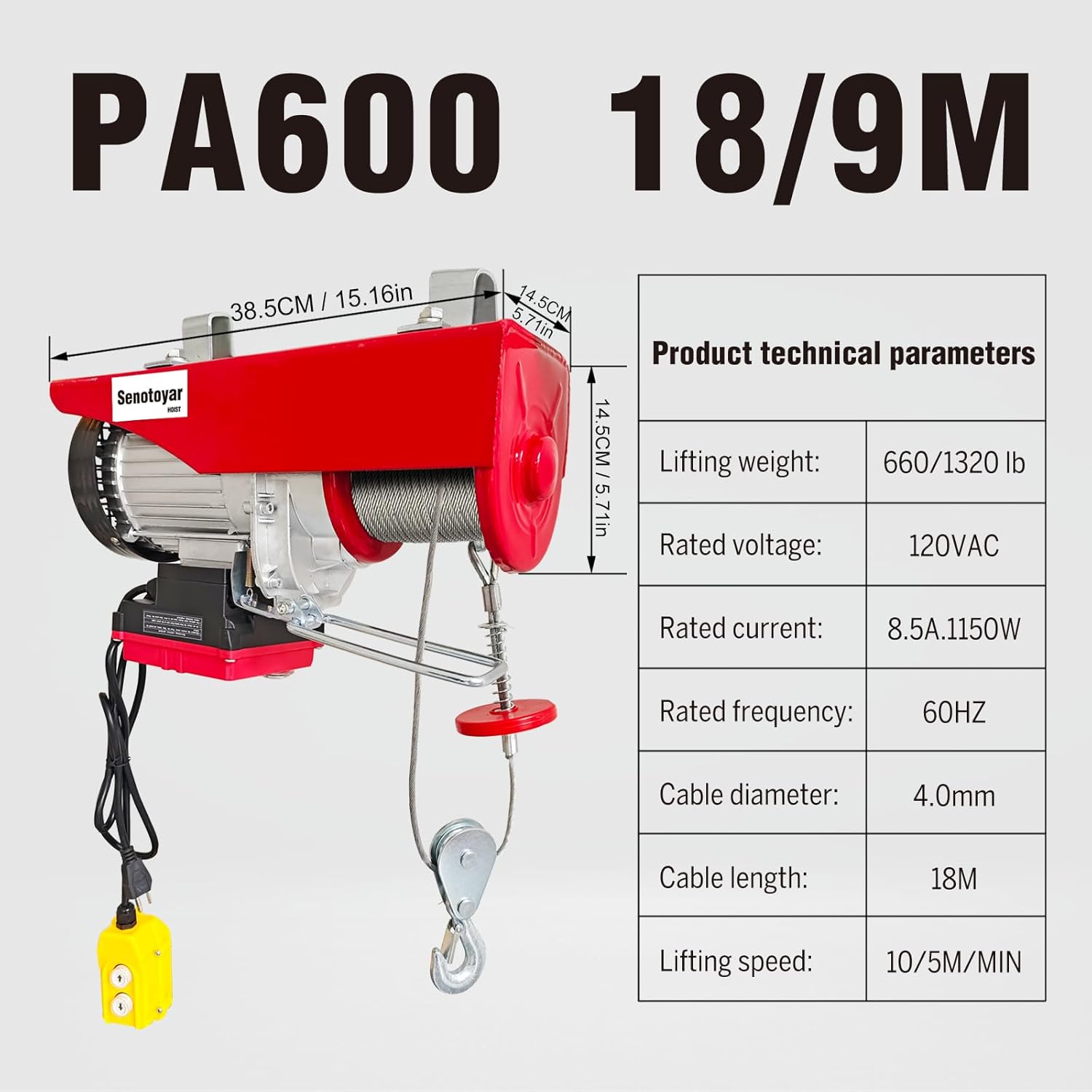
Image 4.1: Detailed technical parameters for the PA600 electric hoist, including lifting capacity, voltage, power, and cable dimensions.
5. Setup and Installation
Proper installation is critical for safe operation. Ensure the mounting surface can support the hoist and its maximum load.
5.1 Mounting the Hoist
- Choose a Location: Select a sturdy overhead beam or structure (metal or solid wooden strips) capable of safely supporting the hoist and the maximum intended load.
- Secure Attachment: Use the provided metal adjustable fixing rings and bolts to securely attach the hoist to the chosen support structure. Ensure all bolts are tightened properly.
- Check Stability: After mounting, gently test the hoist's stability before attaching any load.

Image 5.1: Illustration of the metal adjustable fixing rings and their use for hoist installation on an overhead beam.
5.2 Power Connection
- Connect the hoist's power cord to a grounded 110V AC outlet.
- Ensure the power source is stable and can handle the hoist's 1150W power requirement.
5.3 Remote Control Setup
- Wired Remote: The wired remote control is pre-connected and ready for use.
- Wireless Remote: Insert 2 AAA batteries (not included) into the wireless remote control.
- Indicator Lights: The wireless remote features indicator lights. When the switch is off, the indicator is red. When the switch is on, the indicator is green.

Image 5.2: Depiction of the wireless remote control's indicator lights, showing red for off and green for on, indicating power status.
6. Operation
Understand the different lifting configurations and control methods for optimal performance.
6.1 Lifting Configurations
The hoist supports two lifting configurations:
- Single-Line Lift:
- Capacity: 660 lbs (300 kg)
- Lifting Speed: 32 ft/min (10 m/min)
- Max Height: 59 ft (18 m)
- Method: Attach the load directly to the hook at the end of the wire rope.
- Double-Line Lift:
- Capacity: 1320 lbs (600 kg)
- Lifting Speed: 16 ft/min (5 m/min)
- Max Height: 29.5 ft (9 m)
- Method: Loop the wire rope through the included pulley block and attach the pulley block hook to the load. Then, attach the main hook back to the hoist body or a designated anchor point.

Image 6.1: Comparison of single-cable and double-cable lifting methods, illustrating how the pulley block doubles the lifting capacity while halving the speed and height.
6.2 Using the Controls
- Wired Remote Control:
- Features "Up" and "Down" buttons for direct control.
- Provides reliable control for operations where proximity to the hoist is acceptable.
- Wireless Remote Control:
- Offers a 98ft operating range, allowing for greater flexibility and safety distance from the load.
- Includes "Up," "Down," and "Stop" buttons.
- Important: Avoid rapid changes in direction (e.g., reversing within 0.5 seconds) to prevent damage to the internal circuit board.

Image 6.2: Illustration comparing the traditional wired remote control with the upgraded 98ft wireless remote control, emphasizing enhanced safety and convenience.
6.3 General Operating Tips
- Always ensure the load is balanced and securely attached before lifting.
- Lift loads slowly and smoothly to avoid sudden jerks.
- Do not use the hoist to lift people or loads over people.
- Monitor the wire rope for proper winding on the drum.
- The limit switch will automatically stop lifting when the hook reaches its upper limit.
7. Maintenance
Regular maintenance ensures the longevity and safe operation of your electric hoist.
- Regular Inspection: Periodically inspect the wire rope for fraying, kinks, or corrosion. Check hooks for deformation or cracks.
- Lubrication: Lubricate the wire rope and moving parts as recommended by general hoist maintenance practices.
- Cleaning: Keep the hoist body and motor free from dust and debris. The large cooling fan helps prevent overheating, but a clean exterior aids in heat dissipation.
- Electrical Connections: Check all electrical connections for tightness and signs of wear.
- Storage: When not in use for extended periods, store the hoist in a dry, clean environment.

Image 7.1: Close-up of the hoist's cooling fan, illustrating its role in maintaining optimal motor temperature and extending service life.
8. Troubleshooting
This section addresses common issues you might encounter with your electric hoist.
| Problem | Possible Cause | Solution |
|---|---|---|
| Hoist does not operate | No power supply; Emergency stop engaged; Remote control batteries dead (wireless) | Check power connection; Disengage emergency stop; Replace AAA batteries in wireless remote. |
| Motor overheats | Continuous operation for too long; Overload | Allow motor to cool down; Reduce load to within rated capacity. |
| Wire rope tangles or unwinds improperly | Improper load handling; Damaged rope | Ensure load is balanced; Inspect rope for damage and replace if necessary. |
| Wireless remote unresponsive | Dead batteries; Out of range; Interference | Replace batteries; Move closer to the hoist; Reduce potential interference. |
| Hoist stops unexpectedly during lift | Limit switch activated; Overload protection engaged | Check if hook reached upper limit; Reduce load. |
9. Warranty and Support
For warranty information or technical support, please contact Senotoyar customer service. Keep your purchase receipt as proof of purchase.
Contact information may be found on the product packaging or the official Senotoyar website.
Ask a question about this manual
Ask about setup, troubleshooting, compatibility, parts, safety, or missing instructions. Manuals+ will review the question and use this page’s manual context to help answer it.