
G-hyzzj-2
Wheel Loader Instruction Manual
Model: G-hyzzj-2
1. Introduction
This manual provides essential information for the safe and efficient operation, maintenance, and troubleshooting of your new Wheel Loader. Please read this manual thoroughly before operating the machine to ensure proper usage and to prevent damage or injury.
The Wheel Loader is a versatile piece of mechanical machinery designed for various applications, including loading tasks in mechanical repair shops, farms, construction projects, and energy and mining industries. It is characterized by its flexibility and maneuverability, making it suitable for narrow spaces and difficult terrain.
2. Safety Information
Always prioritize safety when operating heavy machinery. Failure to follow safety instructions can result in serious injury or death.
- Operator Training: Only trained and authorized personnel should operate this machine.
- Personal Protective Equipment (PPE): Always wear appropriate PPE, including hard hat, safety glasses, steel-toed boots, and high-visibility clothing.
- Pre-Operation Check: Before each use, inspect the machine for any damage, leaks, or loose parts. Ensure all safety guards are in place.
- Work Area Safety: Keep the work area clear of bystanders and obstacles. Be aware of your surroundings, especially when operating in confined spaces.
- Load Capacity: Do not exceed the machine's rated load capacity. Overloading can lead to instability and damage.
- Maintenance Safety: Disconnect power and relieve hydraulic pressure before performing any maintenance or repairs.
3. Product Overview
The Wheel Loader is available in both wheel and crawler (tracked) models, offering flexibility for various terrains. It features a robust design with key components engineered for high operating efficiency.
3.1 Key Features
- Automatic Bucket Leveling: Simplifies operation and improves efficiency.
- Advanced Hydraulic System: Three pumps and three valves are standard, ensuring powerful and precise control.
- Accessory Interface: Features an international standard quick-change plug for easy attachment of various accessories.
- High Accessory Flow: Up to 55 liters/minute, capable of meeting the flow requirements of most accessories.
- Convertible Models: Wheel and crawler models can be interchanged to suit different operational needs.
- Anti-slip Design: Rear standing pedal with shock-absorbing buffer for enhanced operator safety and comfort.
- Powerful Engine: Equipped with a branded engine for strong power and reliable performance.
- Durable Construction: Made with high-quality materials and exquisite craftsmanship for long-lasting, stable operation.
3.2 Product Variations

Image: Yellow tracked skid steer loader, showcasing its compact design and robust tracks for difficult terrain.

Image: Red wheeled skid steer loader, highlighting its maneuverability with wheels for various surfaces.

Image: White tracked skid steer loader, demonstrating another color option and the tracked design.

Image: A red wheeled skid steer loader on display, showing its overall appearance and proportions.
3.3 Product Details

Image: Close-up view of the loader's special anti-skid, wear-resistant tires and the standard enlarged, deepened bucket made of thickened material for durability.
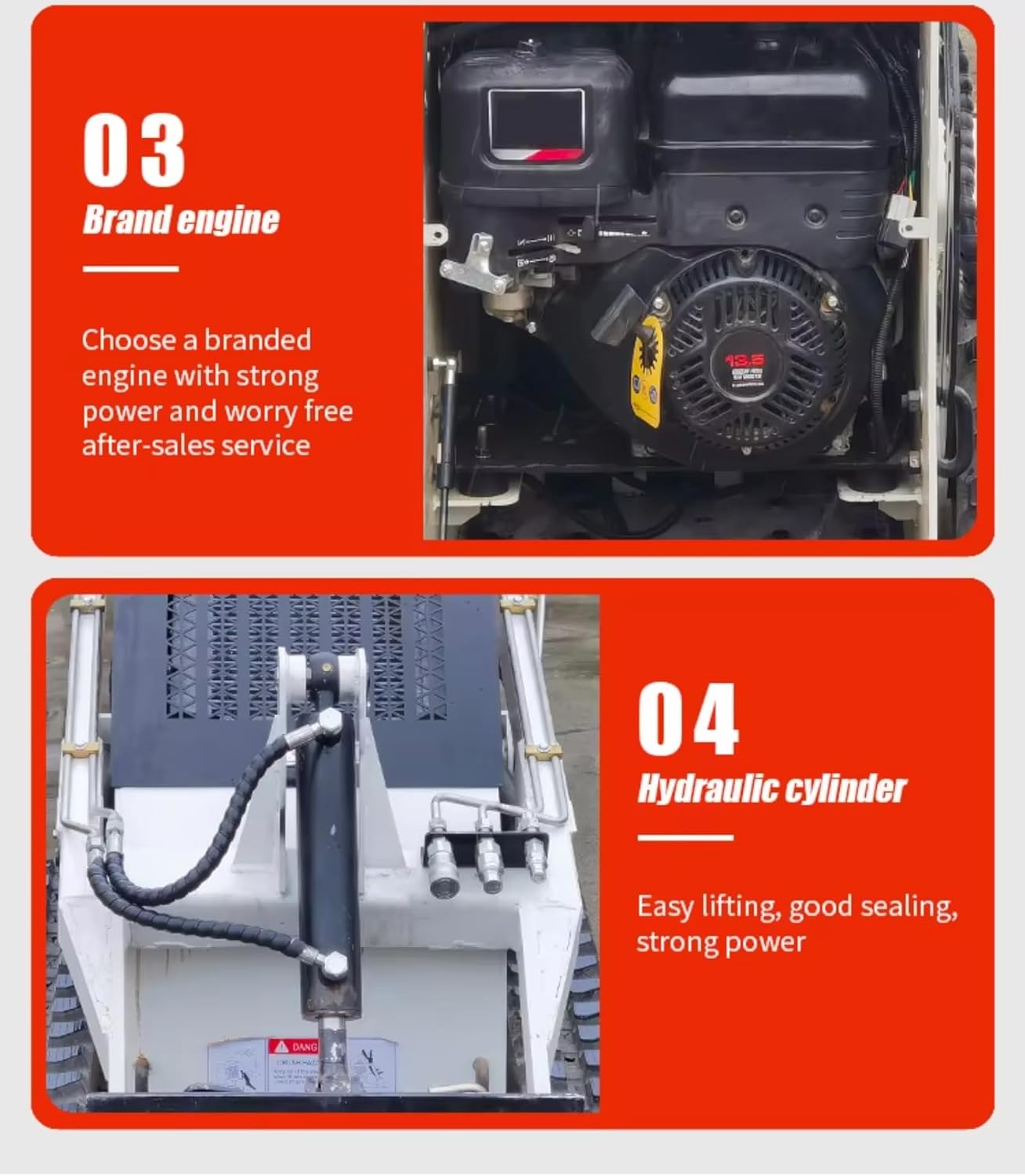
Image: Detailed view of the branded engine, chosen for strong power, and the hydraulic cylinder, ensuring easy lifting, good sealing, and strong power.
3.4 Applicable Scenarios and Supporting Equipment

Image: Examples of applicable scenarios for the loader, including agricultural material handling, government infrastructure projects, and general engineering tasks.

Image: A selection of supporting equipment and attachments available for the loader, such as a grain hopper, fork frame, crab bucket, mixing bucket, and snow brush, demonstrating its versatility.
4. Setup
Upon receiving your Wheel Loader, carefully follow these steps for initial setup.
- Unpacking: Carefully remove the machine from its packaging. Inspect for any visible damage during transit.
- Fluid Levels Check: Before starting, verify all fluid levels (engine oil, hydraulic fluid, fuel) are at the recommended marks. Refer to the specific fluid type and capacity in the specifications section.
- Battery Connection: Ensure the battery is securely connected. If disconnected for shipping, connect the positive (+) cable first, then the negative (-) cable.
- Attachment Installation: If attachments are shipped separately, install them according to their specific instructions, utilizing the international standard quick-change plug. Ensure all connections are secure.
- Initial Inspection: Perform a thorough visual inspection of all hoses, wires, and moving parts to ensure they are properly routed and secured.

Image: Illustration of the packaging and shipping process, indicating how the machine is prepared for transport and delivery.
5. Operating Instructions
This section outlines the general procedures for operating the Wheel Loader. Always refer to the specific controls and indicators on your machine.
5.1 Starting the Machine
- Ensure the machine is on level ground and the parking brake is engaged.
- Check that all controls are in the neutral position.
- Insert the key and turn to the ignition position. Allow the glow plugs (if applicable) to warm up.
- Start the engine. Allow it to warm up for a few minutes before operating.
5.2 Basic Operation
- Driving: Use the drive controls to move the machine forward, backward, and steer. Be mindful of the machine's turning radius, especially in narrow spaces.
- Bucket/Attachment Control: Use the hydraulic controls to raise, lower, tilt, and operate the bucket or other attached implements. The automatic bucket leveling feature assists in maintaining a level load.
- Loading: Approach material slowly and engage the bucket. Lift and curl the bucket to secure the load. Transport loads with the bucket low to the ground for stability.
- Dumping: Position the machine correctly over the dumping area. Extend and tilt the bucket to release the material.
5.3 Shutting Down
- Park the machine on level ground.
- Lower the bucket or attachment to the ground.
- Engage the parking brake.
- Allow the engine to idle for a few minutes to cool down.
- Turn off the engine and remove the key.
6. Maintenance
Regular maintenance is crucial for the longevity and optimal performance of your Wheel Loader. Always perform maintenance on a level surface with the engine off and key removed.
6.1 Daily Checks
- Check engine oil level.
- Check hydraulic fluid level.
- Inspect tires/tracks for damage and proper inflation/tension.
- Clean debris from radiator and engine compartment.
- Check all lights and safety indicators.
- Inspect hydraulic hoses and connections for leaks or damage.
6.2 Periodic Maintenance
- Engine Oil Change: Refer to engine manufacturer's recommendations, typically every 50-100 hours of operation.
- Filter Replacement: Replace air, fuel, and hydraulic filters as recommended by the manufacturer.
- Lubrication: Grease all pivot points and moving parts regularly using appropriate lubricant.
- Hydraulic System Check: Inspect hydraulic lines, cylinders, and pumps for wear or damage.
- Electrical System: Check battery terminals for corrosion and ensure all electrical connections are secure.
7. Troubleshooting
This section provides solutions to common operational issues. For problems not listed here or if issues persist, contact customer support.
| Problem | Possible Cause | Solution |
|---|---|---|
| Engine will not start | Low fuel, dead battery, faulty ignition | Check fuel level, charge/replace battery, inspect ignition system. |
| Loss of hydraulic power | Low hydraulic fluid, clogged filter, pump issue | Check fluid level, replace hydraulic filter, contact service for pump inspection. |
| Machine overheating | Clogged radiator, low coolant, heavy load | Clean radiator fins, check coolant level, reduce load or allow machine to cool. |
| Unusual noises during operation | Loose components, worn bearings, insufficient lubrication | Inspect for loose parts, check lubrication points, contact service for bearing inspection. |
8. Specifications
Detailed technical specifications for the Wheel Loader Model G-hyzzj-2.
| Attribute | Detail |
|---|---|
| Model Number | G-hyzzj-2 |
| Type | Small loader, skid loader, wheel loader |
| Drive Type | Wheel drive (convertible to crawler) |
| Power Source | Fuel-powered |
| Item Weight | 4000 pounds |
| Package Dimensions | 256 x 82 x 80 inches |
| Color | Customized |
| Manufacturer | China |
| Country of Origin | China |
| Hydraulic Flow | Up to 55 liters/minute (for accessories) |
| Included Components | Other (main unit and standard accessories) |
| Batteries Required? | No (for operation, but likely for starting) |
| Date First Available | March 20, 2025 |
9. Warranty and Support
For any inquiries, technical support, or warranty claims, please contact the seller.
- Seller: saiyijixie
- Return Policy: This product is eligible for a 30-day easy returns policy.
- Protection Plans: Optional 3-Year and 4-Year Protection Plans are available for purchase to extend coverage.
- Technical Support: Video technical support is provided for after-sales service.
- Customization & Accessories: For customisable styles and accessories, or further enquiries, you may contact via WhatsApp at +86 13838022782.
Related documentsG-hyzzj-2


Ask a question about this manual
Ask about setup, troubleshooting, compatibility, parts, safety, or missing instructions. Manuals+ will review the question and use this page’s manual context to help answer it.