Introduction
This manual provides detailed instructions for the setup, operation, and maintenance of your Generic Delux T11 One-Handed Mechanical Keyboard. Designed for left-handed users, this compact keyboard features customizable shortcut keys to enhance your workflow.
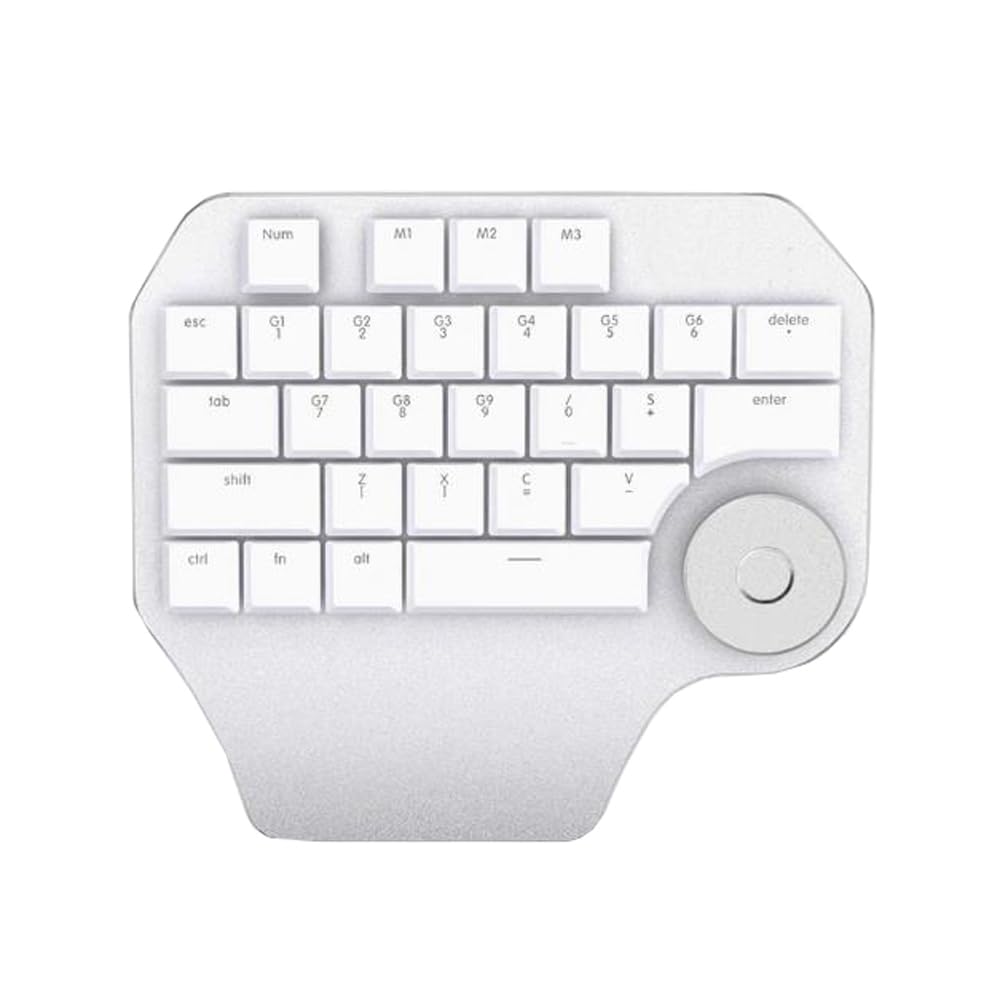
Image: The Delux T11 One-Handed Mechanical Keyboard. This image displays the compact design and key layout of the device, highlighting its ergonomic form factor for single-hand use.
Setup
1. Unpacking
Carefully remove the keyboard from its packaging. Ensure all components, including the keyboard and any included cables, are present and undamaged.
2. Connectivity Options
Your Delux T11 keyboard supports two primary connectivity methods: USB-C (Wired) and Bluetooth (Wireless).
2.1. Wired Connection (USB-C)
- Locate the USB-C port on the keyboard.
- Connect one end of the provided USB-C cable to the keyboard.
- Connect the other end of the USB-C cable to an available USB port on your computer or laptop.
- The keyboard should be automatically recognized by your operating system. No additional drivers are typically required for basic functionality.
2.2. Bluetooth Connection (Wireless)
- Ensure your computer or laptop has Bluetooth enabled.
- Put the keyboard into Bluetooth pairing mode. (Refer to the specific instructions on the keyboard itself or a small included guide for the exact key combination, as this information is not provided. Typically, this involves holding a function key + a Bluetooth key.)
- On your computer, navigate to Bluetooth Settings.
- Search for new devices. The keyboard should appear as "Delux T11" or a similar identifier.
- Select the keyboard and follow any on-screen prompts to complete the pairing process.
Operating Instructions
Basic Use
The Delux T11 is a compact, left-handed mechanical keyboard designed for efficiency. Its QWERTY layout provides familiar key placement for common functions.
Custom Shortcut Keys
A key feature of this keyboard is its customizable shortcut keys. These keys are pre-programmed for common design or editing functions, but can often be remapped using dedicated software (if available from the manufacturer) or operating system settings. Consult the manufacturer's website for any specific software tools.
- Identify Programmable Keys: Look for keys with special markings or those designated as "custom" or "macro" keys.
- Software Configuration: If manufacturer software is available, install it and follow its instructions to assign new functions or macros to the programmable keys.
- Operating System Shortcuts: For basic remapping, your operating system's keyboard settings may allow some customization.
Maintenance
Cleaning
- Power Off: Disconnect the keyboard from your computer before cleaning.
- Dust Removal: Use a can of compressed air to remove dust and debris from between the keys.
- Surface Cleaning: Gently wipe the keycaps and keyboard surface with a soft, lint-free cloth lightly dampened with water or a mild, non-abrasive cleaning solution. Avoid excessive moisture.
- Avoid Harsh Chemicals: Do not use strong solvents, alcohol, or abrasive cleaners, as these can damage the keyboard's finish or keycap legends.
Storage
When not in use, store the keyboard in a clean, dry environment away from direct sunlight and extreme temperatures. Protect it from dust and spills.
Troubleshooting
- Keyboard Not Responding (Wired):
- Ensure the USB-C cable is securely connected to both the keyboard and the computer.
- Try connecting the keyboard to a different USB port on your computer.
- Test the keyboard on another computer to rule out a system-specific issue.
- Keyboard Not Responding (Bluetooth):
- Ensure Bluetooth is enabled on your computer and the keyboard is in pairing mode.
- Remove the keyboard from your computer's Bluetooth device list and attempt to re-pair it.
- Check the keyboard's battery level if it's a wireless-only model (though this model is listed as "Wired" for power source, Bluetooth implies a battery for wireless use).
- Keys Not Functioning Correctly:
- Clean the keyboard to remove any debris that might be obstructing the key switches.
- If specific keys are not working, it might indicate a hardware issue.
- Custom Shortcuts Not Working:
- Verify that any necessary software for customization is installed and running.
- Check the software settings to ensure the shortcuts are correctly configured.
- Ensure there are no conflicts with other software or operating system shortcuts.
Specifications
| Product Dimensions | 3.94 x 7.87 x 11.81 inches |
| Item Weight | 2.2 pounds |
| Manufacturer | Generic |
| Item Model Number | Laptop Parts-24-1-22-18 |
| Brand | Generic |
| Compatible Devices | Laptop |
| Connectivity Technology | Bluetooth, USB-C |
| Keyboard Description | Compact, Left-Handed, Mechanical, Customizable |
| Power Source | Wired |
| Switch Type | Mechanical |
| Keyboard Layout | QWERTY |
| Hand Orientation | Left |
Warranty Information
This product comes with a 90-day warranty from the date of purchase. This warranty covers manufacturing defects under normal use. It does not cover damage caused by misuse, accidents, unauthorized modifications, or normal wear and tear. Please retain your proof of purchase for warranty claims.
Support
For further assistance, technical support, or warranty inquiries, please refer to the contact information provided with your purchase or visit the manufacturer's official website. When contacting support, please have your product model number (Laptop Parts-24-1-22-18) and proof of purchase readily available.
Note: As this is a generic product, specific support channels may vary.