1. Introduction
This manual provides essential information for the proper handling and use of the Generic ID13 Glass Transponder Chips. These chips are blank and designed for use in automotive key systems, requiring professional programming to function correctly with a vehicle's immobilizer system.
The ID13 transponder chip is a passive electronic component that communicates with a vehicle's immobilizer system to allow engine start. Each chip contains a unique identifier that must be correctly programmed to match the vehicle's security protocols.
2. Product Overview
The ID13 Glass Transponder Chip is a small, cylindrical glass capsule containing the electronic circuitry necessary for vehicle immobilization. These chips are commonly found inside car keys or key fobs.

Image 1: A collection of Generic ID13 Glass Transponder Chips. These chips are typically embedded within car keys.
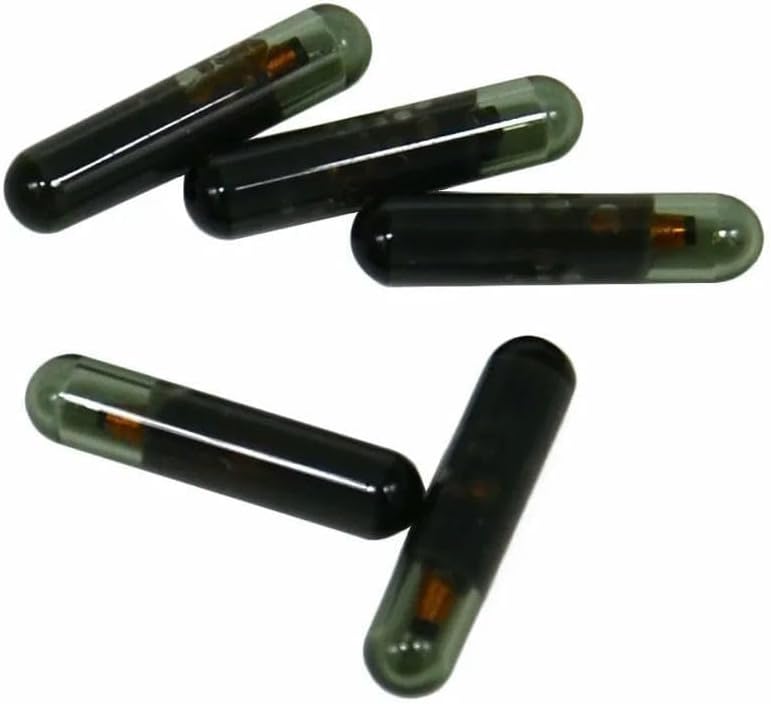
Image 2: Close-up view of four individual ID13 Glass Transponder Chips, highlighting their compact, cylindrical design.
3. Setup and Programming
These ID13 transponder chips are supplied blank and require programming to be recognized by a vehicle's immobilizer system. This process typically involves specialized diagnostic equipment and software.
3.1. Required Tools
- Vehicle-specific diagnostic scanner or key programming tool.
- Appropriate software or firmware for the programming tool.
- Access to the vehicle's immobilizer system (e.g., OBD-II port).
3.2. Programming Steps (General)
- Consult Vehicle Manual: Refer to your vehicle's service manual or a reputable automotive locksmith for specific programming procedures.
- Connect Programmer: Connect the key programming tool to the vehicle's diagnostic port (usually OBD-II).
- Access Immobilizer System: Follow the programming tool's instructions to access the vehicle's immobilizer system.
- Add New Key/Chip: Select the option to add a new key or transponder chip.
- Insert Chip: Place the blank ID13 chip into the designated slot of the key or programming device as instructed by the tool.
- Complete Programming: Follow on-screen prompts to complete the programming sequence. This may involve turning the ignition on/off or pressing buttons on existing keys.
- Test Functionality: After programming, test the chip by attempting to start the vehicle with the key containing the newly programmed chip.
Warning: Improper programming can lead to vehicle immobilization or damage to the vehicle's electronic systems. It is highly recommended that programming be performed by a qualified automotive locksmith or dealership.
4. Operating Principles
Once successfully programmed, the ID13 transponder chip operates as a critical component of the vehicle's immobilizer security system. When the key is inserted into the ignition and turned, or when the start button is pressed, the vehicle's immobilizer antenna sends out a low-frequency radio signal.
The transponder chip, being passive, draws power from this signal and transmits its unique identification code back to the immobilizer control unit. If the code transmitted by the chip matches the code stored in the vehicle's immobilizer memory, the engine control unit (ECU) receives authorization to start the engine. If the codes do not match, the engine will not start, preventing unauthorized use of the vehicle.
5. Care and Handling
To ensure the longevity and proper function of your ID13 transponder chips, observe the following guidelines:
- Avoid Physical Shock: While encased in glass, the internal components are delicate. Avoid dropping or subjecting the chips to strong impacts.
- Protect from Extreme Temperatures: Store chips in a cool, dry place, away from direct sunlight or extreme heat/cold, which can affect electronic components.
- Keep Dry: Moisture can damage the chip. Ensure chips are kept dry and away from liquids.
- Handle with Care: When handling, avoid touching the glass surface excessively to prevent smudges or scratches that could obscure markings (if any).
- Proper Storage: Store unused chips in their original packaging or a protective container to prevent damage and loss.
6. Troubleshooting
If you encounter issues with a programmed ID13 transponder chip, consider the following common problems and solutions:
6.1. Engine Does Not Start After Programming
- Verify Programming: Ensure the chip was correctly programmed to the vehicle's immobilizer system. Re-attempt programming if unsure.
- Check Key Assembly: Confirm the chip is securely seated within the key or key fob and is positioned correctly relative to the vehicle's antenna.
- Immobilizer System Fault: There might be an issue with the vehicle's immobilizer system itself. Consult a professional automotive technician for diagnosis.
- Chip Damage: The chip may have been damaged during handling or programming. Inspect for visible cracks or damage.
6.2. Intermittent Starting Issues
- Weak Signal: Ensure there are no strong electromagnetic interferences near the ignition area.
- Loose Chip: The chip might be loose inside the key, causing intermittent contact with the antenna field. Re-secure the chip.
- Antenna Issues: The vehicle's immobilizer antenna (often around the ignition barrel) might be faulty. Professional diagnosis is recommended.
Note: For complex issues, professional diagnostic services are recommended. Attempting repairs without proper knowledge can lead to further damage.
7. Specifications
| Feature | Detail |
|---|---|
| Brand | Generic |
| Model Number | 6189411052397 |
| Chip Type | ID13 Transponder Chip |
| Memory Type | EEPROM |
| RAM | 111 KB |
| Form Factor | Glass Capsule |
| ASIN | B0DXTM3P7K |
| Date First Available | Feb. 20 2025 |
8. Warranty and Support
As these are blank electronic components intended for professional programming, specific warranty details are typically provided by the seller or distributor at the time of purchase. Please retain your proof of purchase for any warranty claims.
For technical support regarding the programming or compatibility of these chips with specific vehicles, it is recommended to consult with a certified automotive locksmith, a dealership, or the manufacturer of your key programming equipment.
This manual provides general guidance. The performance and compatibility of the chip are dependent on correct programming and the vehicle's immobilizer system.