1. Introduction
This manual provides detailed instructions for the safe and efficient operation, setup, and maintenance of your SPECSTAR 1/3 HP 4.5 CFM HVAC Vacuum Pump, 4-Way AC Manifold Gauge Set, and VIVOHOME RR250 3/4 HP Portable Refrigerant Recovery Machine. This system is designed for A/C recharging and refrigerant recovery for R134a, R12, R22, R502, and R410a systems. Please read this manual thoroughly before use to ensure proper function and to prevent injury or damage.
2. Safety Instructions
Always observe the following safety precautions to reduce the risk of injury or damage:
- Electrical Safety: Ensure the power supply matches the equipment's requirements (110-120V AC, 60Hz). Always connect to a grounded outlet. Do not operate in wet conditions.
- Refrigerant Handling: Refrigerants can cause frostbite or severe injury. Always wear appropriate personal protective equipment (PPE), including safety glasses, gloves, and protective clothing. Work in a well-ventilated area.
- Pressure Safety: Never exceed the maximum pressure ratings of the equipment or the A/C system. Always use appropriate hoses and fittings.
- Vacuum Pump Oil: Use only recommended vacuum pump oil. Avoid skin contact and ingestion.
- Maintenance: Disconnect power before performing any maintenance or cleaning.
- Children and Bystanders: Keep children and unauthorized persons away from the work area.
3. Package Contents
Verify that all items listed below are present in your package:
- SPECSTAR 1/3 HP 4.5 CFM 1-Stage HVAC Vacuum Pump
- 4-Way AC Manifold Gauge Set
- Leak Detector
- 5ft Hoses (Red, Yellow, Blue)
- Accessories for R134a, R12, R22, R502, R410a
- VIVOHOME RR250 110-120V AC 60Hz 3/4 HP Single Cylinder Portable Refrigerant Recovery Machine
- Vacuum Pump Oil Bottle

Image: Overview of the complete HVAC service kit, showing the vacuum pump, manifold gauge set, hoses, leak detector, and refrigerant recovery machine.
4. Product Overview
4.1 SPECSTAR 1/3 HP 4.5 CFM HVAC Vacuum Pump
The SPECSTAR vacuum pump is designed for efficient evacuation of HVAC systems, preparing them for refrigerant charging. It features a robust motor and high flow rate for quick and thorough vacuuming.
- Motor: 1/3 HP high-torque, four-pole pure copper motor.
- Flow Rate: 4.5 CFM (Cubic Feet per Minute).
- Ultimate Vacuum: Achieves down to 2 Pa (Pascals).
- Speed: Approximately 1728 revolutions per minute (R/MIN).
- Compatibility: Suitable for R134a, R12, R22, R502, and R410a systems.
- Ports: Includes 1/2" ACME and 1/4" SAE ports for versatile connections.
- Anti-backflow Design: Prevents oil contamination of the system during operation.
- Oil-filling and Exhaust Ports: Convenient access for maintenance.

Image: Detailed view of the vacuum pump's internal motor, illustrating its key performance specifications.

Image: The air inlet port of the vacuum pump, detailing the 1/2" ACME and 1/4" SAE connections and the anti-backflow mechanism.

Image: Illustration of the vacuum pump's oil-filling and exhaust ports, highlighting the air outlet filter and oil inlet.
4.2 VIVOHOME RR250 3/4 HP Portable Refrigerant Recovery Machine
The VIVOHOME RR250 recovery machine is designed for efficient and safe recovery of refrigerants from A/C systems. Its compact and portable design makes it suitable for various applications.
- Motor: 3/4 HP for high-efficiency recovery.
- Portability: Compact design with an ergonomic handle for easy transport.
- Safety Features: Built-in shut-off switch that activates when pressure exceeds 558 psi (38.5 bar).
- Cooling: High-powered fan for effective heat dissipation.
- Stability: Equipped with waterproof feet.
- Recovery Modes: Offers 'Slow', 'Fast', and 'Purge' recovery options.

Image: Front view of the VIVOHOME RR250 refrigerant recovery machine, displaying its control panel and connections.
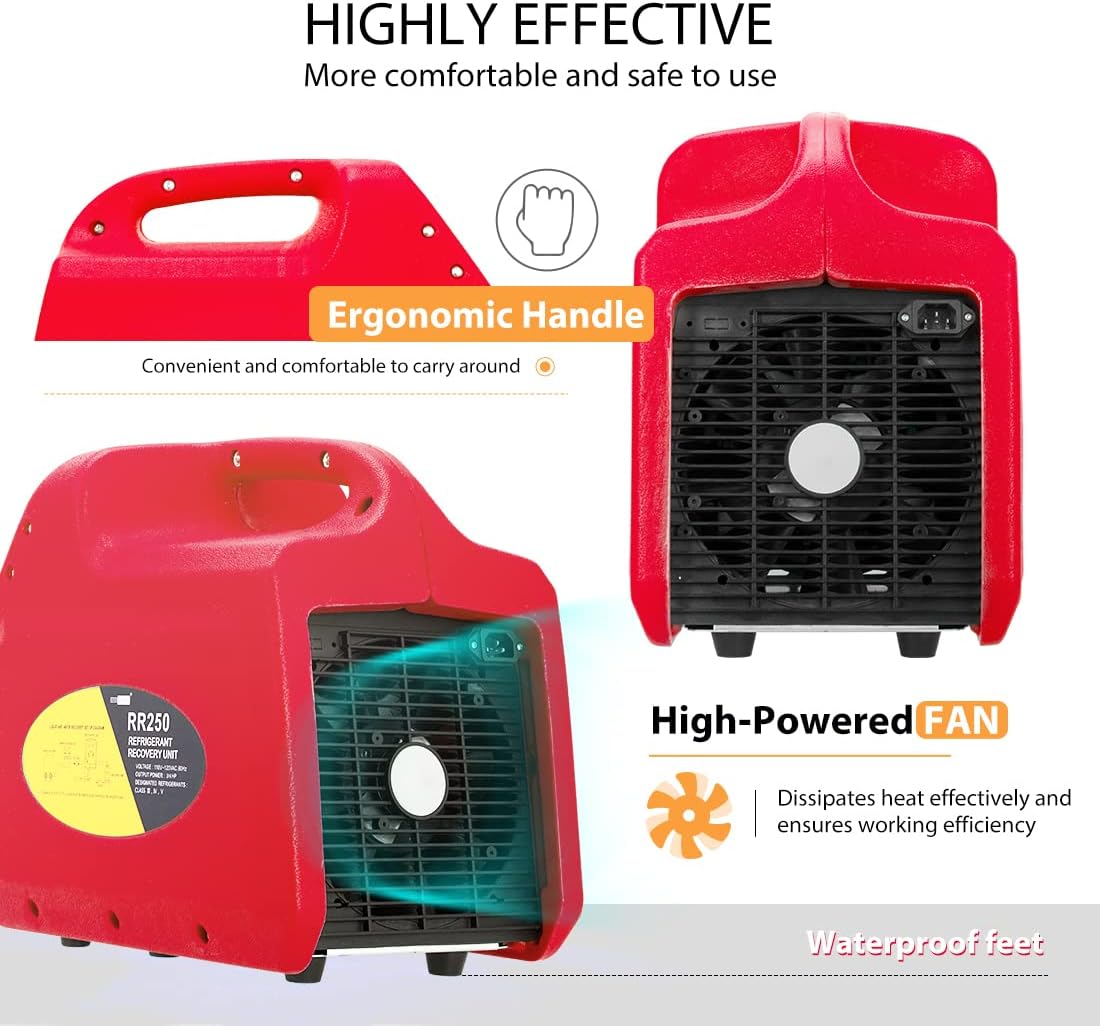
Image: Views of the recovery machine emphasizing its ergonomic handle, high-powered fan, and waterproof feet.

Image: The pressure gauges and the automatic shut-off mechanism of the recovery machine, which activates at 558 psi.
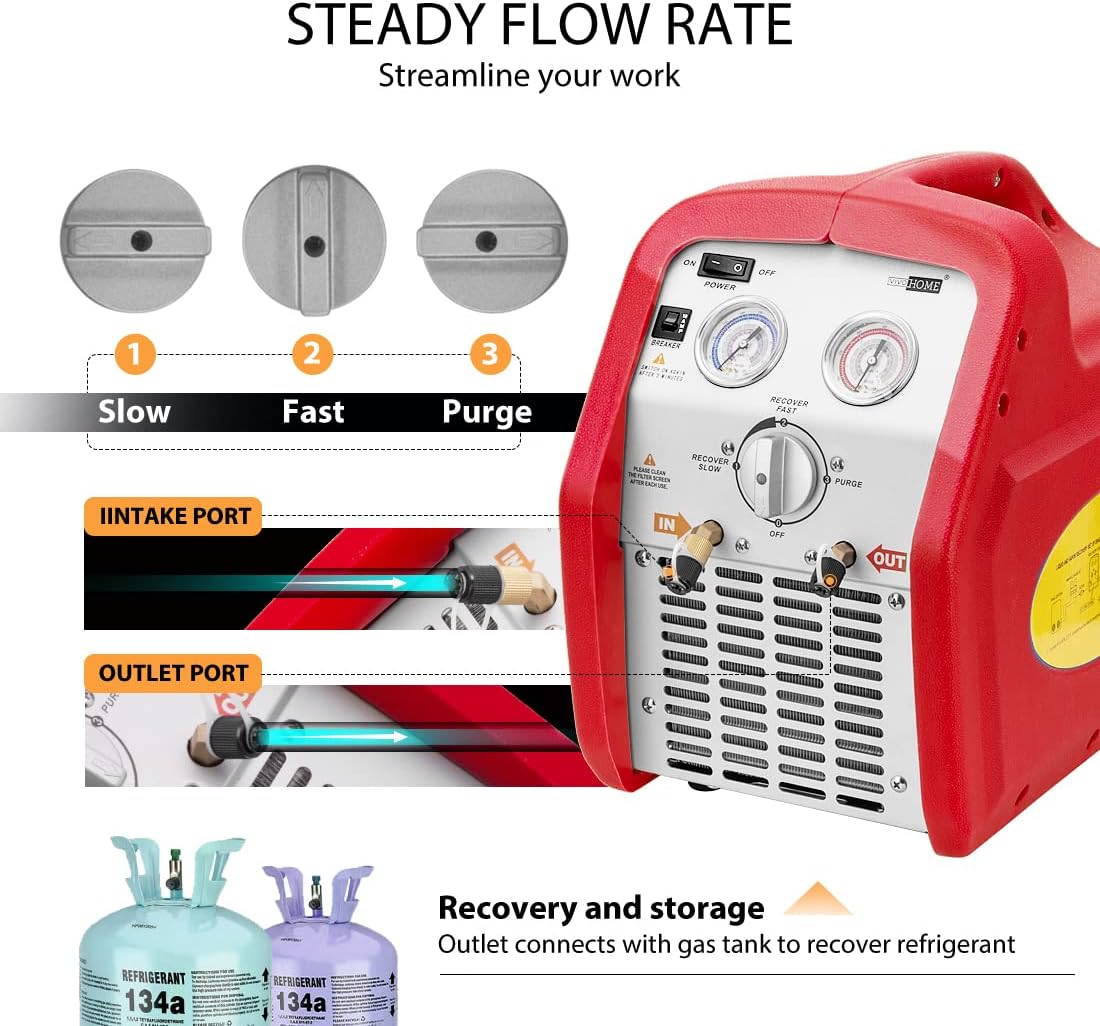
Image: The recovery machine's flow rate settings (Slow, Fast, Purge) and port connections for refrigerant recovery.
5. Setup
5.1 SPECSTAR Vacuum Pump Setup
- Add Vacuum Pump Oil: Remove the oil cap and fill the pump with the provided vacuum pump oil until the oil level is between the MIN and MAX marks on the sight glass. Do not overfill.
- Connect Manifold Gauge: Connect the yellow service hose from the manifold gauge set to the vacuum pump's inlet port.
- Connect to System: Connect the blue (low side) and red (high side) hoses from the manifold gauge set to the respective service ports of the A/C system. Ensure all connections are tight.
- Power Connection: Plug the vacuum pump into a grounded 110-120V AC, 60Hz power outlet.
5.2 VIVOHOME RR250 Refrigerant Recovery Machine Setup
- Connect Input Hose: Connect the hose from the A/C system (or manifold gauge set) to the 'IN' port of the recovery machine.
- Connect Output Hose: Connect a hose from the 'OUT' port of the recovery machine to a recovery tank. Ensure the recovery tank is empty and rated for the refrigerant being recovered.
- Power Connection: Plug the recovery machine into a grounded 110-120V AC, 60Hz power outlet.
- Open Recovery Tank Valve: Ensure the valve on the recovery tank is open.
6. Operating Instructions
6.1 Operating the SPECSTAR Vacuum Pump (System Evacuation)
- Verify Connections: Ensure all hoses are securely connected to the A/C system, manifold gauge, and vacuum pump.
- Open Manifold Valves: Open both the high-side and low-side valves on the manifold gauge set.
- Start Pump: Turn on the vacuum pump. The manifold gauge will begin to show a drop in pressure.
- Monitor Vacuum: Allow the pump to run until the desired vacuum level (e.g., 500 microns or 2 Pa) is reached. This typically takes several minutes, depending on system size and initial pressure.
- Isolate Pump: Once the target vacuum is achieved, close the manifold gauge valves (both high and low side) before turning off the vacuum pump. This prevents air from re-entering the system.
- Vacuum Hold Test: Observe the manifold gauge for 10-15 minutes. If the vacuum holds steady, the system is leak-free and ready for charging. If the vacuum rises, there may be a leak that needs to be addressed.
- Disconnect: Turn off the vacuum pump and disconnect the hoses.
6.2 Operating the VIVOHOME RR250 Refrigerant Recovery Machine
- Verify Connections: Ensure hoses are correctly connected between the A/C system, recovery machine (IN/OUT), and recovery tank.
- Open Valves: Open the valves on the A/C system and the recovery tank.
- Select Recovery Mode: Turn the selector knob on the recovery machine to 'SLOW' or 'FAST' depending on the desired recovery speed. 'FAST' is generally used for liquid recovery, while 'SLOW' is for vapor.
- Start Recovery: Turn on the power switch. The machine will begin recovering refrigerant. Monitor the pressure gauges.
- Automatic Shut-off: The machine will automatically shut off if the internal pressure exceeds 558 psi (38.5 bar) to prevent damage.
- Complete Recovery: Continue recovery until the A/C system pressure reaches a vacuum or the machine automatically shuts off, indicating minimal refrigerant remaining.
- Purge Function: After recovery, turn the selector knob to 'PURGE' to clear any remaining refrigerant from the machine's internal components into the recovery tank. This prevents cross-contamination.
- Close Valves and Disconnect: Close all valves on the A/C system and recovery tank. Turn off the recovery machine and disconnect hoses.
7. Maintenance
7.1 SPECSTAR Vacuum Pump Maintenance
- Oil Change: Change the vacuum pump oil frequently, especially after each use or if the oil appears cloudy or discolored. Dirty oil reduces pump efficiency and lifespan. To change oil, drain old oil from the drain plug, then refill through the oil-filling port to the correct level.
- Cleaning: Keep the exterior of the pump clean and free of debris. Ensure cooling fins are not obstructed.
- Storage: Store the pump in a dry, clean environment.
7.2 VIVOHOME RR250 Refrigerant Recovery Machine Maintenance
- Cleaning: Wipe down the exterior of the machine with a damp cloth. Do not use harsh chemicals.
- Filter Check: Periodically inspect the intake and outlet ports for any debris or blockages. Clean as necessary.
- Storage: Store in a dry, protected area when not in use.
8. Troubleshooting
8.1 Vacuum Pump Troubleshooting
- Pump Not Starting: Check power connection, circuit breaker, and ensure the power switch is on.
- Poor Vacuum/Slow Evacuation:
- Check for leaks in hoses, fittings, or the A/C system.
- Verify manifold gauge valves are fully open.
- Change vacuum pump oil if it's dirty or low.
- Ensure ambient temperature is not too low.
- Oil Mist from Exhaust: This is normal, especially with new oil. Ensure the exhaust port is clear.
8.2 Refrigerant Recovery Machine Troubleshooting
- Machine Not Starting: Check power connection, circuit breaker, and ensure the power switch is on.
- Slow Recovery:
- Ensure all valves (system, machine, tank) are fully open.
- Check for blockages in hoses or filters.
- Verify the recovery tank is not full.
- Ensure the correct recovery mode (SLOW/FAST) is selected.
- Machine Shuts Off Automatically: This indicates high pressure (above 558 psi). Check for closed valves, overfilled recovery tank, or a blockage in the output line. Allow the machine to cool before restarting.
- No Refrigerant Flow: Check for closed valves, kinked hoses, or an empty A/C system.
9. Specifications
9.1 SPECSTAR 1/3 HP 4.5 CFM HVAC Vacuum Pump
| Motor Power | 1/3 HP |
| Flow Rate | 4.5 CFM |
| Ultimate Vacuum | 2 Pa |
| Voltage/Frequency | 110-120V AC, 60Hz |
| Motor Speed | 1728 R/MIN |
| Port Sizes | 1/2" ACME, 1/4" SAE |
9.2 VIVOHOME RR250 3/4 HP Portable Refrigerant Recovery Machine
| Motor Power | 3/4 HP |
| Voltage/Frequency | 110-120V AC, 60Hz |
| Automatic Shut-off Pressure | 558 psi (38.5 bar) |
| Refrigerant Compatibility | R134a, R12, R22, R502, R410a |
10. Warranty and Support
For warranty information or technical support, please refer to the documentation provided with your purchase or contact the manufacturer directly. Keep your purchase receipt as proof of purchase.