Thank you for choosing the ORGCLDKT Vibrant Kingfisher and Smillex Kites. This manual provides essential information for the safe and enjoyable use of your new kites. Please read these instructions carefully before assembly and operation to ensure optimal performance and longevity of your product.
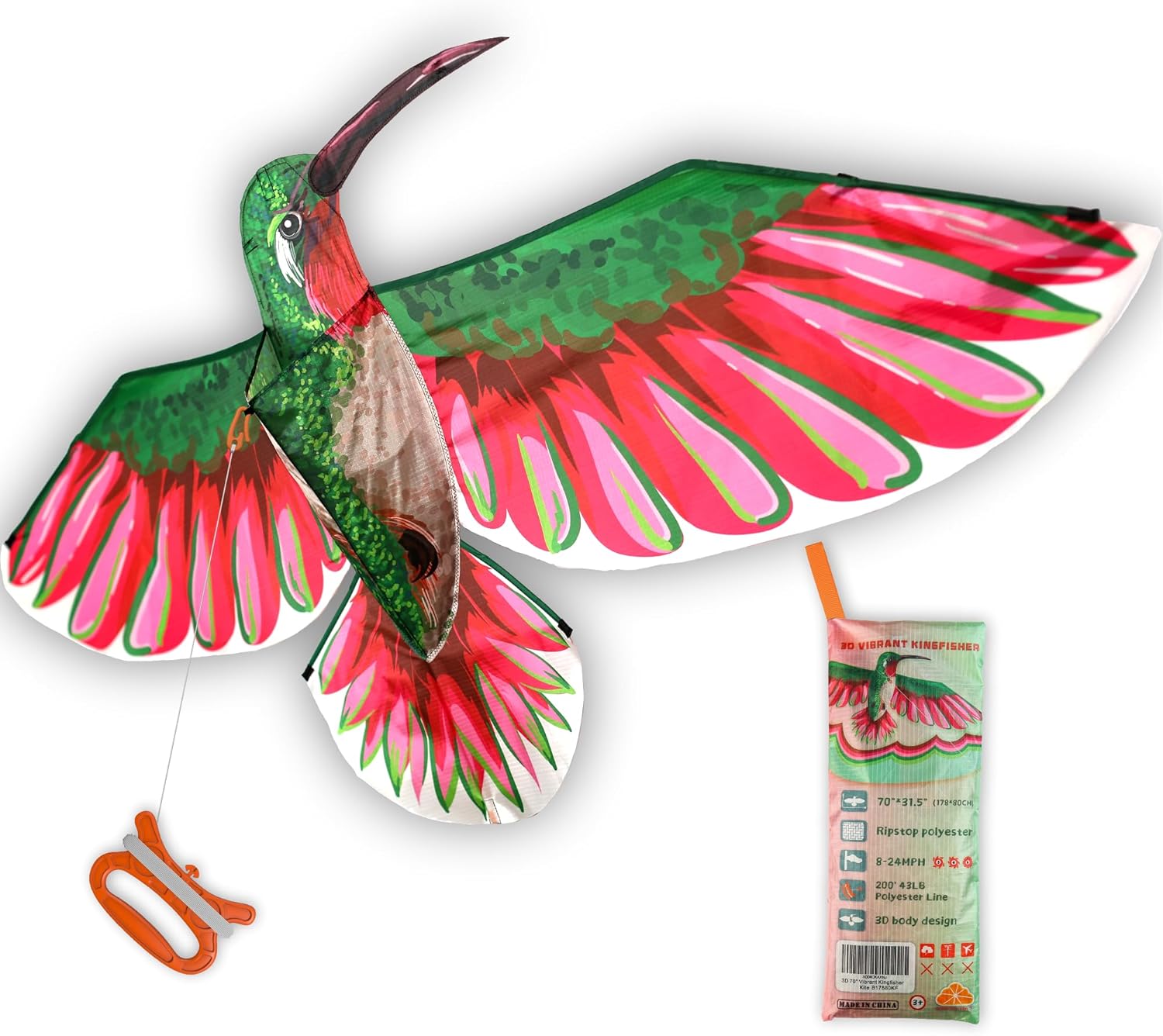
Image: The ORGCLDKT Vibrant Kingfisher kite and the Smillex diamond kite, as they appear in the package.
Setup and Assembly
Vibrant Kingfisher Kite Assembly
Carefully unroll the Kingfisher kite from its packaging.
Identify the main body and wings. The kite is designed for easy assembly, often requiring minimal setup beyond unfolding.
Locate the bridle line (the string attached to the kite that connects to the flying line).
Attach the flying line from the included reel to the loop on the bridle line. Ensure the knot is secure.
Image: Unfolded Kingfisher kite with its flying reel and carry bag, illustrating the components.
Smillex Kite Assembly
Unfold the Smillex diamond kite. This kite typically has a simple frame that may require snapping a few spars into place.
Ensure the kite's frame is fully extended and locked, if applicable, to maintain its diamond shape.
Locate the bridle line on the front of the kite.
Connect the flying line from the second included reel to the bridle loop, securing it with a firm knot.
Image: The Smillex kite with its flying reel, ready for assembly and flight.
Operating Instructions
Choosing a Location
Select an open area free from trees, power lines, buildings, and other obstructions. Beaches, large fields, and parks are ideal. Avoid flying near airports or busy roads.
Wind Conditions
These kites perform best in light to moderate winds, typically 6-24 MPH (10-38 km/h). Avoid flying in strong, gusty winds or during thunderstorms.
Launching the Kite
Have a helper hold the kite up with its back to the wind, about 50-100 feet (15-30 meters) away from you.
Unwind about 20-30 feet (6-9 meters) of line from the reel.
When a steady breeze comes, signal your helper to release the kite.
As the kite rises, slowly let out more line, allowing the kite to climb higher. If the wind is strong enough, you may be able to launch the kite yourself by holding it up and letting the wind catch it as you walk backward, unwinding the line.
Image: A person successfully flying the Kingfisher kite on a beach, demonstrating proper launch technique.
Image: The Smillex kite flying in a clear sky, observed by two children, illustrating stable flight.
Maintenance
Cleaning: If the kite gets dirty, gently wipe it with a damp cloth. Avoid harsh chemicals or abrasive cleaners. Allow it to air dry completely before storage.
Storage: Fold the kite neatly and store it in its original carry bag or a similar protective pouch. Keep it in a cool, dry place away from direct sunlight and extreme temperatures to prevent material degradation.
Inspection: Before each flight, inspect the kite fabric for tears, the frame for bends or breaks, and the flying line for fraying or knots. Repair any damage promptly to ensure safe flight.
Move to an area with more consistent wind. Ensure no obstructions are blocking wind flow. Review launching steps.
Kite spins or dives uncontrollably.
Too much wind, damaged frame, tangled bridle.
Fly in lighter winds. Inspect the frame for damage and repair. Untangle any lines.
Line breaks or frays easily.
Wear and tear, sharp edges, excessive tension.
Regularly inspect the line for damage. Replace the line if significant fraying is present. Avoid sudden jerks.
Specifications
Feature
Detail
Brand
ORGCLDKT
Product Name
Vibrant Kingfisher + Smillex Kites (2-pack)
Model/ASIN
B0DWF1TCVC
Kingfisher Kite Dimensions
Approx. 70" x 31.5" (178 cm)
Smillex Kite Dimensions
Approx. 33" x 28.3"
Recommended Wind Speed
6-24 MPH (10-38 km/h)
Material
Ripstop Polyester
Line Length
200' (61m) Polyester Line
Support Information
For any questions, concerns, or assistance with your ORGCLDKT kites, please refer to the contact information provided with your purchase or visit the official ORGCLDKT store on Amazon. We are committed to providing support for our products.
Ask about setup, troubleshooting, compatibility, parts, safety, or missing instructions. Manuals+ will review the question and use this page’s manual context to help answer it.