
Introduction
This instruction manual provides essential information for the proper installation, use, and maintenance of your Outsunny 4FT x 300FT Heavy Duty Weed Barrier Landscape Fabric. Designed for effective weed suppression, this fabric helps maintain soil moisture and promotes healthy plant growth by allowing air and water to pass through while blocking unwanted weeds. Please read this manual thoroughly before beginning any installation to ensure optimal performance and longevity of the product.

Image: Outsunny Weed Barrier Landscape Fabric in a garden setting, demonstrating its application.
Safety Information
- Always wear appropriate personal protective equipment, such as gloves, when handling the fabric and tools.
- Use caution when cutting the fabric to avoid injury. Keep sharp tools away from children.
- Ensure the area is clear of obstacles and hazards before laying the fabric.
- Do not use the fabric near open flames or extreme heat sources, as it may melt or ignite.
- Keep packaging materials away from children and pets to prevent suffocation hazards.
Product Features
The Outsunny Heavy Duty Weed Barrier Landscape Fabric is engineered with several key features to optimize your gardening and landscaping efforts:
- Effective Weed Suppression: Provides a robust barrier against weeds, reducing the need for chemical herbicides and manual weeding.
- 140 GSM Woven PP Material: Constructed from high-density woven polypropylene, ensuring durability and resistance to tearing.
- Air and Water Permeability: Designed to allow essential air, water, and nutrients to reach the soil and plant roots, while preventing weed growth. This also helps preserve soil moisture.
- Soil-Friendly: Free from harmful materials, ensuring the natural ecosystem of your garden remains undisturbed.
- UV Protection: Built to withstand sun exposure, extending the lifespan of the fabric.
- Integrated Planting Lines: Features green lines for easy and precise straight-line planting and cutting.
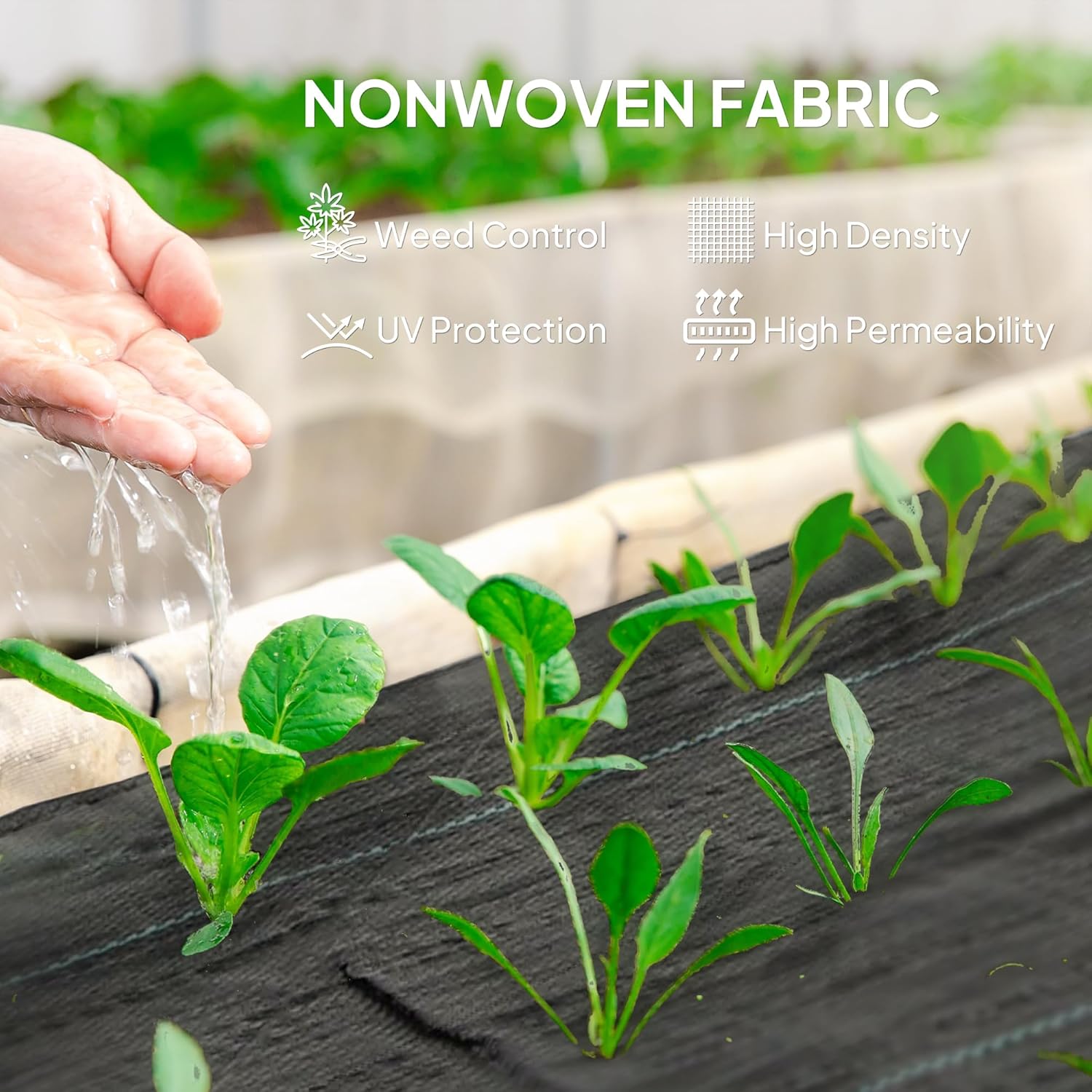
Image: Water permeating through the nonwoven fabric, highlighting its high permeability and weed control properties.

Image: Visual comparison demonstrating how the weed control fabric supports organic plant growth by preventing weed competition.
Setup and Installation
Follow these steps for proper installation of your weed barrier fabric:
- Prepare the Area: Clear the desired area of all existing weeds, grass, and debris. Rake the soil smooth to create an even surface.
- Lay the Fabric: Unroll the weed barrier fabric over the prepared area. Overlap edges by at least 4-6 inches (10-15 cm) to prevent weeds from growing through seams.
- Secure the Fabric: Use landscape fabric anchor pins (not included) to secure the fabric to the ground, especially along edges and overlaps. Place pins every 2-3 feet (60-90 cm).
- Planting (New Plants): For new plants, cut an 'X' shape into the fabric where each plant will be placed. Dig a hole through the 'X' and plant your desired vegetation. Fold the fabric flaps inward around the plant base.
- Planting (Existing Plants): For existing plants, carefully cut the fabric to fit around the base of each plant. Ensure the fabric covers the soil completely while leaving space for the plant stem.
- Cover the Fabric: For best results and aesthetic appeal, cover the weed barrier with a layer of mulch, bark, gravel, or decorative rock. This also helps protect the fabric from UV degradation and extends its life.

Image: Step-by-step guide for easy installation, including weed removal, fabric placement, securing with pins, and covering.

Image: A gardener carefully fitting the weed barrier fabric around established plants.

Image: A close-up of hands planting a seedling through a pre-cut opening in the fabric.
Video: This video demonstrates the application of the Outsunny Weed Barrier, showing its use in various garden settings and how it integrates with plants.
Operating Instructions (Usage)
Once installed, the weed barrier fabric works continuously to prevent weed growth. Here are common applications:
- Vegetable Patches: Ideal for creating organized rows and preventing weeds from competing with your vegetables for nutrients and water.
- Flower Beds: Keeps flower beds tidy and reduces maintenance, allowing your flowers to thrive.
- Underlayer for Artificial Grass/Patios: Provides a stable and weed-free base for artificial turf, pathways, and patio areas.
- Slopes and Embankments: Helps with erosion control while preventing weed growth in challenging areas.

Image: Examples of the weed barrier fabric's versatility, including its use under artificial grass, in vegetable patches, and flower beds.

Image: People actively gardening in an area where the weed barrier fabric has been installed, demonstrating its practical use.
Maintenance
To ensure the long-term effectiveness of your weed barrier fabric:
- Regular Inspection: Periodically check the fabric for any tears or damage. Repair small tears with landscape fabric repair tape to prevent weed penetration.
- Keep Covered: If possible, maintain a layer of mulch, gravel, or other covering material over the fabric. This protects it from direct sunlight, which can degrade the material over time, and adds an extra layer of weed prevention.
- Clear Debris: Remove any organic debris (leaves, soil, etc.) that accumulates on top of the fabric, as this can create a medium for new weed seeds to germinate.
- Edge Maintenance: Ensure the edges of the fabric remain securely anchored to prevent lifting and weed growth along the perimeter.
Troubleshooting
Here are solutions to common issues you might encounter:
- Weeds Growing Through Fabric:
Possible Causes: Insufficient overlap, tears in the fabric, or debris on top of the fabric allowing seeds to germinate.
Solution: Ensure overlaps are adequate (4-6 inches), repair any tears, and regularly clear debris from the fabric surface. - Fabric Fraying at Edges:
Possible Causes: Woven fabrics can naturally fray when cut.
Solution: To prevent fraying, you can carefully melt the cut edges with a flame (e.g., a lighter) to fuse the strands together. Exercise extreme caution if using this method. Alternatively, ensure edges are well-covered or secured. - Water Pooling on Fabric:
Possible Causes: Fabric is not permeable enough, or there is excessive debris blocking pores.
Solution: This fabric is designed for permeability. Ensure it is clean and free of compacted soil or organic matter. If pooling persists, check for proper installation and drainage of the underlying soil.
Specifications
| Feature | Specification |
|---|---|
| Model Number | 84H-312V02BK |
| Material | 140 GSM Woven Polypropylene (PP) |
| Dimensions (Width x Length) | 4 FT x 300 FT (approximately 47.2 x 359.8 inches) |
| Weave Mesh | 11 x 11 |
| Item Weight | 33 pounds |
| Color | Black with green planting lines |

Image: A roll of the weed barrier fabric displaying its overall dimensions.
Warranty and Support
For warranty information or product support, please contact the manufacturer, Aosom LLC, or your retailer directly. Keep your purchase receipt and model number (84H-312V02BK) handy for any inquiries.