
Introduction
The Chroma P01 Type 301 Chef's Knife is a professional-grade 10-inch kitchen tool designed for precision and versatility. Crafted with high-quality Japanese 301 steel, this knife is engineered for superior sharpness, edge retention, and durability. Its ergonomic design, developed in collaboration with chef Jörg Wörther, features a stainless steel handle with an embedded metal pearl for enhanced grip and control.
This manual provides essential information for the safe and effective use, setup, maintenance, and care of your Chroma P01 Type 301 Chef's Knife.
Setup
Unboxing and Initial Inspection
Carefully remove the knife from its packaging. Inspect the blade and handle for any signs of damage. The knife comes with a protective edge guard; remove it before use and retain it for safe storage.
First Use Preparation
Before the first use, hand wash the knife thoroughly with warm water and a mild dish soap. Rinse completely and dry immediately with a soft cloth. This removes any manufacturing residues and prepares the blade for food contact.
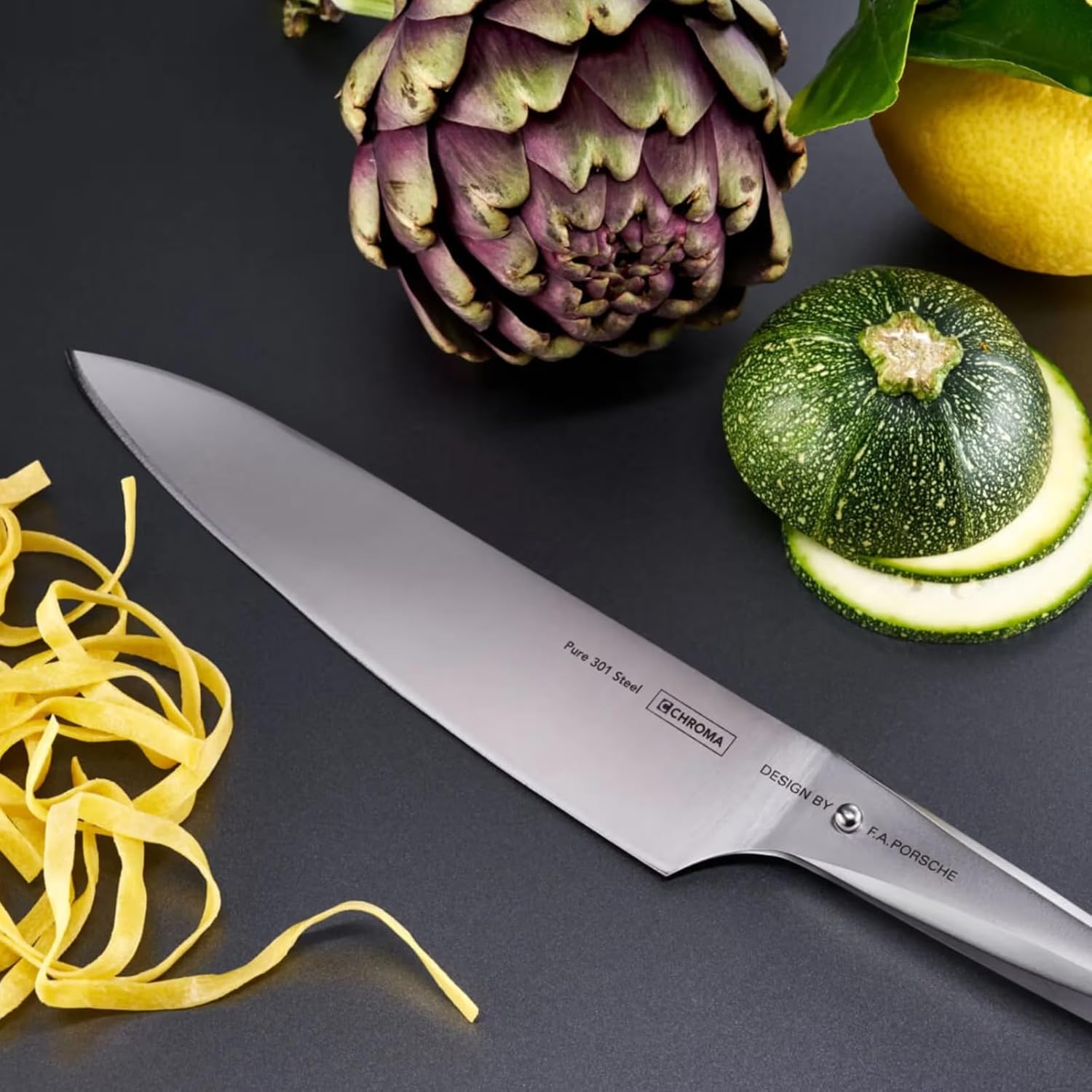
Image: The Chroma P01 Type 301 Chef's Knife positioned alongside fresh artichoke, zucchini, lemon, and pasta, illustrating its readiness for culinary tasks.
Operating Instructions
Proper Grip
Hold the knife with a firm but relaxed grip. The ergonomic stainless steel handle, designed by F.A. Porsche, features a metal pearl for improved tactile feedback and control. Position your thumb and index finger on the blade near the bolster for optimal balance and precision.
Cutting Techniques
- Chopping: Use a rocking motion, keeping the tip of the blade on the cutting board while lifting and lowering the heel to chop ingredients.
- Mincing: For fine mincing, use a similar rocking motion, but keep the blade in contact with the board and pivot from the tip, moving the knife across the ingredients.
- Dicing: Employ precise, controlled cuts to create uniform cubes. The 10-inch blade is suitable for larger ingredients.
- Crushing: The broad side of the blade can be used to crush garlic cloves or other soft ingredients. Place the item under the blade and apply gentle pressure with the palm of your hand.
Safety Precautions
- Always cut on a stable, non-slip cutting board.
- Keep your free hand's fingertips curled inward, using your knuckles as a guide against the blade.
- Never attempt to catch a falling knife.
- Store the knife safely when not in use, preferably in a knife block, magnetic strip, or with its protective edge guard.

Image: A detailed view of the Chroma P01 Type 301 knife blade, showcasing the 'type 301', 'P01', 'CHROMA', and 'DESIGN BY F.A. PORSCHE' engravings, highlighting its design and material.
Maintenance
Cleaning
Hand Wash Only: This knife is NOT dishwasher safe. The harsh detergents and high temperatures in dishwashers can damage the blade and handle materials, leading to corrosion or dulling of the edge. After each use, hand wash the knife immediately with warm water and a mild dish soap. Use a non-abrasive sponge or cloth.
Drying: Dry the knife thoroughly with a soft, clean towel immediately after washing. Do not allow it to air dry, as this can lead to water spots or potential corrosion, even on stainless steel.
Sharpening and Honing
Regular honing with a ceramic or steel honing rod will help maintain the blade's edge between sharpenings. For optimal sharpness, professional sharpening is recommended periodically, or use a high-quality sharpening stone or system designed for fine cutlery. Maintain the original blade angle for best results.
Storage
Store the knife in a safe place where the blade is protected and cannot cause injury. Options include a knife block, a magnetic strip, an in-drawer knife tray, or its original protective edge guard. Proper storage prevents damage to the blade and ensures safety.

Image: The Chroma P01 Type 301 Chef's Knife displayed on a dark, textured surface, highlighting its sleek profile and full blade length.
Troubleshooting
Dull Blade
If the blade feels dull, it may require honing or sharpening. Refer to the 'Sharpening and Honing' section under Maintenance. A dull knife is more dangerous than a sharp one as it requires more force, increasing the risk of slippage.
Rust Spots
Although made of stainless steel, prolonged exposure to moisture or acidic foods can cause surface rust. If rust spots appear, they can often be removed with a non-abrasive cleaner designed for stainless steel or a paste of baking soda and water. Ensure the knife is thoroughly dried immediately after cleaning.
Handle Discoloration
The stainless steel handle is durable. If discoloration occurs, it is likely due to residue buildup. Clean with warm soapy water and a soft cloth. Avoid harsh chemicals or abrasive scrubbers.

Image: A close-up of the Chroma P01 Type 301 knife blade, clearly showing the 'type 301', 'P01', 'CHROMA', and 'DESIGN BY F.A. PORSCHE' markings, with a blurred background of food preparation.
Specifications
- Model: P01 Type 301
- Blade Material: Japanese 301 Steel (Stainless Steel)
- Blade Length: 10 Inches (approximately 25.4 cm)
- Handle Material: Stainless Steel with embedded metal pearl
- Construction Type: Single-Piece
- Blade Edge: Plain
- Dishwasher Safe: No (Hand wash recommended)
- Manufacturer: Chroma
Warranty and Support
While specific warranty details are not provided in this manual, proper care and maintenance as outlined in this document are crucial for the longevity and performance of your Chroma P01 Type 301 Chef's Knife. Adhering to cleaning and storage guidelines will help preserve the knife's quality and sharpness for years of use.
For further support or inquiries regarding your Chroma product, please refer to the manufacturer's official website or contact their customer service department.