
Anmite A156W03
Anmite 15.6-inch Portable Monitor User Manual
Model: A156W03
1. Introduction
Thank you for purchasing the Anmite 15.6-inch Portable Monitor. This manual provides essential information for setting up, operating, and maintaining your device. Please read it thoroughly before use to ensure optimal performance and longevity.
The Anmite 15.6-inch Portable Monitor features an IPS FHD 1080P display, built-in speakers, and versatile connectivity options including USB-C and HDMI. Its ultra-slim design and integrated kickstand make it ideal for various applications, from extending your laptop screen to gaming on the go.
2. Package Contents
Please verify that all items are present in your package:
- 1x Anmite 15.6-inch Portable Monitor
- 1x Mini-HDMI to HDMI cable
- 1x Type-C to Type-C cable
- 1x Type-C to USB-A cable (for power)
- 1x User Guide
3. Specifications
| Model Number | A156W03 |
| Screen Size | 15.6 Inches |
| Panel Type | IPS |
| Resolution | FHD 1080p (1920x1080) |
| Aspect Ratio | 16:9 |
| Contrast Ratio | 1000:1 |
| Brightness | 300 cd/m² |
| Refresh Rate | 60 Hz |
| Viewing Angle | 178 Degrees |
| Display Type | LED |
| Input Interface | Mini-HDMI, Type-C (Full Function) |
| Output Interface | 3.5mm audio interface, Type-C (Power Pass-through) |
| Speakers | Built-in (1W*2) |
| Dimensions (D x W x H) | 0.51"D x 8.77"W x 14"H (366*233*6-13 mm) |
| Net Weight | 0.82kg (900 Milligrams) |
| Power Consumption | 15 Watts |
| Voltage | 5 Volts (DC) |
| Adaptive Sync | FreeSync |

4. Setup and Connections
This section guides you through connecting your portable monitor to various devices.
4.1 Monitor Overview
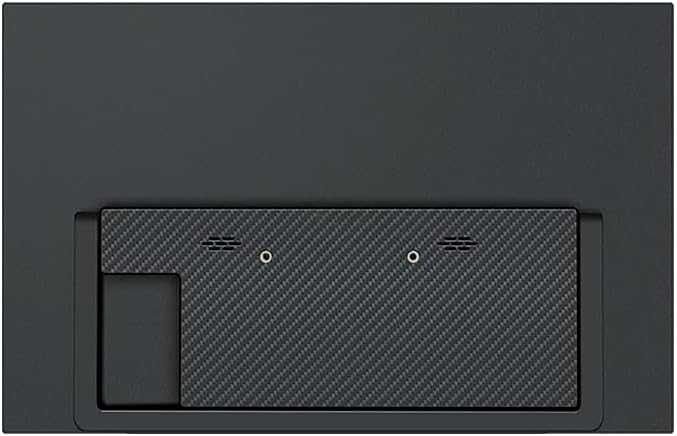
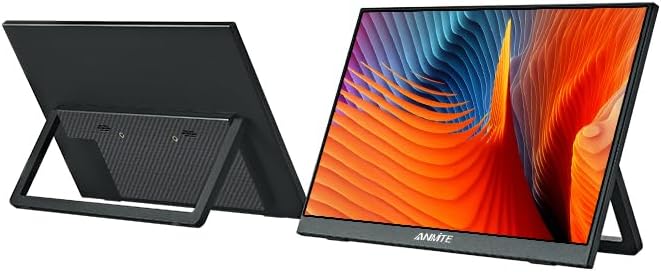
4.2 Connecting to a Laptop/PC (USB-C)
For devices with a full-featured USB-C port (supporting video output and power delivery):
- Connect one end of the Type-C to Type-C cable to the monitor's full-featured Type-C port.
- Connect the other end of the Type-C to Type-C cable to your laptop's full-featured USB-C port.
- The monitor should automatically detect the signal and display the screen. Power will be supplied via the USB-C connection.
Note: If your laptop's USB-C port does not provide sufficient power, or if it's a charging-only port, you may need to connect the monitor to an external power source using the Type-C to USB-A cable and a compatible power adapter (not included).
4.3 Connecting to a Laptop/PC (HDMI)
For devices with an HDMI output:
- Connect one end of the Mini-HDMI to HDMI cable to the monitor's Mini-HDMI port.
- Connect the other end of the Mini-HDMI to HDMI cable to your laptop's/PC's HDMI port.
- Connect the Type-C to USB-A cable to the monitor's power-only Type-C port and the USB-A end to a power source (e.g., laptop USB port, wall adapter). The monitor requires external power when using HDMI.
- The monitor should automatically detect the signal and display the screen.
4.4 Connecting to Gaming Consoles (PS5, Xbox, Switch)
For gaming consoles, use the HDMI connection method described above. Ensure the monitor is powered externally via the Type-C to USB-A cable.
- PS5/Xbox: Connect via HDMI and provide external power.
- Nintendo Switch: Connect via HDMI and provide external power. The Switch dock may also provide power and video output via HDMI.
4.5 Connecting to Phones (USB-C)
For phones with a full-featured USB-C port (supporting video output and power delivery):
- Connect one end of the Type-C to Type-C cable to the monitor's full-featured Type-C port.
- Connect the other end of the Type-C to Type-C cable to your phone's full-featured USB-C port.
- The monitor should display your phone's screen. Power will be supplied via the USB-C connection.
Important Note: Please check if your device has full-featured Type-C interfaces. Type-C charging-only ports are not compatible for video output without an adapter.
5. Operating the Monitor
This section covers basic operation and menu navigation.
5.1 Power On/Off
- The monitor typically powers on automatically when connected to a compatible device that provides power and video signal.
- To manually power off, locate the power button (refer to Figure 4.1 for port locations) and press and hold it for a few seconds.
5.2 On-Screen Display (OSD) Menu
The OSD menu allows you to adjust various display settings. The menu navigation buttons are usually located on the side or back of the monitor (refer to Figure 4.1).
- Press the Menu button to open the OSD menu.
- Use the Up/Down buttons (often combined with volume/brightness controls) to navigate through menu options.
- Press the Enter button (or Menu button again) to select an option.
- Use the Exit button (or power button for some models) to close the OSD menu.
Common OSD Settings:
- Brightness/Contrast: Adjust screen luminance and contrast levels.
- Color Settings: Modify color temperature, hue, and saturation.
- Input Source: Manually select between USB-C and HDMI inputs if auto-detection fails.
- Aspect Ratio: Change between 16:9, 4:3, or other available ratios.
- Volume: Adjust the volume of the built-in speakers.
- HDR Mode: Enable or disable High Dynamic Range (HDR) if supported by your device.
6. Maintenance and Care
Proper care ensures the longevity of your portable monitor.
- Cleaning the Screen: Use a soft, lint-free cloth slightly dampened with water or a screen-cleaning solution. Avoid harsh chemicals or abrasive materials.
- Cleaning the Casing: Wipe the exterior with a soft, dry cloth.
- Storage: When not in use, store the monitor in a cool, dry place, preferably in its original packaging or a protective sleeve to prevent scratches.
- Handling: Avoid dropping the monitor or subjecting it to strong impacts. Do not place heavy objects on it.
- Temperature: Operate the monitor within recommended temperature ranges. Avoid extreme heat or cold.
7. Troubleshooting
If you encounter issues with your monitor, refer to the following common solutions:
7.1 No Signal / Black Screen
- Check Cables: Ensure all cables (USB-C, HDMI, power) are securely connected to both the monitor and the source device.
- Power Supply: Verify the monitor is receiving adequate power. If using HDMI, ensure the Type-C power cable is connected to a sufficient power source.
- Source Device: Confirm your source device (laptop, phone, console) is powered on and configured to output video.
- USB-C Compatibility: If using USB-C, ensure your device's USB-C port supports video output (DisplayPort Alternate Mode). Not all USB-C ports are full-featured.
- Input Source: Manually select the correct input source (USB-C or HDMI) via the OSD menu.
7.2 Flickering Screen / Unstable Display
- Cable Quality: Try using different, high-quality cables. Faulty or low-quality cables can cause display issues.
- Power Supply: Ensure stable power. If the monitor is underpowered, it might flicker. Use a dedicated power adapter if available.
- Refresh Rate: Check your source device's display settings and ensure the refresh rate is compatible with the monitor (60Hz).
7.3 No Sound from Speakers
- Volume Level: Check the monitor's volume setting in the OSD menu and your source device's volume.
- Audio Output: Ensure your source device is set to output audio to the portable monitor.
- Cable Connection: Verify the video cable (USB-C or HDMI) is correctly connected, as audio is transmitted through these.
7.4 Monitor Not Turning On
- Power Source: Confirm the power cable is connected to a working power outlet or USB port.
- Power Button: Press the power button firmly.
- Try Different Cables/Ports: Test with different Type-C cables and ports on both the monitor and the power source.
8. Warranty Information
The Anmite 15.6-inch Portable Monitor comes with a 1-year warranty from the date of purchase. This warranty covers manufacturing defects and malfunctions under normal use. It does not cover damage caused by misuse, accidents, unauthorized modifications, or improper installation.
Please retain your proof of purchase for warranty claims. For detailed warranty terms and conditions, refer to the official Anmite website or contact customer support.

9. Customer Support
For technical assistance, troubleshooting, or warranty inquiries, please contact Anmite Official Store customer support:
- Online Support: Visit the Anmite Official Store on Amazon.
- Email: Refer to the contact information provided in your product packaging or the official Anmite website.
When contacting support, please have your model number (A156W03) and proof of purchase readily available.
Related documentsA156W03

Ask a question about this manual
Ask about setup, troubleshooting, compatibility, parts, safety, or missing instructions. Manuals+ will review the question and use this page’s manual context to help answer it.