
1. Introduction
This manual provides essential information for the proper installation, operation, maintenance, and troubleshooting of your Generic Mikuni VM32-282 32mm Round Slide Carburetor. Please read this manual thoroughly before attempting any procedures to ensure safe and correct usage. This carburetor is designed for specific engine applications requiring a 32mm round slide carburetor.
2. Safety Information
- Always wear appropriate personal protective equipment (PPE), including safety glasses and gloves, when working with fuel systems.
- Ensure the engine is cool and the ignition is off before performing any installation or maintenance.
- Work in a well-ventilated area to avoid inhaling fuel vapors.
- Keep open flames, sparks, and other ignition sources away from fuel and fuel system components.
- Fuel is highly flammable. Handle with extreme care and dispose of waste fuel and materials properly.
- If you are unsure about any procedure, consult a qualified mechanic.
3. What's in the Box
Upon unpacking, verify that all components are present and undamaged. The package should contain:
- One (1) Generic Mikuni VM32-282 32mm Round Slide Carburetor
If any items are missing or damaged, please contact your seller immediately.
4. Setup and Installation
Proper installation is crucial for the carburetor's performance and engine safety. It is recommended that installation be performed by a qualified technician.
4.1 Pre-Installation Checks
- Ensure the engine intake manifold is clean and free of debris.
- Verify that all necessary gaskets and mounting hardware are available and in good condition.
- Compare the new carburetor with the old unit (if replacing) to confirm compatibility.

Image 1: Top-front view of the Mikuni VM32-282 carburetor, showing the air intake and fuel inlet connections. This view highlights the main body and the slide mechanism.
4.2 Installation Steps
- Remove Old Carburetor (if applicable): Disconnect fuel lines, throttle cable, and any vacuum lines. Unbolt the old carburetor from the intake manifold.
- Clean Mounting Surface: Thoroughly clean the engine's intake manifold mounting surface to ensure a proper seal.
- Install Gaskets: Place new gaskets on the intake manifold.
- Mount New Carburetor: Carefully position the new VM32-282 carburetor onto the intake manifold studs. Secure it with the appropriate nuts, tightening them evenly to prevent warping.
- Connect Fuel Line: Attach the fuel line securely to the carburetor's fuel inlet. Ensure there are no leaks.
- Connect Throttle Cable: Route and connect the throttle cable to the carburetor's throttle slide mechanism. Verify smooth operation without binding.
- Connect Other Lines: Reconnect any vacuum lines or overflow hoses as per your engine's requirements.
- Initial Adjustments: Before starting the engine, ensure the float level is correct and the idle screw and air/fuel mixture screw are set to a baseline position (refer to Section 5.2 for details).

Image 2: Side view of the Mikuni VM32-282 carburetor, illustrating the location of the idle speed screw and air/fuel mixture screw, which are critical for tuning.
5. Operating Instructions
The carburetor's primary function is to mix air and fuel in the correct ratio for combustion. Proper tuning is essential for optimal engine performance and fuel efficiency.
5.1 Engine Start-Up
- Ensure the fuel petcock is open.
- If the engine is cold, engage the choke mechanism.
- Start the engine according to the manufacturer's instructions.
- Once the engine warms up, gradually disengage the choke.
5.2 Basic Tuning Adjustments
The VM32-282 carburetor features adjustable screws for fine-tuning. Always make small adjustments and observe the engine's response.
- Idle Speed Screw: This screw adjusts the throttle slide position at idle. Turning it clockwise increases idle speed; counter-clockwise decreases it. Adjust to the engine manufacturer's recommended idle RPM.
- Air/Fuel Mixture Screw: This screw controls the air-fuel ratio at idle and off-idle. Turning it clockwise leans the mixture (less fuel); counter-clockwise enriches it (more fuel). Start with a baseline setting (e.g., 1.5 to 2.5 turns out from lightly seated) and adjust for the smoothest idle and best throttle response.

Image 3: Rear view of the Mikuni VM32-282 carburetor, highlighting the float bowl at the bottom, which houses the float and jets. This part is crucial for fuel delivery.
For optimal performance, especially after significant modifications or changes in altitude, professional jetting adjustments may be required.
6. Maintenance
Regular maintenance ensures the longevity and reliable operation of your carburetor.
6.1 Cleaning
- External Cleaning: Periodically wipe down the exterior of the carburetor to remove dirt and grime.
- Internal Cleaning (Jets and Passages): If performance issues arise, or as part of routine maintenance (e.g., annually), the carburetor may need internal cleaning. This involves disassembling the float bowl and removing jets. Use a carburetor cleaner spray and compressed air to clear all passages. Never use wire or hard objects to clean jets, as this can alter their size.

Image 4: Front view of the Mikuni VM32-282 carburetor, showing the throttle slide opening. This area is crucial for air flow and should be kept clean for smooth operation.
6.2 Inspection
- Gaskets and O-rings: Inspect all gaskets and O-rings for cracks, tears, or signs of wear. Replace as needed to prevent air or fuel leaks.
- Float Level: Verify the float level is set correctly to prevent fuel starvation or overflow.
- Throttle Slide: Ensure the throttle slide moves freely without sticking.
- Fuel Filter: Regularly check and replace the inline fuel filter to prevent contaminants from reaching the carburetor.
7. Troubleshooting
This section addresses common issues you might encounter with your carburetor.
| Problem | Possible Cause | Solution |
|---|---|---|
| Engine will not start | No fuel, clogged fuel filter, clogged jets, incorrect choke setting | Check fuel supply, replace fuel filter, clean jets, adjust choke |
| Poor idle / Stalling | Incorrect idle speed, incorrect air/fuel mixture, vacuum leak | Adjust idle speed and mixture screws, check for vacuum leaks |
| Engine runs rough at high RPM | Main jet too small/large, restricted air filter | Inspect/replace main jet, check/clean air filter |
| Fuel leaks | Damaged float bowl gasket, stuck float, loose fuel line | Replace gasket, clean float needle/seat, tighten fuel line connections |
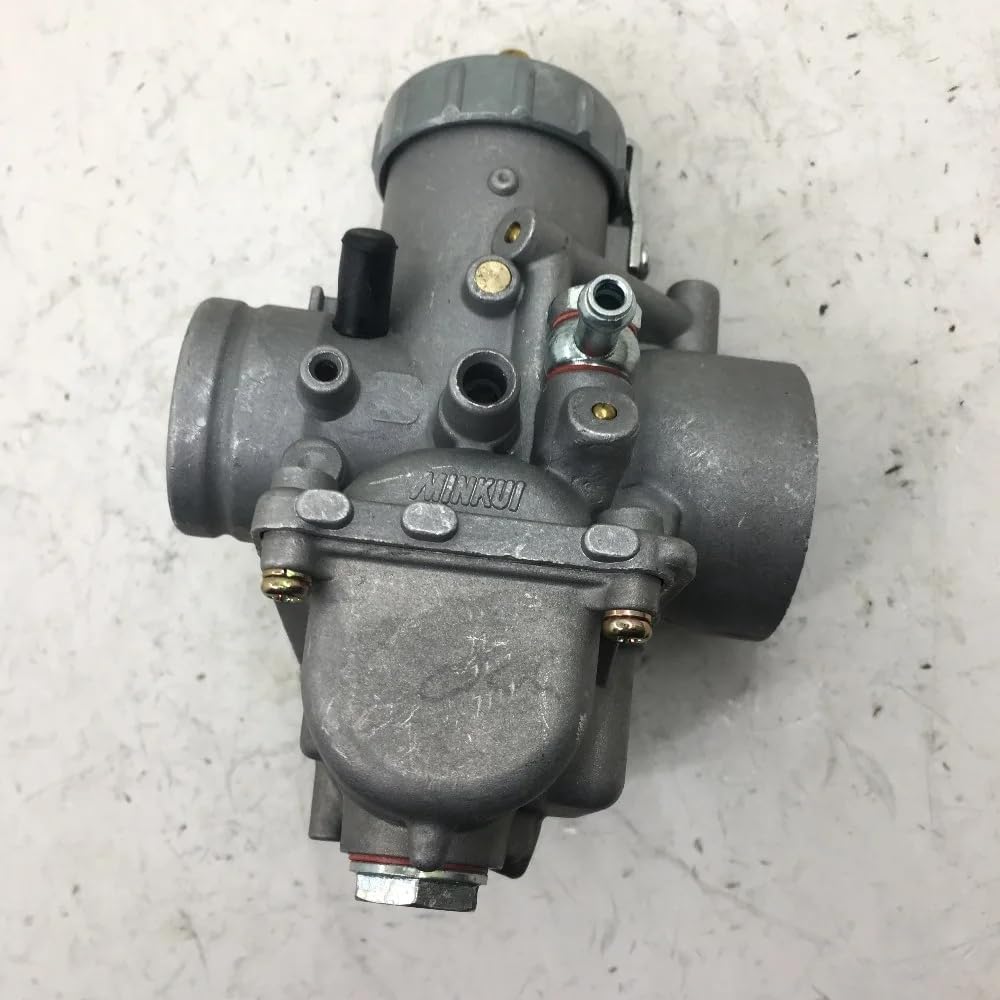
Image 5: Angled view of the Mikuni VM32-282 carburetor, showing the overall construction and the 'MIKUNI' branding on the float bowl. This view provides a comprehensive look at the carburetor's exterior.
8. Specifications
Key specifications for the Generic Mikuni VM32-282 32mm Round Slide Carburetor:
- Model: VM32-282 (32mm Round Slide Carburetor)
- Manufacturer Part Number: B00557cr
- Material Type: Metal
- Exterior Finish: Machined
- Approximate Dimensions (L x W x H): 2 x 6 x 7 inches (Note: These are approximate values from product description and may not represent exact physical dimensions.)
- Approximate Item Weight: 1 lb
9. Warranty and Support
For warranty information, technical support, or replacement parts, please contact the seller or manufacturer directly. Retain your proof of purchase for any warranty claims.