
Tivora MKD292
Tivora TPS Throttle Position Sensor User Manual
Model: MKD292 | Part Number: 21176-0129
For Kawasaki KX250, KX250F, KX450, KX450F
Introduction
This manual provides essential information for the installation, operation, and maintenance of your Tivora TPS Throttle Position Sensor (Part Number 21176-0129, Model MKD292). This sensor is designed to accurately measure the throttle valve opening angle, providing crucial data to the engine control unit (ECU) for optimal fuel injection and ignition timing. Proper installation and care will ensure reliable performance and longevity of the sensor.
Compatibility
This TPS Throttle Position Sensor is compatible with the following Kawasaki models:
- 2009-2016 Kawasaki KX250
- 2009-2016 Kawasaki KX250F
- 2009-2016 Kawasaki KX450
- 2009-2016 Kawasaki KX450F
It replaces original equipment part numbers 21176-0129 and 211760129.
Package Contents
Your package should contain the following item:
- 1 x Tivora TPS Throttle Position Sensor (Part Number 21176-0129)
Product Overview

Figure 1: Front view of the Tivora TPS Throttle Position Sensor, showing the sensor body, wiring, and electrical connector. This is the primary view of the complete unit.
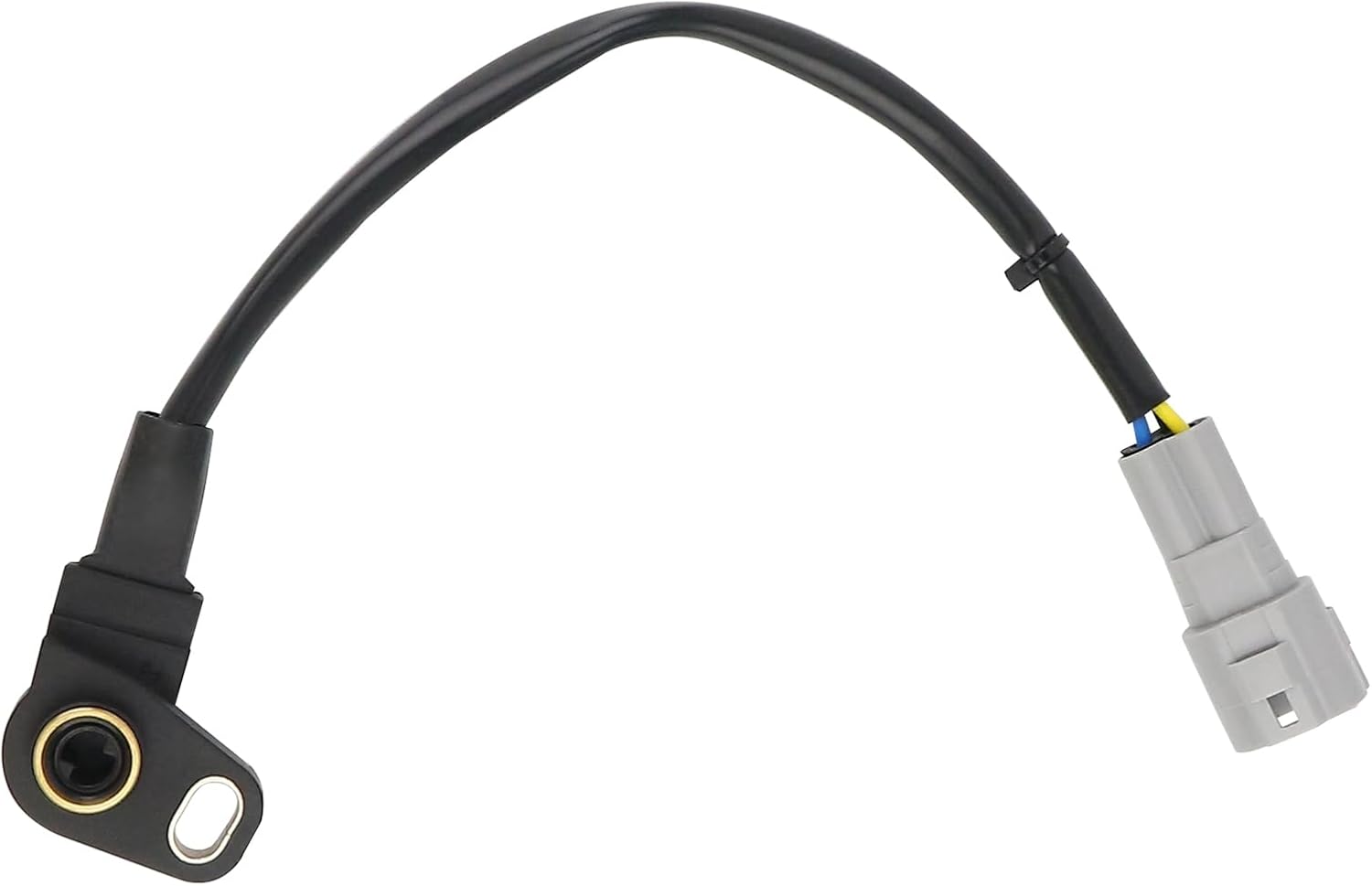
Figure 2: Top-down view of the sensor, highlighting the curvature of the cable and the overall compact design. This perspective helps in understanding its physical footprint.

Figure 3: Detailed view showing the sensor's mounting points and the electrical connector. Note the internal pins within the connector, crucial for proper electrical connection.
Installation Guide
Installation of a Throttle Position Sensor (TPS) typically involves working with sensitive engine components. It is highly recommended that installation be performed by a qualified mechanic or an individual with experience in automotive electrical and engine systems.
General Installation Steps:
- Safety First: Disconnect the vehicle's battery negative terminal before beginning any work to prevent electrical shorts or accidental engine starts.
- Locate the Old Sensor: Identify the existing TPS on the throttle body. It is usually mounted directly to the throttle shaft.
- Disconnect Wiring: Carefully disconnect the electrical connector from the old TPS. Avoid pulling on the wires.
- Remove Old Sensor: Unscrew or unbolt the old TPS from the throttle body. Note its orientation before removal.
- Install New Sensor: Align the new Tivora TPS with the throttle shaft and mounting holes. Ensure it seats correctly. Some TPS units require specific alignment with a D-shaped or keyed shaft.
- Secure the Sensor: Fasten the new sensor using the original screws or bolts. Do not overtighten.
- Reconnect Wiring: Reconnect the electrical connector to the new TPS, ensuring a secure and snug fit.
- Reconnect Battery: Reconnect the vehicle's battery negative terminal.
- Calibration (if required): Some vehicles may require a TPS calibration procedure after replacement. Consult your vehicle's service manual for specific instructions. This may involve turning the ignition on and off, or using a diagnostic scan tool.
- Test Operation: Start the engine and check for proper throttle response and any diagnostic trouble codes (DTCs).
Important: Always refer to your specific vehicle's service manual for detailed, model-specific installation instructions and torque specifications.
Operation Principle
The Tivora TPS Throttle Position Sensor is a critical component of your vehicle's engine management system. It operates by converting the mechanical position of the throttle valve into an electrical signal that is sent to the Engine Control Unit (ECU).
- When the throttle pedal is pressed, the throttle valve opens, allowing more air into the engine.
- The TPS, mechanically linked to the throttle shaft, rotates with the throttle valve.
- As the sensor rotates, its internal resistance changes, altering the voltage signal it sends to the ECU.
- The ECU interprets this voltage signal to determine the throttle opening angle (e.g., idle, partial throttle, wide open throttle).
- Based on this information, the ECU adjusts fuel injection, ignition timing, and other engine parameters to optimize performance, fuel efficiency, and emissions.
As a sensor, it does not require direct user operation after installation. Its function is continuous and automatic as part of the engine's normal operation.
Maintenance
The Tivora TPS Throttle Position Sensor is designed for long-term, maintenance-free operation. However, regular inspection of related components can help ensure its longevity and proper function:
- Wiring and Connector: Periodically inspect the sensor's wiring harness and electrical connector for any signs of damage, corrosion, or loose connections. Ensure the connector is securely seated.
- Throttle Body Cleanliness: A dirty throttle body can affect the smooth operation of the throttle valve, which in turn can impact the TPS. Ensure the throttle body is clean and free of carbon buildup.
- Environmental Exposure: While designed to withstand typical engine bay conditions, avoid exposing the sensor to excessive moisture, extreme temperatures beyond normal operating ranges, or harsh chemicals.
Do not attempt to disassemble or repair the sensor, as this may damage the unit and void any potential warranty.
Troubleshooting
If you experience issues that you suspect are related to the TPS, consider the following common symptoms and potential solutions. Always consult a qualified mechanic for diagnosis and repair.
| Symptom | Possible Cause | Suggested Action |
|---|---|---|
| Rough Idle or Stalling | Incorrect TPS signal at idle, faulty sensor, vacuum leak. | Check TPS wiring and connector. Inspect for vacuum leaks. Consider professional diagnosis and TPS replacement if faulty. |
| Hesitation or Surging during Acceleration | Intermittent or inaccurate TPS signal during throttle changes. | Verify TPS connection. Check for proper sensor output using a diagnostic tool. |
| Poor Fuel Economy | ECU receiving incorrect throttle position data, leading to improper fuel delivery. | Have the TPS signal checked by a professional. Ensure no other engine codes are present. |
| Check Engine Light (CEL) with TPS-related codes (e.g., P0120, P0121) | Faulty TPS, wiring issue, or ECU problem. | Retrieve diagnostic trouble codes (DTCs) using an OBD-II scanner. Follow vehicle-specific diagnostic procedures. |
Note: This table provides general guidance. Always consult a professional mechanic for accurate diagnosis and repair of automotive issues.
Product Specifications
| Brand | Tivora |
| Manufacturer Part Number | MKD292 |
| Replaces Part Numbers | 21176-0129, 211760129 |
| Item Weight | 2.19 ounces |
| Package Dimensions | 6.38 x 3.54 x 3.54 inches |
| ASIN | B0DP885ZXV |
| Date First Available | November 29, 2024 |
Warranty and Support
For information regarding warranty coverage, returns, or technical support for your Tivora TPS Throttle Position Sensor, please refer to the seller's policy on the platform where the product was purchased or contact Tivora customer service directly. Keep your purchase receipt as proof of purchase.
Safety Information
- Always disconnect the vehicle's battery before performing any electrical work.
- Wear appropriate personal protective equipment (PPE), such as safety glasses and gloves, during installation.
- Ensure the engine is cool before working on engine components to avoid burns.
- Do not modify the sensor or its wiring.
- Keep out of reach of children.
- Dispose of old parts responsibly according to local regulations.
Ask a question about this manual
Ask about setup, troubleshooting, compatibility, parts, safety, or missing instructions. Manuals+ will review the question and use this page’s manual context to help answer it.