
Westinghouse W20V2AH
Westinghouse W20V2AH 20 Volt 2AH Lithium-ion Battery User Manual
Model: W20V2AH | Brand: Westinghouse
1. Introduction
This manual provides essential information for the safe and effective use of your Westinghouse W20V2AH 20 Volt 2AH Lithium-ion Battery. This battery is designed to power all Westinghouse 20V cordless lawn, garden, and snow tools. Please read this manual thoroughly before initial use and retain it for future reference.
The W20V2AH battery features a power indicator to show charge status and is engineered with protection mechanisms against over-discharge and over-charge to ensure a longer lifespan.
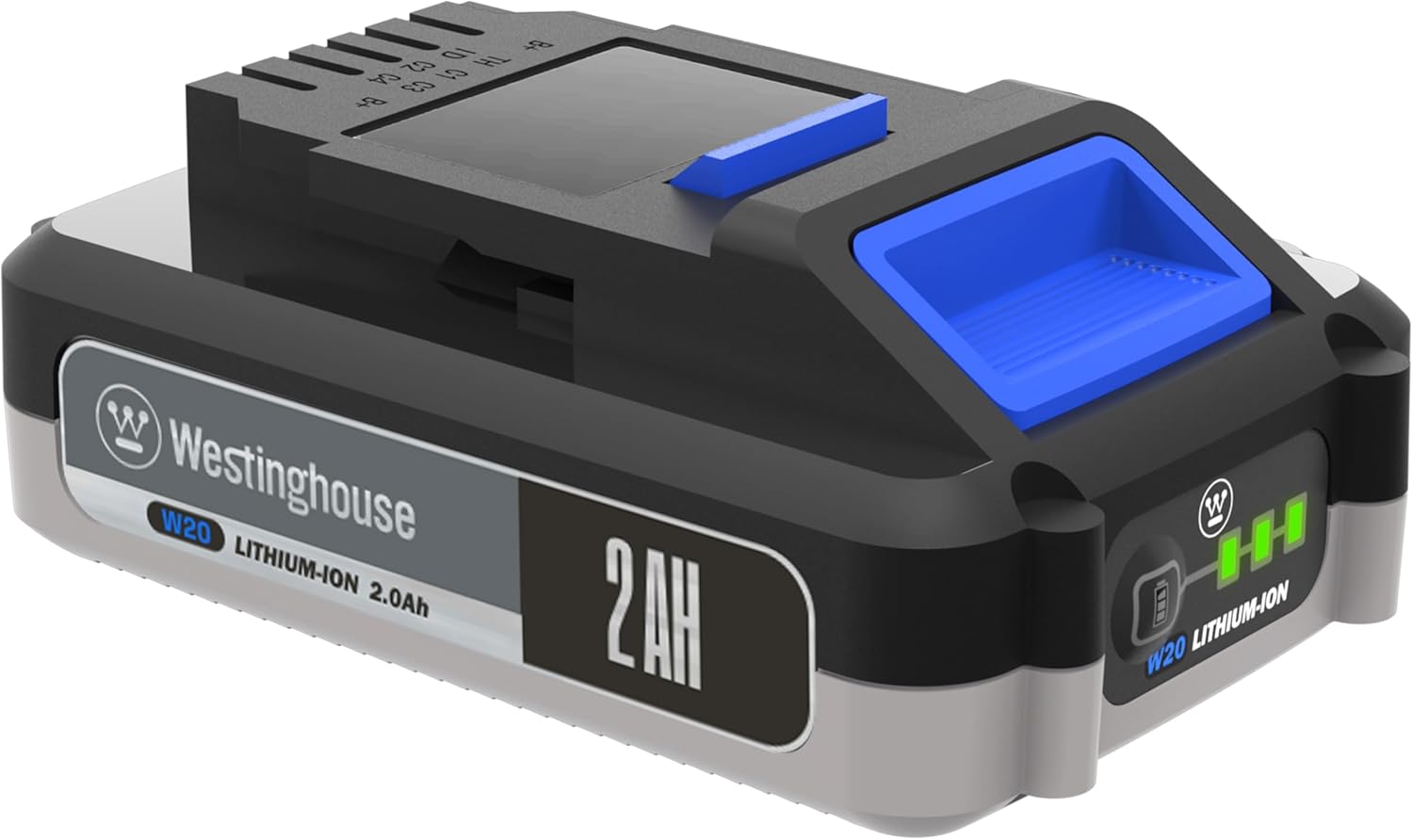
Image: The Westinghouse W20V2AH 20 Volt 2AH Lithium-ion Battery, showcasing its design and key features.
2. Safety Information
Always observe the following safety precautions to prevent injury or damage to the battery and connected tools.
- Read All Instructions: Before using the battery, read all instructions and cautionary markings on the battery, the battery charger, and the product using the battery.
- Charging: Only charge the battery with the specified Westinghouse chargers (W20V2AMP or W20V2DP). Using an incompatible charger may result in fire, electric shock, or injury.
- Storage: Store the battery in a cool, dry place away from direct sunlight, heat sources, and moisture. Do not store in temperatures exceeding 122°F (50°C).
- Handling: Do not short-circuit the battery terminals. Do not disassemble, crush, or incinerate the battery. Do not expose the battery to water or rain.
- Damage: If the battery casing is cracked or damaged, do not use it. Contact customer support for assistance.
- Disposal: Dispose of batteries responsibly according to local regulations. Do not dispose of batteries in household waste or by incineration.
3. Setup and Charging
Before first use, the battery must be fully charged.
- Connect Charger: Plug your Westinghouse W20V2AMP single port charger or W20V2DP dual port charger (sold separately) into a standard 120V outlet.
- Insert Battery: Slide the W20V2AH battery into the charger. Ensure it clicks securely into place.
- Monitor Charging: The LED lights on the charger will indicate the charging status. A full charge typically takes 1 hour with the W20V2AMP charger or 30 minutes (per battery) with the W20V2DP dual port charger.
- Remove Battery: Once fully charged, remove the battery from the charger.

Image: The Westinghouse 20V 2Ah battery being charged on a compatible charger, demonstrating easy connection to a standard 120V outlet.
4. Operating Instructions
The Westinghouse W20V2AH battery is compatible with all Westinghouse 20V cordless lawn, garden, and snow tools.
- Insert Battery: Align the battery with the battery port on your Westinghouse 20V tool. Slide the battery firmly into place until it locks.
- Check Charge Status: The battery features a power indicator. Press the button on the battery to view the current charge level via the LED lights.
- Tool Operation: Refer to your specific Westinghouse 20V tool's user manual for detailed operating instructions.
- Battery Removal: To remove the battery, press the release latch(es) on the tool and slide the battery out.

Image: A hand demonstrating the insertion of the Westinghouse 20V 2Ah battery into a compatible cordless tool, highlighting its built-in protection features.

Image: The Westinghouse 20V 2Ah battery shown with a selection of Westinghouse 20V outdoor power tools it is designed to power, illustrating its versatility.
5. Maintenance and Storage
- Cleaning: Keep the battery clean and free of debris. Use a dry cloth to wipe down the exterior. Do not use solvents or harsh chemicals.
- Charging Cycle: For optimal battery life, avoid completely draining the battery before recharging. It is best to recharge the battery after each use or when the power indicator shows a low charge.
- Long-Term Storage: If storing the battery for an extended period, charge it to approximately 50-60% capacity. Recharge every 3-6 months to prevent deep discharge.
- Temperature: Store the battery in a location where the temperature is between 32°F (0°C) and 77°F (25°C). Extreme temperatures can reduce battery life.
6. Troubleshooting
| Problem | Possible Cause | Solution |
|---|---|---|
| Battery not charging. | Charger not plugged in; faulty outlet; battery not seated correctly; damaged battery/charger. | Ensure charger is securely plugged into a working outlet. Re-insert battery firmly. Inspect battery and charger for visible damage. If damaged, do not use. |
| Battery not powering tool. | Battery not charged; battery not inserted correctly; tool malfunction. | Check battery charge level using the indicator. Ensure battery is fully inserted and locked into the tool. Test battery with another compatible tool if available. Refer to tool's manual for tool-specific troubleshooting. |
| Reduced run time. | Battery not fully charged; battery nearing end of life; heavy load on tool. | Ensure battery is fully charged before use. Battery capacity naturally decreases over time. Consider a higher amp-hour battery for longer run times or replace aging battery. |
7. Specifications
- Model: W20V2AH
- Battery Type: Lithium-ion
- Voltage: 20 Volt
- Capacity: 2 Amp-hour (2Ah)
- Product Dimensions: 4.7 x 3 x 1.8 inches
- Item Weight: 1 pound
- Manufacturer: Westinghouse
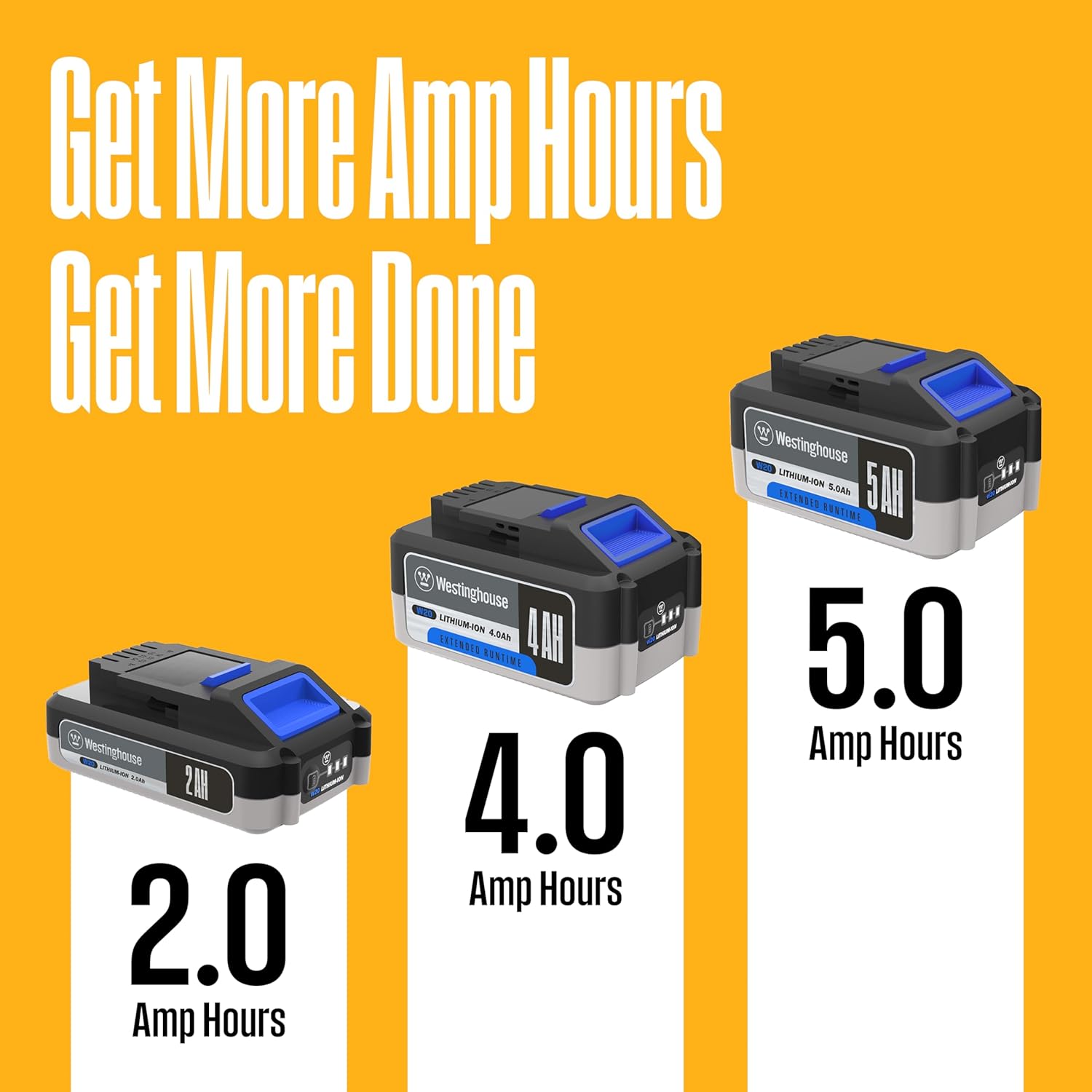
Image: A visual comparison of Westinghouse 20V batteries with different amp-hour capacities (2.0 Ah, 4.0 Ah, 5.0 Ah), indicating options for extended run times.
8. Warranty and Support
The Westinghouse W20V2AH Lithium-ion Battery comes with a 2-year limited warranty. This warranty covers defects in materials and workmanship under normal use.
For warranty claims, technical support, or to purchase compatible accessories (such as chargers), please visit the official Westinghouse website or contact their customer service department.
An official User Manual (PDF) is also available for download: Download User Manual (PDF)
Ask a question about this manual
Ask about setup, troubleshooting, compatibility, parts, safety, or missing instructions. Manuals+ will review the question and use this page’s manual context to help answer it.