
1. Introduction
Thank you for choosing the Targa TG-H 11500.4 4-Channel 11500W Amplifier. This high-power amplifier is designed to enhance your car audio system with clear, dynamic sound. This manual provides essential information for proper installation, operation, and maintenance of your amplifier. Please read it thoroughly before use to ensure optimal performance and safety.
2. Safety Information
To prevent injury or damage to the amplifier and your vehicle, observe the following safety precautions:
- Always disconnect the vehicle's battery negative terminal before beginning any installation.
- Ensure all wiring is properly routed and secured to prevent pinching or damage.
- Use appropriate gauge wiring for power and ground connections as specified in the installation section.
- Do not mount the amplifier in locations exposed to direct sunlight, excessive heat, moisture, or dust.
- Never operate the amplifier with damaged wiring or if it has been exposed to water.
- Seek professional assistance if you are unsure about any installation steps.
3. Product Overview
3.1 Features
The Targa TG-H 11500.4 amplifier offers the following key features:
- 11500W Max Power Output: Delivers substantial power for a robust audio experience.
- 4-Channel Configuration: Provides flexibility for powering multiple speakers or a combination of speakers and subwoofers.
- Adjustable Bass Boost: Offers 0dB, +6dB, and +12dB bass boost options for enhanced low-frequency response.
- Wide Frequency Response: Ensures accurate reproduction of a broad range of audio frequencies.
- Low-Pass Filter: Integrated filter for precise control over subwoofer frequencies.
3.2 Amplifier Components
Familiarize yourself with the various parts of your amplifier:
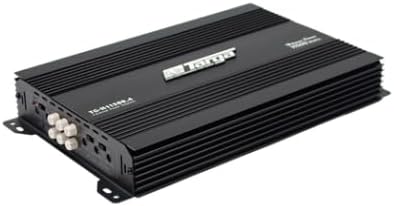
Image 1: Top view of the Targa TG-H 11500.4 amplifier, showcasing its robust heatsink design and the Targa branding. This view highlights the overall aesthetic and build quality.

Image 2: Angled view of the Targa TG-H 11500.4 amplifier, focusing on the power input terminals (left) and speaker output terminals (right). This image provides a clearer look at the connection points for installation.

Image 3: Another angled view of the Targa TG-H 11500.4 amplifier, highlighting the RCA input jacks and various control knobs for gain, bass boost, and filter settings. This perspective is useful for understanding the user-adjustable controls.
- Power Terminals: Connections for +12V (BATT), Ground (GND), and Remote Turn-On (REM).
- Speaker Terminals: Outputs for connecting up to four speakers.
- RCA Input Jacks: For connecting audio signals from your head unit.
- Gain Control: Adjusts the input sensitivity of the amplifier.
- Bass Boost Control: Selects the level of bass enhancement.
- Low-Pass Filter (LPF) Control: Adjusts the cutoff frequency for the low-pass filter.
- LED Indicators: Power and protection indicators.
4. Setup and Installation
Proper installation is crucial for the performance and longevity of your amplifier. If you are not confident in performing the installation yourself, please consult a professional car audio installer.
4.1 Mounting Location
Choose a mounting location that is:
- Secure and free from vibrations.
- Well-ventilated to allow for proper heat dissipation.
- Protected from moisture and direct sunlight.
- Accessible for wiring and adjustments.
Common locations include under a seat, in the trunk, or mounted to a custom amplifier rack.
4.2 Wiring Connections
Before making any connections, disconnect the vehicle's negative battery terminal.
- Power (BATT +12V): Run a heavy-gauge power cable (e.g., 4 AWG or 8 AWG depending on total system power) directly from the positive terminal of the vehicle's battery to the amplifier's +12V terminal. Install an in-line fuse holder within 18 inches (45 cm) of the battery.
- Ground (GND): Connect a heavy-gauge ground cable of the same length as the power cable from the amplifier's GND terminal to a clean, unpainted metal surface on the vehicle chassis. Ensure a good electrical connection.
- Remote Turn-On (REM): Connect a smaller gauge wire (e.g., 18 AWG) from the amplifier's REM terminal to the remote output of your head unit. This wire turns the amplifier on and off with your head unit.
- RCA Audio Inputs: Connect RCA cables from the pre-out outputs of your head unit to the RCA input jacks on the amplifier.
- Speaker Outputs: Connect your speakers to the amplifier's speaker terminals. Ensure correct polarity (+ to + and - to -) for each speaker. Refer to your speaker's impedance and the amplifier's specifications for proper matching.
After all connections are made, reconnect the vehicle's negative battery terminal.
5. Operating Instructions
5.1 Initial Setup and Gain Adjustment
- Turn the amplifier's gain control to its minimum (fully counter-clockwise) setting.
- Set your head unit's volume to about 75% of its maximum level.
- Play a dynamic piece of music.
- Slowly increase the amplifier's gain control until you hear distortion, then back it off slightly until the sound is clear.
- Avoid setting the gain too high, as this can lead to distortion and potential damage to your speakers and amplifier.
5.2 Bass Boost Adjustment
The bass boost control allows you to enhance low frequencies. Adjust it to your preference:
- 0dB: No bass enhancement.
- +6dB: Moderate bass enhancement.
- +12dB: Significant bass enhancement.
Use bass boost sparingly, as excessive boosting can cause distortion and speaker damage.
5.3 Low-Pass Filter (LPF) Adjustment
The LPF control is used to set the upper frequency limit for signals passed to your speakers (typically subwoofers). This amplifier has a range of 40Hz-250Hz.
- If using the amplifier for subwoofers, set the LPF to a frequency between 80Hz and 120Hz, depending on your subwoofer and speaker capabilities.
- If using the amplifier for full-range speakers, ensure the LPF is set appropriately or bypassed if a full-range signal is desired (check amplifier specific settings for full-range operation).
6. Maintenance
Your Targa amplifier requires minimal maintenance to ensure long-term performance:
- Cleaning: Periodically wipe the amplifier's exterior with a soft, dry cloth. Do not use harsh chemicals or abrasive cleaners.
- Ventilation: Ensure that the amplifier's heatsink fins are free from dust and debris to maintain proper cooling.
- Connections: Occasionally check all wiring connections to ensure they are secure and free from corrosion.
7. Troubleshooting
If you experience issues with your amplifier, refer to the following common problems and solutions:
| Problem | Possible Cause | Solution |
|---|---|---|
| No Power / Amplifier Not Turning On | Blown fuse, loose power/ground/remote wire, faulty head unit remote output. | Check in-line fuse, verify all power, ground, and remote connections are secure. Test remote wire for +12V when head unit is on. |
| No Sound Output | RCA cables disconnected, speaker wires disconnected/shorted, gain too low, head unit volume too low. | Check RCA connections, verify speaker wiring and ensure no shorts. Adjust gain. Increase head unit volume. |
| Distorted Sound | Gain set too high, damaged speakers, improper filter settings. | Reduce gain setting. Inspect speakers for damage. Adjust LPF settings. |
| Amplifier Overheating / Protection Mode | Insufficient ventilation, improper speaker impedance, internal fault. | Ensure adequate airflow around the amplifier. Verify speaker impedance matches amplifier specifications. If problem persists, seek professional service. |
If these steps do not resolve the issue, contact customer support or a qualified service technician.
8. Specifications
The following are the technical specifications for the Targa TG-H 11500.4 amplifier:
- Model: TG-H 11500.4
- Max Power Output: 11500W
- Channels: 4
- Frequency Response: 20Hz - 36kHz
- Signal-to-Noise Ratio: 90dB
- Low-Pass Filter (LPF) Range: 40Hz - 250Hz
- Bass Boost: 0dB / +6dB / +12dB
9. Warranty and Support
This Targa TG-H 11500.4 amplifier comes with a Limited 6 Months Manufacturer's Warranty from the date of purchase. This warranty covers manufacturing defects under normal use. It does not cover damage caused by improper installation, abuse, accidents, or unauthorized modifications.
For warranty claims or technical support, please contact your authorized Targa dealer or the point of purchase. Please retain your proof of purchase for warranty service.
