
1. Introduction
This manual provides detailed instructions for the assembly, operation, and maintenance of the TOYAN FS-L200AC 7cc Inline 4-Stroke 2-Cylinder Nitro Internal Combustion Engine Kit. This kit is designed for enthusiasts and model builders. Please read this manual thoroughly before beginning assembly or operation to ensure proper function and safety.
2. Safety Information
WARNING:
- This product is an adult-assembled real engine model. It is not a toy for children.
- Always operate in a well-ventilated area. Engine exhaust contains carbon monoxide, which is a colorless, odorless, and poisonous gas.
- Nitro fuel is highly flammable. Store in a cool, dry place away from ignition sources.
- Wear appropriate eye protection during assembly and operation.
- Keep hands and loose clothing away from moving parts during engine operation.
- The engine can become very hot during operation. Allow it to cool completely before handling.
- Ensure all connections are secure before starting the engine.
3. Package Contents
The TOYAN FS-L200AC engine kit includes various components for assembly. Please verify all parts are present before beginning assembly.
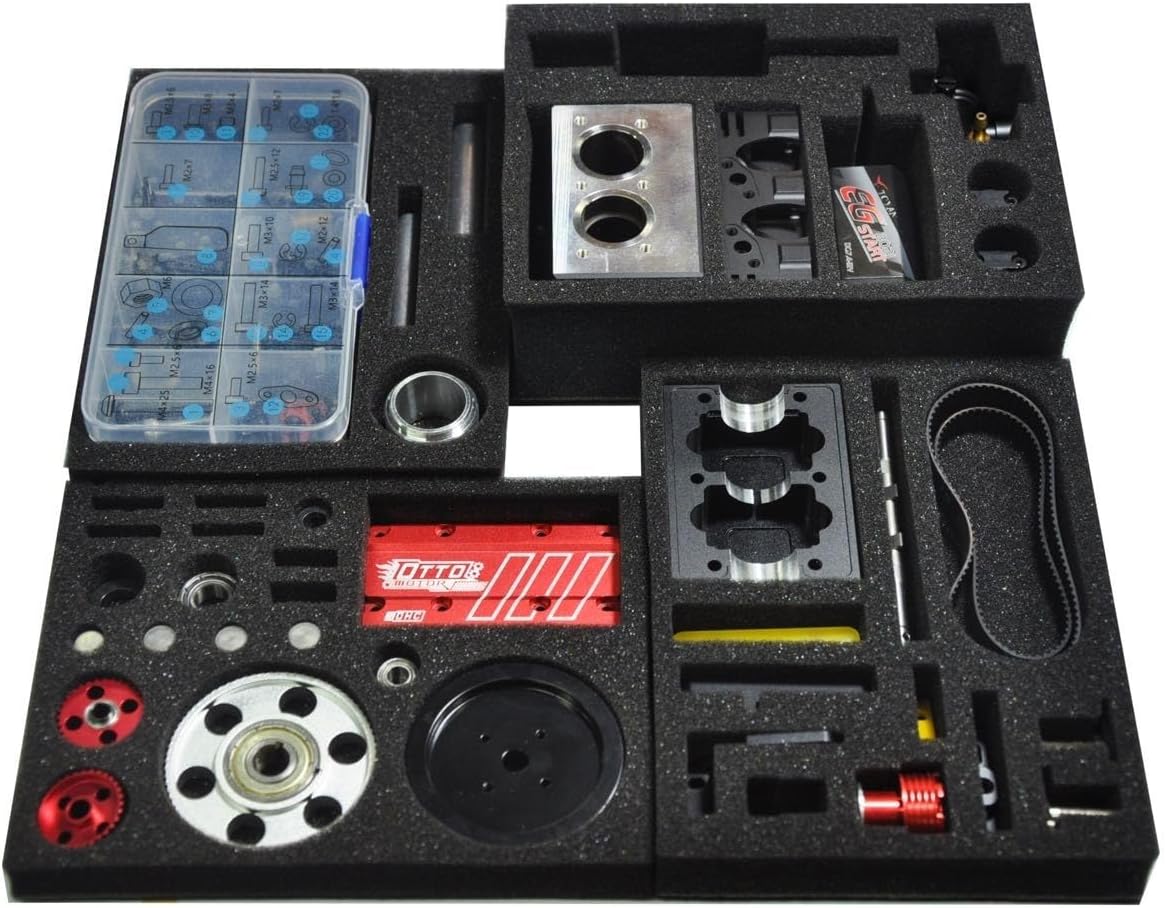
Figure 3.1: All components of the TOYAN FS-L200AC engine kit laid out. This includes the engine block, cylinder head, crankshaft, connecting rods, pistons, timing belt, pulleys, fan, carburetor, ignition system components, and various fasteners and small parts organized in a foam tray.
The kit typically includes:
- Engine Block and Cylinder Head components
- Crankshaft, Pistons, and Connecting Rods
- Timing Belt and Pulleys
- Carburetor and Intake Manifold parts
- Ignition System components (e.g., spark plugs, wiring)
- Cooling Fan and Housing
- Various Fasteners, Gaskets, and Seals
- Assembly Tools (basic set, may require additional specialized tools)
4. Assembly Instructions
This section outlines the general steps for assembling your TOYAN FS-L200AC engine kit. Refer to the detailed diagrams and specific instructions provided with your physical kit for precise component placement and torque specifications. Assembly requires careful attention to detail and mechanical aptitude.
- Preparation: Unpack all components and organize them. Ensure you have a clean, well-lit workspace and the necessary tools.
- Crankshaft and Piston Assembly: Install the crankshaft into the engine block. Attach the connecting rods to the pistons, then install the piston assemblies into the cylinders, ensuring correct orientation.
- Cylinder Head Installation: Place the cylinder head gasket, then carefully mount the cylinder head onto the engine block. Secure with bolts, tightening them in the specified sequence and to the correct torque.
- Timing System: Install the timing pulleys and timing belt, ensuring proper alignment and tension according to the engine's timing marks. This is critical for engine operation.
- Carburetor and Intake: Attach the carburetor and intake manifold to the cylinder head. Ensure all seals are correctly seated.
- Ignition System: Install the spark plugs and connect the ignition wiring.
- Cooling System: Mount the cooling fan and any associated shrouds.
- Final Checks: Before attempting to start, manually rotate the crankshaft to ensure all moving parts operate smoothly without binding. Double-check all fasteners for tightness.

Figure 4.1: The fully assembled TOYAN FS-L200AC 7cc Inline 4-Stroke 2-Cylinder Engine. This image shows the red cylinder head cover, black engine block, visible timing belt and pulleys, and the cooling fan at the front.
5. Operating Instructions
Proper operation is essential for the longevity and performance of your engine. Follow these steps carefully.
- Fuel Preparation: Use 20-25% nitro fuel. Ensure the fuel is fresh and stored correctly.
- Lubrication: This engine uses mixed oil lubrication. Add appropriate grease as specified in your kit's detailed instructions.
- Fueling: Fill the fuel tank (if applicable, or connect to an external fuel supply) with the prepared nitro fuel.
- Starting Procedure (Electric Start):
- Ensure the engine is securely mounted.
- Connect the electric starter motor to a suitable power source.
- Prime the engine if necessary (refer to carburetor instructions).
- Engage the electric starter. The engine should start within a few seconds.
- If the engine does not start, check fuel supply, glow plug (if applicable), and ignition system.
- Running In: For new engines, a proper "running-in" or break-in period is crucial. Operate the engine at varying RPMs, avoiding prolonged high-RPM operation for the first few tanks of fuel. This allows moving parts to seat properly.
- Shutting Down: Cut off the fuel supply or use the engine's kill switch to stop operation.
6. Maintenance
Regular maintenance will ensure reliable performance and extend the life of your engine.
- After Each Use:
- Clean the exterior of the engine to remove dirt and fuel residue.
- Inspect for any loose fasteners or damaged components.
- Drain any remaining fuel from the tank to prevent corrosion and fuel degradation.
- Apply after-run oil to the engine's internal components to prevent rust, especially if storing for extended periods.
- Periodic Maintenance:
- Check and clean the air filter regularly.
- Inspect spark plugs for wear and proper gap. Replace as needed.
- Check the timing belt for wear or damage.
- Lubricate moving parts as specified in the detailed kit instructions.
- Inspect fuel lines for cracks or leaks.
7. Troubleshooting
This section addresses common issues you might encounter with your engine.
| Problem | Possible Cause | Solution |
|---|---|---|
| Engine will not start | No fuel, clogged fuel line, faulty glow plug/ignition, incorrect carburetor settings, low battery for starter. | Check fuel level and flow. Clean/replace fuel line. Check/replace glow plug or ignition system. Adjust carburetor. Charge/replace starter battery. |
| Engine runs poorly/stalls | Incorrect carburetor tuning, air leak, old/bad fuel, overheating. | Adjust carburetor needles. Check for air leaks around carburetor/manifold. Use fresh fuel. Ensure adequate cooling. |
| Excessive smoke | Too rich carburetor setting, incorrect fuel/oil mix. | Lean out the high-speed needle on the carburetor. Verify correct fuel/oil mixture. |
| Engine overheats | Too lean carburetor setting, insufficient cooling, prolonged high-RPM operation. | Richen the high-speed needle. Ensure cooling fan is clear and functional. Avoid continuous high-RPM operation. |
8. Specifications
Detailed technical specifications for the TOYAN FS-L200AC engine.

Figure 8.1: Dimensional drawing of the TOYAN FS-L200AC engine, showing its length (112mm), width (90mm), and height (92mm).
- Model: FS-L200AC
- Engine Type: Nitro Internal Combustion Engine
- Form: KIT (Do-It-Yourself Assembly)
- Material: Metal
- Product Weight: 535 grams
- Product Dimensions (Assembled): 11.2 cm (L) x 9 cm (W) x 9.2 cm (H)
- Displacement: 7cc (3.5cc x 2 cylinders)
- Cylinder Configuration: In-line Twin Cylinder
- Cycle: Four-stroke
- Bore: 16.6mm
- Stroke: 17.00mm
- Speed Range: 4000-16000rpm
- Power Output: 0.6ps
- Cooling Method: Air cooling
- Lubrication Method: Mixed oil lubrication (requires grease addition)
- Start Mode: Electric Start
- Recommended Fuel Type: 20-25% Nitro Fuel
9. Warranty and Support
Information regarding product warranty and customer support was not provided in the available product data. Please refer to the seller or manufacturer's official website for details on warranty coverage, return policies, and technical support contacts.


