
1. Introduction
This manual provides comprehensive instructions for the JHS Pedals Flight Delay Pedal. It covers setup, operation, maintenance, and troubleshooting to ensure optimal performance and longevity of your device. Please read this manual thoroughly before using the pedal.
The JHS Flight Delay pedal is designed to offer essential delay types with user-friendly controls. It features three distinct delay modes: Analog, Reverse, and Digital, alongside modulation options including Chorus and Vibrato. This pedal aims to provide versatile delay effects without complex menu navigation.
2. Safety Information
- Power Supply: Use only a regulated 9V DC, center-negative power supply with a minimum current rating of 85mA. Incorrect power supplies can damage the unit and void the warranty.
- Environment: Do not expose the pedal to water, moisture, excessive heat, or direct sunlight. Operate in a clean, dry environment.
- Handling: Avoid dropping the pedal or subjecting it to strong impacts. Do not attempt to open the enclosure or modify the internal circuitry, as this will void the warranty.
- Cables: Ensure all audio cables are in good condition to prevent unwanted noise or signal loss.
3. Package Contents
- JHS Pedals Flight Delay Pedal (Model FDBL)
- User Manual (this document)
4. Product Overview
The JHS Flight Delay Pedal features a straightforward control layout designed for intuitive use. Below is an illustration of the pedal and a description of its controls.

Figure 1: Front view of the JHS Pedals Flight Delay Pedal (Blue variant).
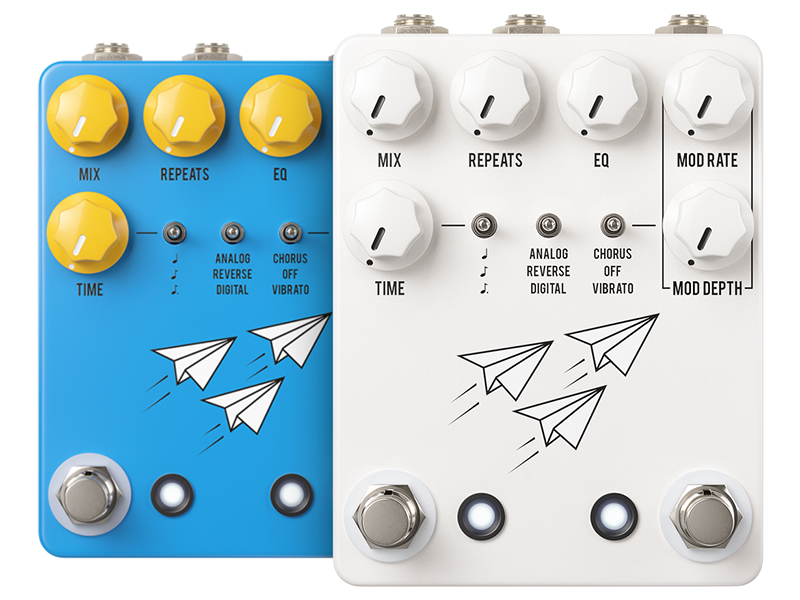
Figure 2: JHS Pedals Flight Delay Pedal shown in both blue and white color options.
Controls:
- MIX Knob: Adjusts the balance between the dry (unaffected) signal and the wet (effected) delay signal. Turning clockwise increases the delay effect's presence.
- REPEATS Knob: Controls the number of delay repetitions. From a single repeat to self-oscillation.
- EQ Knob: Shapes the tone of the delay repeats, allowing for brighter or darker echoes.
- MOD RATE Knob: Determines the speed of the modulation effect (Chorus or Vibrato).
- MOD DEPTH Knob: Controls the intensity or depth of the modulation effect.
- TIME Knob: Sets the delay time, from short slap-back to long, ambient delays.
- Left Toggle Switch (Delay Mode): Selects between Analog, Reverse, and Digital delay types. Musical note symbols indicate notation intervals for tap tempo.
- Right Toggle Switch (Modulation Type): Selects between Chorus, Off (no modulation), and Vibrato.
- Left Footswitch: Engages or bypasses the delay effect.
- Right Footswitch: Typically used for Tap Tempo functionality, allowing you to set the delay time by tapping the switch.
5. Setup
Follow these steps to integrate your Flight Delay Pedal into your audio setup:
- Power Connection: Connect a regulated 9V DC, center-negative power supply (not included) to the power input jack on the pedal. Ensure the power supply meets the specified requirements (85mA minimum).
- Input Connection: Connect your instrument (e.g., guitar) or the output of a preceding effects pedal to the INPUT jack on the Flight Delay Pedal using a standard 1/4-inch instrument cable.
- Output Connection: Connect the OUTPUT jack of the Flight Delay Pedal to your amplifier's input or the input of the next effects pedal in your signal chain using a standard 1/4-inch instrument cable.
- Power On: Once all connections are secure, connect your power supply to a wall outlet. The pedal is now ready for use.
6. Operating Instructions
6.1 Basic Delay Operation
- Engaging the Effect: Press the left footswitch to toggle the delay effect on or off. The LED indicator will illuminate when the effect is active.
- Adjusting Delay Time: Use the TIME knob to set the duration between repeats. Rotate clockwise for longer delay times, counter-clockwise for shorter times.
- Setting Repeats: The REPEATS knob controls the number of echoes. Turn clockwise for more repeats, reaching self-oscillation at maximum settings.
- Blending the Effect: Use the MIX knob to adjust the volume balance between your dry signal and the delayed signal.
- Shaping Delay Tone: The EQ knob allows you to brighten or darken the tone of the delay repeats.

Figure 3: Detail of the TIME knob, used to adjust delay duration.

Figure 4: Detail of the REPEATS knob, controlling the number of delay echoes.

Figure 5: Detail of the MIX knob, used to blend dry and wet signals.

Figure 6: Detail of the EQ knob, for tonal adjustment of delay repeats.
6.2 Delay Modes
Use the left toggle switch to select one of three distinct delay modes:
- Analog: Emulates classic analog delays, providing warm, darker, and decaying repeats.
- Reverse: Plays the delay repeats backward, creating unique textural effects.
- Digital: Offers clear, pristine, and accurate repeats, ideal for modern sounds.
6.3 Modulation Effects
The Flight Delay Pedal includes built-in modulation. Use the right toggle switch to select the modulation type:
- Chorus: Adds a swirling, thickening effect to the delay repeats.
- Off: Disables the modulation effect.
- Vibrato: Introduces a pitch-bending effect to the delay repeats.
Adjust the MOD RATE and MOD DEPTH knobs to fine-tune the speed and intensity of the selected modulation effect.

Figure 7: Detail of the delay mode (left) and modulation type (right) toggle switches.
6.4 Tap Tempo and Notation Intervals
The right footswitch typically functions as a Tap Tempo control. Tap it two or more times to set the delay time. The left toggle switch also features musical note symbols, indicating options for notation intervals (e.g., quarter notes, dotted eighth notes) when using tap tempo. Refer to the official JHS Pedals website or product page for specific tap tempo subdivision instructions.

Figure 8: Detail of the two footswitches, for bypass and tap tempo control.
7. Maintenance
- Cleaning: Use a soft, dry cloth to clean the pedal's exterior. Avoid abrasive cleaners or solvents.
- Storage: When not in use for extended periods, store the pedal in a cool, dry place, away from extreme temperatures and humidity.
- Cable Inspection: Regularly check all audio and power cables for signs of wear or damage. Replace faulty cables immediately.
8. Troubleshooting
- No Sound:
- Ensure the power supply is correctly connected and functioning.
- Check all audio cables for proper connection and integrity.
- Verify that the pedal is engaged (LED illuminated).
- Confirm that the MIX knob is not set to fully dry.
- Unwanted Noise/Hum:
- Use a high-quality, isolated power supply.
- Check for faulty or unshielded audio cables.
- Ensure proper grounding in your electrical setup.
- Effect Not Engaging:
- Press the left footswitch firmly.
- Check power and cable connections.
9. Specifications
| Feature | Specification |
|---|---|
| Model Number | FDBL |
| Item Weight | 1.17 pounds (0.53 kg) |
| Product Dimensions | 6.65 x 4.35 x 3.35 inches (16.9 x 11.0 x 8.5 cm) |
| Power Requirement | 9V DC, Center-Negative |
| Current Draw | 85 Milliamps |
| Hardware Interface | 1/4-inch Audio Input/Output |
10. Warranty Information
JHS Pedals products are covered by a limited warranty against defects in materials and workmanship. The warranty period and terms may vary by region. Please retain your proof of purchase. For detailed warranty information, please visit the official JHS Pedals website or contact customer support.
11. Support
If you encounter any issues not covered in this manual or require further assistance, please visit the official JHS Pedals website for FAQs, additional resources, and contact information for customer support.