
Important Safety Information
Always use this paint sprayer in a well-ventilated area to prevent the accumulation of hazardous fumes. Avoid inhaling paint fumes directly. Wear appropriate personal protective equipment, including safety glasses or goggles, gloves, and a respirator suitable for paint fumes. Do not operate the sprayer near open flames, pilot lights, or any ignition sources. Ensure all electrical connections are secure and the power cord is undamaged. Dispose of paint residues, thinners, and cleaning materials according to local environmental regulations. Keep the device out of reach of children and pets.
Product Overview and Components
The Tilswall 800W Electric Paint Sprayer is designed for efficient and uniform paint application. It features an 800W motor, a 1300ml container, and adjustable spray patterns. Familiarize yourself with the components before operation.

Figure 1: Labeled components of the Tilswall Electric Paint Sprayer. This diagram identifies the main parts of the spray gun and the base unit, including the nozzle locking wheel, clutch switch, trigger, flow adjustment, paint container, handle, and power switch.

Figure 2: Exploded view of the nozzle assembly and key specifications. This image illustrates how the nozzle components fit together and highlights the sprayer's technical data, such as power, maximum viscosity, spray volume, container capacity, and cable/hose lengths.
Included Components:
- 1 x Electric Paint Spray Gun 800W
- 1 x 1300ml Container
- 3 x Plastic Nozzles (φ1.0mm, φ1.8mm, 2.6mm)
- 1 x Cleaning Brush
- 1 x Cleaning Needle
- 3 x Gaskets
- 1 x Lid
- 1 x Measuring Cup
- 1 x Cable (3m)
- 1 x Hose (2.5m)
- 1 x Shoulder Strap
Setup
1. Paint Preparation and Viscosity Adjustment:
Proper paint viscosity is crucial for optimal spray performance and finish quality. Use the included measuring cup to determine the paint's viscosity. Refer to the chart below for recommended viscosity ranges for different paint types. If the paint is too thick, dilute it with the appropriate thinner (not water, unless specified by the paint manufacturer) until it reaches the desired consistency.

Figure 3: Viscosity reference chart. This table provides ideal viscosity ranges (in seconds) for common paint types, measured using a viscosity cup. Wood preservatives, steam towers, oils, disinfectants, and insecticides typically require no dilution.
2. Nozzle Selection:
Select the appropriate nozzle size based on the material you are spraying and the desired finish. The sprayer includes three plastic nozzles: φ1.0mm, φ1.8mm, and 2.6mm.
- φ1.0mm: Suitable for fine finishes on items like chairs, shutters, and art work.
- φ1.8mm: Ideal for general purpose spraying on tables, cabinets, and DIY projects.
- 2.6mm: Best for larger surfaces and thicker materials such as walls, fences, and floors.

Figure 4: Nozzle size guide. This image illustrates the three available nozzle sizes and suggests suitable applications for each, helping users choose the correct nozzle for their project.
3. Assembly:
- Attach the air hose to the compressor unit and the spray gun head. Ensure connections are secure.
- Fill the 1300ml container with your prepared paint.
- Screw the container onto the spray gun head securely.
- Attach the shoulder strap to the compressor unit for easier portability during use.

Figure 5: Complete Tilswall Paint Sprayer unit and accessories. This image displays all parts included with the sprayer, providing a visual reference for assembly and component identification.
Operating Instructions
1. Adjusting Spray Patterns:
The sprayer offers three adjustable spray patterns: vertical, horizontal, and circular. Rotate the air cap to select the desired pattern.
- Horizontal Pattern: For spraying horizontal surfaces or wide areas.
- Vertical Pattern: For spraying vertical surfaces or tall, narrow areas.
- Round Pattern: For small, detailed work or corners.

Figure 6: Spray pattern adjustment. This diagram visually explains how to rotate the nozzle to achieve horizontal, round, or vertical spray patterns, allowing for versatile application.
2. Flow Adjustment:
The paint flow rate can be adjusted between 0-1200 ml/min using the flow adjusting knob near the trigger. Test on a scrap piece of material to find the optimal flow for your paint and project.
3. Spraying Technique:
Maintain a consistent distance (approximately 6-12 inches) from the surface. Move the sprayer in smooth, even strokes, overlapping each pass by about 50%. Release the trigger at the end of each stroke to avoid paint buildup. For best results, apply multiple thin coats rather than one thick coat.
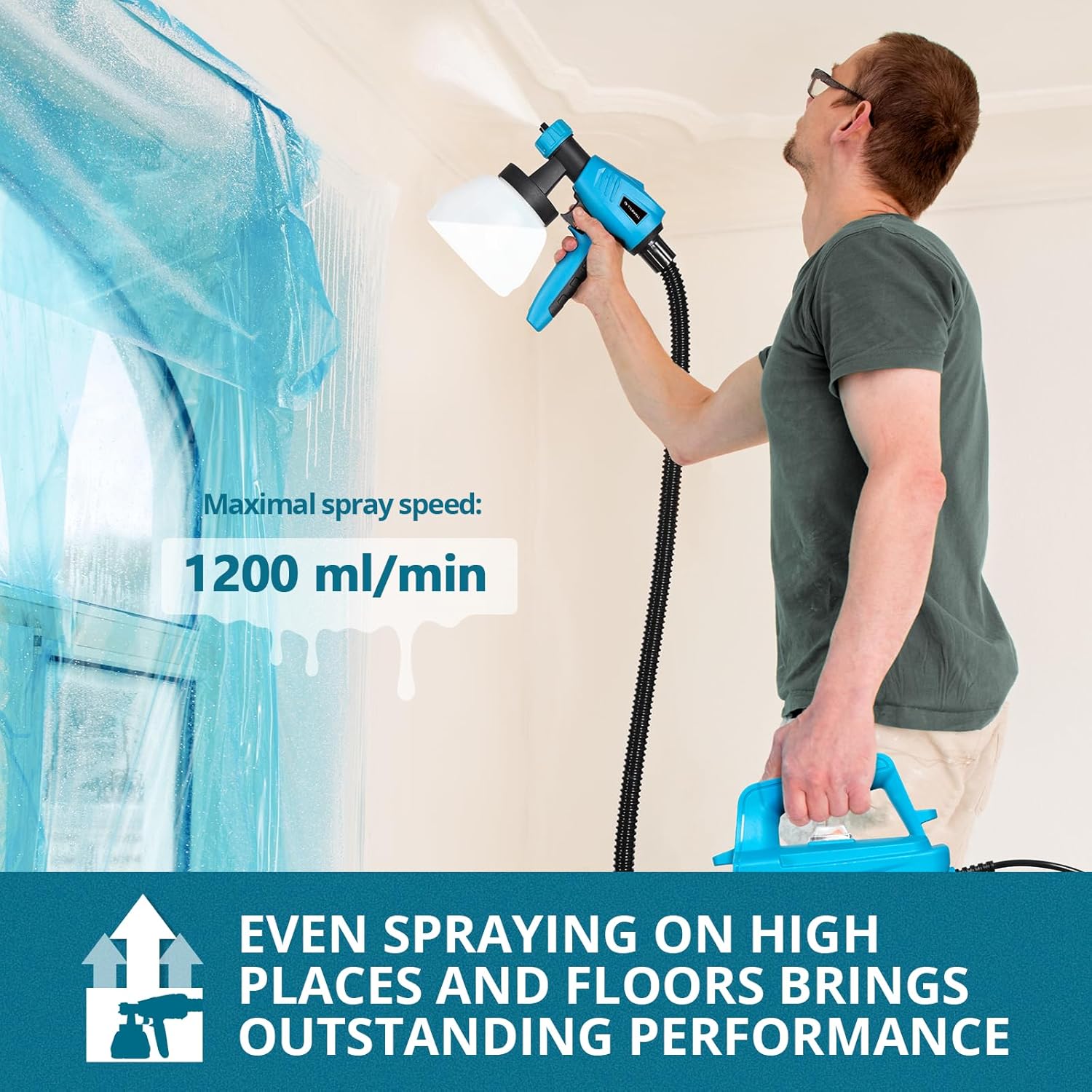
Figure 7: Spraying a ceiling. This image shows a user applying paint to a ceiling, highlighting the sprayer's capability for overhead work and its maximal spray speed of 1200 ml/min.

Figure 8: Portable spraying with shoulder strap. This image demonstrates the use of the included shoulder strap, which reduces arm stress and makes the sprayer suitable for long-term operations like painting a fence.

Figure 9: Floor-based spray gun in use. This image shows the compressor unit placed on the floor, keeping noise and heat away from the user, while the spray gun is used to paint a wall.

Figure 10: Versatile application. This image displays the paint sprayer being used for both outdoor projects, such as painting a roof from a ladder, and indoor tasks like painting a wall, showcasing its wide range of use.
Maintenance and Cleaning
Prompt and thorough cleaning after each use is essential to prevent paint residue from solidifying, which can lead to blockages, leaks, and reduced performance. Never immerse the motor unit in water.
Cleaning Steps:
- Empty any remaining paint from the container back into its original can.
- Pour a small amount of appropriate cleaning solution (water for water-based paints, mineral spirits for oil-based paints) into the container.
- Spray the cleaning solution through the gun until it runs clear.
- Unplug the sprayer and disassemble the spray gun head, including the nozzle, air cap, and container.
- Use the provided cleaning brush and needle to thoroughly clean all disassembled parts, removing any paint residue. Pay special attention to the nozzle and air cap holes.
- Rinse all parts with clean water or appropriate solvent.
- Allow all components to air dry completely before reassembling and storing.

Figure 11: Easy cleaning process. This image illustrates how the spray gun can be completely disassembled for thorough cleaning, emphasizing the importance of using the cleaning needle to clear any nozzle blockages.
Troubleshooting
| Problem | Possible Cause | Solution |
|---|---|---|
| No spray or weak spray | Nozzle clogged; paint too thick; air hose loose; suction tube blocked. | Clean nozzle with cleaning needle; dilute paint to correct viscosity; check air hose connections; clear suction tube. |
| Uneven spray pattern | Nozzle partially clogged; air cap dirty; incorrect spray pattern setting. | Clean nozzle and air cap thoroughly; adjust air cap to desired pattern. |
| Paint leaking from nozzle | Nozzle or air cap not tightened; damaged gasket; paint too thin. | Ensure nozzle and air cap are securely tightened; replace damaged gasket; adjust paint viscosity. |
| Motor not starting | Power cord unplugged; power switch off; circuit breaker tripped. | Check power connection; ensure switch is ON; reset circuit breaker. |
Specifications
| Feature | Specification |
|---|---|
| Model Name | ZYY-800W Paint Sprayer |
| Power | 800W |
| Tank Volume | 1300 ml |
| Max Viscosity | 120 Din/s |
| Max Spray Rate | 1200 ml/min |
| Nozzle Sizes | φ1.0mm, φ1.8mm, 2.6mm |
| Power Source | AC |
| Cord Length | 3 meters (9.84 ft) |
| Hose Length | 2.5 meters (8.2 ft) |
| Product Dimensions | 11W x 24H Centimeters |
| Item Weight | 2220 Grams |
| Material | Plastic |
| Style | Handheld |
Warranty and Customer Support
Tilswall offers a 24-month warranty for this product. If you encounter any issues or require assistance with your paint sprayer within this period, please contact Tilswall customer service. Our team is available to provide support and resolve any concerns you may have.
For customer service inquiries, please refer to the contact information provided with your product packaging or visit the official Tilswall website.


