
FDVBJAFCV-DIA1/25MM-L3.9/100MM
Generic Stainless Steel Conveyor Rollers (5-Pack)
Model: FDVBJAFCV-DIA1/25MM-L3.9/100MM - User Manual
1. Introduction
This manual provides essential information for the safe and efficient use of your Generic Stainless Steel Conveyor Rollers. These robust rollers are designed for various material handling applications, offering durability and smooth operation. Please read this manual thoroughly before installation and operation.
Safety Information
- Always wear appropriate personal protective equipment (PPE) during installation and maintenance.
- Ensure the conveyor system is stable and properly secured before installing rollers.
- Do not exceed the specified load capacity for the rollers.
- Keep hands and loose clothing away from moving parts during operation.
- Regularly inspect rollers for wear or damage and replace as necessary.
2. Package Contents
The package includes the following items:
- 5 x Stainless Steel Conveyor Rollers
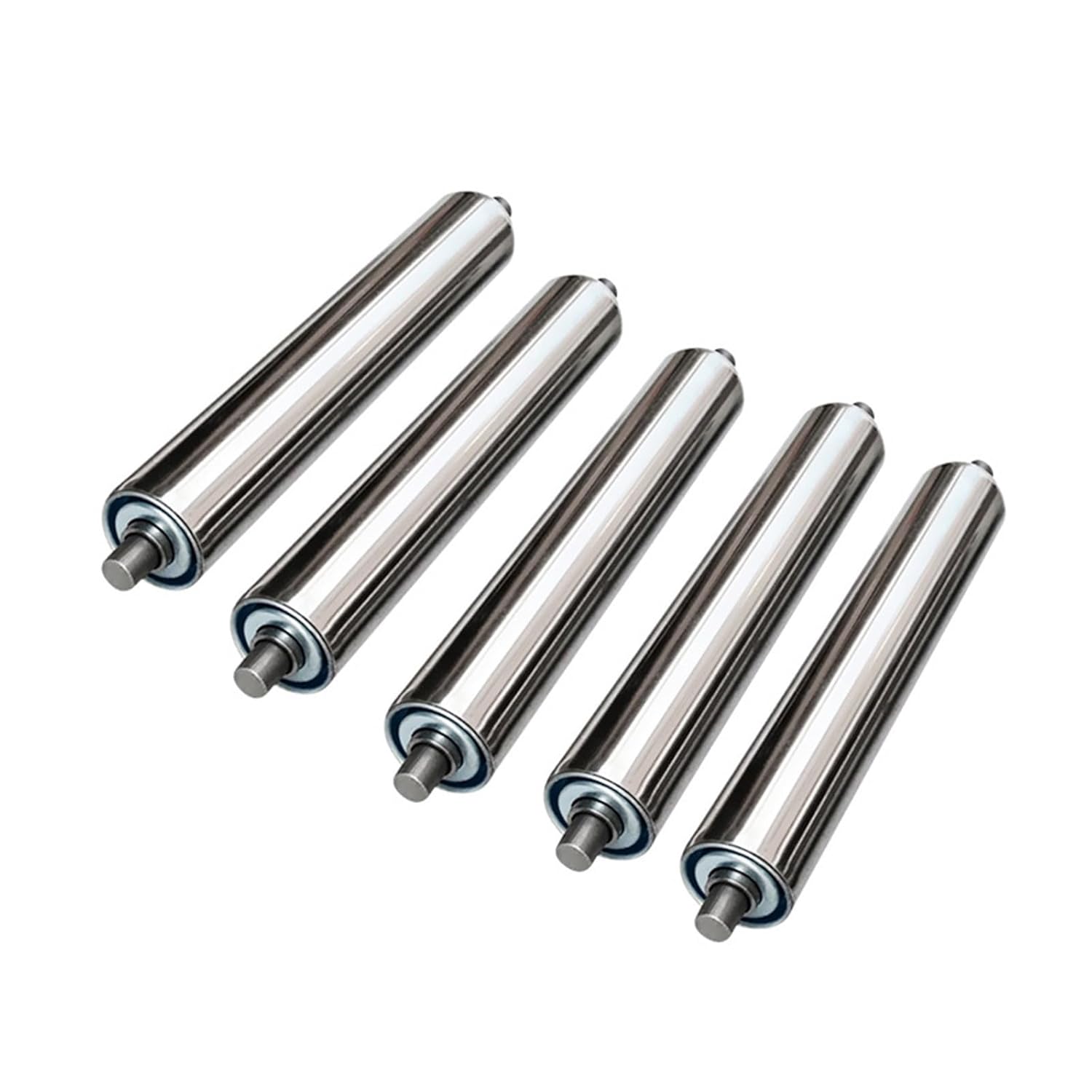
Figure 2.1: Five stainless steel conveyor rollers arranged diagonally. This image shows a set of five stainless steel conveyor rollers, highlighting their polished surface and robust construction.
3. Specifications
These conveyor rollers are constructed from high-quality stainless steel, ensuring durability and resistance to corrosion.
| Feature | Detail |
|---|---|
| Material | Stainless Steel 201 |
| Roller Diameter Options | 25 mm (1.0 in), 38 mm (1.5 in), 50 mm (2.0 in) |
| Shaft Diameter (for 25mm rollers) | 8 mm (3/10 in) |
| Shaft Diameter (for 38mm/50mm rollers) | 12 mm (1/2 in) |
| Load Capacity (25mm roller) | 5 - 40 kg (10 - 88 lb) |
| Load Capacity (38mm roller) | 15 - 65 kg (40 - 130 lb) |
| Load Capacity (50mm roller) | 25 - 80 kg (50 - 170 lb) |
| Installation Method | Spring-fixed |
| Key Features | Waterproof, Rust-proof, Smooth Operation, Low Vibration |
| Model Number | FDVBJAFCV-DIA1/25MM-L3.9/100MM |
| Manufacturer | LONGWEISHOP |
| Country of Origin | China |

Figure 3.1: Detailed technical diagram illustrating the various dimensions of the conveyor rollers, including roller diameter (D), roller bar diameter (d), wall thickness (T), roller surface length (L), roller step length (E), and overall length (W). A table below provides specific measurements for different roller sizes, including load capacity.
4. Setup and Installation
The conveyor rollers feature a spring-fixed mechanism for easy and quick installation into a conveyor frame.
Installation Steps:
- Prepare the Conveyor Frame: Ensure the conveyor frame is clean, stable, and has appropriate slots or holes for roller insertion.
- Compress the Spring: Locate the spring-loaded end of the roller shaft. Gently push or compress the spring to shorten the effective length of the shaft.
- Insert the Roller: Insert the non-spring end of the roller shaft into one side of the conveyor frame's mounting hole.
- Release the Spring: Align the spring-loaded end with the opposite mounting hole. Release the compressed spring, allowing the shaft to extend and securely lock into place within the frame.
- Verify Security: Gently tug on the installed roller to ensure it is firmly seated and does not wobble.
To remove a roller, simply compress the spring on one end and pull the roller out of the frame.
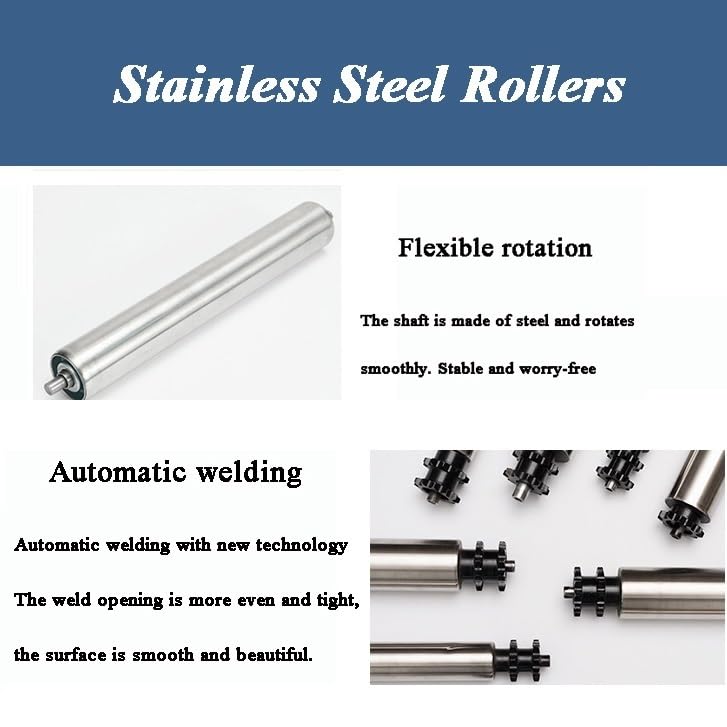
Figure 4.1: This image emphasizes the key features of the stainless steel rollers: flexible rotation due to the steel shaft and the precision of automatic welding technology, resulting in smooth and durable surfaces.
5. Operating Instructions
These stainless steel conveyor rollers are designed for passive material transport in various industrial and commercial settings. They facilitate the movement of goods with minimal friction and noise.
General Operation:
- Ensure the items being transported are within the specified load capacity of the rollers.
- Place items gently onto the conveyor rollers to avoid sudden impacts.
- Monitor the flow of materials to prevent jams or blockages.
- The rollers operate without external power, relying on gravity or manual push for movement.
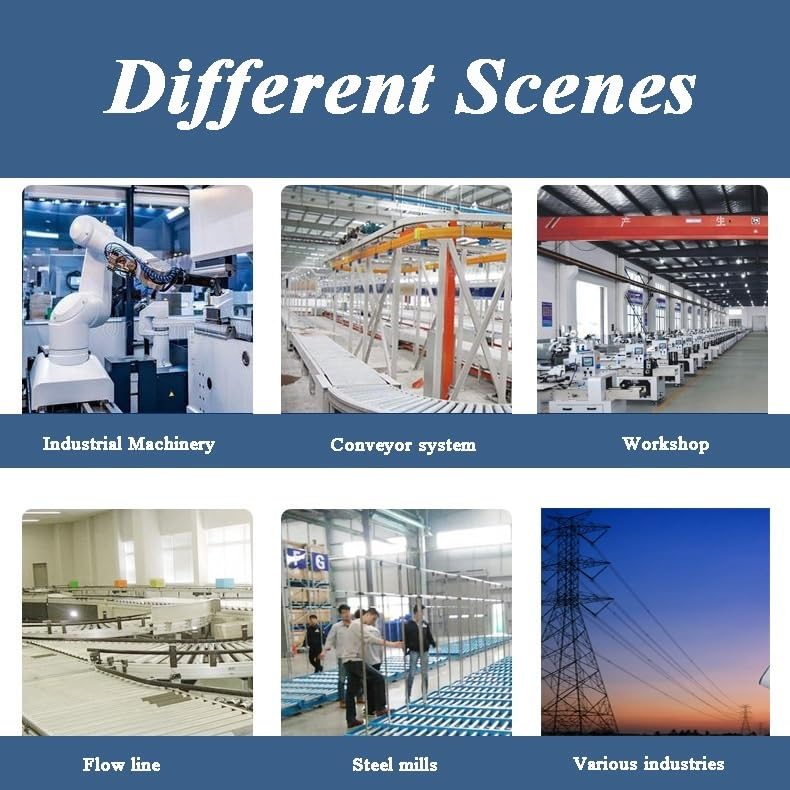
Figure 5.1: A collage of images demonstrating the diverse applications of these conveyor rollers in different industrial environments, including industrial machinery, conveyor systems, workshops, flow lines, steel mills, and other manufacturing industries.
6. Maintenance
Regular maintenance ensures the longevity and optimal performance of your conveyor rollers.
Maintenance Schedule:
- Daily/Weekly: Visually inspect rollers for any signs of damage, excessive wear, or foreign objects lodged between rollers or in bearings.
- Monthly: Clean the roller surfaces and shafts to remove dust, debris, or accumulated grime. Use a damp cloth and mild detergent if necessary, then dry thoroughly.
- Quarterly: Check the rotation of each roller. If any roller exhibits stiffness, excessive noise, or uneven movement, inspect its bearings.
- As Needed: Replace any rollers that are bent, heavily worn, or have damaged bearings to maintain smooth operation and prevent damage to transported goods.
The stainless steel construction provides inherent resistance to rust and water, reducing the need for specialized rust prevention.

Figure 6.1: A close-up view of two conveyor rollers, pointing out their construction from stainless steel material, the integration of precision bearings for flexible operation, and the seamless welding for enhanced durability and quality.
7. Troubleshooting
This section addresses common issues you might encounter with your conveyor rollers.
| Problem | Possible Cause | Solution |
|---|---|---|
| Rollers are not rotating smoothly or are stiff. | Accumulated dirt/debris in bearings or on roller surface; damaged bearing; bent roller shaft. | Clean rollers and bearings. If problem persists, inspect for damage and replace faulty rollers. |
| Excessive noise during operation. | Worn or damaged bearings; improper installation; heavy load. | Check installation for proper seating. Inspect and replace worn bearings. Ensure load is within capacity. |
| Items are not moving consistently. | Uneven roller height; damaged rollers; insufficient incline (for gravity conveyors). | Verify all rollers are installed at the same height. Replace any damaged rollers. Adjust conveyor incline if applicable. |
| Rollers are falling out of the frame. | Improper installation; damaged spring mechanism. | Re-install rollers, ensuring the spring mechanism is fully engaged. Replace rollers with damaged springs. |
8. Warranty Information
Specific warranty details for this product are not provided in the available information. Please refer to your purchase documentation or contact the seller for warranty terms and conditions.
9. Customer Support
For further assistance, technical support, or inquiries regarding your Generic Stainless Steel Conveyor Rollers, please contact your retailer or the manufacturer, LONGWEISHOP.
Manufacturer: LONGWEISHOP
Model Number: FDVBJAFCV-DIA1/25MM-L3.9/100MM
Ask a question about this manual
Ask about setup, troubleshooting, compatibility, parts, safety, or missing instructions. Manuals+ will review the question and use this page’s manual context to help answer it.