1. Introduction
This manual provides comprehensive instructions for the installation, operation, and maintenance of the PowMr 35A MPPT Solar Charge Controller. This device is designed to efficiently manage power flow from solar panels to a battery bank in 12V or 24V systems. It is compatible with various battery types, including lead-acid (sealed, gel, flooded) and lithium (LiFePO4, lithium-ion) batteries.

Image 1.1: Front view of the PowMr 35A MPPT Solar Charge Controller, showing the LCD display and control buttons.
2. Safety Information
Please read and understand all safety instructions before installing or operating the controller. Failure to follow these instructions may result in electric shock, fire, or severe injury.
- Ensure all power sources (solar panels, battery) are disconnected before wiring or performing maintenance.
- Install the controller in a well-ventilated area to prevent overheating.
- Use appropriate circuit breakers or fuses for both the solar panel array and the battery bank.
- Avoid short-circuiting the battery terminals or solar panel connections.
- This controller is designed for indoor use. Protect it from direct sunlight, moisture, and corrosive environments.
- Consult a qualified electrician or solar professional if you are unsure about any part of the installation process.
3. Product Features
The PowMr 35A MPPT Solar Charge Controller incorporates several features for efficient and safe solar power management:
- MPPT Technology: Advanced Maximum Power Point Tracking (MPPT) technology ensures up to 99% tracking efficiency and 98% peak conversion efficiency, maximizing solar panel output.
- Battery Compatibility: Supports 12V and 24V battery systems, including lead-acid (sealed, gel, flooded) and lithium (LiFePO4, lithium-ion) battery types.
- Charging Algorithm: Features a 3-stage charging algorithm for lead-acid batteries (bulk, boost, float) and a 2-stage algorithm for lithium batteries (bulk, boost) for optimal battery health.
- System Capacity: Maximum PV input of 420W for 12V battery systems and 840W for 24V battery systems. Maximum PV Open-Circuit Voltage is less than 80V.
- Customizable Settings: Allows for adjustment of absorption voltage, float voltage, low voltage cutoff, and load timer to suit specific battery requirements.
- Safety Protections: Includes built-in protections against short circuit, overcurrent, reverse polarity, over-discharge, overcharge, and over-temperature.
- User Interface: Equipped with a detailed LCD screen and four control buttons for easy monitoring and configuration.
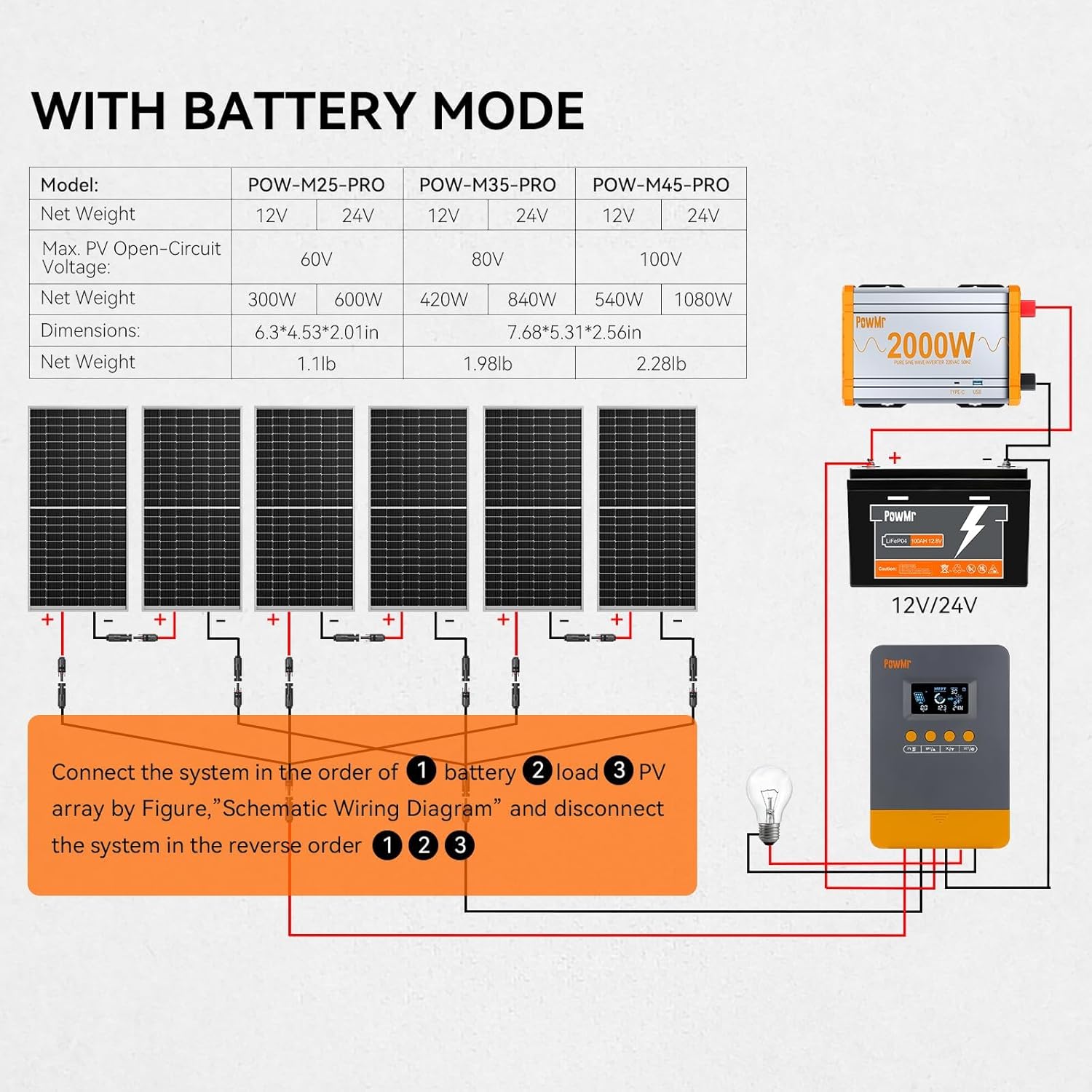
Image 3.1: Diagram illustrating the various built-in electronic protections of the solar charge controller, including PV overcurrent, PV short circuit, PV reverse polarity, battery reverse polarity, battery over voltage, battery over discharge, lithium battery low temperature, load overcurrent, and overtemperature protection.
4. Setup and Installation
Proper installation is crucial for the safe and efficient operation of your solar charge controller. Follow these steps carefully.
4.1 Wiring Sequence
Connect the system components in the following order to ensure safety and prevent damage:
- Connect the Battery: Connect the battery to the controller first. Ensure correct polarity.
- Connect the Load: If applicable, connect the DC load to the controller.
- Connect the PV Array: Finally, connect the solar panels to the controller.
To disconnect the system, reverse this order: first disconnect the PV array, then the load, and finally the battery.

Image 4.1: Schematic diagram showing the connection of the PowMr MPPT Solar Charge Controller to solar panels and a battery bank, highlighting its fast and efficient operation.

Image 4.2: Visual guide for a two-step connection process: 1) Wiring the battery (with breaker open), 2) Wiring solar panels (with breaker open), 3) Connect battery (controller powers on, battery breaker closed), 4) Connect solar panels (charging begins, both PV and battery breakers closed).
4.2 Battery Type Selection
The controller supports various battery types. Ensure the correct battery type is selected in the settings for optimal charging. Refer to the operating instructions for details on how to adjust this setting.

Image 4.3: Detailed diagram showing the connection of multiple solar panels to the controller and battery, along with a table outlining specifications for different models (POW-M25-PRO, POW-M35-PRO, POW-M45-PRO) including net weight, max PV open-circuit voltage, and dimensions. It also illustrates the connection order: battery, load, then PV array.
5. Operating Instructions
The controller features an LCD screen and four buttons for monitoring and configuration.
5.1 LCD Display and Buttons
The LCD screen displays real-time system information such as PV input, battery voltage, and load status. The four buttons allow navigation through menus and adjustment of settings.

Image 5.1: Close-up view of the PowMr solar charge controller's LCD screen, showing various icons and numerical values for PV input, battery status, and load output.
5.2 Battery Voltage Calibration
If there is a discrepancy between the battery voltage monitored by the controller and a multimeter reading, you can calibrate the controller's voltage reading.
- Long press the BAT/▲ key to enter the setting program.
- Use the BAT/▲ and DC/▼ keys to adjust the value.
- Press the SET/★ key to save and confirm.

Image 5.2: Instructions on how to calibrate battery voltage on the controller's LCD screen using the BAT/▲ and DC/▼ keys.
5.3 Load Work Modes
The controller offers multiple load work modes to manage the connected DC load:
- 00H: Load Turn OFF (Load is always off).
- 24H: Load always Turn ON (Load is always on).
- 01H~23H: Time control (Set the duration for which the load remains ON).

Image 5.3: Visual representation of the three load work modes (00H, 24H, 01H~23H) available on the PowMr solar charge controller.
6. Maintenance
Regular maintenance ensures the longevity and optimal performance of your solar charge controller.
- Inspection: Periodically inspect all wiring connections for tightness and corrosion.
- Cleaning: Keep the controller clean and free from dust and debris. Use a dry cloth for cleaning.
- Ventilation: Ensure that the installation area maintains adequate ventilation to prevent heat buildup.
- Battery Check: Regularly check the battery terminals for corrosion and ensure they are clean and tight.
7. Troubleshooting
This section provides guidance on common issues and their potential solutions. The controller's LCD screen may display fault codes to indicate specific problems.
7.1 Fault Codes and Solutions
| Fault Code | Fault Cause | Solution |
|---|---|---|
| 18 | Input photovoltaic voltage too low | Increase the number of solar panels or connect them in series to raise the photovoltaic input voltage. |
| 60 | Overtemperature protection | Allow the equipment to cool to below the recovery temperature to resume normal charging and discharging. |
| 63 | Battery voltage too high | Measure to confirm if battery voltage exceeds rated voltage and disconnect photovoltaic array circuit breaker. |
| 65 | Battery voltage too low | Charge the battery until voltage exceeds the undervoltage recovery point. Refer to '5.7 Default Parameters for Different Battery Types' for more details. |
| 71 | Input photovoltaic voltage too high | Reduce the number of photovoltaic arrays connected to the controller to lower photovoltaic input, or adjust series and parallel connections to reduce voltage or current values. |
| 73 | Overcharging current | Reduce output terminal load to ensure total load is within rated limits of the controller and battery. |
| 72 | Overdischarging current | Reduce output terminal load to ensure total load is within rated limits of the controller and battery. |

Image 7.1: The controller's backlight LCD screen displaying a working mode (Boost Charging Mode) and a table detailing various fault codes, their causes, and corresponding solutions.
8. Specifications
Below are the technical specifications for the PowMr 35A MPPT Solar Charge Controller:
- Brand: PowMr
- Model: 35Amp MPPT Controller
- Max PV Input (12V System): 420W
- Max PV Input (24V System): 840W
- Max. PV Open-Circuit Voltage: <80V
- System Voltage: 12V/24V (DC)
- Display Type: LCD
- Item Weight: 2 Pounds (0.91 kg)
- Package Dimensions: 7.87 x 5.91 x 2.76 inches (20 x 15 x 7 cm)
- Included Components: MPPT Solar Charge Controller
- Color: Orange
- Batteries Required: No (for controller operation, but requires external battery bank)
9. Warranty and Support
For warranty information, technical support, or service inquiries, please refer to the official PowMr website or contact their customer service department. Keep your purchase receipt as proof of purchase.
PowMr Customer Support: Visit the PowMr Store on Amazon