
1. Introduction
This manual provides detailed instructions for the installation, configuration, and maintenance of your CCYLEZ B85M K Motherboard. Please read this manual thoroughly before proceeding with installation to ensure correct setup and optimal performance.
2. Safety Information
Always observe the following safety precautions:
- Disconnect the power supply from your computer before installing or removing any components.
- Wear an anti-static wrist strap to prevent electrostatic discharge (ESD) damage to components.
- Handle components by their edges, avoiding contact with pins or circuitry.
- Ensure proper ventilation within your computer case to prevent overheating.
- If you are unsure about any installation step, consult a qualified technician.
3. Package Contents
Verify that all items are present in your package:
- 1 x CCYLEZ B85M K Motherboard
- 1 x Metal Plate (I/O Shield)
- 1 x Connection Cable (likely SATA cable)
4. Product Overview
The CCYLEZ B85M K Motherboard is designed for desktop computing, offering robust features for enhanced performance.

Image 1: Overview of CCYLEZ B85M K Motherboard key features. This image highlights the dual DDR3 memory slots supporting up to 16GB, the LGA1150 CPU socket, M.2 NGFF/NVMe interface for high-speed data transfer, a PCI Express x16 slot for graphics cards, and a Gigabit network port.
Key Features:
- CPU Support: LGA1150 socket for Intel Core i3/i5/i7 4th and 5th generation processors.
- Memory: 2 x UDIMM DDR3 slots, supporting 1066/1333/1600MHz, up to 16GB total capacity.
- Storage: 3 x SATA3.0 ports, 2 x SATA2.0 ports.
- Expansion Slots: 1 x PCI Express x16 slot for graphics cards, 1 x PCI Express x1 slot.
- Networking: 1 x RTL8111H Gigabit NIC for high-speed wired internet.
- USB Ports: 2 x USB2.0, 2 x USB3.0.
- Video Output: VGA interface.
- Power Design: Full solid capacitors for stable power delivery and enhanced durability.
- Construction: Premium PCB material for stable and efficient performance.
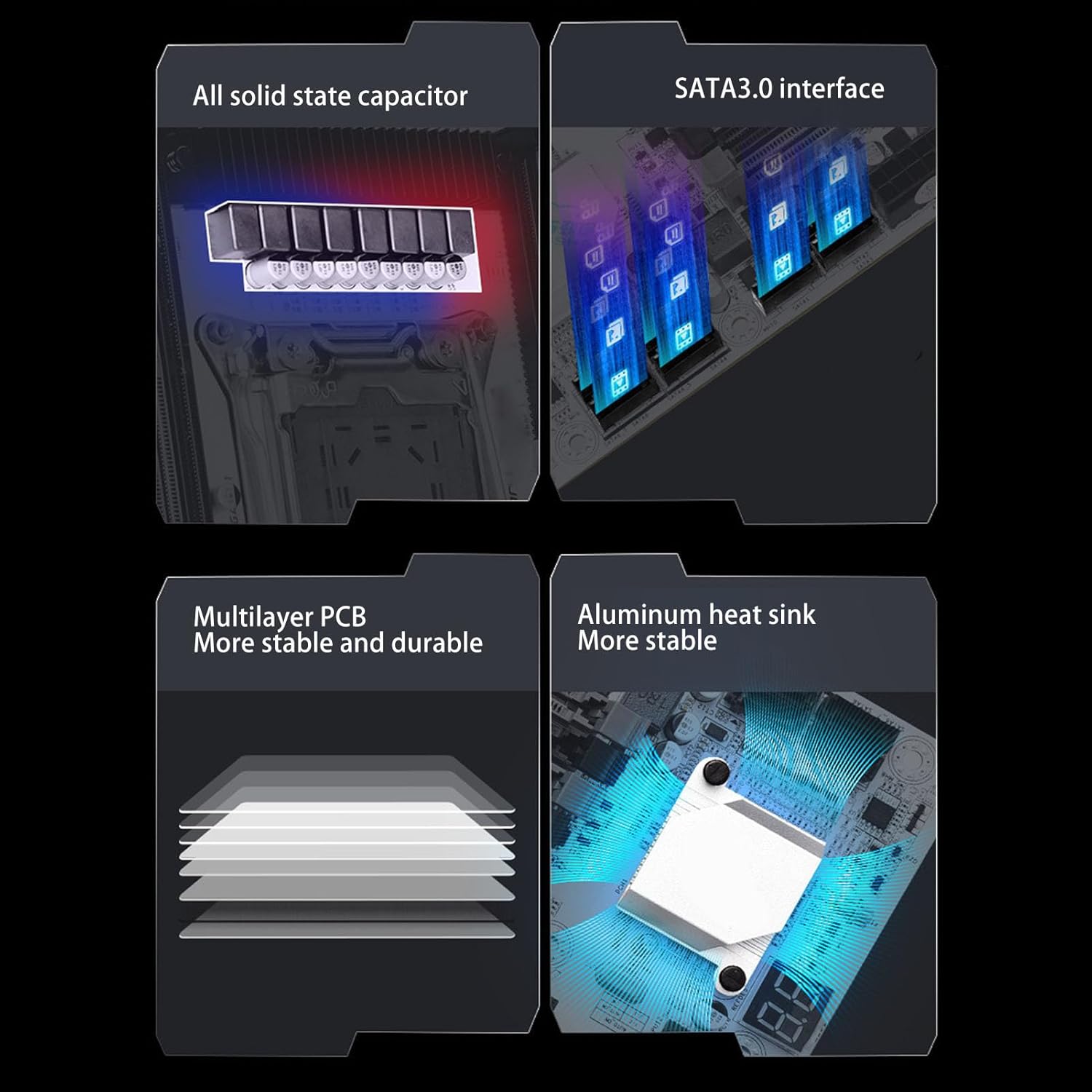
Image 2: Detailed view of motherboard components. This image illustrates the full solid state capacitors for stable power, the SATA3.0 interfaces for high-speed storage, the multilayer PCB design for durability, and the aluminum heat sink for efficient cooling.
Rear I/O Panel:
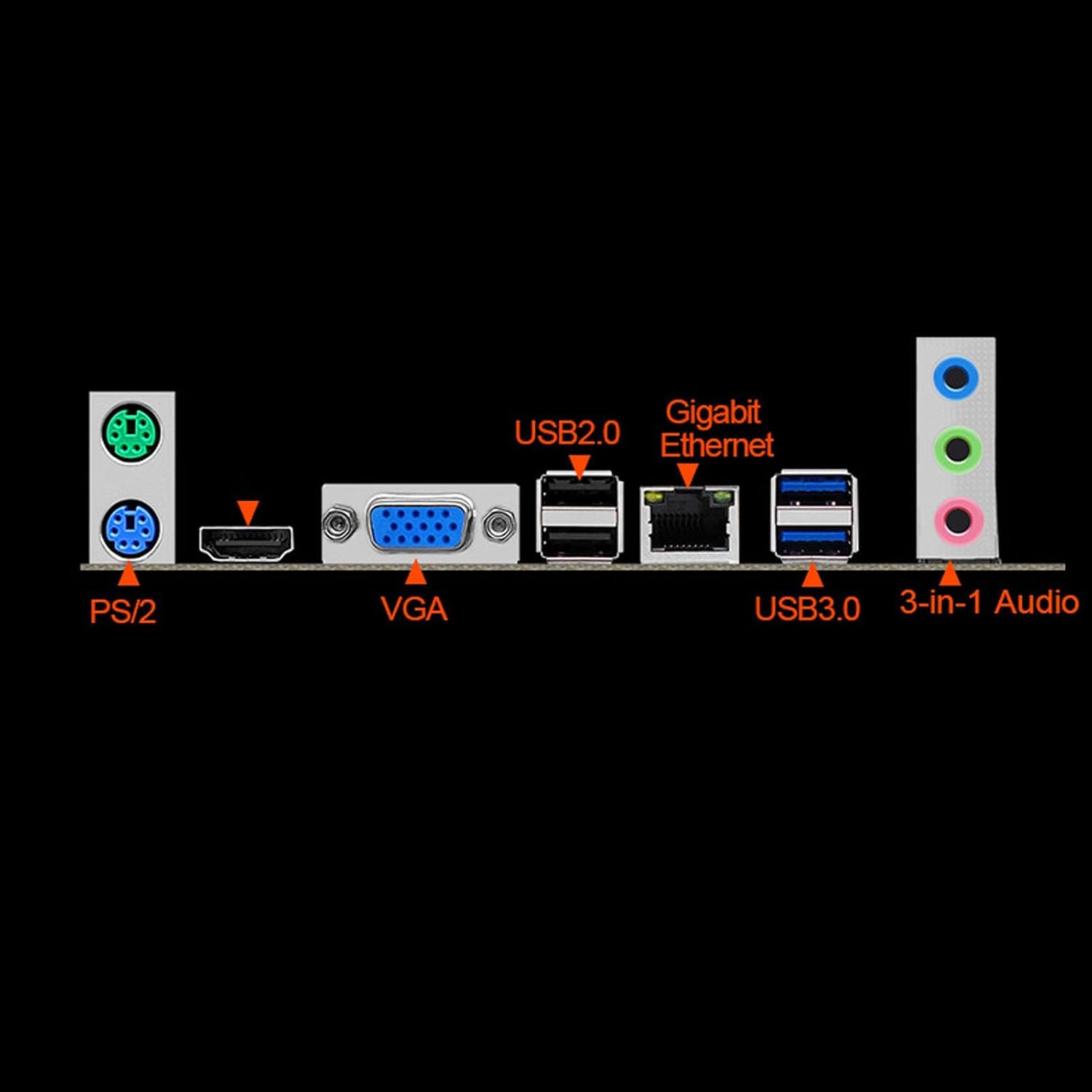
Image 3: Rear Input/Output (I/O) Panel. This image displays the various ports available on the rear of the motherboard, including PS/2 ports for keyboard/mouse, a VGA port for display output, USB 2.0 ports, a Gigabit Ethernet port, USB 3.0 ports, and 3-in-1 audio jacks.
- 2 x PS/2 Ports (Keyboard/Mouse)
- 1 x VGA Port
- 2 x USB 2.0 Ports
- 1 x Gigabit Ethernet Port
- 2 x USB 3.0 Ports
- 3 x Audio Jacks (Line In, Line Out, Mic In)
5. Setup and Installation
Follow these steps carefully to install your motherboard and components.
5.1 Motherboard Installation
- Prepare the Case: Install the I/O shield (metal plate) into the rear opening of your computer case.
- Mount the Motherboard: Carefully align the motherboard with the standoffs in your case and secure it with screws. Ensure no components are touching the case directly without proper insulation.
5.2 CPU Installation (LGA1150)
- Open CPU Socket: Gently push down the load lever on the LGA1150 socket and pull it to the side to open the metal retention frame.
- Insert CPU: Align the triangular mark on the CPU with the corresponding mark on the socket. Carefully place the CPU into the socket without forcing it.
- Close CPU Socket: Close the metal retention frame and push the load lever back into its locked position.
- Install CPU Cooler: Apply thermal paste (if not pre-applied) and install your CPU cooler according to its manufacturer's instructions. Connect the CPU fan cable to the "CPU_FAN" header on the motherboard.
5.3 Memory (RAM) Installation
- Open DIMM Slots: Open the clips at both ends of the DDR3 memory slots.
- Insert RAM Modules: Align the notch on the DDR3 memory module with the key in the DIMM slot. Press down firmly on both ends of the module until the clips snap into place.
- Dual Channel Configuration: For optimal performance, install memory modules in matching slots (e.g., both in the same color slots if applicable, or as indicated in the motherboard diagram). This motherboard has 2 UDIMM DDR3 slots.
5.4 Storage Device Installation (SATA)
- Connect SATA Data Cable: Connect one end of the SATA data cable to a SATA port on the motherboard (SATA3.0 for faster drives) and the other end to your SSD or HDD.
- Connect SATA Power Cable: Connect a SATA power cable from your power supply unit (PSU) to your SSD or HDD.
5.5 Graphics Card Installation (PCI Express x16)
- Open PCIe Slot Latch: If present, open the retention latch at the end of the PCI Express x16 slot.
- Insert Graphics Card: Align your graphics card with the PCI Express x16 slot and press down firmly until it is fully seated and the latch (if applicable) snaps into place.
- Secure Card: Secure the graphics card to the computer case with a screw.
- Connect Power: If your graphics card requires additional power, connect the appropriate PCIe power cables from your PSU.
5.6 Power Supply Connection
- 24-Pin ATX Power: Connect the main 24-pin ATX power connector from your PSU to the corresponding socket on the motherboard.
- 4-Pin ATX 12V Power: Connect the 4-pin ATX 12V power connector (CPU power) from your PSU to the socket near the CPU.
5.7 Front Panel and Peripheral Connections
- Front Panel Headers: Connect the power switch, reset switch, HDD LED, and power LED cables from your computer case to the front panel header pins on the motherboard. Refer to the motherboard diagram for correct pin assignments.
- USB Headers: Connect front panel USB 2.0 and USB 3.0 cables to the corresponding headers on the motherboard.
- Audio Header: Connect the front panel audio cable to the "F_AUDIO" header.
- Peripherals: Connect your keyboard, mouse, monitor (to the graphics card or motherboard VGA port), and Ethernet cable to the rear I/O panel.
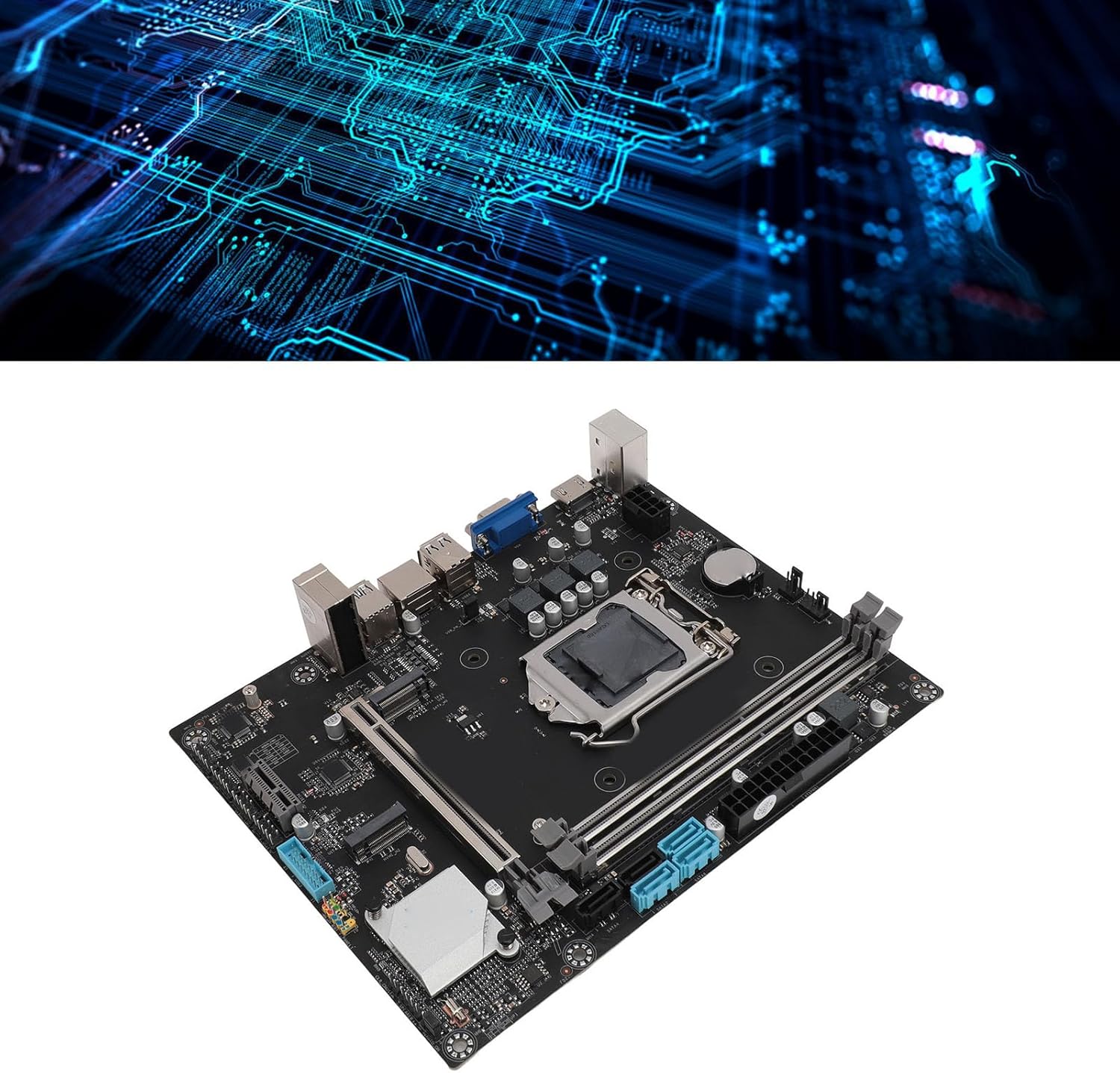
Image 4: Angled view of the CCYLEZ B85M K Motherboard. This image provides a general perspective of the motherboard layout, including the CPU socket, RAM slots, and various connectors.
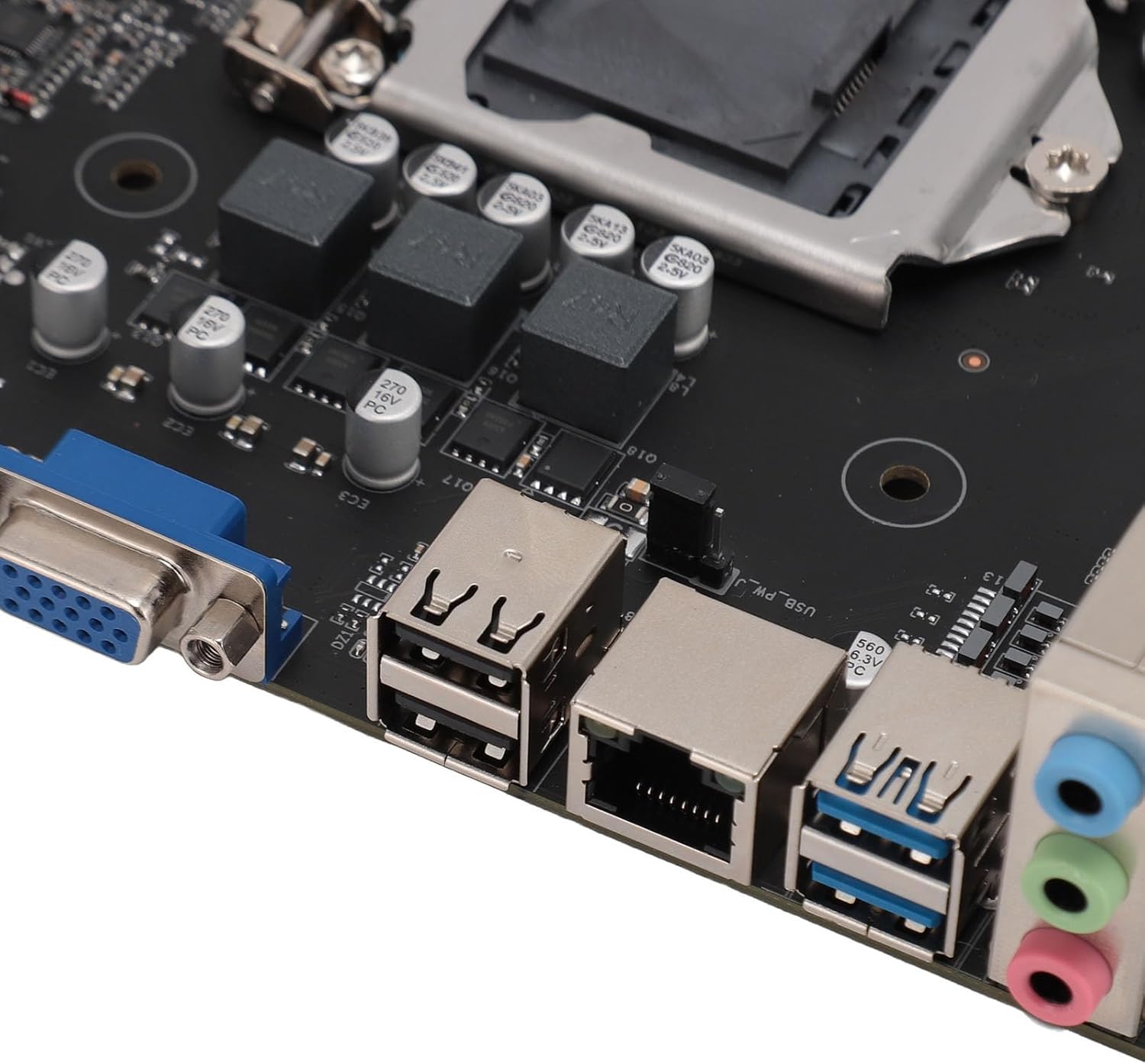
Image 5: Close-up of USB, Ethernet, and Audio Ports. This image provides a detailed view of the connectivity options on the rear I/O panel, specifically highlighting the USB 2.0, USB 3.0, Gigabit Ethernet, and audio ports.

Image 6: Close-up of Internal Headers and SATA Ports. This image shows the front panel headers (power, reset, LEDs), the USB 3.0 header, and the SATA data ports for connecting storage devices.

Image 7: Close-up of 24-Pin ATX Power Connector and SATA Ports. This image details the main power input for the motherboard and additional SATA ports.
6. Operating Instructions
- Power On: After all components are installed and connected, connect the power cord to your PSU and press the power button on your computer case.
- BIOS/UEFI Setup: During startup, press the designated key (usually DEL or F2) to enter the BIOS/UEFI setup utility. Here you can configure boot order, system time, and other advanced settings.
- Operating System Installation: Insert your operating system installation media (USB drive or DVD) and follow the on-screen prompts to install your preferred OS.
- Driver Installation: After OS installation, install the necessary drivers for your motherboard (chipset, audio, LAN, etc.) from the manufacturer's website or included media.
7. Maintenance
Regular maintenance helps ensure the longevity and stable operation of your motherboard and system.
- Dust Removal: Periodically clean dust from inside your computer case, especially from fans and heatsinks, using compressed air. Ensure the system is powered off and unplugged before cleaning.
- BIOS/UEFI Updates: Check the manufacturer's website for BIOS/UEFI updates. Updates can improve compatibility, stability, and performance. Follow the update instructions carefully to avoid system damage.
- Cable Management: Ensure cables are neatly routed to improve airflow and prevent interference.
8. Troubleshooting
If you encounter issues, refer to the following common troubleshooting steps:
- No Power:
- Check if the power supply unit (PSU) is switched on.
- Ensure all power cables (24-pin ATX, 4-pin CPU, PCIe for graphics card) are securely connected.
- Verify front panel power switch connection to the motherboard.
- No Display:
- Ensure your monitor is connected to the correct video output (graphics card or motherboard VGA port).
- Reseat the graphics card and memory modules.
- Test with a single RAM stick if multiple are installed.
- System Instability/Crashes:
- Check CPU and GPU temperatures. Ensure coolers are properly installed.
- Verify RAM modules are correctly seated.
- Run memory diagnostic tools.
- Ensure all drivers are up to date.
- Peripheral Not Detected:
- Try connecting the peripheral to a different USB port.
- Check device manager for driver issues.
9. Specifications
Detailed technical specifications for the CCYLEZ B85M K Motherboard:
| Feature | Specification |
|---|---|
| Motherboard Model | B85M K |
| Form Factor | M-ATX |
| CPU Socket | LGA 1150 |
| Compatible Processors | Intel Core i3-4xxx, i5-4xxx, i7-4xxx, i3-5xxx, i5-5xxx, i7-5xxx |
| Chipset | Intel B85 |
| Memory Slots | 2 x UDIMM DDR3 |
| Memory Type Supported | DDR3 1066/1333/1600MHz |
| Max Memory Capacity | 16GB |
| Graphics Card Slot | 1 x PCI Express x16 |
| Expansion Slots | 1 x PCI Express x1 |
| SATA Ports | 3 x SATA3.0, 2 x SATA2.0 (Total 5) |
| USB Ports (Rear) | 2 x USB2.0, 2 x USB3.0 (Total 4) |
| Ethernet | 1 x RTL8111H Gigabit NIC |
| Video Output | 1 x VGA |
| Audio | 3-in-1 Audio Jacks |
| Power Connectors | 1 x 24-Pin ATX, 1 x 4-Pin ATX 12V |
| Built-in Battery | 1 x 240mAh CR2032 Battery |
10. Warranty and Support
For product support, please refer to the retailer where the product was purchased. This product typically includes a standard return policy of 30 days from the date of purchase for refund or replacement, as per retailer terms.
Optional protection plans may be available for extended coverage:
- 3-Year Protection Plan
- 4-Year Protection Plan
- Complete Protect (monthly subscription)
Please check with your retailer for details on available protection plans and their terms.