
FLISH HSR10RM
THK Linear Carriage HSR10RM User Manual
Model: HSR10RM | Brand: FLISH
1. Introduction
This manual provides essential information for the proper setup, operation, and maintenance of the THK Linear Carriage HSR10RM. This component is designed for precision linear motion applications, offering high rigidity and excellent durability.
Key features of the HSR10RM include:
- 4 directions of equal load capacity, ensuring stable performance under various load conditions.
- High rigidity design, contributing to precise and stable linear movement.
- Self-aligning ability, which helps absorb mounting errors and ensures smooth operation.
- Excellent durability, providing a long service life in demanding environments.
- Suitable for high-speed movement, significantly reducing the driving horsepower required by the machine.

Figure 1.1: The THK Linear Carriage HSR10RM block, a precision component for linear motion systems.
2. Components and Dimensions
The HSR10RM linear carriage is designed to integrate with a linear rail to provide precise guidance. Understanding its dimensions and components is crucial for proper installation and application.
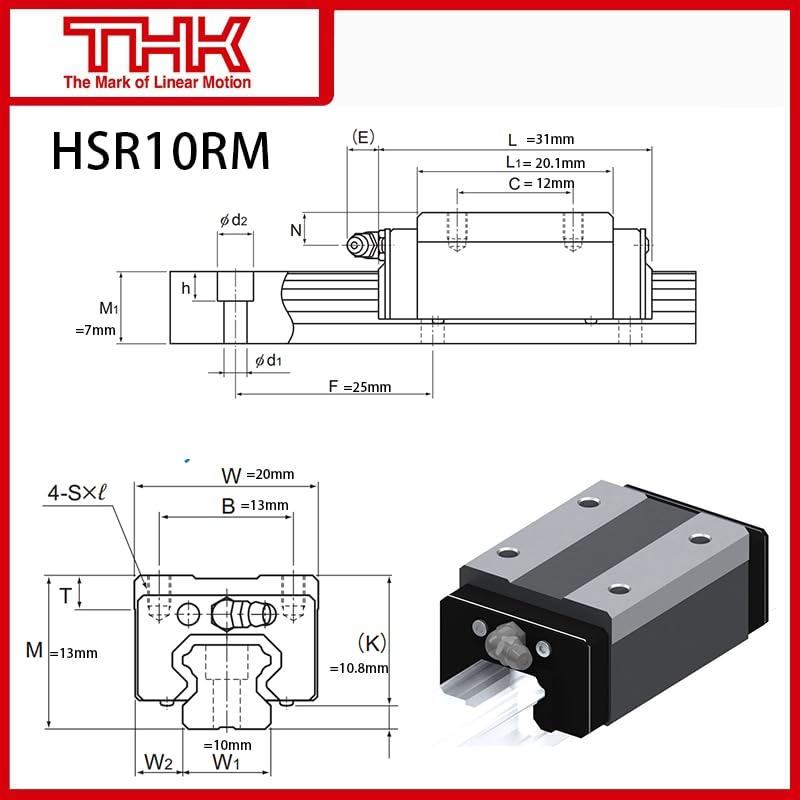
Figure 2.1: Technical drawing of the HSR10RM linear carriage, showing key dimensions such as length (L), width (W), height (M), and mounting hole specifications.

Figure 2.2: The HSR10RM linear carriage shown mounted on a compatible linear rail, illustrating its operational configuration.

Figure 2.3: Detailed technical specifications and outer dimensions for HSR-RM models, including HSR8RM and HSR10RM. This diagram provides critical measurements for integration and design.
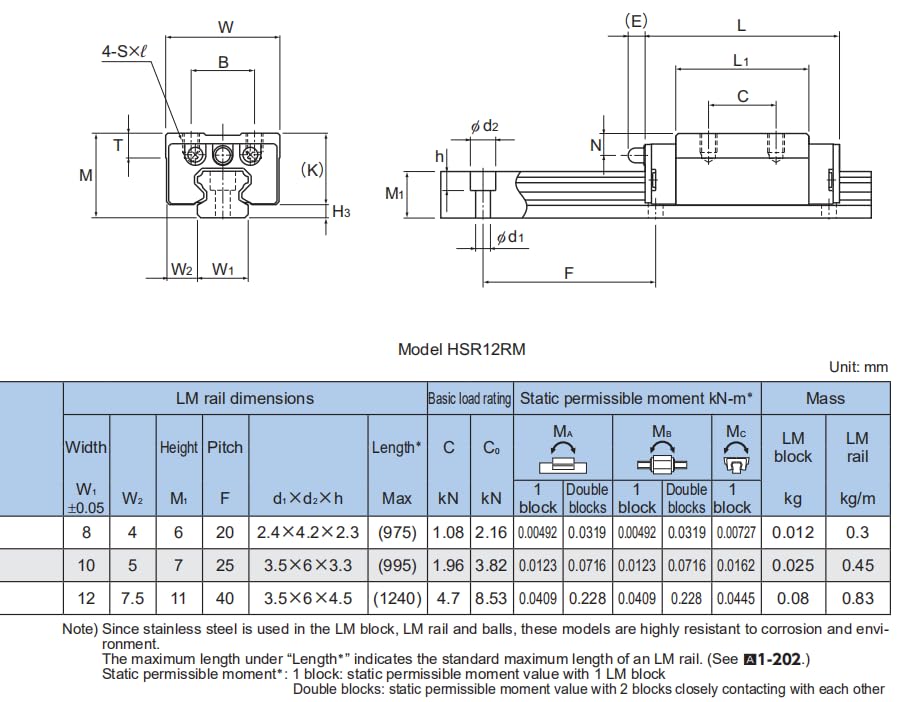
Figure 2.4: Detailed technical specifications and outer dimensions for the HSR12RM model, including LM rail dimensions, basic load rating, static permissible moment, and mass. Note that while this image shows HSR12RM, the principles apply to the HSR10RM model's design characteristics.
3. Setup and Installation
Proper installation is critical for the optimal performance and longevity of the THK Linear Carriage HSR10RM. Follow these guidelines carefully.
3.1 Pre-Installation Checks
- Ensure the mounting surface is clean, flat, and free from burrs or debris.
- Verify that the linear rail is correctly aligned and securely fastened.
- Inspect the linear carriage for any signs of damage or foreign particles.
3.2 Mounting Procedure
- Carefully slide the HSR10RM linear carriage onto the linear rail. Avoid dropping or forcing the carriage, as this can damage the internal ball bearings.
- Align the mounting holes on the carriage with the corresponding holes on your application's mounting surface.
- Insert appropriate mounting screws (refer to Figure 2.1 for screw hole dimensions) and hand-tighten them initially.
- Gradually tighten the screws in a diagonal pattern to ensure even pressure and prevent distortion. Use a torque wrench to apply the recommended torque specifications for your screw size.
- After tightening, manually move the carriage along the rail to check for smooth, unobstructed motion.
3.3 Post-Installation
- Apply a thin layer of appropriate lubricant to the rail and carriage if not pre-lubricated (refer to Maintenance section).
- Perform a test run to confirm proper functionality under operational loads.
4. Operating Principles
The THK Linear Carriage HSR10RM operates on the principle of recirculating ball bearings, providing smooth and precise linear motion. Its design allows for equal load capacity in four directions (radial, reverse radial, and lateral), making it versatile for various applications.
The self-aligning capability of the HSR10RM helps to absorb minor mounting errors, ensuring consistent performance even with slight misalignments. This contributes to reduced friction and extended service life.
For optimal performance, ensure that the operating environment is free from excessive dust, moisture, or corrosive substances. Adhere to the specified load capacities and speed limits to prevent premature wear or damage.
5. Maintenance
Regular maintenance is essential to ensure the long-term reliability and performance of your THK Linear Carriage HSR10RM.
5.1 Lubrication
Proper lubrication is crucial for reducing friction and preventing wear. The frequency of lubrication depends on operating conditions, speed, load, and environment.
- Use a high-quality lithium-soap based grease or a specialized linear motion lubricant.
- Apply lubricant through the grease nipple (if present, refer to Figure 2.3 for location) or directly to the raceways of the linear rail and carriage.
- Ensure even distribution of lubricant by moving the carriage along the full length of the rail several times after application.
5.2 Cleaning
Keep the linear rail and carriage clean to prevent contamination from abrasive particles.
- Wipe down the rail and carriage surfaces with a clean, lint-free cloth.
- For stubborn dirt, use a mild, non-corrosive cleaning agent. Avoid solvents that may damage seals or plastic components.
- After cleaning, re-lubricate the system.
5.3 Inspection
Periodically inspect the linear motion system for signs of wear or damage.
- Check for excessive play or looseness in the carriage.
- Look for any visible damage to the rail or carriage surfaces, such as nicks, dents, or corrosion.
- Ensure all mounting screws are securely tightened.
- Listen for unusual noises during operation, which may indicate a need for lubrication or inspection.
6. Troubleshooting
This section provides solutions to common issues encountered with the THK Linear Carriage HSR10RM.
| Problem | Possible Cause | Solution |
|---|---|---|
| Rough or Stiff Movement | Lack of lubrication, contamination, mounting surface misalignment, damaged components. | Apply appropriate lubricant. Clean rail and carriage. Check mounting surface for flatness and alignment. Inspect for damage and replace if necessary. |
| Excessive Noise | Insufficient lubrication, foreign particles, worn components, improper mounting. | Lubricate the system. Clean thoroughly. Inspect for wear or damage. Re-check mounting screw torque and alignment. |
| Reduced Accuracy | Loose mounting screws, rail deformation, worn components. | Tighten mounting screws to specified torque. Inspect rail for straightness. Replace worn components. |
| Short Service Life | Overload, insufficient lubrication, harsh environment, improper installation. | Ensure operation within specified load limits. Implement regular lubrication schedule. Protect from contaminants. Verify correct installation. |
7. Specifications
The following table outlines the general specifications for the THK Linear Carriage HSR10RM. For detailed dimensions, refer to Figures 2.1, 2.3, and 2.4.
| Attribute | Value |
|---|---|
| Model Number | HSR10RM |
| Product Dimensions | 10 x 10 x 10 cm (approximate for block only) |
| Weight | 1 kg (approximate) |
| Load Capacity | Equal load in 4 directions |
| Rigidity Type | High rigidity |
| Self-Aligning | Yes |
| Durability | Excellent |
For specific dimensions and load ratings, please refer to the detailed technical drawings provided in Section 2.
8. Warranty and Support
For warranty information and technical support regarding your THK Linear Carriage HSR10RM, please contact the manufacturer, FLISH, or your authorized distributor. Keep your purchase receipt and product model number (HSR10RM) available when seeking support.
General return policy for this product is 30 days from purchase, for refund or replacement, as per seller terms.
9. Related Linear Motion Products
FLISH offers a range of linear motion components that complement the HSR10RM linear carriage. These include various types of LM Guides, ball screws, and other precision linear motion systems.

Figure 9.1: An overview of various linear motion system components, including different types of LM Guides, ball screws, and linear bushings, illustrating the broader product family.
Ask a question about this manual
Ask about setup, troubleshooting, compatibility, parts, safety, or missing instructions. Manuals+ will review the question and use this page’s manual context to help answer it.