
yifaeux EB260
yifaeux EB260 Gas Leaf Blower User Manual
Model: EB260
1. Introduction
Thank you for choosing the yifaeux EB260 Gas Leaf Blower. This manual provides essential information for the safe operation, assembly, maintenance, and troubleshooting of your new leaf blower. Please read this manual thoroughly before operating the machine to ensure proper use and to prevent injury or damage.
2. Important Safety Information
Always follow basic safety precautions to reduce the risk of fire, electric shock, and personal injury. Keep this manual for future reference.
General Safety Rules
- Read the Manual: Understand all instructions and warnings before operating the blower.
- Personal Protective Equipment (PPE): Always wear eye protection (safety glasses or goggles), hearing protection, long pants, and sturdy, non-slip footwear. Consider wearing gloves.
- Fuel Handling: Handle gasoline with extreme care. It is highly flammable. Store fuel in approved containers. Do not refuel while the engine is running or hot.
- Ventilation: Operate the blower in well-ventilated areas. Never operate indoors.
- Clear Work Area: Keep children, bystanders, and pets at a safe distance (at least 50 feet/15 meters) from the operating area.
- Inspect Before Use: Check for loose parts, damaged components, or fuel leaks before each use. Do not operate a damaged blower.
- Avoid Contact: Keep hands, hair, and clothing away from moving parts.
- Proper Grip: Maintain a firm grip on the handle during operation.
- Emergency Stop: Know how to stop the engine quickly in an emergency.
- Storage: Store the blower in a dry, secure place, out of reach of children. Allow the engine to cool before storing.
3. Package Contents
Upon unpacking, ensure all items listed below are present and undamaged:
- 1 x Blowing Suction Leaf Blower Unit
- 1 x Oil Bottle (Empty)
- 1 x Leaf Storage Bag (for vacuum function)
- 1 x Funnel
- 1 x Tool Bag
- 6 x Blow Pipes (various lengths/shapes)
- 1 x Wind Nozzle
- 1 x User Manual (this document)

Figure 3.1: Included components for the yifaeux EB260 Gas Leaf Blower, showing the main unit, various blower tubes, a wind nozzle, and the leaf collection bag.
4. Product Overview (Parts Diagram)
Familiarize yourself with the different parts of your yifaeux EB260 Gas Leaf Blower before assembly and operation.

Figure 4.1: Key components of the EB260 Gas Leaf Blower. This diagram highlights the Blower Tube, Cruise Control, Throttle Button, Choke Control, Shoulder Strap, Starter Knob, the 424 CFM Engine, Transparent Fuel Tank, and the Fallen Leaf Collection Bag.

Figure 4.2: Detailed view of control elements including the cruise control switch, gear adjustment knob, starter knob, and a section of the engine housing.
5. Assembly and Setup
Follow these steps to assemble your leaf blower before first use.
5.1 Attaching Blower Tubes
- Select the desired blower tube configuration from the included pipes.
- Align the tube with the blower outlet on the main unit.
- Twist or push the tube firmly until it locks into place. Ensure it is securely attached to prevent detachment during operation.
5.2 Attaching the Leaf Collection Bag (for Vacuum Function)
- Ensure the blower tube is removed.
- Locate the vacuum intake port (usually where the blower tube attaches).
- Attach the leaf collection bag to the designated port, ensuring a tight seal to prevent debris leakage.
- Attach the shoulder strap to the blower unit for comfortable use during vacuuming.
6. Fuel Mixture
The yifaeux EB260 is a 2-stroke engine and requires a specific gasoline-to-oil mixture. Do NOT use straight gasoline.
- Fuel Type: Use fresh, unleaded gasoline with an octane rating of 89 or higher.
- Oil Type: Use high-quality 2-stroke engine oil specifically designed for air-cooled engines.
- Mixing Ratio: Refer to the engine oil manufacturer's instructions for the exact mixing ratio, typically 40:1 or 50:1 (gasoline to oil). If no specific ratio is provided, a 40:1 ratio is generally safe (e.g., 3.2 oz of oil per gallon of gasoline).
- Mixing Procedure: Use the provided oil bottle and funnel to accurately measure and mix the fuel in a separate, approved fuel container. Shake the container thoroughly before filling the blower's fuel tank.
- Filling the Tank: Carefully pour the mixed fuel into the blower's transparent fuel tank. Do not overfill. Wipe up any spills immediately.
7. Operating Instructions
7.1 Starting the Engine
- Place the blower on a flat, stable surface.
- Ensure the fuel tank is filled with the correct fuel mixture.
- Set the ON/OFF switch to the 'ON' position.
- Engage the choke control (usually a lever or button).
- Press the primer bulb several times until fuel is visible in the clear return line.
- Pull the starter knob (recoil starter) firmly and smoothly until the engine attempts to start (usually 1-3 pulls).
- Once the engine 'pops' or attempts to start, disengage the choke control.
- Pull the starter knob again until the engine starts and runs smoothly.
- Allow the engine to warm up for a few moments before applying full throttle.
7.2 Using the Blower Function
With the blower tube attached and the engine running, you can begin clearing debris.
- Hold the blower firmly with both hands if necessary, or use the shoulder strap for extended use.
- Direct the blower tube towards the debris you wish to move.
- Use the throttle button to control the air velocity. The cruise control feature can maintain a constant speed.
- Work in a sweeping motion, pushing debris into piles for easier collection.

Figure 7.1: The EB260 in blowing mode, demonstrating its use for clearing leaves with an interchangeable nozzle.
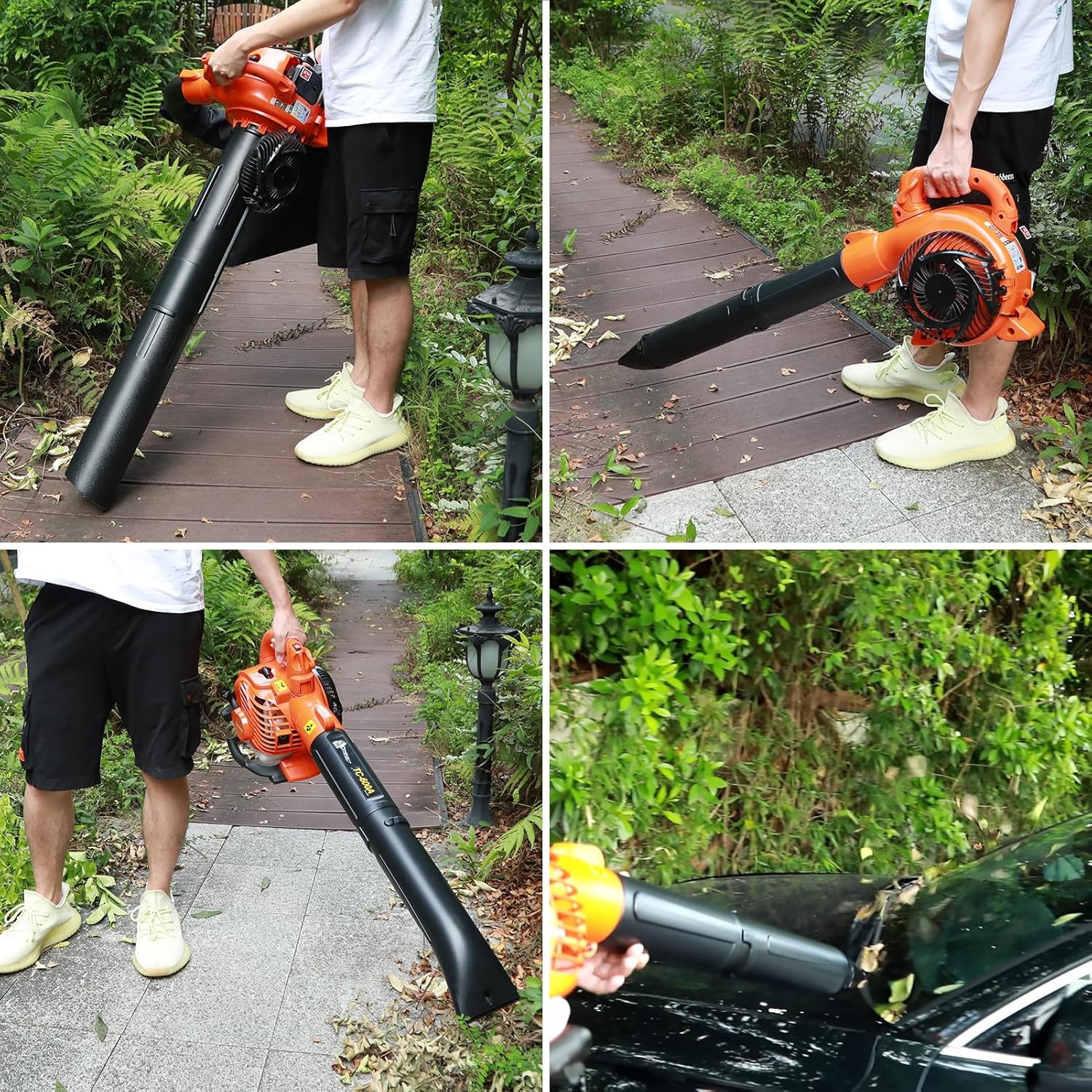
Figure 7.2: Examples of the blower in action, clearing leaves from various surfaces including paths and vehicles.
7.3 Using the Vacuum/Suction Function
To use the vacuum function, ensure the leaf collection bag is securely attached and the blower tube is removed.
- Start the engine as described in Section 7.1.
- Direct the vacuum intake towards the leaves or debris you wish to collect.
- Move the blower slowly over the debris. The impeller will shred the material and deposit it into the collection bag.
- Monitor the collection bag and empty it when full to maintain optimal performance.
7.4 Stopping the Engine
To stop the engine, simply move the ON/OFF switch to the 'OFF' position.
8. Maintenance
Regular maintenance ensures optimal performance and extends the life of your leaf blower. Always disconnect the spark plug wire before performing any maintenance.
8.1 Air Filter Cleaning
- Remove the air filter cover.
- Carefully remove the air filter element.
- Clean the filter with warm, soapy water, or tap it gently to remove loose debris. For heavily soiled filters, replace them.
- Allow the filter to dry completely before reinstallation.
8.2 Spark Plug Inspection/Replacement
- Remove the spark plug cap and then the spark plug using a spark plug wrench.
- Inspect the spark plug for carbon buildup or damage. Clean with a wire brush if necessary.
- Check the electrode gap and adjust if needed (refer to specifications for correct gap).
- Replace the spark plug if it is heavily fouled or damaged.
8.3 Fuel Filter
- The fuel filter is located inside the fuel tank.
- Inspect periodically for debris. Replace if clogged or damaged.
8.4 General Cleaning and Storage
- After each use, clean the exterior of the blower with a damp cloth. Remove any debris from the air intake and exhaust areas.
- Before long-term storage, drain the fuel tank or run the engine until it runs out of fuel to prevent fuel degradation issues.
- Store the blower in a cool, dry place, away from direct sunlight and sources of ignition.
9. Troubleshooting
This section addresses common issues you might encounter with your leaf blower.
| Problem | Possible Cause | Solution |
|---|---|---|
| Engine won't start |
|
|
| Engine runs, then stops |
|
|
| Loss of power |
|
|
| Excessive vibration |
|
|
10. Specifications
Technical data for the yifaeux EB260 Gas Leaf Blower:
| Feature | Specification |
|---|---|
| Brand | yifaeux |
| Model | EB260 |
| Engine Type | 2-Stroke, Gas Powered |
| Engine Size | 26 CCs |
| Engine Power | 0.7 KW / 1 HP (approx.) |
| Air Volume | 424-425 CFM (Cubic Feet Per Minute) |
| Air Velocity | 180 MPH (Miles Per Hour) |
| Functions | Blowing, Suction (Vacuum) |
| Style | Handheld |
| Item Weight | 16.53 lbs (7.5 kg) |
| Dimensions (Approx.) | L: 85cm (33.46"), W: 30cm (11.81"), H: 30cm (11.81") |
11. Warranty and Support
For warranty information or technical support, please refer to the documentation provided at the time of purchase or contact your retailer. Keep your proof of purchase for any warranty claims.
Ask a question about this manual
Ask about setup, troubleshooting, compatibility, parts, safety, or missing instructions. Manuals+ will review the question and use this page’s manual context to help answer it.