
LSHOME GS526A
LSHOME GS526A Smoke Detector User Manual
Model: GS526A | Brand: LSHOME
1. Product Overview
The LSHOME GS526A is a 9V battery-operated photoelectric smoke detector designed for residential fire safety. It is optimized to detect slow smoldering fires, which typically generate light smoke before bursting into flames. This device provides audible and visual warnings to alert occupants to the presence of smoke.

Image: Three LSHOME GS526A Smoke Detectors, illustrating the product's appearance.
Key features include easy installation, a test button for weekly checks, and a loud alarm with an LED warning light. The photoelectric technology ensures sensitivity to light smoke, making it an effective component of a home fire safety system.

Image: A diagram illustrating various application scenarios for the smoke detector, including housing, schools, hotels, hospitals, companies, factories, warehouses, and shopping malls.
2. Specifications
| Feature | Detail |
|---|---|
| Model Number | GS526A |
| Brand | LSHOME |
| Power Source | 9V Battery (Included: Zinc Carbon) |
| Sensor Type | Photoelectric |
| Alarm Type | Audible, Visual (Red LED) |
| Alarm Volume | > 85dB(A) @ 3 meters |
| Product Dimensions | 4"D x 4"W x 1"H (approx. 10cm x 10cm x 2.5cm) |
| Item Weight | 1 Pound (approx. 0.45 kg) |
| Material | Fire-Retardant PC Plastic |
| UPC | 709450991554 |

Image: Exploded view diagram of the LSHOME smoke detector, detailing its internal components such as the photoelectric sensor, 9V battery, and buzzer.
3. Installation
The LSHOME GS526A smoke detector is designed for easy installation. Follow these steps for proper mounting and placement.
3.1. Choosing Installation Location
Proper placement is crucial for effective smoke detection. Install smoke detectors in every room (except bathrooms and kitchens due to steam/cooking fumes that can cause false alarms). Consider the following guidelines:
- Install on the ceiling or high on a wall.
- Avoid placing near windows, doors, or vents where drafts might interfere with smoke reaching the detector.
- Keep away from areas with high humidity or extreme temperatures.
- Refer to local building codes and regulations for specific requirements.

Image: Technical diagrams (Figure 1 and Figure 2) illustrating recommended and acceptable installation locations for smoke detectors on ceilings and side walls, including minimum distance requirements from corners and peaks for optimal performance.
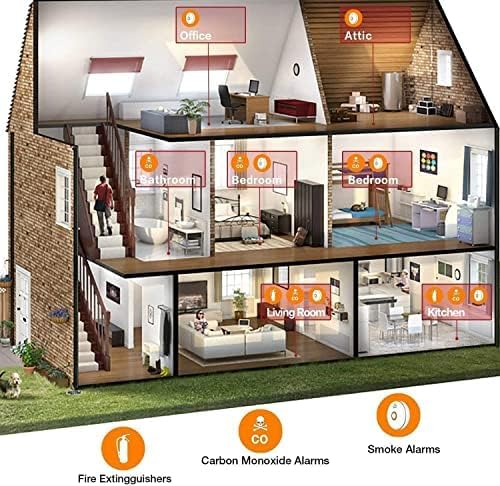
Image: A diagram showing a multi-story house layout with suggested placements for smoke detectors, carbon monoxide alarms, and fire extinguishers in various rooms like bedrooms, living room, and office.
3.2. Mounting Instructions
- Prepare the Mounting Bracket: The smoke detector comes with a mounting bracket and screws.
- Install Battery: Insert the 9V battery into the battery compartment. The safety clip feature prevents mounting the smoke alarm without the battery installed, ensuring it is always powered.
- Attach Bracket: Secure the mounting bracket to your chosen ceiling or wall location using the provided screws. Ensure it is firmly attached.
- Mount Detector: Align the smoke detector with the mounting bracket and twist clockwise to secure it in place.
- Test Installation: After mounting, press the test button to ensure the alarm functions correctly.
4. Operation
The LSHOME GS526A smoke detector operates continuously once the battery is installed. It features a photoelectric sensor to detect smoke particles and provides clear warnings.
4.1. Normal Operation
Under normal conditions, the smoke detector remains in standby mode, continuously monitoring the air for smoke. The red LED indicator may flash periodically (e.g., every 32 seconds) to indicate normal operation.
4.2. Alarm Indication
When the smoke detector senses smoke or combustion particles in the air, it will activate its alarm. The alarm will sound loudly (> 85dB(A) @ 3 meters), and the red LED will flash rapidly. The alarm will continue until the air is clear of smoke or the test button is released (if pressed for testing).
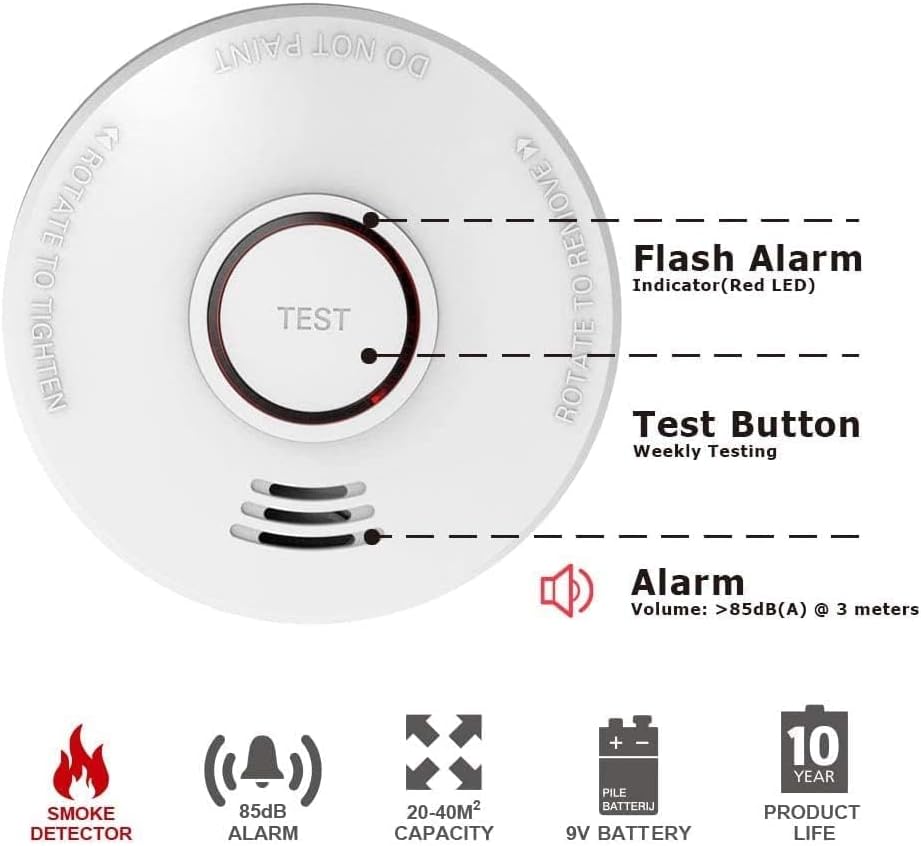
Image: A close-up diagram of the smoke detector, pointing out the Flash Alarm (Red LED), the central Test Button, and the location of the Alarm speaker, indicating a volume of over 85dB at 3 meters.
4.3. Test Button Function
The test button is located in the center of the smoke detector. Press and hold this button for approximately 5 seconds to perform a functional test. The alarm should sound, and the LED should flash, confirming the unit is working correctly. Release the button to stop the test.
5. Maintenance
Regular maintenance ensures the continued reliability and effectiveness of your smoke detector.
5.1. Weekly Testing
It is recommended to test your smoke alarm weekly by pressing the test button for 5 seconds. This verifies that the alarm circuitry, battery, and horn are functioning.
5.2. Battery Replacement
The smoke detector will indicate a low battery condition by emitting a "chirp" sound approximately every 32 seconds, accompanied by a rapid flash of the red LED. When this occurs, replace the 9V battery immediately. To replace the battery, remove the detector from its mounting bracket, open the battery compartment, replace the old battery with a new 9V battery, and re-mount the detector.
5.3. Cleaning
Clean the smoke detector every 6 months to prevent dust accumulation from clogging the sensor and causing false alarms or reduced sensitivity. Use a soft brush or a vacuum cleaner with a soft brush attachment to gently clean the exterior and around the sensor openings. Do not paint the smoke detector.
6. Troubleshooting
If your smoke detector is not functioning as expected, refer to the following common issues and solutions:
| Problem | Possible Cause | Solution |
|---|---|---|
| Alarm chirps every 32 seconds | Low battery | Replace the 9V battery immediately. |
| Alarm sounds without smoke present (false alarm) | Dust accumulation, high humidity, cooking fumes, steam, or insect infestation. | Clean the detector as described in the Maintenance section. Relocate the detector if it's too close to kitchens, bathrooms, or dusty areas. Check for insects. |
| Alarm does not sound during test | Dead or improperly installed battery, faulty unit. | Ensure the 9V battery is correctly installed and fully charged. Replace the battery. If the problem persists, the unit may be faulty and require replacement. |
| Red LED not flashing periodically | No power, faulty LED. | Check battery installation and charge. If the battery is new and correctly installed, the unit may be faulty. |
If you experience persistent issues not covered here, please contact LSHOME customer support.
7. Warranty and Support
LSHOME provides a 10-year warranty for this smoke detector. If you encounter any problems with your product, please contact LSHOME customer support. We are committed to responding to your inquiries within 24 hours.
For support, please refer to the contact information provided with your product packaging or visit the official LSHOME website.
Ask a question about this manual
Ask about setup, troubleshooting, compatibility, parts, safety, or missing instructions. Manuals+ will review the question and use this page’s manual context to help answer it.