
BLUBERY 3600 PSI
BLUBERY Heavy-Duty Gas Pressure Washer 3600 PSI Instruction Manual
Brand: BLUBERY | Model: 3600 PSI
1. Introduction
This manual provides essential information for the safe and efficient operation, maintenance, and troubleshooting of your BLUBERY Heavy-Duty Gas Pressure Washer. Please read this manual thoroughly before operating the unit and keep it for future reference.

Front view of the BLUBERY Heavy-Duty Gas Pressure Washer.
2. Safety Information
WARNING: Failure to follow these instructions may result in serious injury or property damage.
- Always read and understand the entire instruction manual before operating the pressure washer.
- Keep children and pets away from the pressure washer during operation.
- Do not spray towards people, animals, electrical devices, or outlets. The high-pressure spray can cause severe injury.
- Avoid touching the hot muffler. Stay away from the hot muffler until it has completely cooled down.
- Ensure adequate ventilation when operating the gas pressure washer to prevent carbon monoxide poisoning.
- All pressure washers are 100% functionally tested at the factory and may contain minimal residual fuel/oil or fuel smell. This is normal.
- This item is non-returnable. If the item arrives damaged or defective, please contact the after-sales support for a partial refund or replacement parts.
3. Specifications
| Feature | Specification |
|---|---|
| Brand | BLUBERY |
| Model Number | 3600 PSI |
| Power Source | Gas Powered |
| Maximum Pressure | 3600 PSI |
| Maximum Flow Rate | 2.7 Gallons Per Minute (GPM) |
| Engine Type | 212cc 4-Stroke OHV Engine |
| Hose Length | 30 Feet |
| Soap Tank Volume | 3.8 Liters (approx. 1 Gallon) |
| Item Weight | 73 Pounds |
| Product Dimensions | 25.5"L x 23.5"W x 40.4"H |
| Nozzle Tips | 5 Quick-Connect (0°, 15°, 25°, 45°, Soap) |
4. Setup
4.1. Unpacking and Assembly
The pressure washer is designed for easy assembly, typically by one person in about 10 minutes. Refer to the included assembly guide for detailed steps.

Side view of the pressure washer, showing the high-pressure hose.
4.2. Adding Fuel and Oil
Before first use, and regularly thereafter, ensure proper fluid levels.
- Engine Oil: Fill with SAE 10W-30 oil. The oil capacity is approximately 0.2 gallons. Check the oil level using the dipstick to ensure it reaches at least the 'L' mark. The engine will shut down if oil is low.
- Fuel: Fill the fuel tank with gasoline containing less than 10% ethanol. The fuel tank capacity is 3.6 liters (approximately 1 gallon). Never overfill the fuel tank.
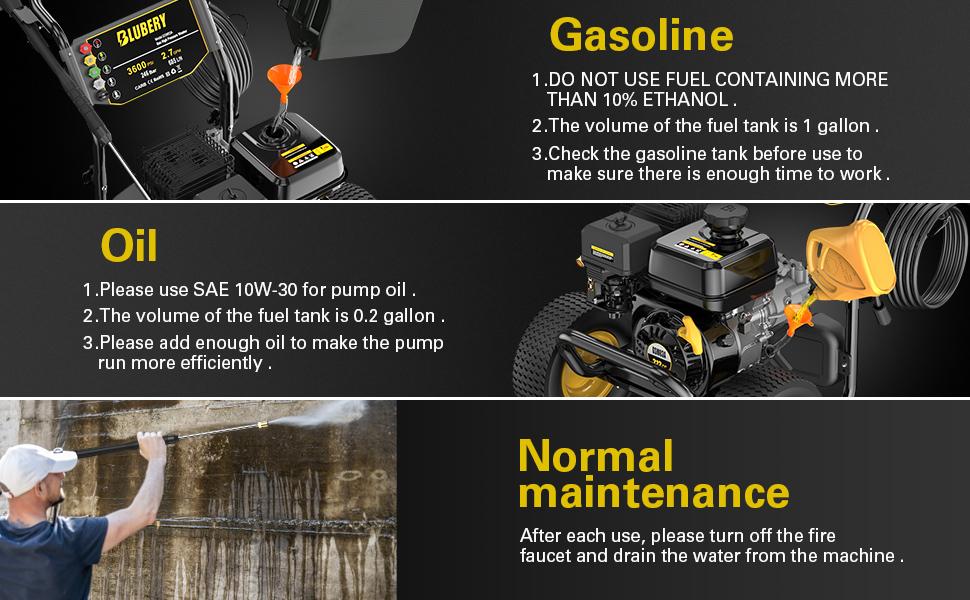
Visual guide for gasoline and oil requirements.
4.3. Water Connections
- Water Filter: Insert the water filter into the pump inlet. Regularly check the filter for blockages and clean if required.
- Garden Hose: Attach a garden hose to the pump inlet. Ensure all connections are firmly tightened. Open the water source. WARNING: Running the pump without water will cause damage. Use cold water with an inlet temperature below 40°C (104°F).
- High-Pressure Hose & Spray Gun: Connect the high-pressure hose to the pump outlet and the other end to the spray gun. Ensure all connections are firmly tightened.
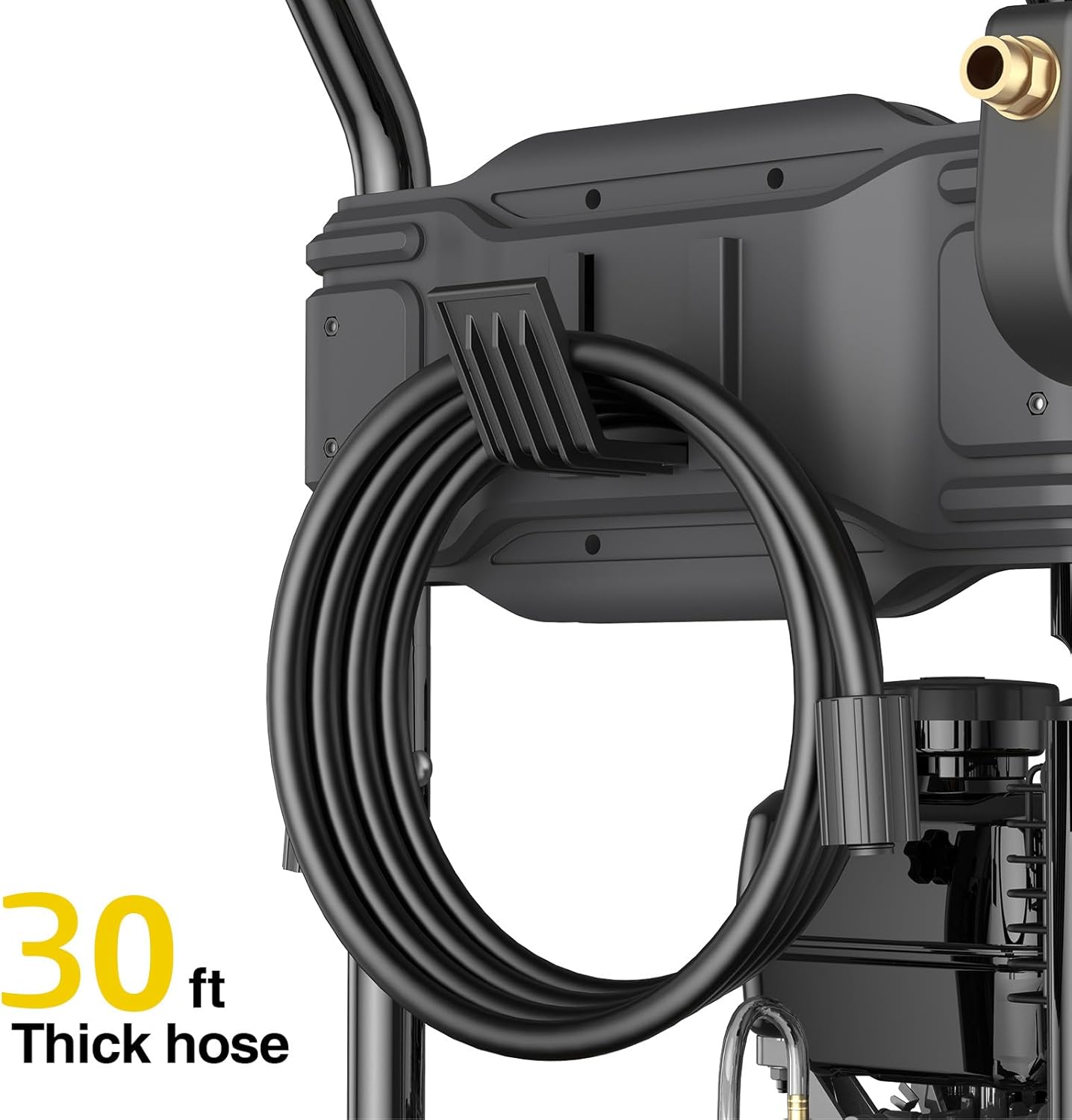
The 30-foot thick high-pressure hose for extended reach.
4.4. Video Guide: Initial Setup
This video demonstrates the initial setup process, including adding oil and fuel, and connecting hoses. (Source: AUYI)
5. Operating Instructions
5.1. Starting the Engine
- Turn the engine switch to the "ON" position.
- Move the choke lever to the "OFF" position (left side) for a cold engine start. If the engine is warm or the ambient temperature is high, switch the choke valve to "ON" (right side) before starting.
- Turn the fuel valve to the "ON" position (right side).
- Locate the recoil cord. Pull it slowly until resistance is felt, then pull rapidly to start the engine.
- Once the engine has started, turn the choke lever to the "ON" position (right side). If the engine fails to start, repeat the above steps.
- Squeeze the spray gun trigger to purge any air from the pump and hose. This helps to start the engine and ensures proper water flow.

Step-by-step visual guide for starting the engine.
5.2. Nozzle Selection
The pressure washer comes with 5 quick-connect nozzle heads, each designed for different cleaning tasks:
- 0° (Red): Ultra high-pressure, pinpoint stream for tough, concentrated cleaning.
- 15° (Yellow): High-pressure, narrow fan for intense cleaning of smaller areas.
- 25° (Green): Medium-pressure, wider fan for general cleaning.
- 45° (White): Low-pressure, wide fan for delicate surfaces or rinsing.
- Soap (Black): For applying cleaning fluid/detergent.

Illustration of the various quick-connect nozzle tips and their uses.
5.3. Cleaning Procedures
Always test the spray on an inconspicuous area first to avoid damage. Start with a wider spray pattern and lower pressure, then adjust as needed.
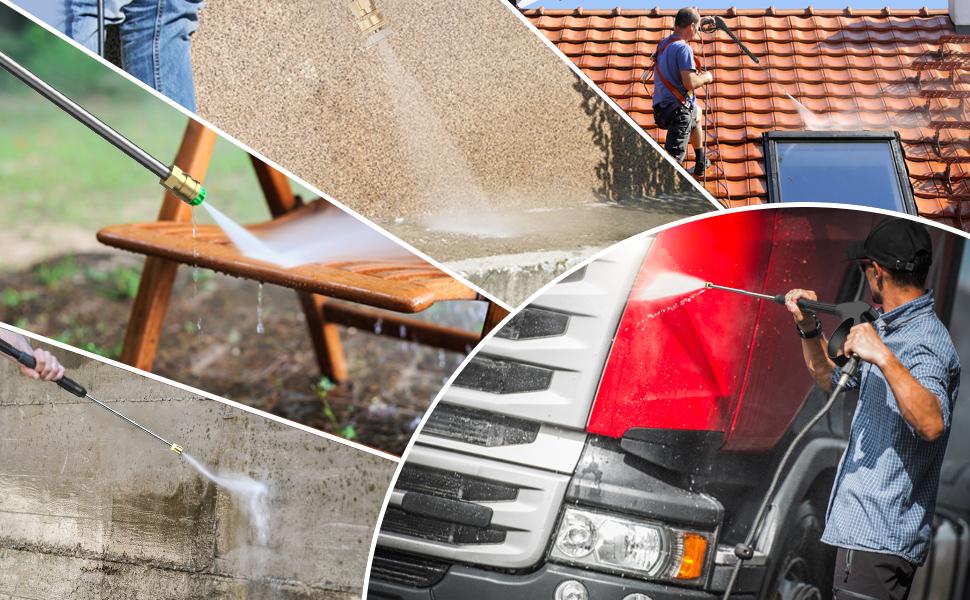
Examples of cleaning applications for the pressure washer.
5.4. Video Guide: Operation and Startup
This video provides a comprehensive guide to the product's operation. (Source: AUYI)
This video demonstrates the correct startup steps for the pressure washer. (Source: Sunlands)
This video illustrates the correct engine starting procedure. (Source: SuperShi)
5.5. Stopping the Engine
To stop the engine, simply turn the engine switch to the "OFF" position.
6. Maintenance
- Oil Level: Check the engine oil level (0.2 gallon capacity) every time you use the pressure washer to ensure efficient operation.
- Water Drainage: After each use, turn off the water faucet and drain all water from the machine to prevent damage, especially in freezing temperatures.
- Air Filter: Regularly inspect and clean the air filter as per the engine manufacturer's recommendations.
7. Troubleshooting
If you encounter issues with your pressure washer, consider the following common solutions:
- Engine Not Starting: Check fuel level, oil level, engine switch position, choke lever position, and ensure the spark plug is clean and properly connected.
- Low Pressure: Ensure the water supply is fully open and unrestricted. Check for kinks in the garden hose or high-pressure hose. Clean the water inlet filter for any debris. Verify the correct nozzle is selected and properly seated.
- Water Leaks: Check all hose connections for tightness. Ensure gaskets are properly installed in water pipe connections.
8. Warranty and Support
This item is non-returnable. However, if your BLUBERY Heavy-Duty Gas Pressure Washer arrives damaged or defective, please contact the after-sales support directly. You may be eligible for a partial refund or replacement parts.
Ask a question about this manual
Ask about setup, troubleshooting, compatibility, parts, safety, or missing instructions. Manuals+ will review the question and use this page’s manual context to help answer it.