
1. Introduction
This manual provides essential information for the safe and efficient installation, operation, and maintenance of your HUIZHITENGDA 12000W Vertical Axis Wind Turbine Generator. Please read this manual thoroughly before installation and retain it for future reference. This wind turbine is designed for generating electricity from wind energy, suitable for various applications including home power supply and off-grid systems.
2. Safety Instructions
- Professional Installation Recommended: Installation of the wind turbine and its electrical components should be performed by qualified personnel to ensure safety and proper functionality.
- High Voltage Warning: The system operates at high voltages. Always disconnect all power sources before performing any installation, maintenance, or troubleshooting.
- Rotating Parts: The turbine blades rotate at high speeds. Keep clear of the turbine during operation and ensure it is safely shut down before approaching for maintenance.
- Secure Mounting: Ensure the turbine is securely mounted to a stable structure capable of withstanding wind loads. Improper mounting can lead to structural failure and injury.
- Grounding: Proper grounding of the wind turbine system is crucial to prevent electrical shock and protect against lightning strikes.
- Environmental Considerations: Avoid installing the turbine near power lines, tall buildings, or other obstructions that could interfere with wind flow or pose a safety hazard.
3. Product Features
- Integrated Blade Design: Features 3 vertical arc-shaped blades manufactured with precision injection molding technology, reducing the risk of blade detachment and enhancing safety.
- 360-Degree Wind Direction Adaptability: Vertical axis design eliminates the need for wind tracking, allowing the turbine to capture wind from any direction and speed efficiently.
- Low Noise Operation: Engineered for quiet rotation, making it suitable for residential and urban environments (below 30dB).
- Low Start Wind Speed: Begins generating power at low wind speeds, maximizing energy capture.
- High Efficiency Generator: Utilizes a highly efficient permanent magnet alternator with optimized internal space and rotor design to minimize resistance torque and improve reliability.
- Easy Installation: Designed for straightforward installation and adaptability to various environments.
4. Package Contents
Upon unpacking, please verify that all components are present and undamaged:
- 1 x Vertical Axis Wind Turbine Generator
- 1 x Wind Turbine Controller
- 1 x English Assembly Instructions

Image 1: The HUIZHITENGDA Vertical Axis Wind Turbine Generator shown with its accompanying controller.
5. Specifications
| Specification | Value |
|---|---|
| Rated Power | 12000W |
| Rated Voltage | 220V |
| Number of Blades | 2 |
| Blade Material | Nylon Fiber |
| Start Wind Speed | 2 m/s |
| Rated Wind Speed | 13 m/s |
| Package Weight | 16 kg |
| Turbine Height | 96 cm |
| Composition (as per product data) | EVA |
| Manufacturer | HUIZHITENGDA |

Image 2: The vertical axis wind turbine with a visual indication of its 96 cm height.
6. Setup and Installation
Proper installation is critical for the performance and safety of your wind turbine. Refer to the included English Assembly Instructions for detailed steps. The following provides a general overview:
6.1 Mounting the Turbine
- Select a location with unobstructed wind flow, away from buildings, trees, and other potential obstacles.
- Ensure the mounting pole or structure is robust enough to support the turbine's weight and withstand strong winds.
- Assemble the turbine blades and hub according to the assembly instructions.
- Securely attach the assembled turbine to the mounting pole.
6.2 Electrical Wiring
All electrical connections must be made with power disconnected and by a qualified electrician.
- Connect Turbine to Controller: Connect the output wires from the wind turbine generator to the designated wind power generator wiring terminals on the controller. Ensure correct polarity.
- Connect Battery to Controller: Connect the battery bank to the battery wiring terminals on the controller. Observe correct positive (+) and negative (-) connections.
- Connect Inverter (Optional): If using an inverter for AC loads, connect the inverter to the battery bank.
- Connect Solar Panels (Optional for Hybrid System): If integrating solar panels, connect them to the solar battery input on the controller.
- Connect Dump Load (Optional but Recommended): A dump load (or diversion load) is crucial for dissipating excess energy when batteries are full or wind speeds are too high, preventing overcharging and damage to the system. Connect it to the designated terminals on the controller.
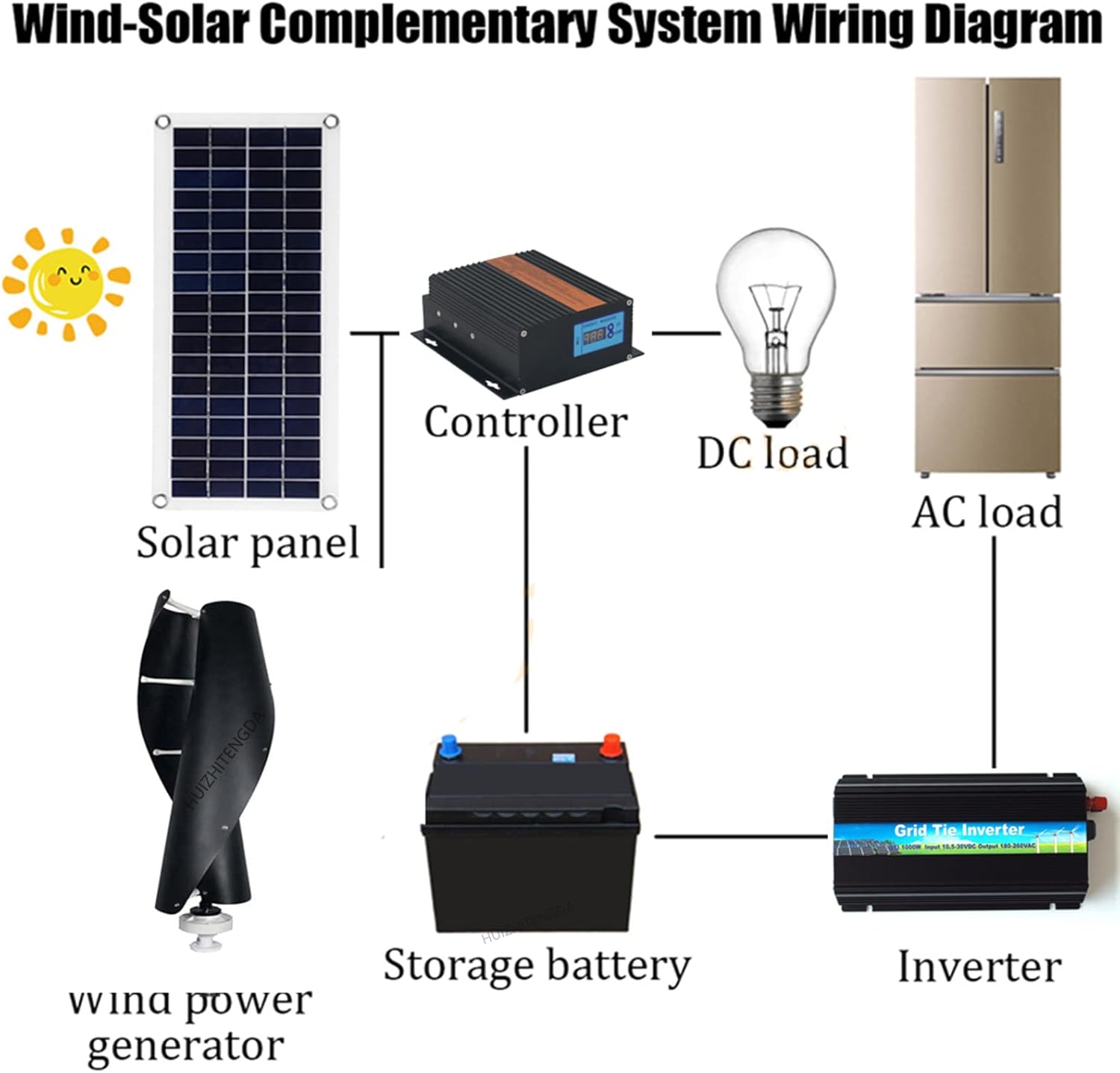
Image 3: Diagram illustrating the wiring for a wind-solar complementary system, including solar panel, controller, battery, inverter, and loads.

Image 4: A diagram showing the working principle of a wind power generator system, detailing connections between the wind generator, solar battery, controller, battery, inverter, and user loads.
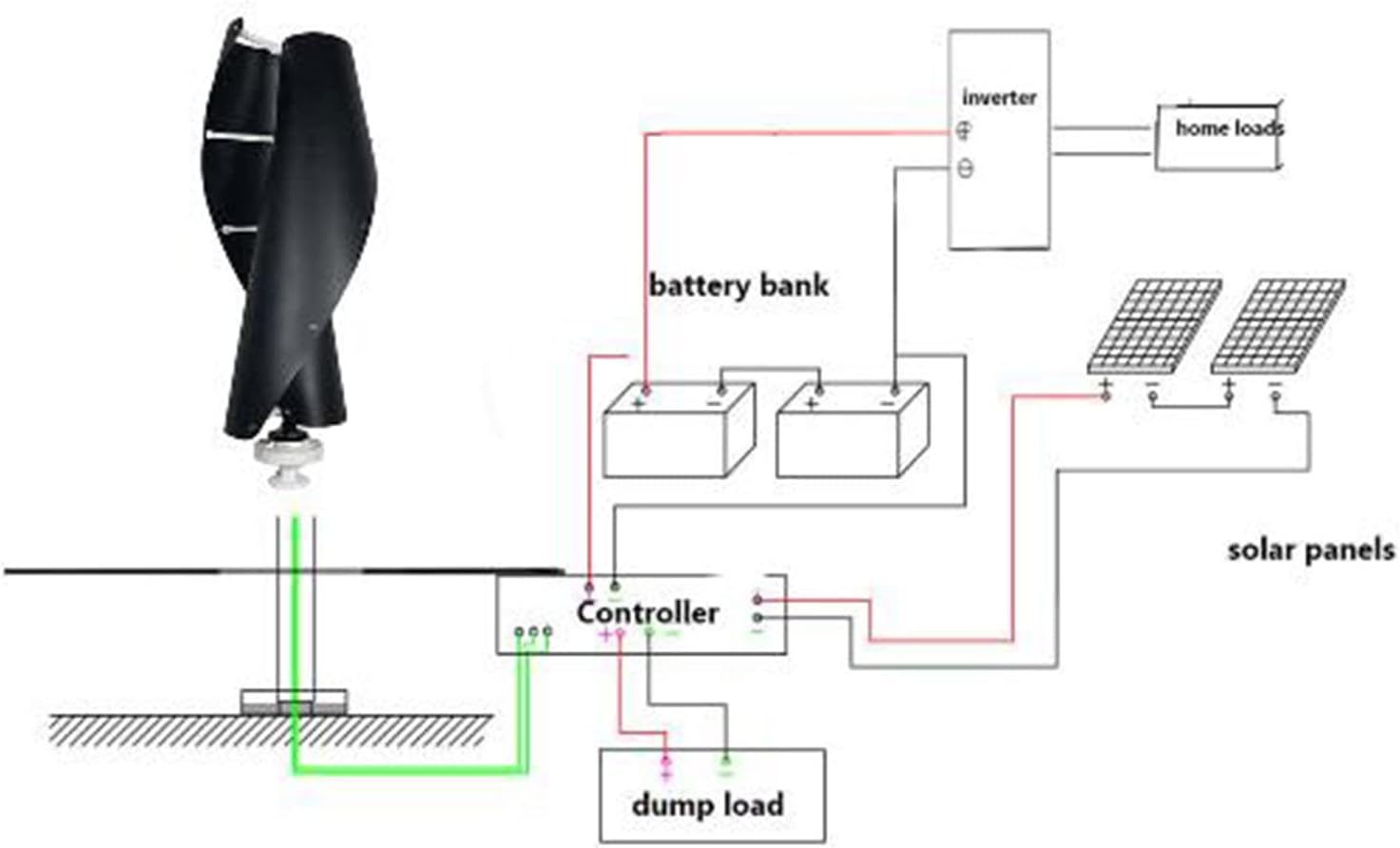
Image 5: A detailed wiring schematic for a combined wind and solar power system, showing connections for the wind turbine, solar panels, controller, battery bank, inverter, home loads, and dump load.
7. Operating Instructions
Once properly installed and wired, the HUIZHITENGDA Vertical Axis Wind Turbine Generator operates automatically:
- The turbine will begin to rotate and generate electricity when wind speeds reach the starting threshold (2 m/s).
- The controller manages the charging of the battery bank, preventing overcharge and ensuring stable power delivery.
- Monitor the controller's indicators (if available) to check system status, battery charge level, and power output.
- The vertical axis design allows for efficient power generation regardless of wind direction, eliminating the need for manual adjustment.

Image 6: Visual representation of the vertical wind turbine, emphasizing its key features such as low noise, low start wind speed, high efficiency, and automatic direction adjustment.

Image 7: Examples of typical applications for the wind turbine, including residential use, integration into power plans, and powering street lights.
8. Maintenance
Regular maintenance ensures the longevity and optimal performance of your wind turbine system.
- Visual Inspection (Monthly): Check the turbine blades, mounting pole, and all visible wiring for any signs of damage, corrosion, or loose connections.
- Blade Cleaning (Annually or as needed): Clean the turbine blades to remove dirt, dust, or debris that may reduce efficiency. Use a soft cloth and mild detergent. Ensure the turbine is completely stopped and secured before cleaning.
- Electrical Connections (Annually): With power disconnected, inspect all electrical connections for tightness and corrosion. Apply dielectric grease if necessary.
- Controller Check: Ensure the controller is free from dust and moisture. Verify that all indicator lights are functioning as expected.
- Battery Maintenance: Follow the manufacturer's guidelines for your specific battery type (e.g., checking water levels for flooded lead-acid batteries).
9. Troubleshooting
This section addresses common issues you might encounter. For complex problems, consult a qualified technician.
| Problem | Possible Cause | Solution |
|---|---|---|
| No power output | Low wind speed; Loose wiring; Controller malfunction; Damaged turbine. | Check wind conditions; Inspect all electrical connections; Verify controller status; Inspect turbine for physical damage. |
| Low power output | Insufficient wind; Dirty blades; Partial wiring issue; Battery degradation. | Ensure clear wind path; Clean blades; Check connections; Test battery health. |
| Turbine not spinning | No wind; Mechanical obstruction; Bearing issue. | Wait for adequate wind; Check for debris or obstructions; Contact support if bearings are suspected. |
| Controller error indicator | Overcharge; Over-discharge; Short circuit; System fault. | Refer to controller manual for specific error codes; Check battery voltage; Inspect wiring for shorts. |
10. Warranty and Support
For warranty information, please refer to the terms and conditions provided at the time of purchase or contact your retailer. If you require technical assistance or have questions not covered in this manual, please contact HUIZHITENGDA customer support through the vendor's contact channels.