Introduction
This manual provides comprehensive instructions for the proper use, setup, and maintenance of your Generic 75L Large Camping Backpack. Designed for outdoor enthusiasts, this backpack offers a large capacity, waterproof features, and a comfortable carrying system suitable for trekking, camping, and mountaineering. Please read this manual thoroughly before using the backpack to ensure optimal performance and longevity.
Product Overview
Key Features
- 75L Large Capacity: Ample space for clothing, sleeping bags, tents, and other essentials.
- Waterproof Fabric: Constructed from specialized waterproof material to protect contents in wet conditions.
- Lightweight and Comfortable: Designed for reduced carrying pressure with thickened shoulder straps and a supportive back system.
- Organized Storage: Multiple compartments and pockets for efficient item organization and easy access.
- Versatile Design: Suitable for various outdoor activities and users.
Components
The backpack features a main compartment, various external pockets, adjustable shoulder straps, a hip belt, a chest strap, and compression straps. Understanding these components is key to effective use.

Image: Overview of the 75L camping backpack, highlighting its design and multiple compartments from different angles.
Setup
Adjusting the Backpack for Proper Fit
Proper adjustment is crucial for comfort and weight distribution, especially during long treks. Follow these steps to customize the fit:
- Loosen All Straps: Before putting on the backpack, loosen all shoulder straps, load lifter straps, hip belt, and chest strap.
- Position the Hip Belt: Place the backpack on your back. The hip belt should rest comfortably on your iliac crest (the top of your hip bones). Fasten and tighten the hip belt securely. Approximately 70-80% of the pack's weight should be supported by your hips.
- Tighten Shoulder Straps: Gently pull the shoulder straps until they are snug against your shoulders. They should not bear the majority of the weight but keep the pack close to your body.
- Adjust the Chest Strap: Fasten the chest strap across your sternum. Adjust its height and tension to a comfortable position that does not restrict breathing or arm movement. This strap helps stabilize the pack.
- Engage Load Lifter Straps: These straps are located above your shoulder straps, connecting to the top of the backpack. Pull them forward to bring the top of the pack closer to your body, preventing it from swaying backward. Adjust until the pack feels stable and the weight is distributed evenly.
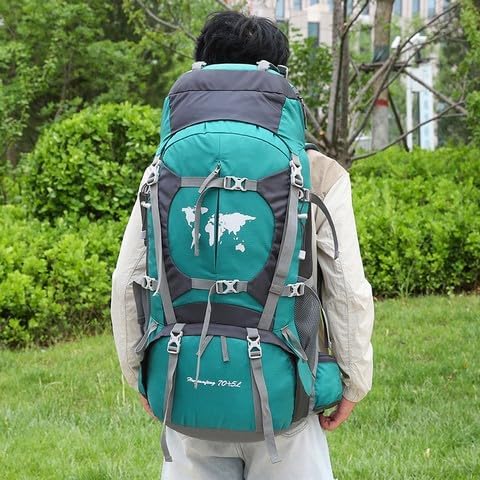
Image: A user wearing the 75L backpack, illustrating proper fit and weight distribution across the back and hips.
Operating
Packing the Backpack
Efficient packing improves comfort and accessibility. Distribute weight strategically:
- Bottom Zone: Place bulky, lightweight items you won't need until camp (e.g., sleeping bag, extra clothes).
- Middle Zone (Core): Position dense, heavy items close to your back, between your shoulder blades (e.g., food, water, stove). This helps maintain your center of gravity.
- Top Zone: Store frequently accessed items (e.g., rain gear, snacks, first-aid kit).
- External Pockets: Use side pockets for water bottles or items needing quick access. Front pockets can hold maps or small tools.
- Compression Straps: Once packed, tighten all external compression straps to stabilize the load and prevent shifting.
Maintenance
Cleaning Your Backpack
Regular cleaning extends the life of your backpack:
- Spot Cleaning: For minor dirt, use a damp cloth with mild soap. Gently scrub the affected area.
- Deep Cleaning: Empty the backpack completely. Use a soft brush or sponge with mild, non-detergent soap and lukewarm water. Avoid harsh chemicals or bleach.
- Rinsing: Rinse thoroughly with clean water to remove all soap residue. Do not submerge the entire backpack in water if possible, especially if it has a rigid frame.
- Drying: Hang the backpack upside down in a well-ventilated area, away from direct sunlight or heat, until completely dry. Ensure all pockets are open.
Storage
Store your backpack properly to prevent damage:
- Ensure the backpack is completely clean and dry before storage to prevent mold or mildew.
- Store in a cool, dry place away from direct sunlight, extreme temperatures, and pests.
- Avoid compressing the backpack for long periods, as this can damage the frame or padding.
Troubleshooting
Here are solutions to common issues you might encounter:
- Discomfort/Pain: Re-adjust all straps (hip belt first, then shoulder, chest, and load lifters). Ensure heavy items are close to your back. Reduce overall weight if necessary.
- Contents Getting Wet: Verify all zippers are fully closed. Ensure the waterproof fabric is not compromised. Consider using a rain cover for prolonged exposure to heavy rain.
- Zippers Sticking: Clean the zipper teeth with a small brush to remove dirt. Apply a zipper lubricant if needed.
- Straps Slipping: Ensure buckles are fully engaged. If straps consistently slip, inspect the buckle for wear or damage.
Specifications
| Feature | Detail |
|---|---|
| Capacity | 75 Liters |
| Product Dimensions | 9 x 12.9 x 31 inches |
| Department | Unisex-Adult |
| ASIN | B0D9QCBKWQ |
| Material | Waterproof Fabric (specific type not provided) |
Warranty and Support
For warranty information, please refer to the documentation provided at the time of purchase or contact the retailer directly. For product support or inquiries, please reach out to the manufacturer or seller through the platform where the product was acquired.


