
Introduction
The Graigar HT-225B is a manual concrete test hammer designed for non-destructive testing of concrete compressive strength. This instrument provides an efficient and reliable method for assessing concrete quality in various construction and engineering applications. It features a digital display for rebound values, data storage capabilities, and a robust design for field use. This manual provides essential information for the proper setup, operation, maintenance, and troubleshooting of your HT-225B device.
Safety Information
Please read and understand all safety instructions before operating the HT-225B. Failure to follow these instructions may result in injury or damage to the device.
- Always wear appropriate personal protective equipment (PPE), such as safety glasses, when operating the test hammer.
- Ensure the test surface is stable and free from loose debris before performing a test.
- Do not apply excessive force beyond the intended operation of the hammer.
- Keep the device clean and free from dust and moisture to ensure accurate readings and longevity.
- Store the device in its protective case when not in use to prevent damage.
- Do not attempt to disassemble or repair the device beyond the instructions provided in this manual. Refer to qualified personnel for service.
Package Contents
Verify that all items listed below are included in your package:
- HT-225B Manual Concrete Test Hammer
- Protective Carrying Case
- Cleaning Brush
- Screwdriver
- Abrasive Stone
- User Manual (this document)

Image: The HT-225B Concrete Test Hammer and its accompanying accessories, including the main hammer unit, the red carrying case, and various small tools like a screwdriver and cleaning brush, are displayed separately.
Setup
Unpacking and Initial Inspection
- Carefully remove the HT-225B and all accessories from the packaging.
- Inspect the device for any visible damage that may have occurred during shipping. If any damage is found, contact your supplier immediately.
- Familiarize yourself with the components of the test hammer and its accessories.
Battery Module and Power
The HT-225B is equipped with a standard battery module that can be easily disassembled and replaced. While the product description indicates it is battery-powered, specific charging instructions or battery type are not detailed. Ensure the device is adequately powered before use. If the digital display does not activate, check the battery module connection or charge the device if it supports recharging.

Image: The HT-225B Concrete Test Hammer is shown neatly placed within its custom-fitted red carrying case, indicating proper storage and transport readiness.
Operating Instructions
Basic Operation and Display
The HT-225B features a 2.0-inch color LCD screen (220×176 pixels) for clear display of inspection data. The device automatically displays and records the rebound value upon impact. Use the silicone buttons for navigation and selection within the device's interface.
Performing a Concrete Test
- Surface Preparation: Ensure the concrete surface to be tested is smooth, clean, and dry. Use the provided abrasive stone to grind any rough spots or remove loose material from the test area.
- Positioning: Hold the HT-225B firmly and perpendicular to the concrete surface.
- Impact: Press the hammer against the surface until the impact mechanism triggers. The rebound value will be automatically displayed and recorded.
- Multiple Readings: For accurate results, perform multiple tests (e.g., 9 to 12 impacts) within a designated test area, ensuring each impact is at least 25mm from previous impact points and edges.
- Data Calculation: The device automatically calculates the converted intensity value for each measurement area and estimates the strength of the component according to relevant inspection specifications.

Image: The HT-225B Concrete Test Hammer is shown alongside an abrasive stone, which is used to prepare the concrete surface for testing by smoothing it and removing any loose particles.
Data Management and Connectivity
The HT-225B has a storage capacity of 2000 pieces of data, totaling up to 640 thousand data points. It supports multiple data transmission modes for simple and convenient operation. You can selectively transmit, print, export, and delete test components. An optional Bluetooth printer is available for on-site data printing.
Carbonization Value Input
The device allows for the input of carbonization values in the measurement area up to 3 times, with the average value automatically calculated for improved accuracy in strength assessment.
Steel Anvil Calibration
The HT-225B includes a built-in steel anvil calibration function to ensure the accuracy of your measurements. Regularly perform calibration as per industry standards or manufacturer recommendations to maintain optimal performance. The device records calibration information.
Maintenance
Cleaning
After each use, especially in dusty environments, clean the exterior of the HT-225B with a soft, dry cloth. Use the provided cleaning brush to remove any debris from the impact mechanism. Do not use abrasive cleaners or solvents that could damage the device's finish or internal components.
Storage
When not in use, store the HT-225B in its protective carrying case. Ensure the device is clean and dry before storage. Store the case in a cool, dry place, away from direct sunlight and extreme temperatures, to prolong the life of the instrument.
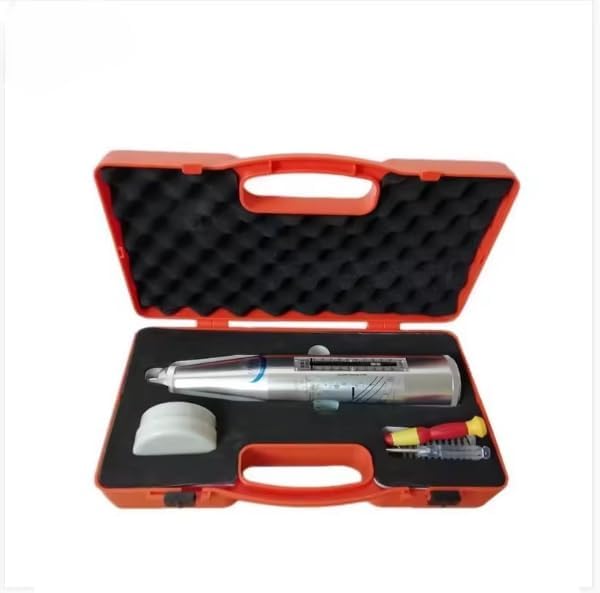
Image: The HT-225B Concrete Test Hammer is shown nestled within the foam cutouts of its red carrying case, demonstrating how it should be stored for protection and transport.
Troubleshooting
This section addresses common issues you might encounter with your HT-225B. For problems not listed here, please contact customer support.
| Problem | Possible Cause | Solution |
|---|---|---|
| Device does not power on. | Battery module not properly installed or discharged. | Ensure the battery module is correctly seated. If rechargeable, connect to power source and charge. |
| Inconsistent rebound readings. | Improper surface preparation; device not held perpendicular; calibration needed. | Clean and smooth the test surface. Ensure the hammer is held perpendicular. Perform steel anvil calibration. |
| Data transmission issues. | Incorrect settings; connectivity problem. | Check device settings for data transmission. Ensure proper connection to external devices (e.g., Bluetooth printer). |
| Screen display is dim or unreadable. | Low battery; extreme temperature. | Charge the battery. Operate the device within its specified temperature range. |
Specifications
Technical specifications for the Graigar HT-225B Manual Concrete Test Hammer:
| Parameter | Value |
|---|---|
| Model | HT-225B |
| Standard Compliance | ASTM C805, BS 1881-202, DIN 1048, UNI 9198, EN12504-2 |
| Standard Impact Energy | 0.225 mkg (2.207 Joule) |
| Rigidity of Tension Spring | 7.85 N/m |
| Error Range for Digital Displayer | ≤±1 (difference between displayer and scale) |
| Average Rebound Hammer on Steel Anvil (Rm) | 80±2 |
| Storage Capacity | 2000 pcs, 640 thousand data |
| Automatic Turn Off | Yes, without operation |
| Dimensions | Ø60 x 280 mm |
| Weight | 1.0 kg |
| Material | Metal |
| Power Source | Battery Powered (Standard battery module, replaceable) |
| Included Components | Hammer, tools |
Warranty and Support
For information regarding the warranty period, terms, and conditions for your Graigar HT-225B, please refer to the documentation provided at the time of purchase or contact the seller/manufacturer directly. For technical support, troubleshooting assistance beyond this manual, or inquiries about spare parts and accessories, please reach out to Graigar customer service or your authorized dealer.
Note: Support for personal customization and optional accessories like the Bluetooth printer should be discussed with the supplier before purchasing.