
Temank 100AH 12.8V
Temank 12V 100Ah LiFePO4 Lithium Battery User Manual
Model: 100AH 12.8V
1. Introduction
This manual provides essential information for the safe and efficient use of your Temank 12V 100Ah LiFePO4 Lithium Battery. Please read it thoroughly before installation and operation.
The Temank 12V 100Ah LiFePO4 battery is designed for various applications, including RVs, marine systems, solar energy storage, and home backup. It features Grade A LiFePO4 cells and a built-in Battery Management System (BMS) for enhanced safety and longevity.

Image 1.1: Front view of the Temank 12V 100Ah LiFePO4 Lithium Battery, showcasing its compact design and terminal posts.
2. Safety Information
- Do not use as a starter battery: This battery is not designed for engine starting applications.
- Operating Temperatures: Ensure the battery operates within the specified temperature ranges:
- Discharging: -20°C to 60°C (-4°F to 140°F)
- Charging: 0°C to 50°C (32°F to 122°F)
- Storage: -10°C to 50°C (14°F to 122°F)
- Built-in BMS: The integrated 100A Battery Management System (BMS) protects against overcharge, over-discharge, overcurrent, and short circuits.
- Installation: The battery is IP65 waterproof, allowing for indoor or outdoor installation. However, avoid submersion.
- Connections: Ensure all connections are secure and correct polarity is observed to prevent damage.
- Ventilation: While LiFePO4 batteries produce minimal gas, ensure adequate ventilation in enclosed spaces.
3. Product Features
- Long Lifespan: Utilizes Grade A LiFePO4 cells, offering 4000+ cycles at 100% Depth of Discharge (DOD), 6000 cycles at 80% DOD, and up to 15000 cycles at 60% DOD. This provides a lifespan of up to 10 years.
- Lightweight and Compact: Weighs approximately 11.5 kg (25.3 lbs), which is significantly lighter than comparable lead-acid batteries, making it easier to transport and install.
- Integrated 100A BMS: Provides comprehensive protection against common electrical faults, ensuring safe and reliable operation.
- Expandable Capacity: Designed for scalability, allowing up to 4 batteries to be connected in series and 4 in parallel (max. 4S4P) to achieve higher capacities (up to 400Ah) and voltages (up to 51.2V), with a maximum energy storage of 20.48kWh.
- Versatile Applications: Suitable for a wide range of uses including RVs, camping, marine vessels, solar power systems, home energy storage, off-grid setups, and electric scooters.

Image 3.1: Visual comparison highlighting the weight, size, lifespan, and cycle advantages of the Temank LiFePO4 battery over traditional lead-acid batteries.

Image 3.2: Diagram illustrating the internal Grade A cells and the impressive cycle life ratings at various depths of discharge.
4. Setup and Installation
4.1 Unpacking
Carefully remove the battery from its packaging. Inspect for any visible damage. Report any damage to your supplier immediately.
4.2 Connections
- The battery is equipped with M8 terminals. Ensure appropriate M8 terminal bolts are used for secure connections.
- Always connect the positive (+) terminal to the positive (+) terminal of the load/charger and the negative (-) terminal to the negative (-) terminal.
- Tighten all connections firmly to prevent loose contacts, which can cause overheating and damage.
4.3 Series and Parallel Configuration
The Temank 12V 100Ah LiFePO4 battery supports both series and parallel connections to increase voltage or capacity.
- Parallel Connection: Connect up to 4 batteries in parallel (max. 4P) to increase total capacity while maintaining 12.8V. For example, 4 batteries in parallel will provide 400Ah at 12.8V.
- Series Connection: Connect up to 4 batteries in series (max. 4S) to increase total voltage while maintaining 100Ah capacity. For example, 4 batteries in series will provide 100Ah at 51.2V.
- Combined Configuration: Various combinations like 4S2P, 2S2P, 3S2P are possible, allowing for a maximum total energy of 20.48kWh.
- Important: When connecting batteries in series or parallel, ensure all batteries are of the same brand, model, and state of charge before connecting. Use appropriate cabling for the expected current.

Image 4.1: Illustration of how to connect multiple batteries in parallel and series configurations to expand capacity or voltage.
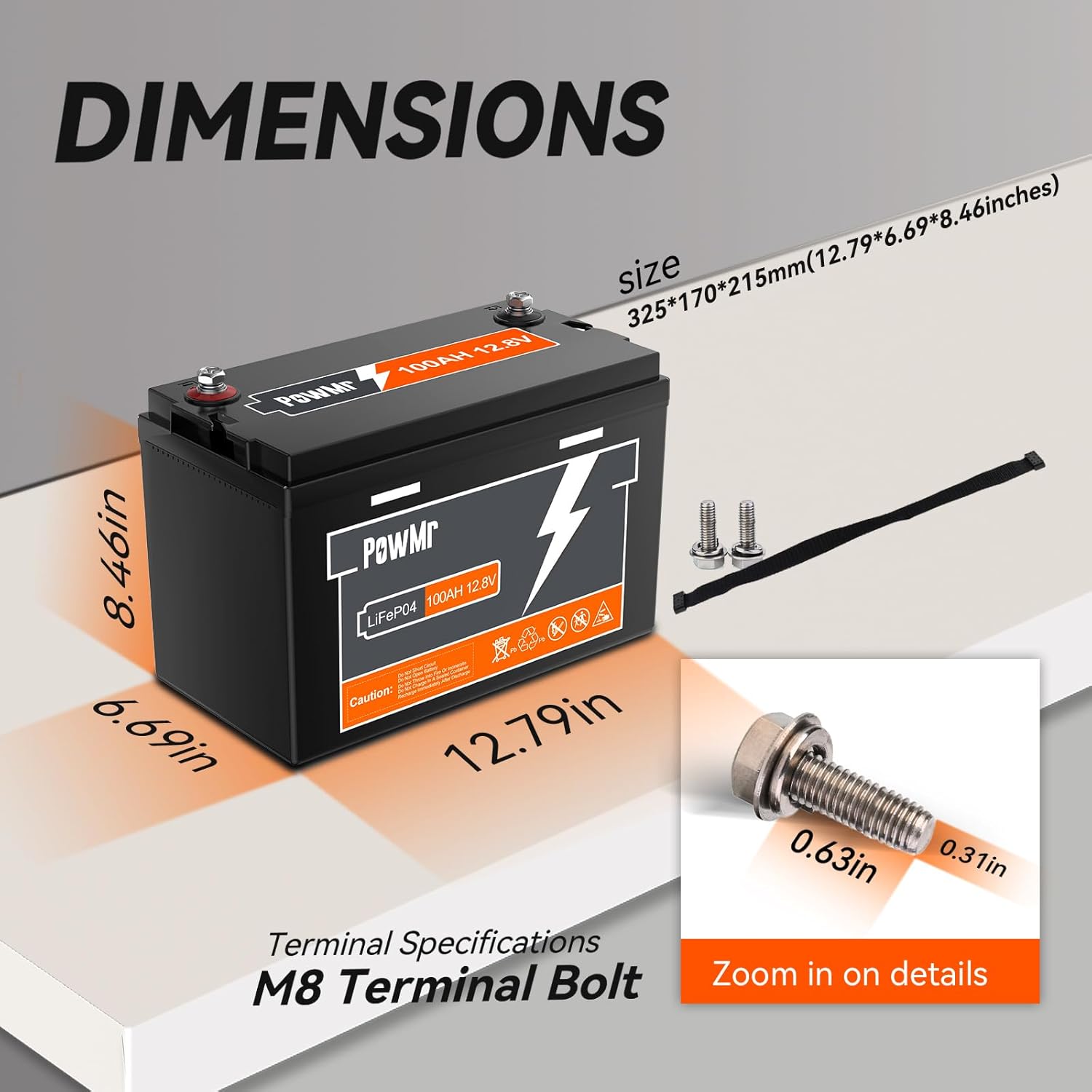
Image 4.2: Detailed view of the battery dimensions and the M8 terminal bolt specifications for proper connection.
5. Operating Instructions
5.1 Charging
- Use a LiFePO4 compatible charger.
- The recommended charging current for optimal lifespan is 0.2C (20A).
- Maximum charging rate is 1C, with a maximum charging current of 100A.
- Minimum charging time is 1 hour at maximum current.
- Ensure charging temperatures are within 0°C to 50°C (32°F to 122°F).

Image 5.1: Overview of various charging methods including lithium battery chargers, photovoltaic components (solar panels), and generators.
5.2 Discharging
- The battery can be discharged within a temperature range of -20°C to 60°C (-4°F to 140°F).
- The built-in BMS will protect the battery from over-discharge.
- For optimal performance and longevity, avoid consistently discharging to 0% DOD.
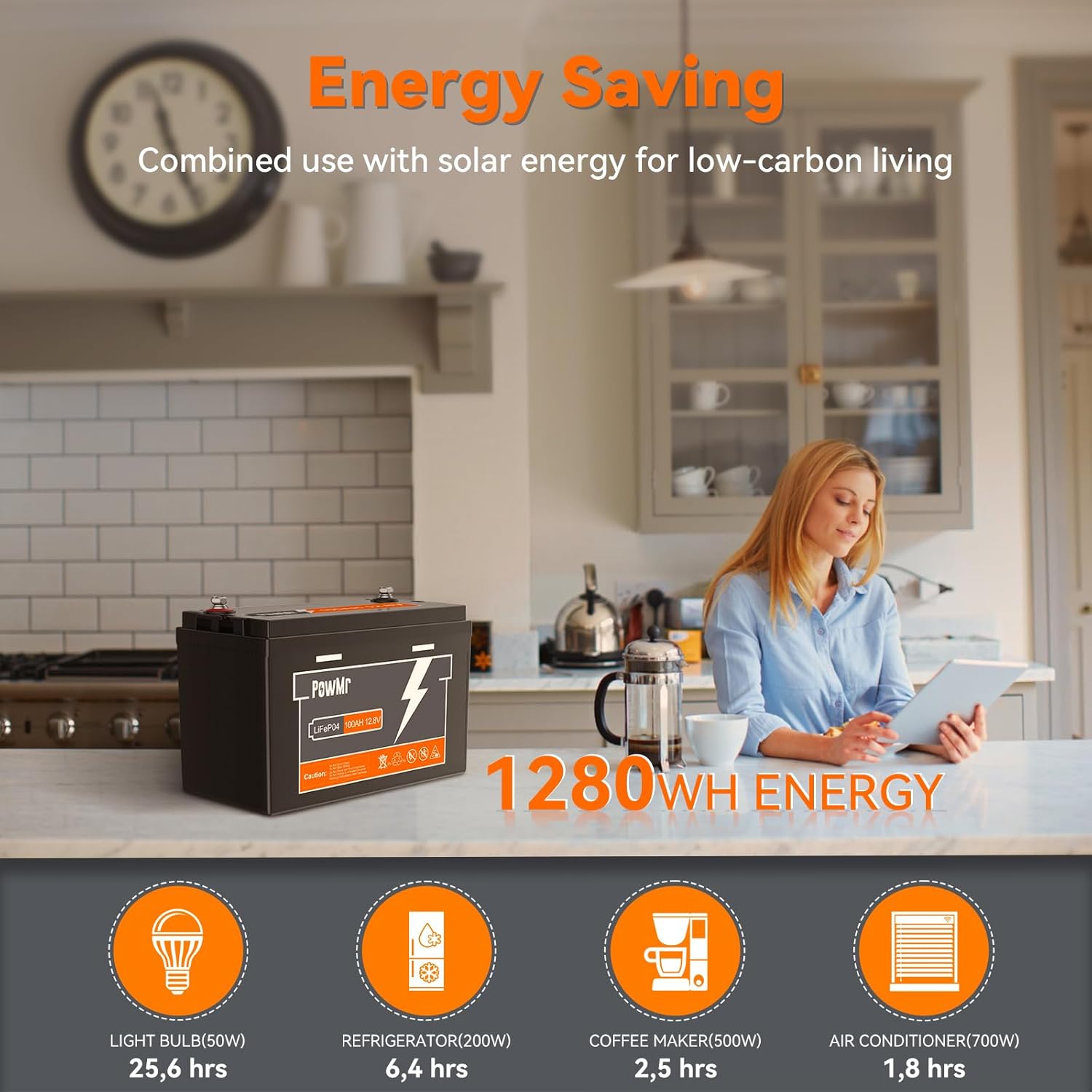
Image 5.2: Examples of appliances and their estimated runtimes using the 1280Wh energy capacity of the battery, such as light bulbs, refrigerators, coffee makers, and air conditioners.
6. Maintenance
- Regular Inspection: Periodically check battery terminals for corrosion or loose connections. Clean as necessary.
- Storage: If storing the battery for an extended period, ensure it is charged to approximately 50-70% capacity. Store in a cool, dry place within the recommended storage temperature range of -10°C to 50°C (14°F to 122°F).
- Recharge during Storage: For very long storage periods, it is advisable to check the battery voltage every 3-6 months and recharge if necessary to prevent deep discharge.
- Cleaning: Clean the battery casing with a damp cloth. Do not use harsh chemicals or abrasive cleaners.
7. Troubleshooting
The built-in 100A BMS provides protection against various conditions. If the battery appears to be non-functional or exhibiting unusual behavior, consider the following:
- No Power Output:
- Check all cable connections for tightness and correct polarity.
- Verify the battery voltage. If it's very low, the BMS might have activated over-discharge protection. Attempt to charge the battery with a compatible LiFePO4 charger.
- Ensure the load is not exceeding the battery's maximum continuous discharge current (100A). The BMS will activate overcurrent protection if exceeded.
- Battery Not Charging:
- Confirm the charger is specifically designed for LiFePO4 batteries and is functioning correctly.
- Check charging temperature. The BMS will prevent charging if the temperature is outside the 0°C to 50°C range.
- Ensure the charger's voltage and current settings are appropriate for a 12V LiFePO4 battery.
- Unusual Heat:
- Disconnect the battery immediately from all loads and chargers.
- Excessive heat can indicate an internal fault or an external short circuit. Do not attempt to use the battery until the cause is identified and resolved.
If troubleshooting steps do not resolve the issue, please contact Temank customer support for assistance.
8. Specifications
| Feature | Specification |
|---|---|
| Brand | Temank |
| Model | 100AH 12.8V |
| Nominal Voltage | 12.8V |
| Nominal Capacity | 100Ah |
| Energy | 1280Wh |
| Battery Type | LiFePO4 (Lithium Iron Phosphate) |
| Built-in BMS | 100A |
| Cycle Life | 4000+ cycles @100% DOD, 6000 cycles @80% DOD, 15000 cycles @60% DOD |
| Max. Continuous Charge Current | 100A |
| Max. Continuous Discharge Current | 100A |
| Operating Temperature (Discharge) | -20°C to 60°C (-4°F to 140°F) |
| Operating Temperature (Charge) | 0°C to 50°C (32°F to 122°F) |
| Storage Temperature | -10°C to 50°C (14°F to 122°F) |
| Item Weight | 11.5 kg (25.3 lbs) |
| Product Dimensions | 12.8 x 6.69 x 8.46 inches (325 x 170 x 215 mm) |
| Terminal Type | M8 Terminal |
| Waterproof Rating | IP65 |
9. Warranty and Support
For any questions, technical assistance, or support regarding your Temank 12V 100Ah LiFePO4 Lithium Battery, please contact Temank customer service. Refer to your purchase documentation for specific warranty terms and contact information.
You can typically find support contact details on the manufacturer's official website or through your point of purchase.
Related documents100AH 12.8V


Ask a question about this manual
Ask about setup, troubleshooting, compatibility, parts, safety, or missing instructions. Manuals+ will review the question and use this page’s manual context to help answer it.