
GREATHTEK 4K60HZ+USB2.0
GREATHTEK HDMI+Displayport Dual Monitor KVM Switch User Manual
Model: 4K60HZ+USB2.0
1. Introduction
The GREATHTEK HDMI+Displayport Dual Monitor KVM Switch allows two computers or laptops to share two monitors and a single set of keyboard and mouse. This device supports both extended and duplicate display modes, provided your computer's graphics card supports these capabilities. It is designed to streamline your workspace by enabling seamless switching between two systems.
Key features include:
- Dual Monitor Support: Connects two monitors to two computers using a combination of HDMI and DisplayPort inputs.
- High Resolution: Supports Ultra HD resolutions up to 4K@60Hz, with backward compatibility for lower resolutions.
- Integrated USB Hub: Features four USB 2.0 ports for sharing peripherals such as keyboards, mice, U-disks, printers, gamepads, and webcams.
- Adaptive EDID: Ensures smooth and stable signal output by adapting to various display environments.
- Broad Compatibility: Compatible with Windows 10/7/2000/XP/Vista, Linux, UNIX, Ubuntu, Fedora, and other operating systems.
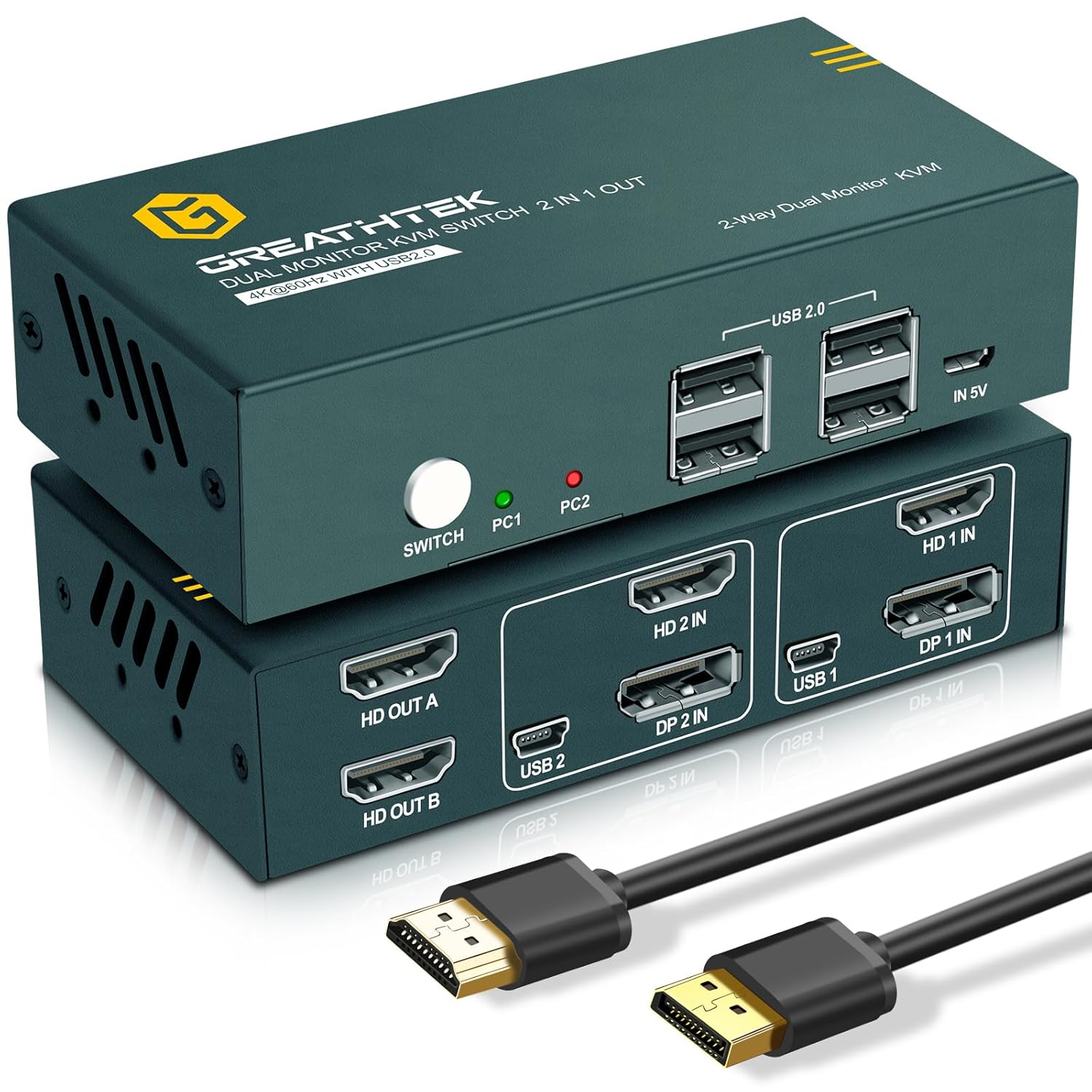
Image 1.1: Front and rear view of the GREATHTEK KVM Switch with included cables.
2. Package Contents
Please verify that all items listed below are included in your package:
- GREATHTEK HDMI+Displayport Dual Monitor KVM Switch Unit
- Mini USB Cable (x2)
- Micro USB Cable (x1)
- DP Cable (5 ft) (x2)
- HDMI Cable (5 ft) (x2)
- Foot Pad
- Warranty Card
- User Manual
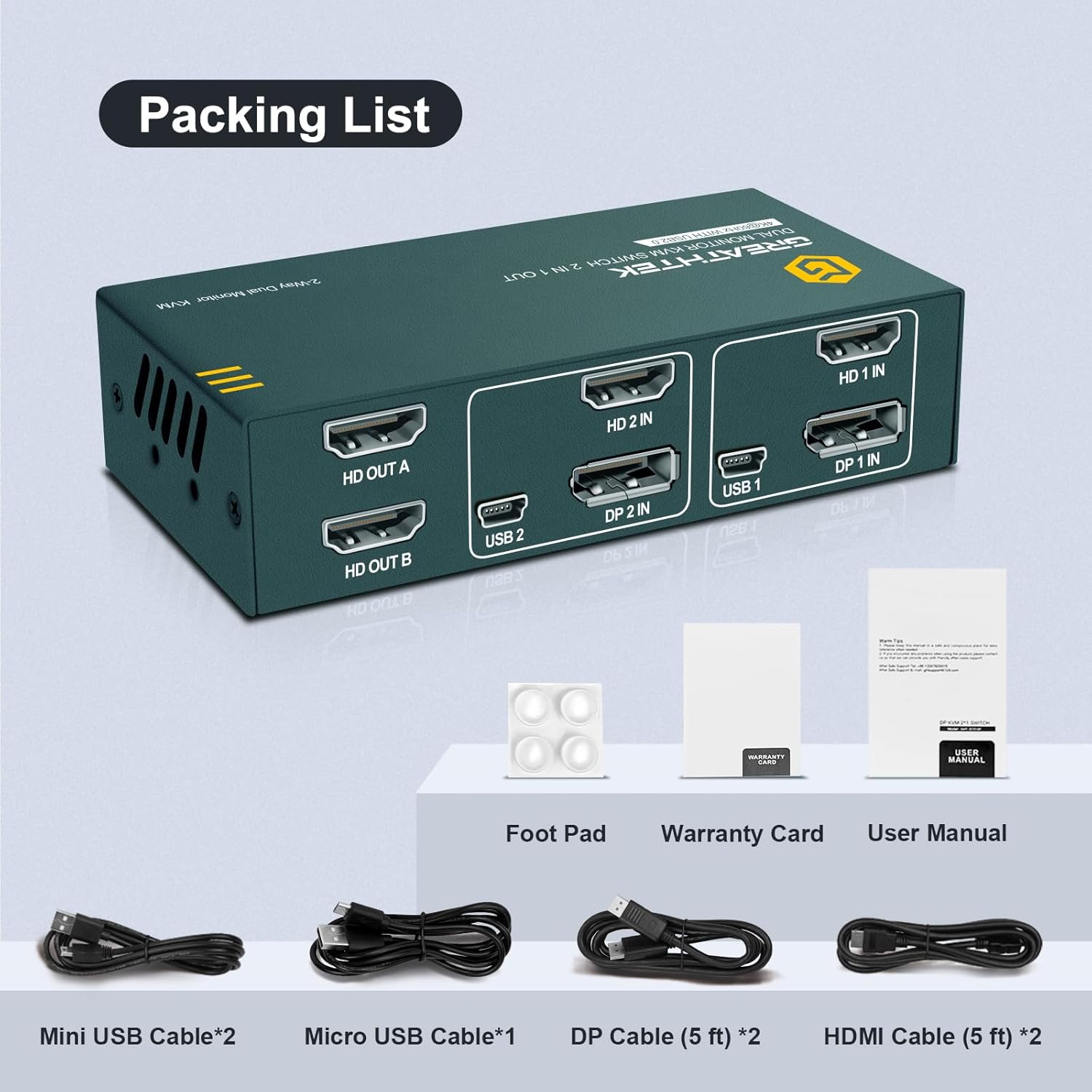
Image 2.1: Illustration of the KVM Switch and its included accessories.
3. Product Diagrams
3.1 Front and Rear Panel Layout

Image 3.1: Detailed view of the KVM Switch's front and rear ports.
- 1. HD OUT A: HDMI output for Monitor A
- 2. HD OUT B: HDMI output for Monitor B
- 3. HD 2 IN / DP 2 IN / USB 2: Input group for PC2 (HDMI, DisplayPort, USB)
- 4. HD 1 IN / DP 1 IN / USB 1: Input group for PC1 (HDMI, DisplayPort, USB)
- 5. SWITCH: Button to switch between PC1 and PC2
- 6. PC1 / PC2: Status indicators (LEDs)
- 7. USB 2.0 Ports: For keyboard, mouse, and other USB 2.0 devices
- 8. IN 5V: 5V power supply input port (Micro USB)
3.2 Connection Diagram

Image 3.2: Visual guide for connecting two computers and two monitors to the KVM Switch.
4. Setup Instructions
Follow these steps to connect your GREATHTEK KVM Switch:
- Power Off Devices: Ensure both computers and monitors are powered off before making any connections.
- Connect Monitors to KVM Outputs:
- Connect your first monitor to the KVM's HD OUT A port using an HDMI cable.
- Connect your second monitor to the KVM's HD OUT B port using an HDMI cable.
- Connect PC1 to KVM Inputs:
- Connect PC1's HDMI output to the KVM's HD 1 IN port using an HDMI cable.
- Connect PC1's DisplayPort output to the KVM's DP 1 IN port using a DisplayPort cable.
- Connect PC1's USB port to the KVM's USB 1 port using a Mini USB to USB-A cable.
- Connect PC2 to KVM Inputs:
- Connect PC2's HDMI output to the KVM's HD 2 IN port using an HDMI cable.
- Connect PC2's DisplayPort output to the KVM's DP 2 IN port using a DisplayPort cable.
- Connect PC2's USB port to the KVM's USB 2 port using a Mini USB to USB-A cable.
- Connect USB Peripherals: Connect your keyboard, mouse, and other USB 2.0 devices (e.g., U-disk, printer, webcam) to the four USB 2.0 Ports on the front of the KVM switch.
- Connect Power: Connect the Micro USB cable to the IN 5V port on the KVM switch and to a 5V power adapter (not always included, but recommended for stable operation, especially with multiple USB devices).
- Power On: Power on your monitors and then your computers. The KVM switch should automatically detect the active input.
Note: Ensure all cables are securely connected. Loose connections can lead to display or peripheral issues.
5. Operating the KVM Switch
5.1 Switching Between Computers
To switch between the connected computers (PC1 and PC2), press the SWITCH button located on the front panel of the KVM device. The corresponding LED indicator (PC1 or PC2) will illuminate to show which computer is currently active.

Image 5.1: The front panel switch button for changing active computers.
5.2 Display Modes
The KVM switch supports both extended and duplicate display modes. The specific mode depends on your computer's operating system and graphics card settings. You can configure these settings directly on your computer.

Image 5.2: Illustration of mirrored and extended display configurations.
6. Maintenance
To ensure the longevity and optimal performance of your KVM switch, follow these general maintenance guidelines:
- Keep the device in a cool, dry place, away from direct sunlight, heat sources, and moisture.
- Avoid exposing the device to extreme temperatures or humidity.
- Clean the exterior of the KVM switch with a soft, dry cloth. Do not use liquid cleaners or abrasive materials.
- Ensure proper ventilation around the device to prevent overheating.
- Regularly check all cable connections to ensure they are secure.
7. Troubleshooting
If you encounter issues with your KVM switch, please refer to the following common problems and solutions:
| Problem | Possible Cause | Solution |
|---|---|---|
| No display on monitors after switching. | Loose video cables, incorrect input selection, resolution incompatibility. |
|
| Keyboard or mouse not responding. | Loose USB cables, KVM not powered, incompatible USB device. |
|
| USB devices disconnect randomly. | Insufficient power, faulty USB cable, KVM firmware issue. |
|
| Switching is slow or unresponsive. | Cable quality, KVM processing delay. |
|
8. Specifications
| Feature | Detail |
|---|---|
| Model | 4K60HZ+USB2.0 (GHT-7217PH2-016) |
| Video Inputs | 2 x HDMI, 2 x DisplayPort |
| Video Outputs | 2 x HDMI |
| USB Ports (for computers) | 2 x Mini USB (USB 1, USB 2) |
| USB Ports (for peripherals) | 4 x USB 2.0 Type-A |
| Max Resolution | 4K@60Hz (backward compatible) |
| Operation Mode | Manual (Push Button) |
| Product Dimensions | 22.5 x 16.6 x 7.6 cm |
| Weight | 780 g |
| Material | Plastic, Copper/Copper Alloy |
| Compatibility | Windows 10/7/2000/XP/Vista, Linux, UNIX, Ubuntu, Fedora |
9. Warranty and Support
GREATHTEK is committed to providing excellent products and customer service. Your KVM switch comes with a warranty. Please refer to the included Warranty Card for specific terms and conditions, including the warranty period.
If you have any questions, concerns, or require technical assistance with your GREATHTEK KVM switch, please do not hesitate to contact our customer support team. Contact information can typically be found on the Warranty Card or the official GREATHTEK website.
Ask a question about this manual
Ask about setup, troubleshooting, compatibility, parts, safety, or missing instructions. Manuals+ will review the question and use this page’s manual context to help answer it.