
1. Introduction
This manual provides detailed instructions for the installation, operation, maintenance, and troubleshooting of the ECO-WORTHY Solar Combiner Box. This device is designed to simplify the wiring of solar panel systems, enhance protection, and ensure reliable performance for both on-grid and off-grid applications, including RV setups. Please read this manual thoroughly before using the product.

Figure 1: ECO-WORTHY 4-string PV Combiner Box with 10A Fuses.
2. Setup and Installation
2.1 Simplified Connection
The ECO-WORTHY Solar Combiner Box features a plug-and-play design with pre-wired cables, facilitating straightforward installation. It efficiently combines up to 4-string PV arrays, significantly reducing wiring complexity. Each input supports a maximum current of 10 A, making it particularly suitable for 100 W solar panels.
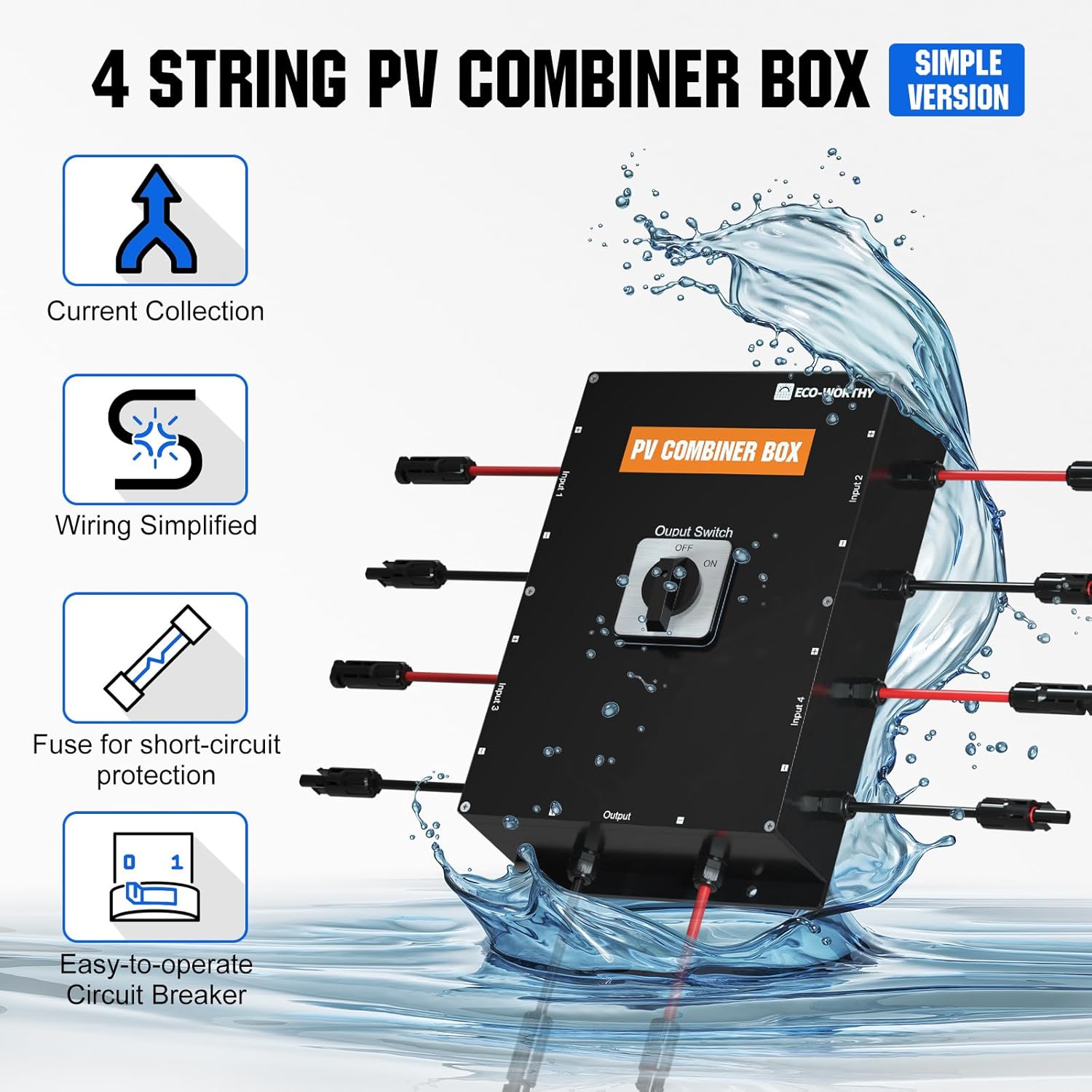
Figure 2: Key Features of the Combiner Box.
2.2 Component Configuration
Each solar combiner box package includes the following components:
- 4-string PV Combiner Box (x1)
- 60 A Toggle Disconnect Switch (integrated, x1)
- 10 A Fuse (x4)
- 9 AWG Cable (x1)
Note: An additional 60A solar cable may be required for optimal use with this combiner box.

Figure 3: Solar Disconnect Switch.
2.3 Choosing Matching Fuses
It is crucial to select fuses that match the short-circuit current of your solar panels to ensure proper function and protection. The combiner box can utilize a maximum of 20A in-line fuses.

Figure 4: Fuse Selection Guide.
| Adapt to Solar Panels | Short Circuit Current | Fuse Specifications |
|---|---|---|
| 100W | <6.4A | 10A Fuse |
| 200W | <9.6A | 15A Fuse |
| 400W | <12.8A | 20A Fuse |
| Formula: Short circuit current x 1.56 < Fuse Current | ||
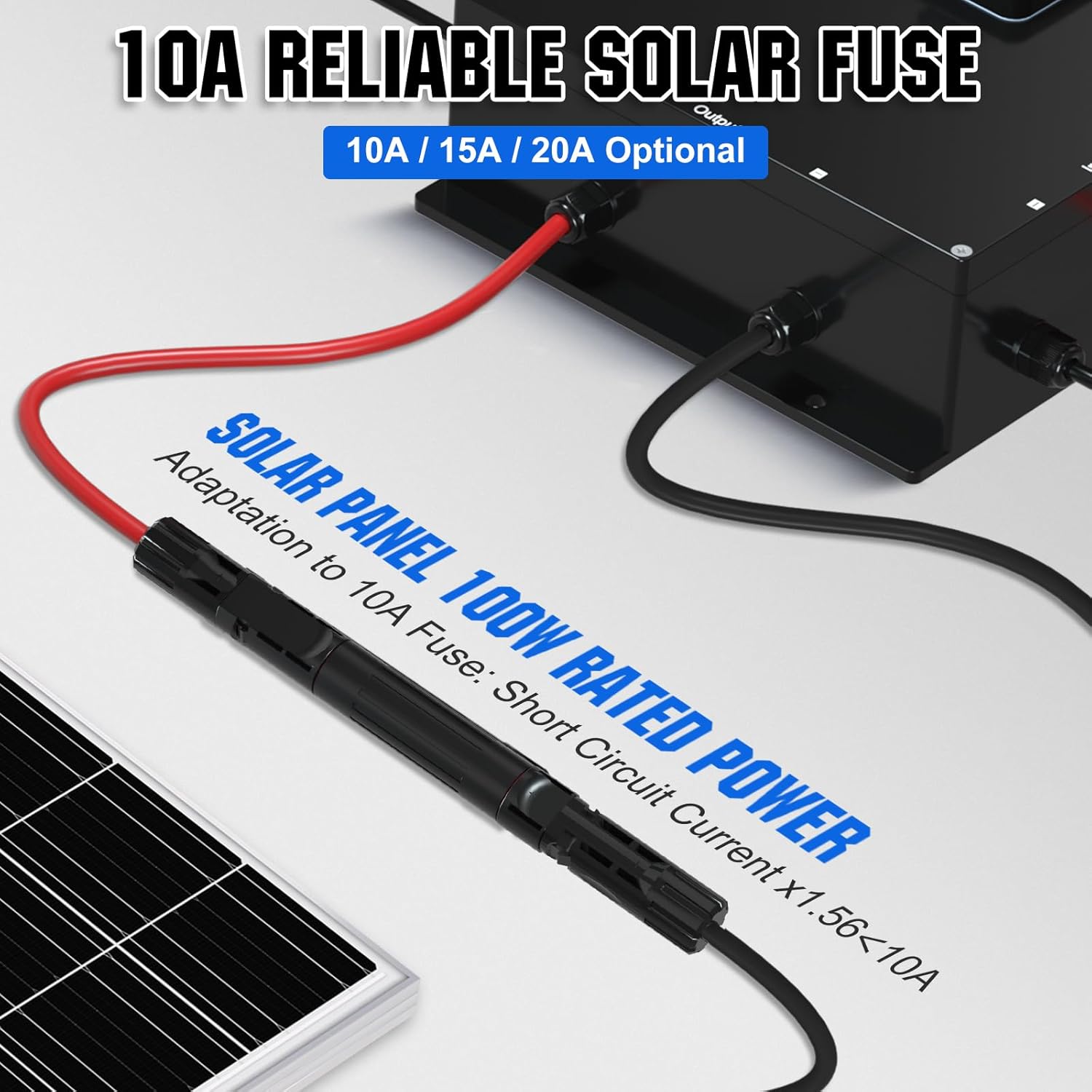
Figure 5: 10A Reliable Solar Fuse.
3. Operation
3.1 Enhanced Protection Features
The fuses within the solar combiner box offer multiple layers of protection, including short-circuit protection, overcurrent protection, and overvoltage protection. These features are designed to safeguard your solar panels and controllers, ensuring reliable operation under various environmental conditions.
3.2 Upgraded In-line Fuses
The 10A fuses are encased in durable PPO material, providing an IP67 waterproof rating to resist aging and UV damage. Their built-in latch design allows for plug-and-play functionality. The external placement of these fuses facilitates quick fault detection and timely replacement, minimizing downtime.

Figure 6: Premium In-Line Fuse Case.
3.3 Off-Grid Solar System Diagram
Below is a typical diagram illustrating how the combiner box integrates into an off-grid solar system, connecting solar panels to a charge controller and battery bank.

Figure 7: Off-Grid Solar System Diagram.
4. Maintenance and Safety Precautions
4.1 Rugged Outdoor Use
The solar combiner box is engineered for durability in outdoor environments. It features a sturdy, flame-retardant PVC shell and boasts an IP67 rating for water resistance. This robust construction ensures its suitability for both grid-connected and off-grid solar panel systems, as well as RV applications, withstanding various weather conditions.

Figure 8: Durability for Outdoor Use.
4.2 Precautions for Use
Adhere to the following precautions to ensure safe and effective operation:
- Always connect fuses to the positive terminal only for safe operation.
- It is recommended to turn off the disconnect switch during thunderstorms or if the system will be unattended for prolonged outdoor activities.
- Before purchasing or installing, always check the short-circuit current of your solar panel. The combiner box and fuse combination will function optimally only when the calculation formula (Short circuit current x 1.56 < Fuse Current) is satisfied.

Figure 9: Important Warnings.
5. Troubleshooting
5.1 Importance of a Combiner Box
A solar combiner box is a critical component for the safety and efficiency of your solar power system. Without a combiner box, a short circuit in one panel can lead to significant damage to other panels and the charge controller, potentially causing fires. With a combiner box, the system is protected by fuses, which will burn out in case of an overload or short circuit, isolating the fault and preventing widespread damage.

Figure 10: System with vs. Without Combiner Box.
5.2 Common Issues and Solutions
Refer to the table below for a comparison of system behavior with and without a combiner box, highlighting potential issues and their resolutions.
| Using a Combiner Box | Do Not Use Combiner Boxes | |
|---|---|---|
| Connection Method | Independent connections | Series and parallel connections |
| Voltage/Current | Slight fluctuations | Wild fluctuations |
| Overload Consequences | Fuse burnt | Solar panels and controllers burnt |
| Processing | Fuse replacement | PV system components replacement |

Figure 11: Combiner Box Comparison Table.
6. Specifications
| Attribute | Value |
|---|---|
| Brand | ECO-WORTHY |
| Model Number | L03JYHLX4-BXS10A-1 |
| Product Dimensions (L x W x H) | 11.8" x 7.09" x 3.74" |
| AC Adapter Current | 10 Amps |
| Material | Polyvinyl Chloride (PVC) |
| Number Of Circuits | 4 |
| Phase Type | Single Phase |
| Item Weight | 36.8 pounds |
| Color | Black |
| Item Package Quantity | 1 |
| Included Components | Solar combiner box |
| Batteries Required? | No |
7. Warranty and Support
For warranty information, technical support, or any inquiries regarding your ECO-WORTHY Solar Combiner Box, please refer to the contact information provided with your product packaging or visit the official ECO-WORTHY website. Our customer service team is available to assist you with any questions or concerns.