
Introduction
This manual provides instructions for the proper installation, operation, and maintenance of your AKW Vacuum Breaker Hose Bib Backflow Preventer. This device is designed to prevent the backflow of contaminated water into the main potable water supply, ensuring water safety.
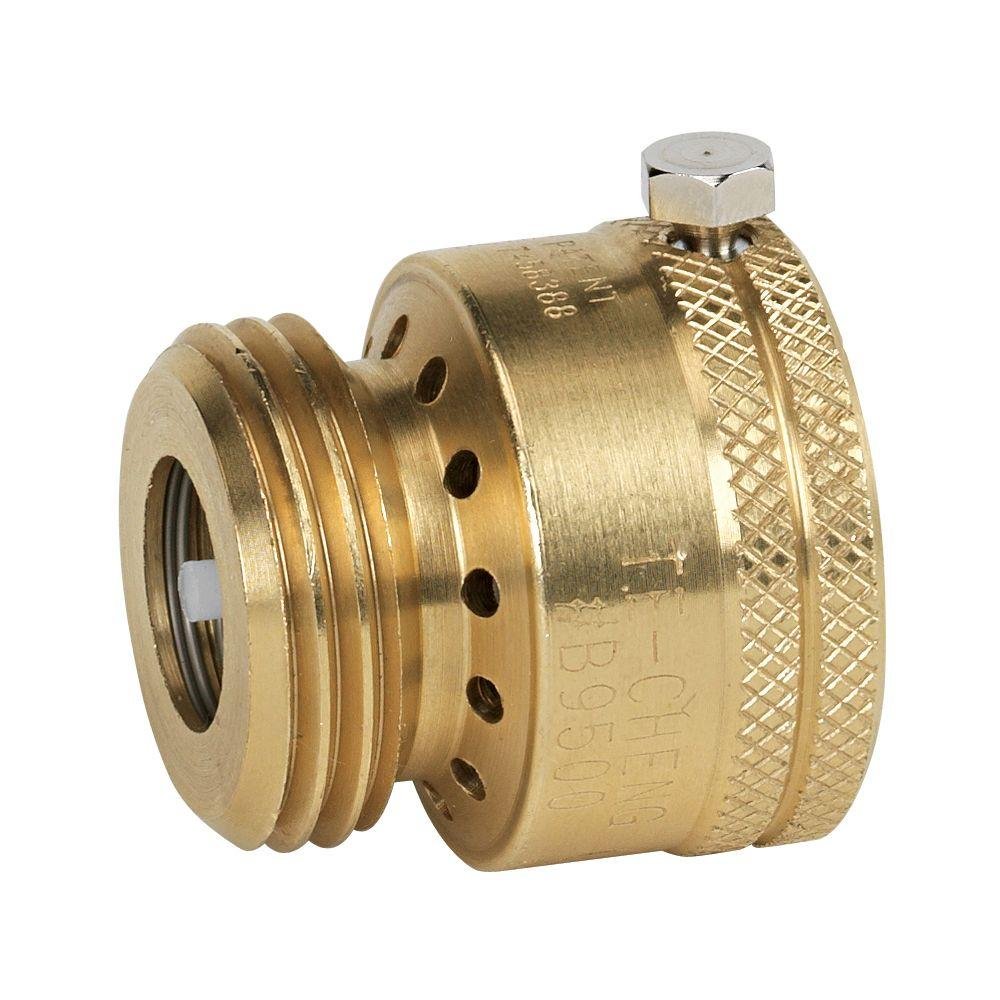
Image: The AKW Vacuum Breaker Hose Bib Backflow Preventer, made of brass, featuring a 3/4-inch male hose thread connection on one end and a female hose thread connection on the other, with a small vent on top and drainage holes along the body.
Setup and Installation
- Preparation: Ensure the water supply to the hose bib or sillcock is turned off before beginning installation.
- Compatibility Check: The AKW Vacuum Breaker features a 3/4-inch male hose thread outlet, compatible with most standard hose bibs, sillcocks, wall faucets, and garden hoses.
- Attachment: Thread the vacuum breaker onto the hose bib or sillcock. Hand-tighten first, then use a wrench to ensure a snug, leak-free connection. Do not overtighten.
- Permanent Attachment (Optional): For permanent installation, the vacuum breaker includes a break-off screw. Once the device is securely installed and tightened, the screw can be broken off to prevent unauthorized removal. This step is typically performed by a professional or when local codes require it.
- Water Supply Restoration: Slowly turn the water supply back on and check for any leaks around the connection points.
Operating Instructions
The AKW Vacuum Breaker operates automatically to prevent backflow. When water flows through the device, internal components allow normal flow. When the water supply pressure drops or a negative pressure (vacuum) occurs, the device activates to break the vacuum, preventing water from being siphoned back into the potable water system. It is a self-draining unit, designed to drain water from the device when the pressure is relieved, which helps prevent freezing in cold weather conditions when properly installed and drained.
Maintenance
- Inspection: Periodically inspect the vacuum breaker for any signs of damage, leaks, or corrosion.
- Cleaning: If debris or mineral buildup is observed, disconnect the device and gently clean it. Avoid using harsh chemicals that could damage the brass or internal components.
- Winterization: In freezing climates, it is recommended to disconnect and store the vacuum breaker indoors during winter months, even though it is self-draining. Ensure all water is drained from the hose bib and the vacuum breaker itself to prevent freeze damage.
- Corrosion Resistance: The AKW Vacuum Breaker is constructed from durable brass, offering inherent corrosion resistance.
Troubleshooting
- Leaks at Connection: If leaks occur, ensure the vacuum breaker is securely tightened to the hose bib. Check the condition of any rubber washers or gaskets and replace if necessary.
- Reduced Water Flow: Check for any obstructions or debris within the vacuum breaker or the hose bib. Ensure the water supply is fully open.
- Continuous Dripping/Spitting: This may indicate a minor issue with the internal valve or debris. Disconnect, inspect, and clean the unit. If the issue persists, replacement may be necessary.
Specifications
| Model Number | AKWVacuumBreak |
| Material | Brass |
| Connector Type | Male x Female (3/4-inch thread) |
| Product Dimensions (L x W x H) | 1.6 x 1.5 x 1.3 inches |
| Item Weight | 1 pound |
| Standards Compliance | Meets ASSE 1011 / CSA B64.2 Standards |
| UPC | 198168437490 |
Warranty and Support
For specific warranty information and terms, please refer to the manufacturer's official website or contact AKW customer support directly. Keep your purchase receipt as proof of purchase. This product is designed to meet ASSE 1011 / CSA B64.2 Standards, ensuring reliable performance for backflow prevention.
For technical assistance or inquiries, please contact AKW customer service through their official channels.