
1. Introduction
This manual provides essential information for the safe and effective use of your Vapcell Flat Top 18350 3.7V 1600mAh Li-ion Rechargeable Batteries. Please read all instructions and safety warnings carefully before use to ensure optimal performance and prevent potential hazards.
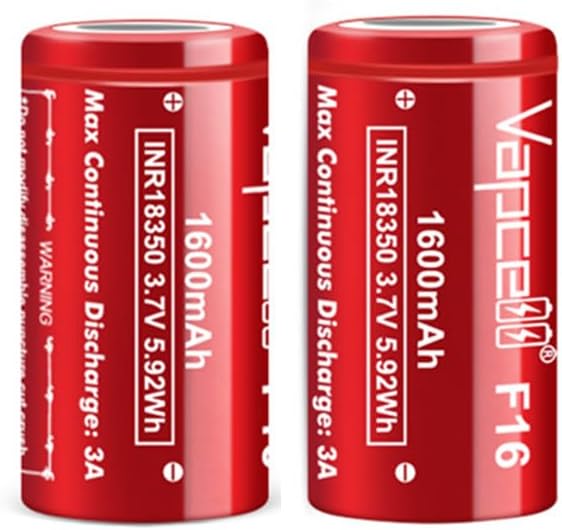
Image 1.1: Two Vapcell Flat Top 18350 batteries. These are red cylindrical batteries with white text indicating model, voltage, capacity, and discharge rating.
2. Specifications
The Vapcell Flat Top 18350 battery offers reliable performance for compatible devices. Key specifications are detailed below:
- Model: F16 (18350)
- Battery Type: Flat Top IMR Li-ion Rechargeable
- Nominal Voltage: 3.7V
- Typical Capacity: 1600mAh (0.2C discharge)
- Minimum Capacity: 1500mAh (0.2C discharge)
- Max Continuous Discharge Current: 3A (3000mA)
- End-of-charge Voltage: 4.20V
- End-of-discharge Voltage: 2.50V
- Internal Resistance: 60mΩ (AC 1kHz)
- Standard Charge: 500mA, CCCV 50mA cut-off
- Quick Charge Current: 1000mA
- Dimensions: 18.3 ± 0.2mm (Diameter) x 35.0 ± 0.3mm (Length)
- Weight: Approximately 26g per battery
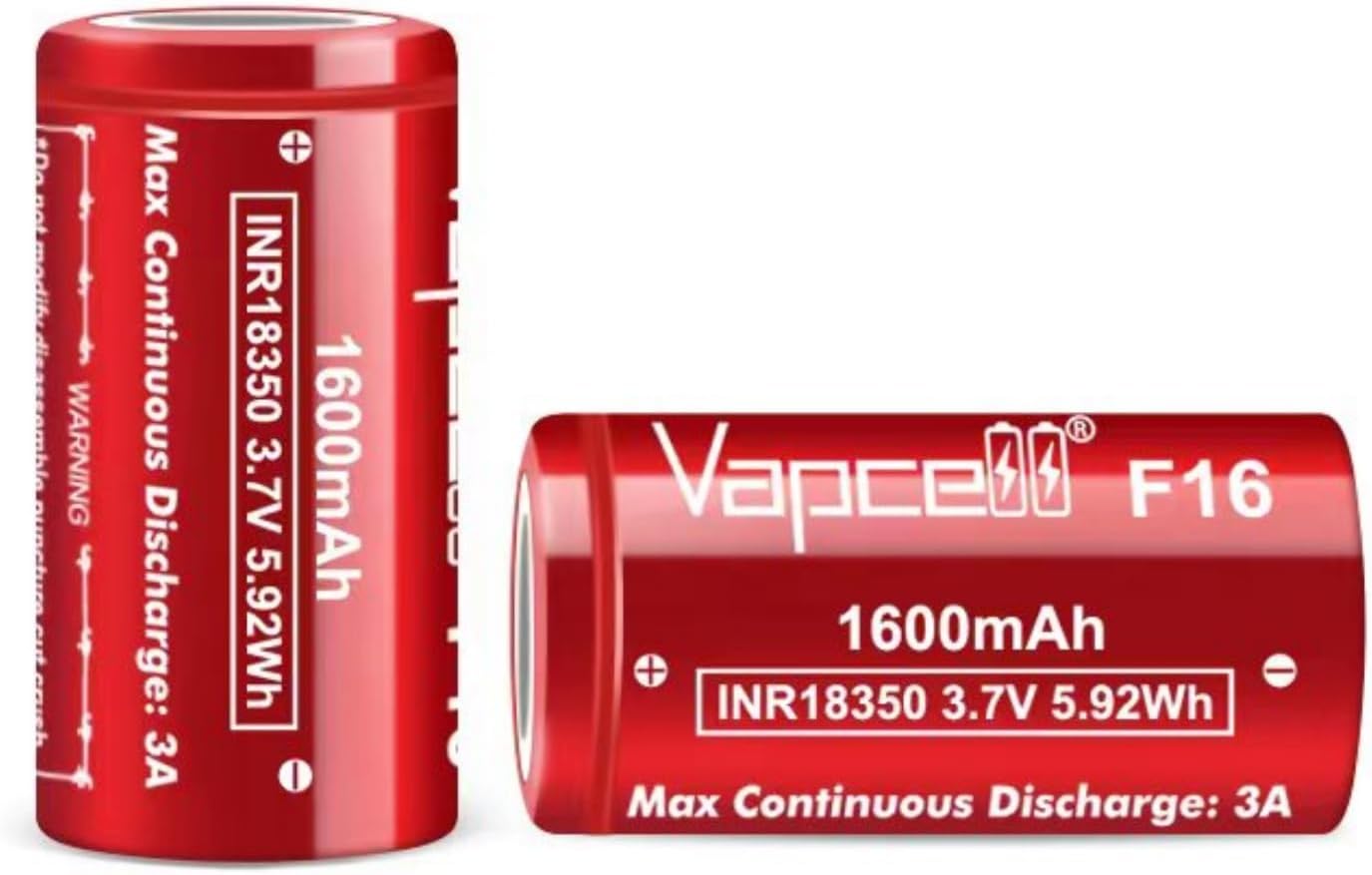
Image 2.1: A visual representation of the Vapcell F16 18350 battery specifications, including model, size, capacity, voltage, discharge current, and charging parameters.

Image 2.2: A graph illustrating the discharge performance of the Vapcell 18350 1600mAh F16 battery under various current loads (0.5A, 2.0A, 3.0A, 4.0A). The table below the graph provides detailed data points for each test.
3. Safety Guidelines
Lithium-ion batteries can be dangerous if not handled properly. Adhere to the following safety guidelines to prevent injury or damage:
- Do not disassemble, puncture, crush, or short-circuit the battery.
- Do not expose the battery to water or fire.
- Do not use if the battery wrapper is damaged or torn.
- Do not expose to extreme temperatures (above 60°C or below 0°C).
- Always use a charger specifically designed for Li-ion batteries.
- Do not overcharge or over-discharge the battery.
- Keep batteries away from children and pets.
- If the battery emits an odor, generates heat, becomes discolored or deformed, or appears abnormal in any way during use, charging, or storage, immediately remove it from the device or charger and discontinue use.
4. Charging Instructions
Proper charging is crucial for battery longevity and safety:
- Use a high-quality Li-ion battery charger compatible with 18350 cells.
- Insert the battery into the charger, ensuring correct polarity (+ and -).
- Charge the battery at the recommended standard charge current of 500mA for optimal battery health. A quick charge current of up to 1000mA can be used if supported by your charger and device.
- Do not leave batteries unattended while charging.
- Disconnect the battery from the charger once fully charged (typically when the charger indicates completion or the battery reaches 4.20V).
5. Usage Guidelines
These Vapcell 18350 batteries are suitable for various applications requiring high drain and compact power. Examples include:
- LED Flashlights
- Remote Control Vehicles
- Medical Equipment
- Compact Power Tools
- Certain Cameras
- Mini Electric Juicers

Image 5.1: This image displays various devices that can utilize the Vapcell 18350 battery, such as cameras, medical equipment, toys, LED flashlights, power tools, and mini electric juicers.
Always ensure the battery's specifications (voltage, capacity, discharge rate) match the requirements of your device. Using an incompatible battery can lead to poor performance or damage.
6. Storage and Maintenance
Proper storage and maintenance extend battery life:
- Store batteries in a cool, dry place, away from direct sunlight and heat sources.
- For long-term storage, charge batteries to approximately 3.7V - 3.8V (around 50% capacity).
- Avoid storing batteries fully charged or fully discharged for extended periods.
- Use protective cases to prevent accidental short-circuiting when carrying or storing loose batteries.
- Regularly inspect batteries for any signs of damage, swelling, or leakage.
7. Troubleshooting
If you encounter issues with your Vapcell 18350 batteries, consider the following:
- Battery not charging:
- Ensure the charger is functioning correctly and compatible with Li-ion batteries.
- Check for proper battery insertion and polarity.
- Inspect the battery for physical damage or wrapper tears.
- Short runtime:
- Verify the battery is fully charged before use.
- Ensure the device is not drawing excessive current beyond the battery's 3A continuous discharge limit.
- Battery capacity may degrade over time with repeated charge cycles.
- Battery getting hot during use/charging:
- Immediately discontinue use or charging.
- This could indicate a short circuit, internal damage, or over-discharge/overcharge.
- Dispose of the battery safely if it exhibits excessive heat.
8. Disposal Information
Do not dispose of Li-ion batteries in household waste. They contain materials that can be harmful to the environment and should be recycled properly. Contact your local waste management facility or battery recycling center for information on proper disposal.
9. Product Overview Video
Watch this video for a visual overview of the Vapcell 18350 1600mAh 3A Li-ion Battery.
Video 9.1: A short video showcasing the Vapcell 18350 1600mAh 3A Li-ion battery, rotating on a white turntable to display its features and branding from all angles.
10. Warranty and Support
For warranty information or technical support regarding your Vapcell batteries, please refer to the retailer's return policy or contact the manufacturer directly. Keep your proof of purchase for any warranty claims.