
Product Overview
The XINDA HH-9776 Climbing Stop Descender is a multi-functional descent device designed for belaying, rappelling, and various high-altitude operations. Constructed from high-strength 304 stainless steel and graphene, it offers durability and reliability. This descender features an auto-braking function to enhance safety by preventing accidental falls.

Package Contents
- 1 x XINDA HH-9776 Climbing Stop Descender
- 1 x Hex Wrench
Specifications
| Feature | Detail |
|---|---|
| Model Name | HH-9776 |
| Material | High-strength 304 Stainless Steel and Graphene |
| Dimensions | 8.84 x 3.94 x 3.15 inches |
| Weight | 0.35 Pounds |
| Recommended Rope Diameter | 10.5mm (suitable for 10.5mm-12mm rope) |
| Maximum Workload | 100 kg (220.46 lb) |
| Static Load | 400 kg (881.85 lb) |
| Function | Auto Braking |
Safety Information
WARNING: Climbing and rappelling are inherently dangerous activities. Improper use of this equipment can result in severe injury or death. Read and understand all instructions before use. Seek professional training from a qualified instructor.
- Always inspect the descender, rope, and all other climbing equipment for damage before each use.
- Ensure the rope diameter is within the recommended range (10.5mm recommended, suitable for 10.5mm-12mm).
- Do not exceed the maximum workload of 100 kg (220.46 lb).
- For long distance descents (over 20-30 meters), take breaks to allow the device to dissipate heat.
- When resting in the air, always make a safety knot in the rope to prevent accidental contact with the handle.
- This device is intended for use by experienced individuals or under direct supervision of a qualified professional.
- Always use appropriate personal protective equipment, including a helmet and harness.
Setup and Installation
- Fold the rope in half, creating a bight.
- Insert the folded rope through the descender's main opening. Ensure the rope anchor (the part of the rope that will bear the load) faces the handle side of the descender.
- Clip a suitable climbing carabiner (O-shape recommended) onto the double rope loop that passes through the descender.
- Securely lock the carabiner.
- Attach the locked carabiner to your climbing harness's belay loop.
- Pull the rope upwards to ensure it is tight and properly seated within the descender and carabiner.
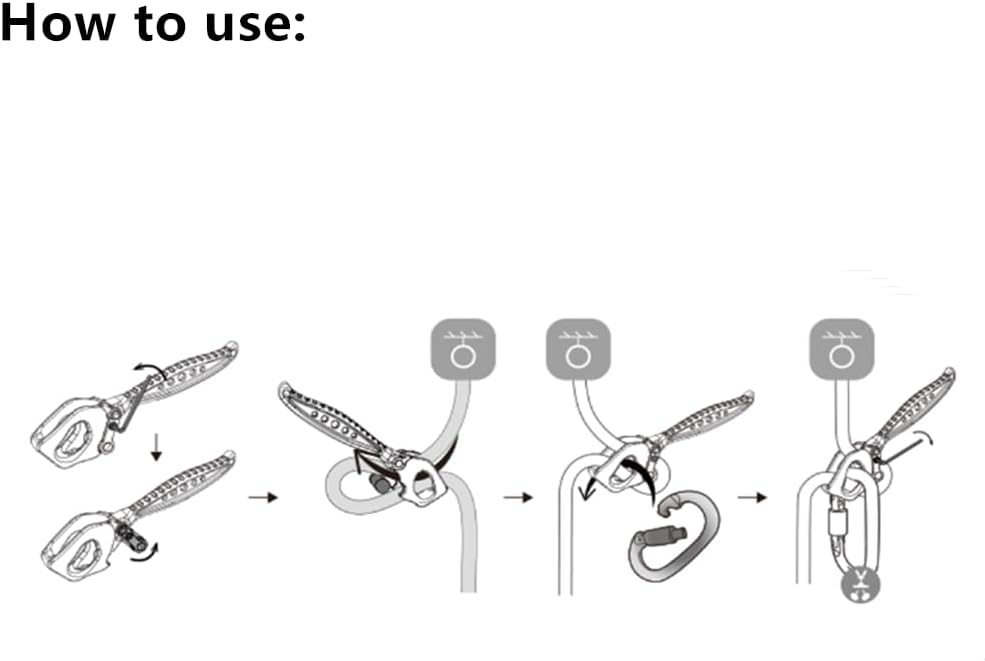
Video demonstrating the correct procedure for attaching the XINDA HH-9776 descender to a rope and harness for descent.
Operating Instructions
Descent
- Once the descender is securely attached to your harness and the rope, hold the free end of the rope with your dominant hand (e.g., right hand) and position it near your leg loop.
- With your non-dominant hand (e.g., left hand), gently press the handle of the descender. This action releases the auto-braking mechanism, allowing the rope to feed through.
- Control your descent speed by varying the pressure on the handle and the tension on the free end of the rope.
- To stop the descent, release the handle. The auto-braking function will engage, stopping your movement.

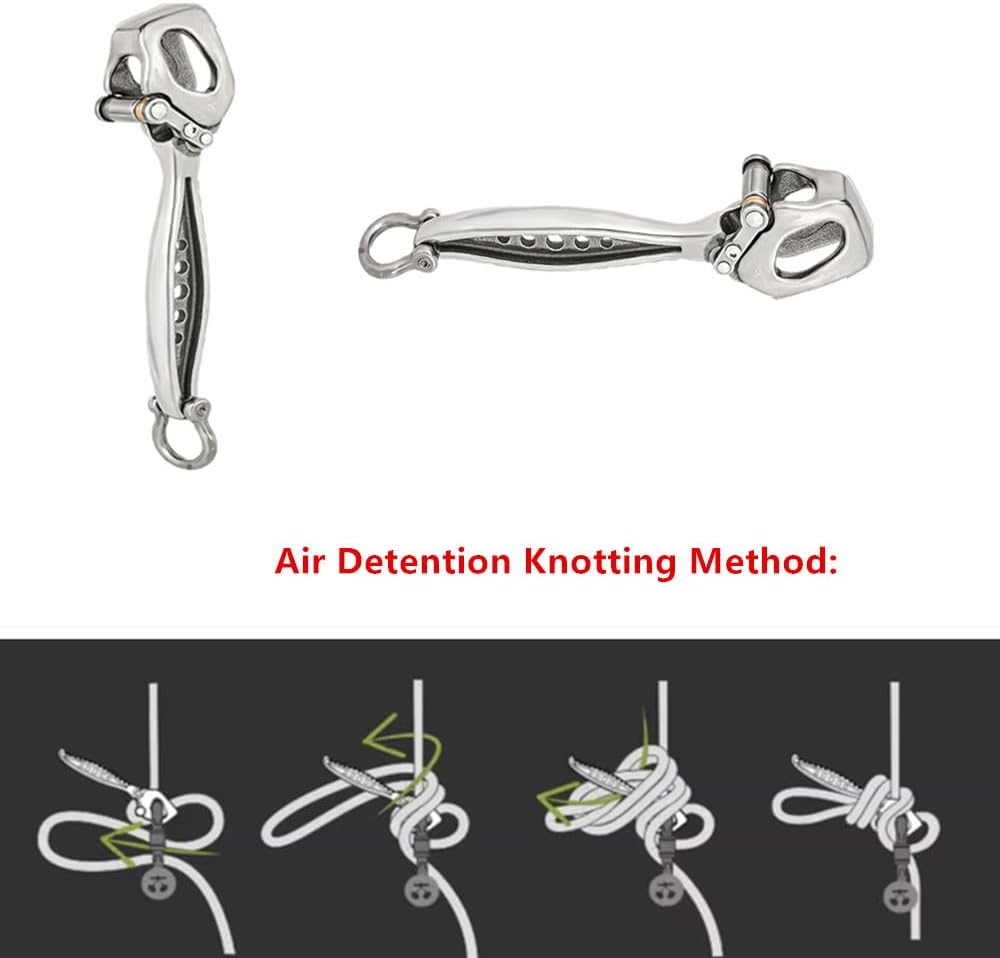
Air Detention Knotting Method
For short rest periods during descent, it is crucial to secure yourself by tying a safety knot to prevent accidental release or contact with the handle.
- While suspended, create a loop in the rope above the descender.
- Pass this loop through the main opening of the descender, around the rope, and back through the loop to form a friction hitch or a specific safety knot.
- Ensure the knot is tight and properly dressed to prevent slippage.
Maintenance
- After each use, clean the descender with fresh water and mild soap, then rinse thoroughly.
- Allow the device to air dry completely before storage.
- Store the descender in a cool, dry place away from direct sunlight, chemicals, and extreme temperatures.
- Regularly inspect for any signs of wear, cracks, deformation, or corrosion. Pay close attention to moving parts and rope contact areas.
- If any damage is found, immediately retire the device from service.
Troubleshooting
Rope not feeding smoothly
- Check if the rope diameter is within the recommended range (10.5mm-12mm).
- Ensure the rope is not twisted or kinked.
- Verify that the descender is clean and free from dirt or debris.
Auto-braking not engaging
- Ensure the handle is fully released.
- Inspect the internal mechanism for any obstructions or damage. If damaged, discontinue use immediately.
Warranty and Support
This product does not come with a manufacturer's warranty. For any product-related inquiries or support, please contact XINDA OUTDOOR directly through their official channels.
For additional information and resources, you may visit the XINDA Store on Amazon.