
Introduction
This manual provides essential information for the safe and effective operation, maintenance, and troubleshooting of your Electric Reciprocating Saw. Please read this manual thoroughly before using the product and retain it for future reference.
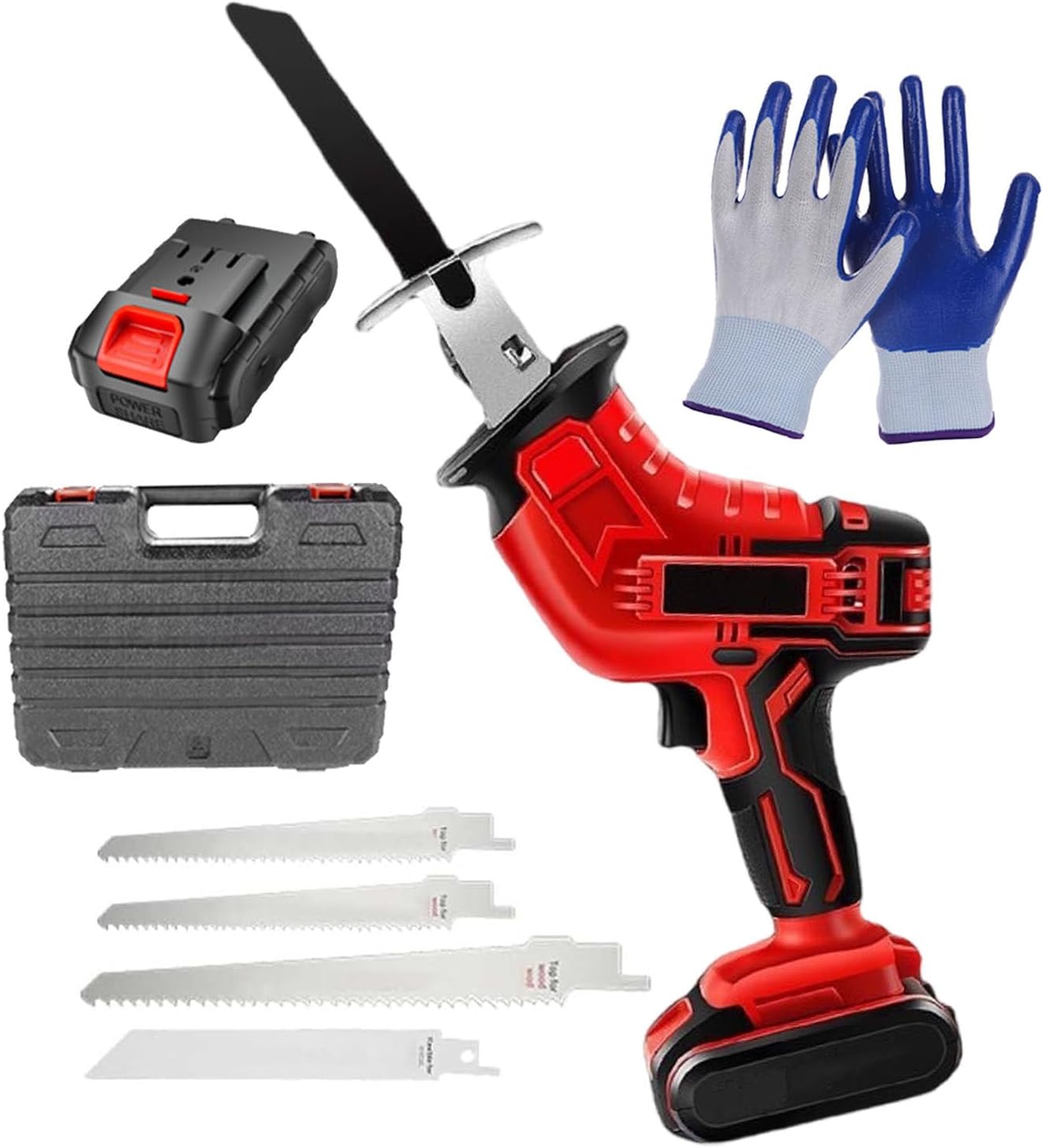
Image: The Electric Reciprocating Saw, showing the main unit, battery, charger, four saw blades, a plastic carrying case, and a pair of gloves.
Safety Instructions
Always follow basic safety precautions to reduce the risk of fire, electric shock, and personal injury.
- Wear appropriate personal protective equipment (PPE) including safety glasses, gloves, and hearing protection.
- Ensure the work area is well-lit and free from obstructions.
- Keep children and bystanders away while operating the saw.
- Do not operate the saw in damp or wet conditions.
- Always unplug the saw or remove the battery before changing blades, cleaning, or performing maintenance.
- Secure the workpiece firmly before cutting to prevent movement.
- Avoid accidental starting. Ensure the switch is in the off-position before inserting the battery pack.
- Use only recommended accessories and saw blades.
- Do not force the tool; let the saw do the work.
Package Contents
Verify that all items are present in the package:
- Electric Bone Cutting Machine (Reciprocating Saw) x 1
- Saw Blade x 4 (various types for different materials)
- Plastic Box (Carrying Case) x 1
- Gloves x 1 pair
- Charger x 1
- Battery x 1
Setup
1. Charging the Battery
Before first use, fully charge the battery. Connect the charger to a power outlet and insert the battery pack into the charger. The indicator light on the charger will show the charging status. Once fully charged, disconnect the battery.
2. Installing the Saw Blade
Ensure the battery is removed from the saw before installing or changing blades.
- Locate the self-locking chuck on the front of the saw.
- Twist or pull the chuck collar to open the blade reception slot.
- Insert the shank of the desired saw blade fully into the slot.
- Release the chuck collar to lock the blade in place. Gently pull on the blade to ensure it is securely fastened.
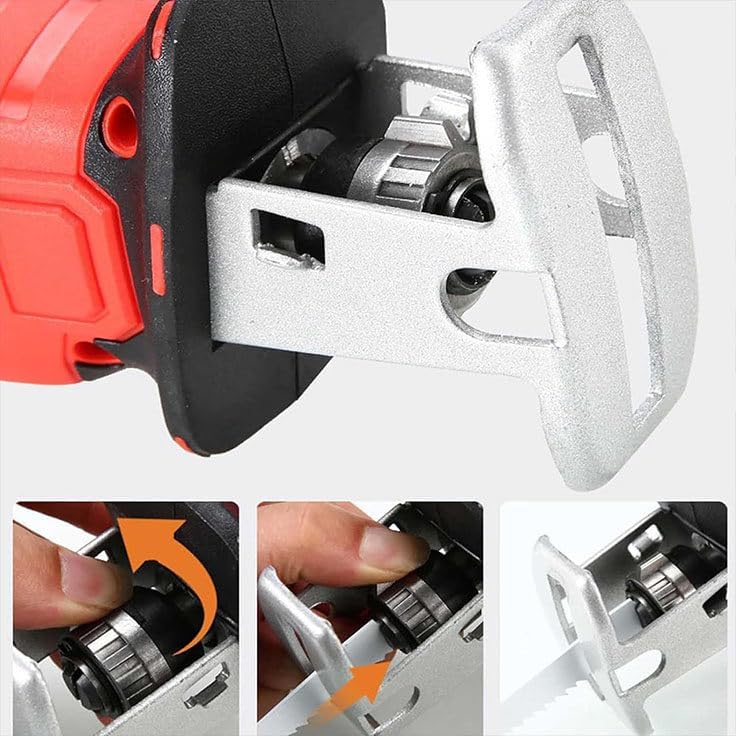
Image: A three-panel illustration demonstrating the process of inserting and securing a saw blade into the saw's chuck mechanism.

Image: Different lengths and tooth configurations of saw blades, highlighting their suitability for efficient cutting of various materials.
Operating Instructions
1. Powering On/Off
Insert the charged battery into the saw until it clicks into place. To start the saw, press the trigger switch. The saw's speed is variable based on trigger pressure. To stop, release the trigger. The saw features a switch lock to prevent accidental activation.

Image: A detailed view of the saw's trigger, illustrating that pressing faster increases speed, lifting the finger slows speed, and releasing stops the saw automatically.
2. Cutting Techniques
The reciprocating saw is versatile and can be used for cutting various materials including wood, metal, plastic, and even bone. It is also suitable for outdoor pruning.
- General Cutting: Place the shoe of the saw firmly against the workpiece. Start the saw and allow it to reach full speed before engaging the blade with the material. Apply steady, even pressure.
- Plunge Cutting: For cutting into the middle of a surface, tilt the saw so the blade tip touches the workpiece. Slowly pivot the saw until the blade plunges through the material.
- LED Lighting: The integrated LED light illuminates the cutting area, improving visibility in low-light conditions and helping to maintain a straight cutting line.

Image: Four panels demonstrating the saw's application in cutting wood, metal pipes, plastic, and pruning tree branches outdoors.
Maintenance
Regular maintenance ensures the longevity and optimal performance of your reciprocating saw.
- Cleaning: After each use, remove the battery and clean the saw with a dry cloth. Use a brush to remove sawdust and debris from vents and moving parts. Do not use solvents or abrasive cleaners.
- Blade Care: Inspect saw blades for wear or damage before each use. Replace dull or bent blades immediately to ensure efficient and safe cutting. Store blades in a dry place to prevent rust.
- Battery Storage: Store the battery in a cool, dry place away from direct sunlight and extreme temperatures. For long-term storage, ensure the battery is partially charged.
Troubleshooting
| Problem | Possible Cause | Solution |
|---|---|---|
| Saw does not start | Battery not inserted correctly or discharged. | Ensure battery is fully seated. Charge battery if necessary. |
| Blade not cutting efficiently | Dull or incorrect blade for material. | Replace with a sharp, appropriate blade for the material being cut. |
| Excessive vibration | Blade not securely installed or bent blade. | Re-install blade securely. Replace bent blade. |
| Overheating | Continuous heavy use or blocked vents. | Allow saw to cool down. Clear any obstructions from vents. Avoid forcing the tool. |
Specifications
| Feature | Detail |
|---|---|
| Name | Electric Reciprocating Saw |
| Material | Plastic, Stainless Steel |
| Color | Red |
| Item Weight | 5.5 pounds (approx. 2kg) |
| Package Dimensions | 13.78 x 11.81 x 3.94 inches |
| Motor Type | Pure Copper Motor |
| Special Features | LED Lighting, Self-locking Chuck, Rubber-coated Handle |

Image: A visual representation of the product's dimensions, including the saw itself (33cm length) and its carrying case (35cm length, 26cm width, 9.5cm height).

Image: An exploded view showing key internal components: the powerful all-copper motor, a Category A smart lithium battery, and an AI smart chip, highlighting product advantages like strong load capacity and higher efficiency.
Warranty and Support
For warranty information or technical support, please refer to the contact details provided with your purchase documentation or visit the manufacturer's official website. Keep your proof of purchase for warranty claims.


