
1. Important Safety Instructions
Always observe basic safety precautions to reduce the risk of fire, electric shock, and personal injury when operating this power tool. Read and understand all instructions before use.
- Wear Eye Protection: Always wear safety glasses or goggles that comply with applicable standards.
- Hearing Protection: Use ear protection during operation to prevent hearing damage.
- Respiratory Protection: Wear a dust mask, especially when cutting materials that produce fine dust.
- Proper Attire: Do not wear loose clothing, gloves, neckties, or jewelry that can get caught in moving parts. Secure long hair.
- Maintain Work Area: Keep the work area clean, well-lit, and free of clutter. Ensure adequate space around the saw.
- Keep Guards in Place: Ensure all guards are properly installed and functioning before operation.
- Use Push Stick: Always use a push stick for narrow cuts and to keep hands away from the blade.
- Unplug Before Adjustments: Disconnect the saw from the power source before changing blades, making adjustments, or performing maintenance.
- Avoid Overreaching: Maintain proper footing and balance at all times.
- Secure Workpiece: Always ensure the workpiece is firmly supported and guided.
- Overload Protection: The saw is equipped with overload protection. If the motor stops due to overload, turn off the saw, unplug it, and allow it to cool before restarting.
Failure to follow these safety instructions may result in serious personal injury or property damage.
2. Product Overview and Components
The Garvee 10 Inch Table Saw is designed for various woodworking tasks, offering adjustable cutting depth and bevel capabilities. Familiarize yourself with the components before assembly and operation.

Figure 2.1: Full view of the Garvee 10-inch table saw with its stand.

Figure 2.2: Labeled diagram of the Garvee table saw components, including fence, blade guard, switches, and adjustment wheels.
Key Components:
- Cross Cutting Fence: For guiding workpieces during cross cuts.
- Fence/Rip Fence: Adjustable guide for parallel cuts.
- Side Table Lock: Secures the side table extensions.
- Bevel Angle Lock: Secures the blade at the desired bevel angle.
- On/Off Switch: Controls power to the saw.
- Bevel Angle Adjustment Wheel: Adjusts the blade tilt for bevel cuts.
- Stand Rubber Foot: Provides stability and reduces vibration.
- Blade Guard: Transparent cover for safety during operation.
- Blade Guard Seat: Base for the blade guard assembly.
- Dia216mm/10 Inch Saw Blade: The primary cutting tool.
- Table Insert Plate: Removable plate around the blade.
- Side Table Extension: Extends the work surface for larger materials.
- Push Stick: Essential safety tool for guiding small workpieces.
- Table Saw Stand: Provides a stable base for the saw.
- Stand Back Support: Reinforces the stability of the stand.
3. Assembly and Setup
This section outlines the steps for assembling your Garvee table saw and preparing it for use.
3.1 Unpacking and Inventory
Carefully unpack all components and verify against the 'What You Get' list:
- Garvee Table Saw unit
- 10-Inch 24-Tooth Carbide Tipped Blade
- Blade Guard
- Metal Stand components
- Push Stick
- Wrenches
- Rip Fence
- Miter Gauge
- Assembly manual
3.2 Stand Assembly
- Assemble the metal stand components according to the diagrams in the assembly manual. Ensure all bolts and fasteners are securely tightened.
- Attach the stand rubber feet to the bottom of the stand legs for stability.
3.3 Mounting the Saw Unit
- Carefully place the table saw unit onto the assembled stand.
- Secure the saw unit to the stand using the provided hardware. Double-check all connections for tightness.
3.4 Blade Installation and Guard Attachment
- Ensure the saw is unplugged.
- Remove the table insert plate.
- Using the provided wrenches, loosen the arbor nut and install the 10-inch blade, ensuring the teeth are oriented correctly for cutting.
- Tighten the arbor nut securely.
- Reinstall the table insert plate.
- Attach the transparent blade guard assembly over the blade, ensuring it moves freely and covers the blade effectively.

Figure 3.1: Clear view of the transparent blade guard, emphasizing safety.
3.5 Rip Fence and Miter Gauge
- Install the rip fence onto the table, ensuring it slides smoothly and locks securely parallel to the blade.
- Insert the miter gauge into the table slot.

Figure 3.2: Close-up of the rip fence adjustment lever and measuring scale.

Figure 3.3: Close-up of the miter gauge and angle adjustment mechanism on the table saw.
4. Operating Instructions
This section provides guidance on how to safely and effectively operate your Garvee table saw for various cuts.
4.1 Power On/Off
The saw is equipped with a clearly marked On/Off switch for safe operation.
- To turn on: Press the green 'I' button.
- To turn off: Press the red 'O' button.

Figure 4.1: Close-up of the red (off) and green (on) power switch for the table saw.
4.2 Adjusting Blade Height and Bevel Angle
The blade height and angle can be adjusted to suit your cutting requirements.
- Blade Height: Use the hand wheel to raise or lower the blade. Adjust the blade height so that it is approximately 1/8 inch (3mm) above the workpiece for optimal cutting and safety.
- Bevel Angle: Loosen the bevel angle lock and use the bevel angle adjustment wheel to tilt the blade from 0° to 45°. Securely tighten the bevel angle lock once the desired angle is set.

Figure 4.2: Close-up of the table saw blade guard and a workpiece being cut at 90 degrees, illustrating adjustable cutting depth.

Figure 4.3: Image showing the table saw performing a bevel cut between 0 and 45 degrees, with the blade tilted.
4.3 Making Cuts
Always ensure the workpiece is stable and properly guided. Use the rip fence for parallel cuts and the miter gauge for cross cuts.
- Rip Cuts: Set the rip fence to the desired width. Place the workpiece against the fence and slowly feed it into the blade. Use a push stick for the final portion of the cut.
- Cross Cuts: Use the miter gauge to guide the workpiece. Hold the workpiece firmly against the miter gauge and feed it through the blade.
- Bevel Cuts: Adjust the blade to the desired angle (0-45°). Follow the same procedure as rip or cross cuts, ensuring the workpiece is securely held.

Figure 4.4: Image demonstrating the proper use of the push stick to guide a workpiece safely past the blade.

Figure 4.5: User operating the table saw with a dust collection system connected, highlighting a clean working environment.
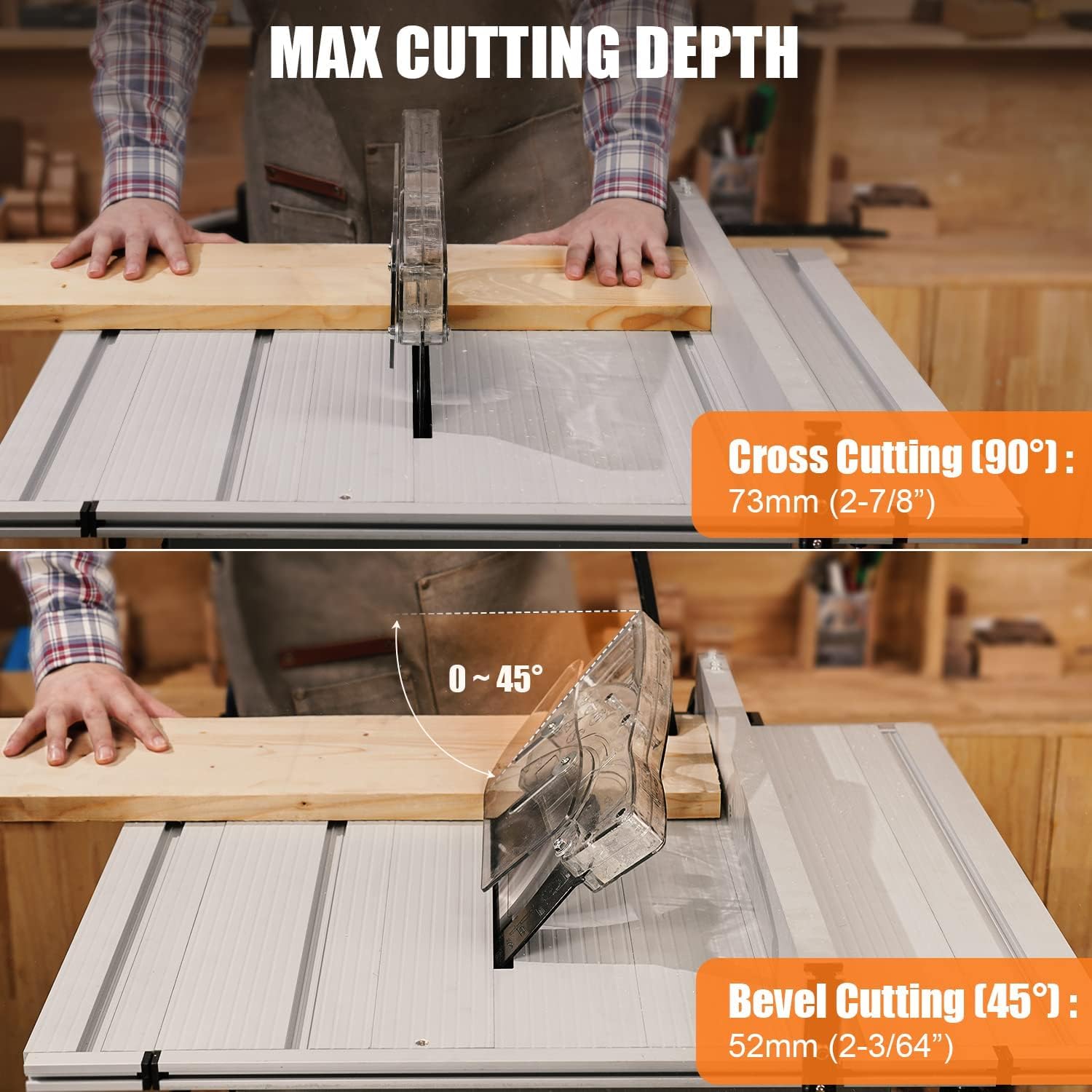
Figure 4.6: Comparison image showing maximum cutting depths for 90-degree cross cuts (73mm) and 45-degree bevel cuts (52mm).

Figure 4.7: User performing a 45-degree bevel cut on a wooden board using the table saw.
4.4 Dust Collection
The Garvee table saw features a port for connecting a dust collector, helping to maintain a cleaner and safer work environment.
- Connect a standard dust collection hose to the port located at the back of the saw.
- Ensure the dust collector is operational during use to minimize airborne dust.

Figure 4.8: Detail of the dust collection port located at the rear of the table saw.
5. Maintenance
Regular maintenance ensures the longevity and safe operation of your table saw.
5.1 General Cleaning
- Always unplug the saw before cleaning.
- Remove sawdust and debris from the table surface, blade guard, and motor housing using a brush or vacuum.
- Clean the blade regularly to remove pitch and resin buildup, which can affect cutting performance.
5.2 Blade Care and Replacement
- Inspect the blade for dullness, damage, or missing teeth before each use. Replace damaged blades immediately.
- When replacing the blade, ensure it is the correct size (10-inch) and type for your application. Refer to Section 3.4 for installation steps.
5.3 Lubrication
- Periodically lubricate moving parts such as the blade height adjustment mechanism and bevel adjustment gears with a dry lubricant or light machine oil.
6. Troubleshooting
This section addresses common issues you might encounter during the operation of your Garvee table saw.
| Problem | Possible Cause | Solution |
|---|---|---|
| Saw does not start | No power supply Overload protection tripped Faulty switch | Check power cord and outlet Reset overload protector (turn off, unplug, wait, restart) Contact customer support |
| Blade binds or cuts slowly | Dull or dirty blade Improper blade height Workpiece not properly supported Motor overload | Clean or replace blade Adjust blade height (1/8 inch above workpiece) Ensure workpiece is stable and guided Reduce feed rate, check for obstructions |
| Excessive vibration | Loose components Damaged blade Unstable stand | Check all fasteners and tighten Replace blade Ensure stand is assembled correctly and on a level surface |
| Inaccurate cuts | Rip fence not parallel Miter gauge not set correctly Blade not square to table | Adjust rip fence for parallelism Verify miter gauge angle Check blade squareness and adjust if necessary |
If you encounter issues not listed here or if solutions do not resolve the problem, please contact Garvee customer support.
7. Specifications
Detailed technical specifications for the Garvee 10 Inch Table Saw, Model 01.

Figure 7.1: Dimensions of the Garvee table saw, showing overall width, depth, and height.
| Specification | Value |
|---|---|
| Model Number | 01 |
| Product Dimensions | 35 x 30 x 40 inches |
| Item Weight | 53 Pounds |
| Power Source | Corded Electric |
| Motor Amperage | 15 Amp |
| No-Load Speed | 5000 RPM |
| Blade Diameter | 10 Inch (254mm) |
| Cross Cut Capacity (90°) | 74mm (2-7/8 inches) |
| Bevel Cut Capacity (45°) | 52mm (2-3/64 inches) |
| Bevel Angle Range | 0-45° |
| Blade Material | Stainless Steel |
| Color | Red |
| Manufacturer | Garvee |