
Introduction
This instruction manual provides comprehensive guidance for creating lined corsets using the Simplicity SS9974K5 sewing pattern. The pattern includes templates, sizing information, and detailed instructions for two distinct corset styles: a waist-length corset and a long-line corset. Both designs feature steel boning, back lacing, and grommets, with options for shoulder straps and additional embellishments.
Setup and Preparation
1. Pattern Packet Contents
Your Simplicity SS9974K5 pattern packet contains:
- Sewing templates for all pattern pieces.
- Sizing information to help you select the correct pattern size.
- Detailed instructions for cutting, sewing, and finishing the garments.
- Recommendations for fabric and trims.

Image: Front of the Simplicity SS9974K5 pattern envelope, displaying fabric suggestions, sizing chart, and design details for Corsets A, B, and C.
2. Fabric and Notions Selection
Careful selection of fabric and notions is crucial for the success and appearance of your corset. Refer to the pattern envelope for specific requirements based on your chosen corset view.
Suggested Fabrics: Brocade, cotton types, linen types, satin, silk shantung, velvet. For contrast sections (B, C skirt/binding), chiffon, crepe de chine, or double georgette may also be used. Interlining should be coutil for structural integrity, and lining fabric can be broadcloth or standard lining material.
Notions: Steel boning, back lacing (corded trim or ribbon), grommets, and an invisible zipper for the long-line corset (View C).
3. Sizing and Pattern Adjustment
This pattern is designed for Misses' sizes 8-10-12-14-16. Before cutting your fabric, compare your body measurements to the sizing chart provided on the pattern envelope. Make any necessary pattern adjustments for a custom fit. It is recommended to create a muslin (test garment) to check the fit before cutting into your final fabric.
Operating Instructions (Sewing Process)
Follow the step-by-step instructions included within your pattern packet. The general construction process involves:
- Cutting Fabric: Carefully cut all pattern pieces from your chosen fabrics, paying attention to grainlines and markings.
- Interlining and Boning Channels: Construct the corset body, incorporating the coutil interlining for strength. Create channels for the steel boning.
- Boning Insertion: Insert the steel boning into the prepared channels.
- Lining: Attach and finish the lining for a clean interior.
- Grommets and Lacing: Install grommets along the back edges of the corset for the lacing closure. Thread the corded trim or ribbon through the grommets.
- Shoulder Straps: For View A, B, and C, construct and attach the shoulder straps, which are tied on with corded trim or ribbon.
- Basque Front (View A): Finish the waist-length corset (View A) with a slightly rounded basque front, typically finished with bias binding.
- Long-Line Corset Details (View B & C):
- View B features a long-line corset with a basque waistline and a contrast lined skirt.
- View C also has a basque waistline, contrast lined skirt, matching or contrast binding, a back invisible zipper, and corded trim embellishments.

Image: Technical line drawings illustrating the front and back views of Corset A (waist-length), Corset B (long-line with skirt), and Corset C (long-line with skirt and zipper details.
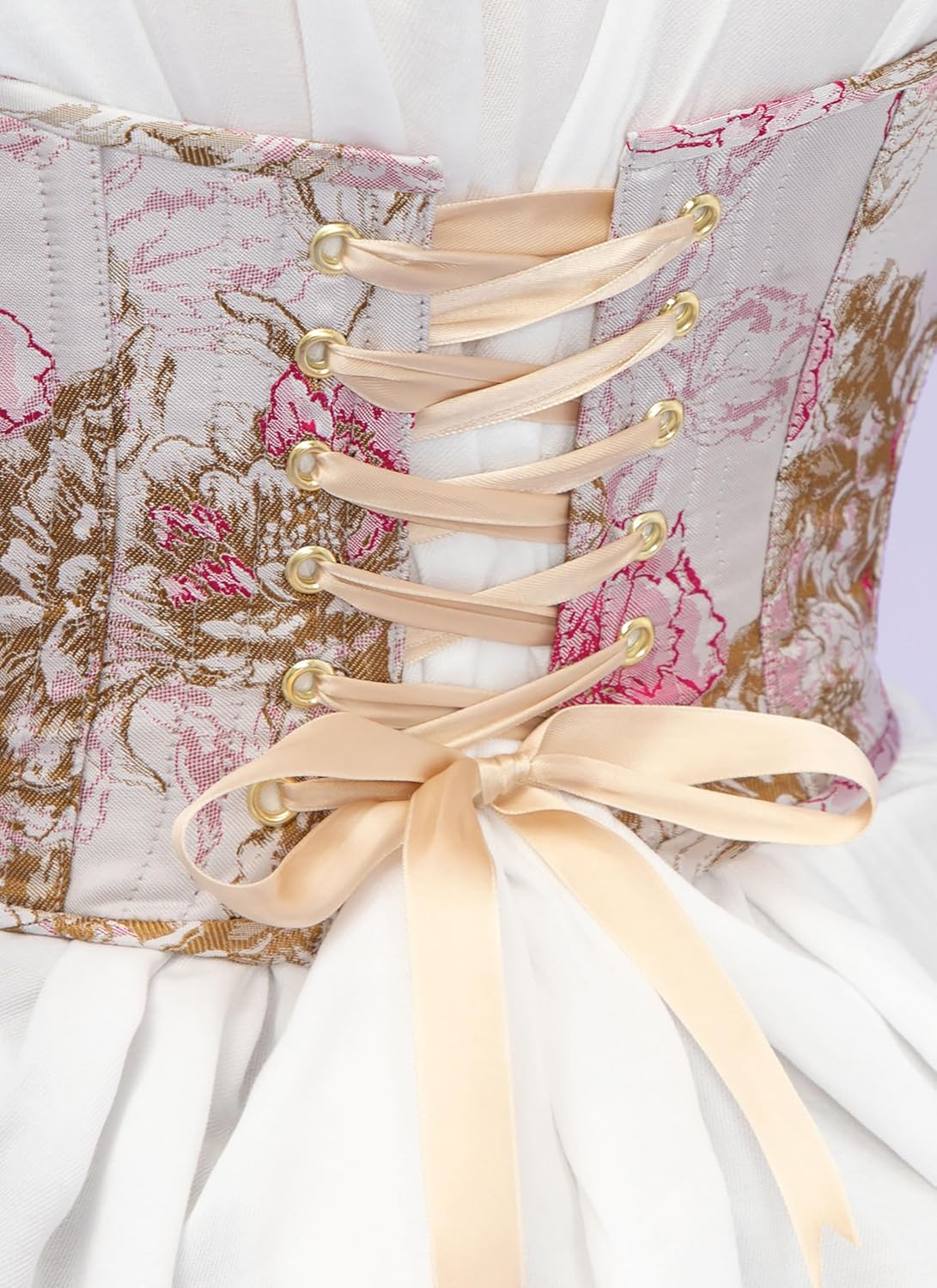
Image: Detailed view of the back lacing mechanism on a finished corset, showing grommets and ribbon closure.

Image: A model showcasing the finished waist-length corset (View A) worn over a white long-sleeved blouse.
Maintenance of Finished Garment
Proper care will extend the life of your handmade corset. Due to the variety of fabrics and notions that can be used, always refer to the care instructions for your specific materials. General guidelines include:
- Cleaning: Hand wash or dry clean is often recommended for garments with boning and delicate fabrics. Avoid machine washing unless all components are explicitly machine washable.
- Drying: Air dry flat to maintain shape and prevent damage to boning. Do not tumble dry.
- Ironing: Use a low to medium heat iron, and always test on an inconspicuous area first. Avoid direct heat on boning or delicate trims.
- Storage: Store the corset flat or hung carefully to prevent distortion of the boning.
Troubleshooting Common Sewing Issues
Even experienced sewers encounter challenges. Here are some common issues and tips:
- Fit Issues: If the corset does not fit correctly, re-evaluate your measurements against the pattern. Consider making a second muslin with adjustments.
- Boning Poking Through: Ensure boning channels are securely sewn and the ends of the boning are capped or smoothed to prevent them from piercing the fabric.
- Grommet Installation: If grommets are difficult to install or fall out, ensure you are using the correct tools and technique for your chosen grommet type and fabric thickness. Reinforce the fabric area with interfacing if necessary.
- Fabric Slippage: When working with slippery fabrics like satin or silk, use fine pins, a walking foot, or tissue paper under the fabric to prevent shifting during sewing.
Specifications
| Feature | Detail |
|---|---|
| Brand | Simplicity |
| Model Number | SS9974K5 |
| Design Code | S9974 |
| Sizes Included | Misses' 8-10-12-14-16 |
| Recommended Uses | Costume, Underwear, Fashion Garment |
| Material Suggestions | Brocade, Cotton types, Linen types, Satin, Silk Shantung, Velvet (for main fabric); Chiffon, Crepe de Chine, Double Georgette (for contrast); Coutil (for interlining); Broadcloth, Lining Fabric (for lining) |
| Key Features | Lined corsets, steel boning, back lacing, grommets, shoulder straps, basque waistline, optional invisible zipper. |
| Media Type | Physical Pattern |
| UPC | 039363599746 |
Support
For additional assistance, pattern corrections, or general inquiries regarding Simplicity sewing patterns, please visit the official Simplicity website or contact their customer support. You can often find helpful resources, FAQs, and community forums online.
Online Resources: Simplicity Official Website