
Introduction
This manual provides essential information for the safe and efficient use of your Caruner D3530 1400KV Brushless Outrunner Motor. Please read this manual thoroughly before installation and operation to ensure proper function and longevity of the product. This motor is designed for use in mini RC multicopters, RC airplanes, and drones.
Safety Information
- Always disconnect the battery before performing any maintenance or installation.
- Ensure all connections are secure and properly insulated to prevent short circuits.
- Operate the motor in a well-ventilated area.
- Keep fingers and loose clothing away from rotating parts, especially propellers, during operation.
- Use only recommended propellers and Electronic Speed Controllers (ESCs) that match the motor's specifications.
- Do not exceed the maximum voltage or current ratings specified for the motor.
- This product is not a toy. Keep out of reach of children.
Package Contents
Upon opening the package, verify that all components are present and undamaged:
- 1x Caruner D3530 1400KV Brushless Outrunner Motor
- Mounting hardware (screws, propeller adapter)
Product Overview
The Caruner D3530 1400KV Brushless Outrunner Motor is engineered for high performance and reliability in various RC applications. Its robust construction ensures smooth rotation and efficient power delivery.
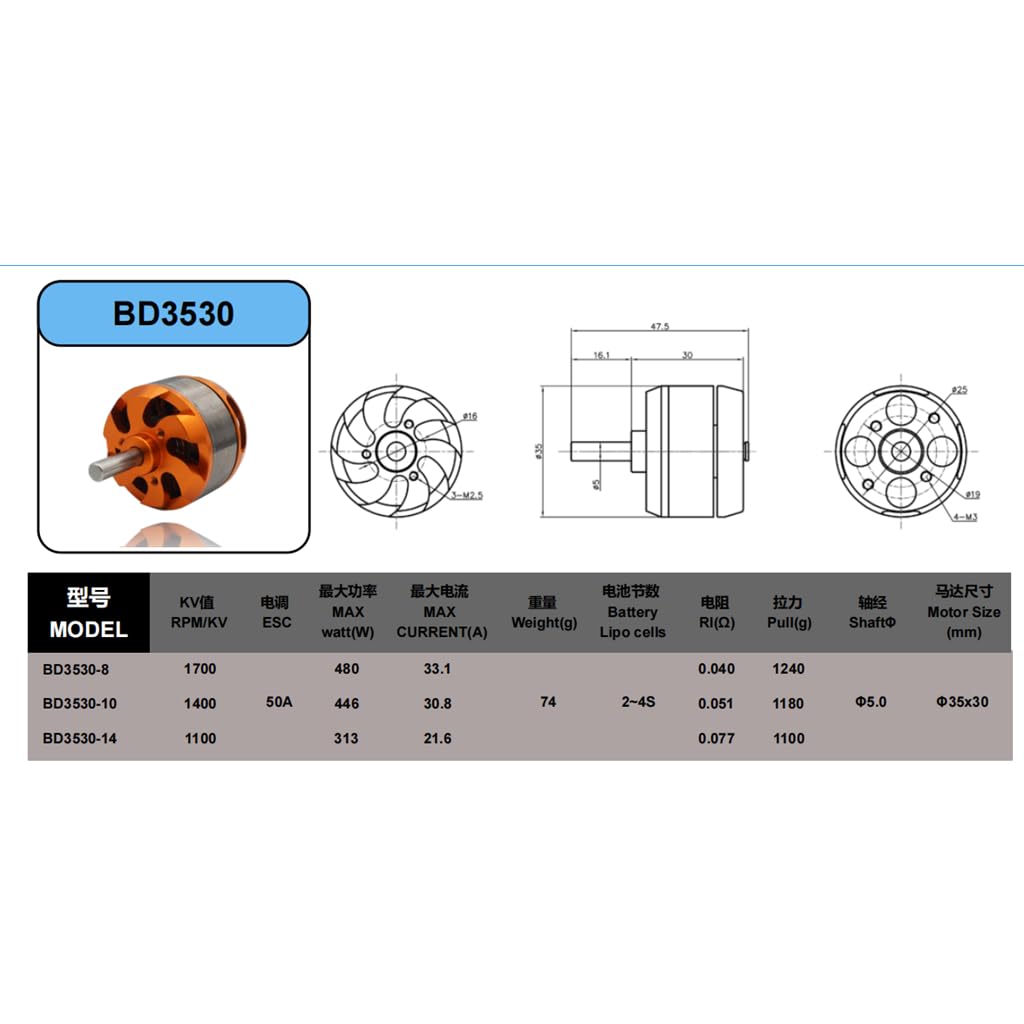
Image: The Caruner D3530 1400KV Brushless Outrunner Motor, showing its orange casing, silver shaft, and three colored wires with gold bullet connectors for ESC connection.
Key features include:
- D3530 1400KV Brushless Outrunner Motor for Mini RC Multicopter, RC Airplane, Drone, Helicopter.
- Constructed from high-quality material for smooth rotation and durability.
- Motor Size: Ø35x30mm; Shaft Size: Ø5x47.5mm.
- Compatible with 2-4S LIPO batteries.
- Recommended ESC: 50A.
- Suggested Propellers: 8x4/9x4.5.
- Pull: 1180g.

Image: A side view of the Caruner D3530 1400KV motor, highlighting the motor's casing, shaft, and the exit point for the power wires.
Specifications
Detailed specifications for the Caruner D3530 1400KV motor are provided below:

Image: A diagram showing the physical dimensions and electrical specifications for various D3530 motor variants, including the 1400KV model. It details RPM/KV, ESC recommendation, max power, max current, weight, Lipo cells, resistance, pull, shaft size, and motor size.
| Specification | Value |
|---|---|
| Item Name | D3530 Brushless Motor |
| KV Rating | 1400KV |
| Pull | 1180g |
| Motor Size | Ø35x30mm |
| Shaft Size | Ø5x47.5mm |
| Battery Compatibility | 2-4S LIPO |
| Max Power | 430W |
| Recommended Propeller | 8x4 / 9x4.5 |
| Suggested ESC | 50A |
| Weight | 74g |
| Brand | Caruner |
| Manufacturer | Caruner |
| Part Number | CN TJ D3530 1400KV |
Setup and Installation
Follow these steps for proper installation of your D3530 motor:
- Mounting the Motor: Secure the motor to your aircraft's motor mount using appropriate screws. Ensure the screws do not penetrate too deeply into the motor, which could damage internal windings. Refer to the motor's dimensions for correct screw length.
- Connecting to ESC: Connect the three motor wires to the three output wires of your Electronic Speed Controller (ESC). The order of connection determines the rotation direction. If the motor spins in the wrong direction, swap any two of the three wires.
- Propeller Installation: Attach the propeller adapter to the motor shaft. Then, mount the propeller onto the adapter, ensuring it is balanced and securely fastened. An unbalanced propeller can cause excessive vibration and damage.
- Battery Connection: Connect the ESC to a compatible 2-4S LIPO battery. Always ensure the battery is fully charged and properly connected before operation.
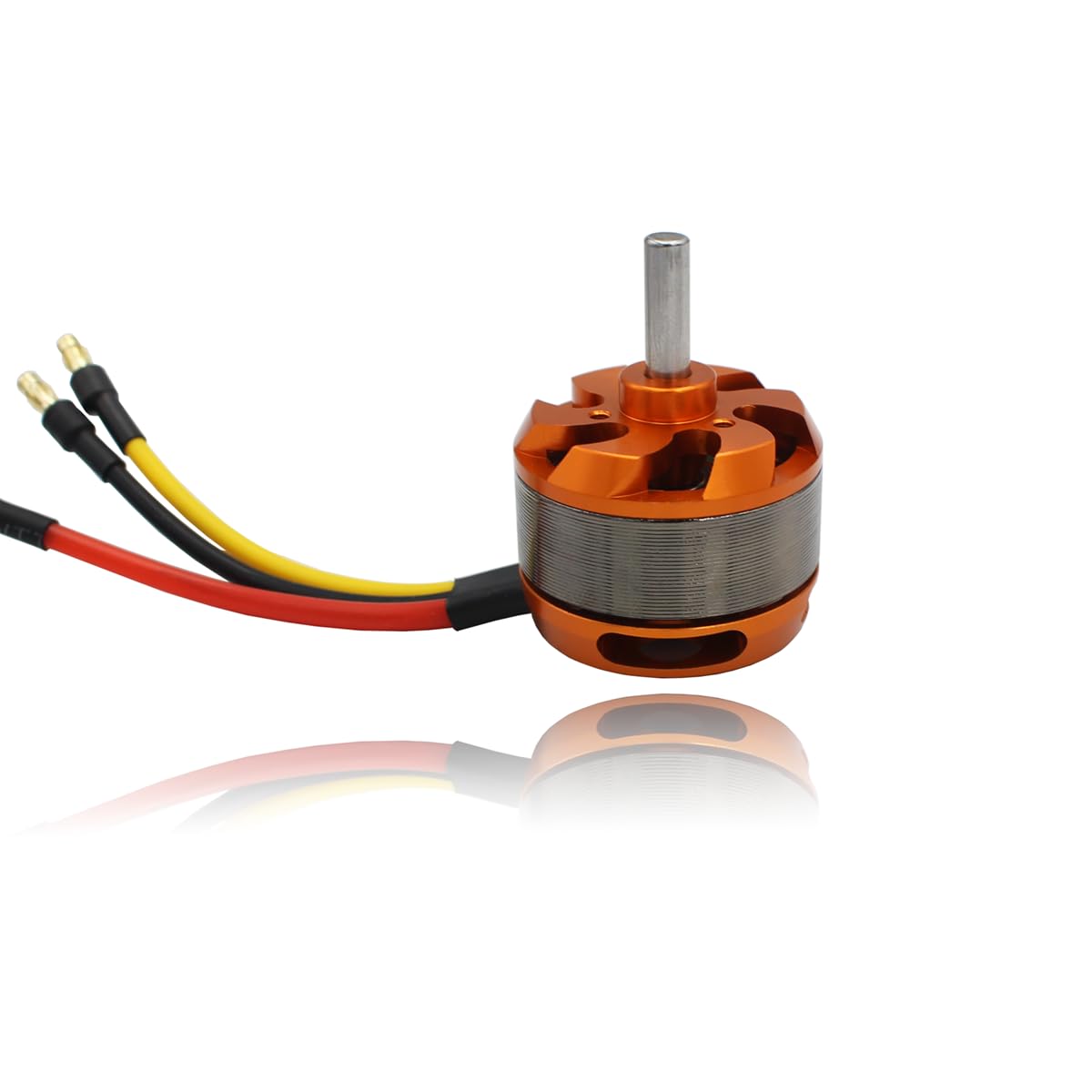
Image: A view of the bottom of the Caruner D3530 1400KV motor, clearly showing the four mounting screw holes for secure attachment to an aircraft frame.
Operating Instructions
Before operating your RC model with the D3530 motor, perform a pre-flight check:
- ESC Calibration: Ensure your ESC is properly calibrated with your radio transmitter's throttle range. Refer to your ESC's manual for specific calibration procedures.
- Propeller Check: Verify the propeller is securely attached and free from damage.
- Battery Check: Confirm the battery is fully charged and correctly connected.
- Initial Spin-up: Gradually increase throttle to check for smooth operation and correct rotation direction. If the motor vibrates excessively or makes unusual noises, stop immediately and investigate.
During operation, monitor motor temperature. Excessive heat can indicate an overloaded motor or improper propeller selection. Avoid continuous operation at maximum throttle for extended periods.
Maintenance
Regular maintenance helps prolong the life and performance of your motor:
- Cleaning: Periodically clean the motor to remove dust, dirt, and debris. Use compressed air or a soft brush. Avoid using liquids that could damage the motor's electronics or bearings.
- Bearing Inspection: Check the motor bearings for smooth rotation. If you notice any grinding or resistance, the bearings may need lubrication or replacement.
- Wire and Connector Check: Inspect all wires and connectors for signs of wear, fraying, or corrosion. Replace damaged components immediately.
- Mounting Security: Ensure all mounting screws remain tight. Vibrations during flight can loosen hardware.

Image: A detailed side profile of the Caruner D3530 1400KV motor, showcasing its outrunner design and ventilation slots for cooling.
Troubleshooting
If you encounter issues with your motor, refer to the following common problems and solutions:
- Motor Not Spinning:
- Check battery connection and charge level.
- Verify ESC is properly connected and calibrated.
- Inspect motor wires for breaks or loose connections.
- Ensure no debris is obstructing the motor's rotation.
- Motor Spinning in Wrong Direction:
- Swap any two of the three motor wires connected to the ESC.
- Excessive Vibration or Noise:
- Check propeller balance and secure attachment.
- Inspect motor shaft for bends or damage.
- Check motor bearings for wear or damage.
- Ensure motor mounting screws are tight.
- Motor Overheating:
- Reduce propeller size or pitch.
- Ensure adequate airflow around the motor.
- Verify ESC is rated appropriately for the motor and battery.
- Check for short circuits or excessive current draw.
Warranty and Support
For warranty information or technical support, please contact Caruner customer service through the retailer where the product was purchased. Keep your purchase receipt as proof of purchase.
Contact Information: Refer to your retailer's website or the Caruner brand store on Amazon for the most current support contact details.
This manual is subject to change without prior notice. Please visit the manufacturer's website for the latest version.