1. Introduction
This manual provides essential information for the safe and efficient operation, installation, and maintenance of your AIR Master AODD-15 A/S Air Operated Double Diaphragm Pump. Please read this manual thoroughly before operating the pump to ensure proper function and to prevent injury or damage.
2. Safety Information
Always observe safety precautions to prevent personal injury and damage to the equipment. This pump operates with compressed air and handles various fluids, some of which may be hazardous.
- Ensure all connections are secure and leak-free before operation.
- Wear appropriate personal protective equipment (PPE) such as safety glasses, gloves, and protective clothing.
- Depressurize the air supply and fluid lines before performing any maintenance or inspection.
- Do not exceed the maximum working pressure specified for the pump.
- Ensure adequate ventilation when pumping volatile or hazardous fluids.
- Keep hands and loose clothing away from moving parts.
3. Product Overview & Features
The AIR Master AODD-15 A/S is an Air Operated Double Diaphragm pump designed for versatile fluid transfer applications. It features a durable aluminum body and Santoprene internals, making it suitable for a wide range of industrial uses.
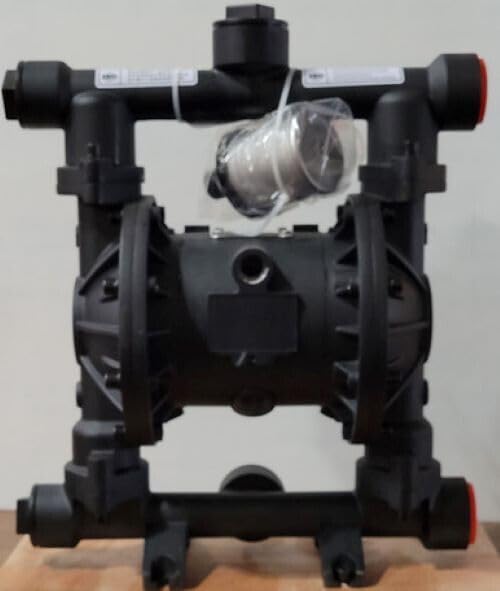
Figure 1: Front view of the AIR Master AODD-15 A/S Air Operated Double Diaphragm Pump. The pump features a black aluminum body with visible inlet and outlet ports, and a central air motor housing.
Key Applications:
- Food Industry: Pumping peanut butter, pickles, mashed potatoes, small sausage, jam, apple syrup, chocolate, perfume raw materials, hops and yeast slurry, syrup, molasses.
- Paint Industry: Pumping various paints, resins.
- Adhesives and Glues: Pumping all kinds of adhesives and glues.
- Ceramic Industry: Pumping various tile, porcelain, tiles, and pottery glaze.
- Mining Industry: Pumping sediment after oil well drilling, water or mud from mines, trenches, tunnels, mineral processing, slag, cement grout, mortar.
- Chemical Industry: Pumping various emulsions and fillers, rubber paste, abrasives, oil and mud, grease, toxic, flammable, volatile liquids, acids, alkalis, strong corrosive liquids.
- Environmental Protection, Wastewater Treatment: Filter pressure, pumping various sewage, mud, slurry.
- Shipping Industry: Pumping various sewage, oil for oil tankers, barges.
- Capable of pumping high-temperature liquids, up to 150 ℃.
4. Specifications
| Parameter | Value |
|---|---|
| Model | AODD-15 A/S |
| Max. Flow | 5.0 GPM (18.9 LPM) |
| Max. Working Pressure | 100 PSI (0.7 Mpa) |
| Fluid Inlet Size | 1/2 inch (DN15) NPT |
| Fluid Outlet Size | 1/2 inch (DN15) NPT |
| Air Inlet Size | 1/4 inch NPT |
| Suction Lift (Dry Suction) | 8 - 10 ft. (2.5 - 3m) |
| Max. Permitted Grain | 0.06 in. (1.5mm) |
| Max. Air Consumption | 9.0 SCFM |
| Every Stroke Flow | 0.006 gal. (23cc) |
| Every Reciprocating Flow | 0.012 gal. (46cc) |
| Max. Reciprocating Speed (Dry Running) | 320 cpm |
| Max. Reciprocating Speed (Wet Running) | 250 cpm |
| Body Structure Material | Aluminum Alloy |
| Diaphragm Material | Santoprene |
| Item Weight | 25 pounds |
| Product Dimensions | 15 x 8 x 20 inches |
| Color | Black |
5. Setup & Installation
Proper installation is crucial for the pump's performance and longevity.
- Mounting: Securely mount the pump on a stable, level surface capable of supporting the pump's weight and any associated piping and fluid.
- Fluid Connections:
- Connect the fluid inlet line (1/2 inch NPT) to the bottom port of the pump. Ensure the suction line is as short and straight as possible to minimize friction loss.
- Connect the fluid outlet line (1/2 inch NPT) to the top port.
- Use appropriate thread sealant on all fluid connections to prevent leaks.
- Air Connection:
- Connect a clean, dry, regulated air supply to the 1/4 inch NPT air inlet port.
- An air filter, regulator, and lubricator (FRL unit) are recommended for optimal performance and pump life.
- Ensure the air supply pressure does not exceed 100 PSI.
- Priming: For initial startup or after maintenance, ensure the pump is primed by allowing fluid to fill the pump chambers before applying air pressure. This can often be achieved by gravity feeding the fluid to the pump inlet.
6. Operation
Follow these steps for safe and effective pump operation.
- Pre-Operation Check:
- Verify all fluid and air connections are tight.
- Ensure the fluid supply is adequate.
- Confirm the air regulator is set to the desired operating pressure (do not exceed 100 PSI).
- Starting the Pump:
- Slowly open the air supply valve to the pump. The pump will begin to cycle.
- Adjust the air pressure to achieve the desired flow rate. Higher air pressure generally results in higher flow.
- Stopping the Pump:
- Close the air supply valve to the pump.
- If necessary, close fluid inlet and outlet valves.
- Depressurize the system before any disconnection or maintenance.
7. Maintenance
Regular maintenance ensures optimal performance and extends the life of your pump.
- Routine Checks (Daily/Weekly):
- Inspect for any fluid or air leaks.
- Check air filter for condensation and drain if necessary.
- Listen for unusual noises during operation.
- Diaphragm and Valve Ball Inspection (Periodically):
- Depending on fluid type and usage, diaphragms and valve balls may wear over time.
- If performance degrades (e.g., reduced flow, inconsistent cycling), inspect these components for wear, cracks, or swelling.
- Replace worn parts with genuine replacement parts.
- Cleaning:
- Flush the pump with a compatible cleaning solution or clean water after use, especially when pumping corrosive or viscous fluids.
- Ensure the pump is thoroughly drained before storage.
8. Troubleshooting
This section provides solutions to common operational issues.
| Problem | Possible Cause | Solution |
|---|---|---|
| Pump not cycling or low flow | Insufficient air pressure; Clogged air inlet/exhaust; Worn diaphragms; Stuck valve balls; Clogged fluid lines. | Increase air pressure; Check air filter/regulator; Clean air lines; Inspect and replace diaphragms; Clean valve balls and seats; Clear fluid lines. |
| Fluid leaks from pump body | Loose fasteners; Damaged O-rings/gaskets; Cracked housing. | Tighten fasteners; Replace O-rings/gaskets; Inspect housing for damage. |
| Excessive air consumption | Air motor leak; Worn air valve components. | Inspect air motor for leaks; Replace worn air valve components. |
| Pump cycles but no fluid output | Loss of prime; Suction line air leak; Clogged suction line; Stuck check valve. | Re-prime the pump; Check suction line for leaks; Clear suction line obstruction; Inspect and free/replace check valve. |
9. Warranty & Support
For warranty information, technical support, or to order replacement parts, please contact the seller or manufacturer directly. Retain your purchase receipt for warranty claims.
Manufacturer: Air Master
Model Number: AODD-15 A/S


