
1. Introduction
The XPG Hurricane 140 ARGB PWM fan is engineered to provide efficient cooling performance for your computer system while offering customizable Addressable RGB (ARGB) lighting. This fan features a patented dual-layer blade design, a durable fluid dynamic bearing, and Pulse Width Modulation (PWM) for precise speed control. It is designed for PC enthusiasts and modders seeking both aesthetic value and effective thermal management.

Front view of the XPG Hurricane 140 ARGB PWM fan, showcasing its illuminated blades and frame.
2. Features
- Patented Dual-Layer Blade Design: The main blade optimizes airflow while minimizing wind resistance, and the smaller, narrower booster blade enhances static pressure while reducing noise levels.
- Fluid Dynamic Bearing (FDB): Fluid lubrication between the bearings and shaft during rotation ensures improved cooling efficiency, lower power consumption, and extended fan lifespan.
- Efficient Pulse Width Modulation (PWM): PWM functionality allows the fan to automatically adjust its speed (RPM) based on component temperature, optimizing cooling performance and noise levels.
- Daisy Chain Capable: Multiple units can be connected directly to synchronize ARGB lighting effects, simplifying cable management and lighting control.
- Motherboard ARGB Software Compatibility: The fan syncs directly with most major motherboard manufacturers' ARGB software, including Asus, MSI, and others, for comprehensive lighting customization.

Detailed view of the XPG Hurricane fan's patented dual-layer blade design, distinguishing the main blade for airflow and the booster blade for static pressure.
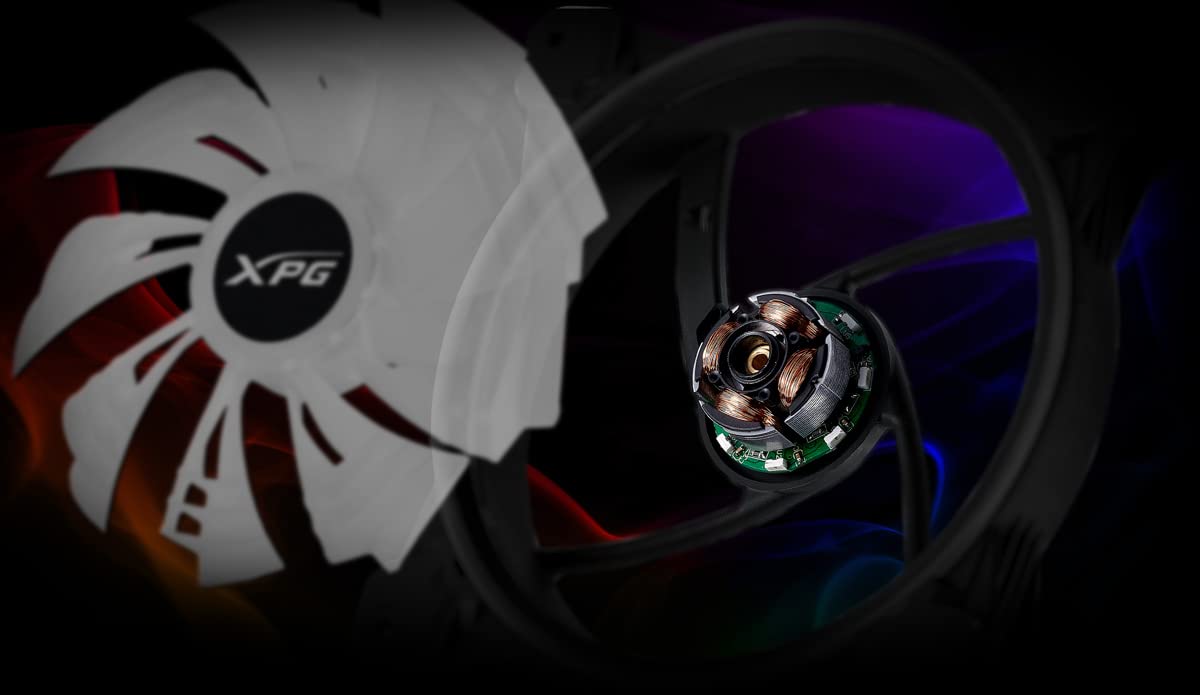
Diagram showing the internal components of the XPG Hurricane fan, specifically highlighting the fluid dynamic bearing (FDB) for enhanced durability and quiet operation.
3. Setup and Installation
3.1 Physical Installation
- Identify the desired mounting location within your PC case (e.g., front, top, rear, or radiator).
- Align the fan with the screw holes on your case or radiator. Ensure the fan is oriented to push or pull air in the desired direction for optimal airflow.
- Secure the fan using the provided mounting screws. Tighten screws evenly to prevent warping and reduce potential vibration noise.

Close-up of a fan corner, illustrating the mounting screw hole and integrated anti-vibration padding for secure and quiet installation.
3.2 Electrical Connections
- PWM Connection: Connect the fan's 4-pin PWM cable to an available 4-pin fan header on your motherboard. This allows the motherboard to control the fan speed based on system temperatures.
- ARGB Connection: Connect the fan's 3-pin ARGB cable to an available 3-pin 5V ARGB header on your motherboard. Ensure it is a 5V ARGB header and not a 12V RGB header to prevent damage.
- Daisy Chain (Optional): If installing multiple XPG Hurricane ARGB fans, you can connect them in a daisy chain using the provided ARGB pass-through connectors. Connect the ARGB output of one fan to the ARGB input of the next fan, and then connect the last fan's ARGB input to the motherboard header.

The XPG Hurricane fan displayed with its 4-pin PWM connector for fan speed control and 3-pin ARGB connectors, demonstrating its daisy-chain capability for lighting synchronization.
4. Operating Instructions
4.1 Fan Speed Control (PWM)
The fan's speed is automatically regulated by your motherboard's PWM function. You can typically adjust the fan curve settings within your motherboard's BIOS/UEFI or through dedicated motherboard software (e.g., ASUS AI Suite, MSI Dragon Center, Gigabyte SIV) to customize fan behavior based on temperature thresholds.
4.2 ARGB Lighting Control
To control the Addressable RGB lighting, use your motherboard's ARGB synchronization software. This software allows you to select various lighting effects, colors, and patterns. Ensure your motherboard's ARGB header is properly connected and recognized by the software.
5. Maintenance
Regular maintenance helps ensure optimal performance and longevity of your fan:
- Dust Removal: Periodically clean dust accumulation from the fan blades and frame using compressed air or a soft brush. Ensure the fan is powered off before cleaning.
- Inspection: Check for any obstructions around the fan blades or unusual noises during operation.
6. Troubleshooting
- Fan Not Spinning:
- Verify that the 4-pin PWM cable is securely connected to the motherboard fan header.
- Check your motherboard's BIOS/UEFI settings to ensure the fan header is enabled and configured correctly.
- ARGB Lighting Not Working:
- Confirm the 3-pin ARGB cable is correctly connected to a 5V ARGB header on your motherboard. Avoid connecting to 12V RGB headers.
- Ensure your motherboard's ARGB software is installed and updated. Check if the software detects the ARGB device.
- If daisy-chaining, ensure all connections between fans are secure.
- Excessive Noise:
- Check if the fan is securely mounted and not vibrating against the case.
- Adjust the fan speed curve in your motherboard's BIOS/UEFI or software to reduce RPM at lower temperatures.
- Ensure no cables or obstructions are interfering with the fan blades.
7. Specifications
| Specification | Value |
|---|---|
| Model Number | HURRICANE140ARGBPWM-BKCWW |
| Product Dimensions | 9.84"L x 1.42"W x 9.84"H (250 x 36 x 250 mm) |
| Maximum Rotational Speed | 1800 RPM |
| Power Connector Type | 4-Pin PWM |
| Voltage | 12 Volts |
| Wattage | 4 milliamp_hours |
| Cooling Method | Air |
| Compatible Devices | Desktop |
| Noise Level | 28.1 Decibels |
| Material | Copper |
| Manufacturer | XPG |
| Date First Available | September 6, 2022 |

Image displaying the XPG Hurricane 140 ARGB PWM fan next to its P-Q curve, which details the relationship between static pressure and airflow performance.
8. Warranty and Support
The XPG Hurricane 140 ARGB PWM fan comes with a 2-year warranty from the date of purchase. For technical support, warranty claims, or further assistance, please visit the official XPG website or contact their customer service department. Please retain your proof of purchase for warranty validation.


