
Introduction
The Yardworks Folding Pruning Saw is designed for efficient and precise cutting of tree limbs and branches. Manufactured from high carbon steel, this saw offers superb performance and maximum durability. Its folding design ensures portability and safety when not in use, making it an ideal tool for homeowners and professionals alike. This manual provides essential information for the safe and effective use, maintenance, and care of your pruning saw.
Safety Information
Always prioritize safety when using any cutting tool. Adhere to the following guidelines:
- Wear appropriate personal protective equipment (PPE), including safety glasses and sturdy gloves, to protect against debris and cuts.
- Keep hands and fingers away from the blade at all times, especially during operation and when folding/unfolding.
- Ensure the blade is securely locked in either the open or closed position before handling or storing the saw.
- Do not force the saw through material. Let the sharp teeth do the work.
- Maintain a stable footing and clear work area to prevent accidents.
- Keep out of reach of children.
- Inspect the saw before each use for any damage or loose parts. Do not use if damaged.
Components
Your Yardworks Folding Pruning Saw includes the following main components:
- Folding Blade: 7-inch straight blade with razor-sharp, 3-sided teeth.
- Ergonomic Handle: Constructed from plastic and rubber for a comfortable and secure grip.
- Locking Mechanism: Spring-loaded latch to secure the blade in open or closed positions.
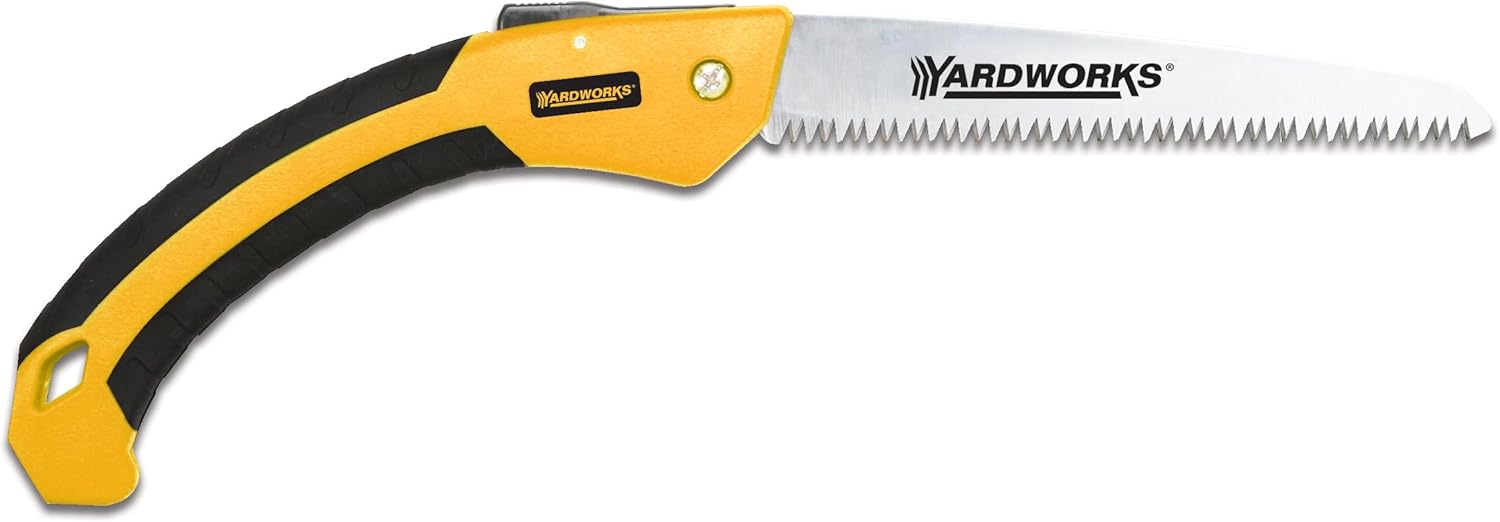
Image: The Yardworks 7-inch Folding Pruning Saw, featuring its distinctive yellow and black handle and a silver blade with sharp teeth. The saw is shown in its open, ready-to-use position.
Setup
Unfolding the Saw
- Hold the handle firmly with one hand.
- Locate the spring-loaded latch near the pivot point of the blade.
- Press the latch to release the blade.
- Carefully unfold the blade until it is fully extended and clicks into the locked open position. Ensure the latch re-engages to secure the blade.
Folding the Saw for Storage
- Hold the handle firmly.
- Press the spring-loaded latch to release the blade from its open position.
- Carefully fold the blade back into the handle until it is fully retracted and clicks into the locked closed position. Ensure the latch re-engages.
- Always store the saw with the blade folded and locked to prevent accidental injury.
Operating Instructions
Pruning Technique
The Yardworks Folding Pruning Saw is designed to cut on the pull stroke. This means the cutting action occurs as you pull the saw towards you, not when pushing it away.
- Identify the branch: Select the branch to be pruned, ensuring it is within the saw's capacity (up to 6 inches in diameter).
- Position the saw: Place the blade on the underside of the branch first, making a small undercut to prevent bark stripping. Then, move to the top side.
- Start the cut: Apply light pressure and begin with short, controlled pull strokes to create a groove.
- Continue cutting: Once a groove is established, use longer, steady pull strokes. Allow the saw's sharp teeth to do the work; avoid excessive force.
- Reduce binding: The taper-ground blade is designed to reduce binding. If binding occurs, slightly adjust your angle or clear any sawdust from the cut.
- Complete the cut: Continue until the branch is fully severed. Support the branch if necessary to prevent it from tearing or falling unexpectedly.
Maintenance
Cleaning
After each use, clean the blade to remove sap, resin, and debris. This prevents rust and maintains cutting efficiency.
- Use a damp cloth or a soft brush to wipe down the blade.
- For stubborn sap, use a specialized blade cleaner or a small amount of mineral spirits.
- Ensure the blade is completely dry before folding and storing.
Blade Care and Storage
- Periodically apply a light coat of rust-preventative oil to the blade, especially if storing for extended periods or in humid conditions.
- Store the saw in a dry place, with the blade folded and securely locked.
- While the blade features impulse-hardened teeth for durability, professional sharpening may be required over time to restore optimal cutting performance.
Troubleshooting
| Problem | Possible Cause | Solution |
|---|---|---|
| Blade is difficult to open or close. | Accumulation of dirt or debris in the locking mechanism; mechanism needs lubrication. | Clean the pivot area and locking mechanism. Apply a small amount of light machine oil to the pivot point. Ensure the latch is fully depressed when operating. |
| Saw binds frequently during cutting. | Sawdust buildup in the kerf; improper cutting angle; cutting wood that is too thick. | Clear sawdust from the cut. Adjust your cutting angle slightly. Ensure the branch diameter is within the saw's recommended capacity (up to 6 inches). |
| Blade feels dull or cutting is inefficient. | Blade is dirty with sap/resin; blade teeth are worn or damaged. | Clean the blade thoroughly. If teeth are worn, consider professional sharpening or blade replacement if severely damaged. |
Specifications
| Brand | Yardworks |
| Model Number | YWFS-180 |
| Blade Length | 7 Inches |
| Blade Material | High Carbon Steel |
| Teeth Per Inch (TPI) | 6.5 (3-sided teeth) |
| Handle Material | Plastic and Rubber |
| Special Feature | Foldable, Locking Blade |
| Product Dimensions | 4"L x 0.75"W x 15.25"H (open) |
| Item Weight | 6.4 ounces |
| UPC | 650056121909 |
Warranty
The Yardworks Folding Pruning Saw comes with a limited warranty. For specific details regarding coverage, duration, and claims procedures, please refer to the warranty information provided at the time of purchase or contact Yardworks customer support.
Support
For further assistance, technical support, or inquiries regarding your Yardworks Folding Pruning Saw, please visit the official Yardworks website or contact their customer service department. Contact information can typically be found on the product packaging or the manufacturer's official website.