
MECHANIC MASTER C28
MECHANIC MASTER Cool Cube Series C28 Computer Case User Manual
Model: C28
Product Overview
The MECHANIC MASTER Cool Cube Series C28 is an ultra-compact and portable computer case designed for MATX/ITX motherboards. It features a robust aluminum and steel construction with tempered glass panels, offering both durability and aesthetic appeal. This case is engineered for efficient hardware layout and versatile cooling configurations, making it suitable for various computing needs.

Figure 1: Mechanic Master Cool Cube Series C28 Computer Case (Elegant Black)
Key Features
- Ultra-Compact & Portable: 17.9L chassis with a top carry handle for easy mobility.
- Dual Cooling Configurations: Supports either 240mm AIO + SFX PSU or 162mm Air Cooler + ATX PSU.
- High-Density Hardware Layout: Efficiently accommodates MATX motherboards, full-length GPUs, and robust cooling in minimal space.
- Sleek Minimalist Aesthetic: Aluminum panels and clean lines blend seamlessly into various environments.
- Quality Construction: Crafted with attention to detail and precision for a bespoke fit.
Specifications
| Attribute | Detail |
|---|---|
| Brand | MECHANIC MASTER |
| Model Name | C28 |
| Dimensions (LxWxH) | 13.4 x 7.3 x 11.2 inches (342 x 185 x 284 mm excluding foot pad) |
| Item Weight | 7.7 pounds (3.5 Kilograms) |
| Material | Tempered Glass, Alloy Steel, Aluminum (Outer frame: 2mm aluminum alloy, Inner frame: 1mm SPCC steel) |
| Motherboard Compatibility | Micro ATX, ITX |
| CPU Cooler Support | 162mm Tower Cooler / 240 AIO / 280 AIO |
| GPU Support | Up to 335mm Length |
| Power Supply Support | ATX / SFX / SFX-L |
| Front I/O Ports | 2x USB 3.0, 2x USB 2.0, 1x Type-C 10G, Metal Power Switch |
| Cooling Method | 120/240 Water, Air 162mm |
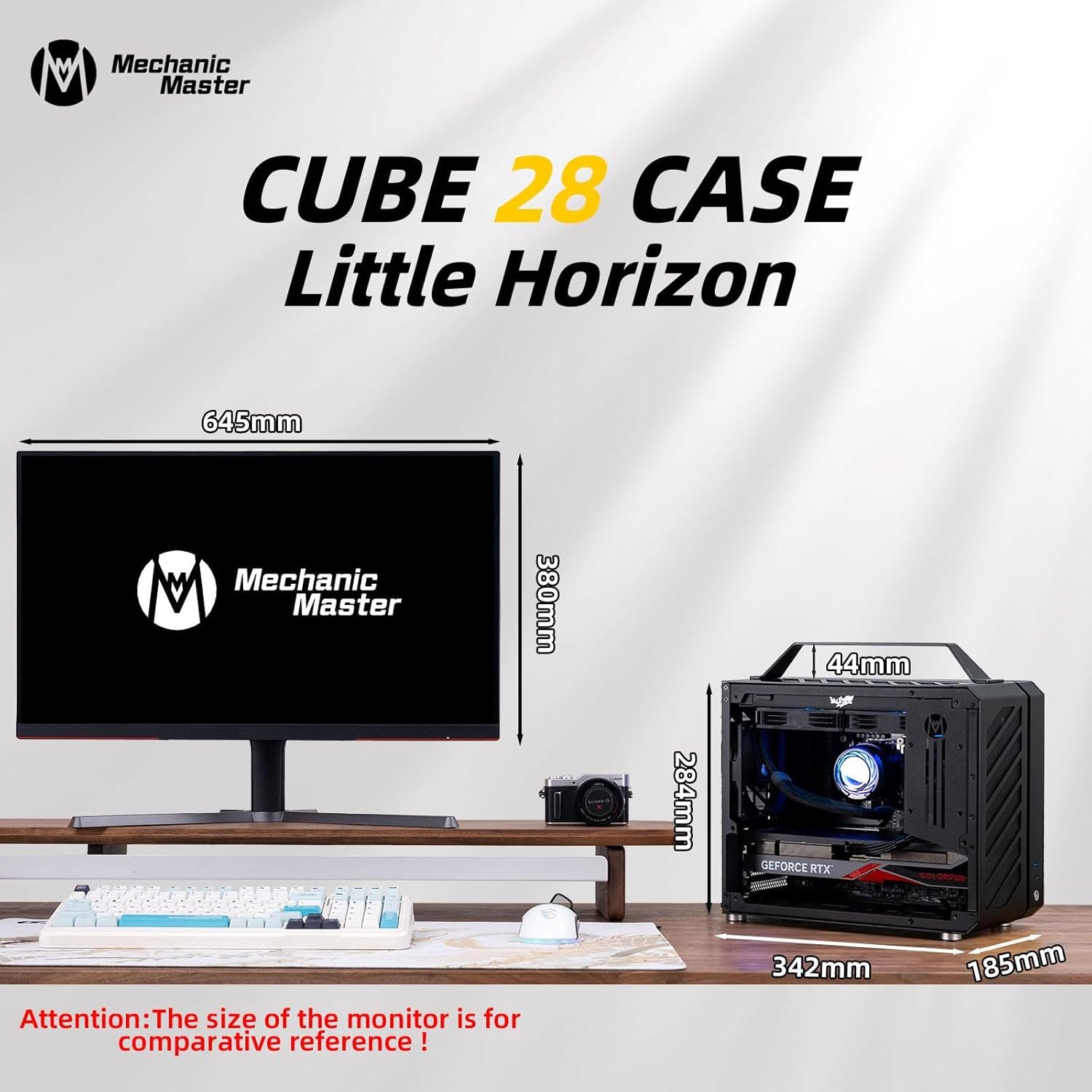
Figure 2: Case dimensions and comparative size. Note: Monitor size is for reference only.

Figure 3: Comprehensive specifications for the C28 case.
Setup Guide
This section provides a general guide for assembling your computer components within the C28 case. Due to the compact design, careful planning and execution are recommended.
1. Case Disassembly
The C28 case features a double shell structure and is multi-faceted detachable. Carefully remove the side panels and top/bottom panels to access the internal frame for component installation. Note that patience is required for disassembling and assembling the case due to the numerous screws used for secure construction.

Figure 4: Exploded view of the C28 case components, showing its modular design.
2. Motherboard and CPU Installation
Install your MATX or ITX motherboard into the designated area. Ensure proper alignment with the standoffs. Install your CPU and CPU cooler according to their respective manuals. The case supports CPU coolers up to 162mm in height or 240/280 AIO liquid coolers.

Figure 5: Internal layout for MATX motherboard, SFX/SFX-L PSU, 240mm AIO, and GPU compatibility.

Figure 6: Internal layout for MATX motherboard, ATX PSU, 162mm air cooler, and GPU compatibility.

Figure 7: Example build with MATX motherboard and air cooler configuration.

Figure 8: Example build with MATX motherboard and 240 AIO liquid cooling configuration.
3. Graphics Card Installation
The C28 case supports full-length GPUs up to 335mm in length. Carefully insert your graphics card into the PCIe slot on the motherboard.
4. Power Supply Installation
Install your ATX, SFX, or SFX-L power supply in the designated mounting area. Route cables efficiently to ensure proper airflow and a clean build.
5. Cable Management
Due to the compact nature of the case, effective cable management is crucial for optimal airflow and aesthetics. Utilize available tie-down points and routes to keep cables tidy.
6. Reassembly
Once all components are installed and cables are managed, carefully reattach the panels. Ensure all screws are securely fastened to maintain the case's structural integrity.
Video 1: Overview of the Mechanic Master Cool Cube Series C28 case, showcasing its features and internal layout with components.
Operating Instructions
After successful assembly, connect your peripherals (monitor, keyboard, mouse, etc.) to your installed components. Connect the power cable to the power supply unit and press the power button located on the front I/O panel to start your system.

Figure 9: Front I/O panel featuring USB 3.0, Type-C, and the aluminum alloy power switch.
Video 2: A brief product display of the C28 case in a typical desktop setup, highlighting its compact size and aesthetic.
Maintenance
- Dust Cleaning: Regularly clean dust from the case's ventilation areas and internal components using compressed air or a soft brush. This helps maintain optimal airflow and cooling performance.
- Panel Care: Wipe the aluminum and tempered glass panels with a soft, damp cloth. Avoid abrasive cleaners that could scratch the surfaces.
- Component Checks: Periodically check that all internal components (fans, cables, etc.) are securely seated and free from obstructions.

Figure 10: Illustration of the vertical airflow design, emphasizing the importance of clear air pathways for cooling.
Troubleshooting
- System Not Powering On: Double-check all power connections, including the PSU to the wall outlet, the 24-pin ATX connector, and the CPU power connector on the motherboard. Ensure the power button cable is correctly connected to the motherboard's front panel header.
- No Display Output: Verify that the graphics card is properly seated in its PCIe slot and that the display cable is securely connected to both the graphics card and the monitor. If using integrated graphics, ensure the display cable is connected to the motherboard's video output.
- Overheating Issues: Ensure all case fans and CPU cooler fans are spinning correctly. Check for dust buildup that might impede airflow. Verify that thermal paste is properly applied to the CPU.
- Loose Components: If experiencing intermittent issues, power down the system and re-seat all major components (RAM, GPU, storage drives) to ensure they are firmly connected.
Warranty and Support
For warranty information and technical support, please refer to the official MECHANIC MASTER website or contact your retailer. Keep your proof of purchase for any warranty claims.
Online resources and FAQs may also be available on the manufacturer's support pages.
Related Documents - C28
 |
Mechanic Master C28 Little Horizon PC Case Installation Manual & Guide Comprehensive installation manual and guide for the Mechanic Master C28 Little Horizon computer case, covering setup, component compatibility, and assembly for MATX/ITX builds with air or water cooling. |
 |
C28 Smart Watch User Manual User manual for the C28 Smart Watch, covering device maintenance, setup, features, and frequently asked questions. Learn how to use your high-performance wrist-band SmartWatch for a healthier lifestyle. |
 |
C28 Wireless Transmitter Receiver User Manual User manual for the C28 Wireless Transmitter Receiver, detailing package contents, specifications, interface diagram, how to use in receiver and transmitter modes, and precautions. |
 |
C28 Wireless Transmitter Receiver User Manual User manual for the C28 Wireless Transmitter Receiver, detailing package contents, specifications, interface diagram, and usage instructions for both receiver and transmitter modes. |
 |
Mechanic Master iF25 Portable MATX Computer Case Specifications and Build Guide Detailed specifications, features, and build guidance for the Mechanic Master iF25, a portable MATX computer case. This guide covers component compatibility, internal layout, and typical build scenarios for ATX and SFX power supplies, various cooling solutions, and long graphics cards. |
 |
Mechanic Master iF16-T ITX Computer Case Installation Manual A comprehensive installation manual for the Mechanic Master iF16-T ITX computer case, detailing component compatibility, assembly steps, and important considerations for building a PC. |
Ask a question about this manual
Ask about setup, troubleshooting, compatibility, parts, safety, or missing instructions. Manuals+ will review the question and use this page’s manual context to help answer it.