
1. Introduction
This manual provides essential information for the safe and efficient use of your LIPULS 12V 100Ah Mini LiFePO4 Lithium Battery (Model: 12V100Ah100MINI). Please read this manual thoroughly before installation and operation to ensure optimal performance and longevity of your battery.
The LIPULS 12V 100Ah Mini LiFePO4 battery is designed for deep cycle applications, offering a compact and lightweight energy storage solution. It is suitable for various uses including RVs, marine applications, trolling motors, solar systems, and off-grid power setups.

Image 1.1: The LIPULS 12V 100Ah Mini LiFePO4 Lithium Battery, showcasing its compact design and M8 terminals.
2. Safety Information
WARNING: Failure to follow these safety instructions may result in electric shock, fire, serious injury, or death.
- Always wear appropriate personal protective equipment (PPE), including safety glasses and insulated gloves, when handling batteries.
- Do not short-circuit the battery terminals. This can cause severe damage to the battery and pose a fire hazard.
- Ensure all connections are secure and properly insulated to prevent accidental contact.
- Do not expose the battery to open flames, excessive heat, or direct sunlight for prolonged periods.
- Do not immerse the battery in water. While IP65 rated for splashes, it is not designed for submersion.
- Do not attempt to open, disassemble, or modify the battery. There are no user-serviceable parts inside.
- Keep the battery away from children and pets.
- Use only chargers specifically designed for LiFePO4 batteries. Using incompatible chargers can damage the battery and create a safety risk.
- Ensure the operating temperature range is maintained: Charge (32~113°F / 0~45°C), Discharge (-4~140°F / -20~60°C). Cell surface temperature should not exceed 176°F (80°C).
- In case of fire, use a Class D fire extinguisher or copious amounts of water. Do not use CO2 or foam extinguishers.
3. Product Overview and Features
The LIPULS 12V 100Ah Mini LiFePO4 battery is engineered for high performance and durability in a compact form factor.
3.1 Key Features
- Compact and Lightweight Design: Approximately 35% smaller and 69% lighter than most Group 31 lead-acid batteries, offering 1280Wh energy storage.
- Advanced Battery Management System (BMS): Equipped with a 100A BMS providing 5 smart protections: overcharge, over-discharge, over-current, short circuit, and high-temperature safeguards.
- Grade A LiFePO4 Cells: Constructed with high-quality cells for long-lasting performance, offering up to 15,000 cycles at 60% Depth of Discharge (DOD) and a 10-year lifespan.
- IP65 Waterproof Rating: The matte surface battery case provides excellent defense against dust and water splashes, suitable for marine and outdoor applications.
- Expandable System: Up to 16 batteries can be connected in series and/or parallel to create a robust 51.2V 400Ah off-grid system (max 4S4P configuration).
- Versatile Applications: Ideal for RVs, camping, solar systems, off-grid power, and trolling motors (30-70 lbs).
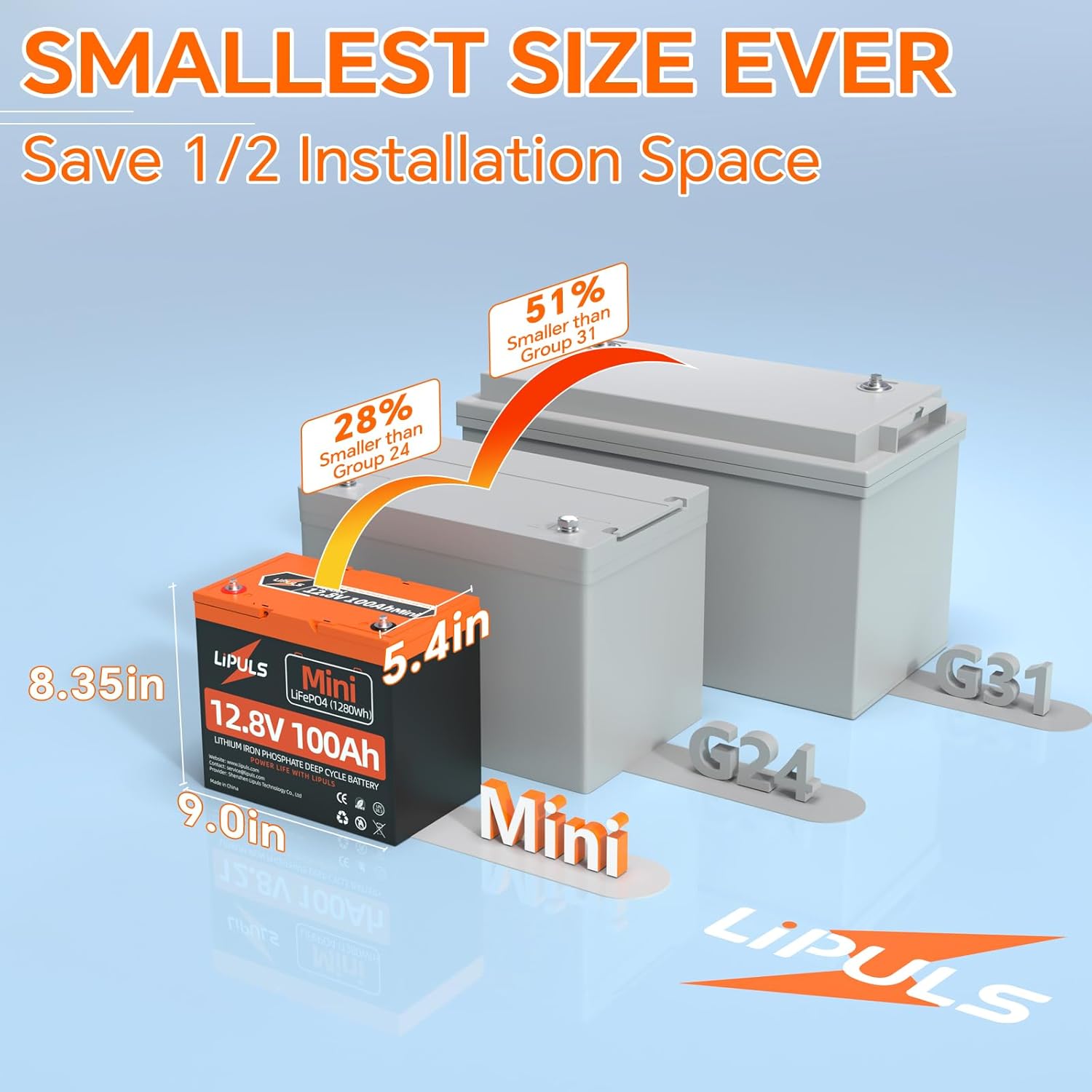
Image 3.1: Size comparison illustrating the compact dimensions of the LIPULS Mini battery compared to standard Group 24 and Group 31 lead-acid batteries.

Image 3.2: Visual representation of the weight and energy density advantages of the LIPULS Mini battery over traditional AGM batteries.
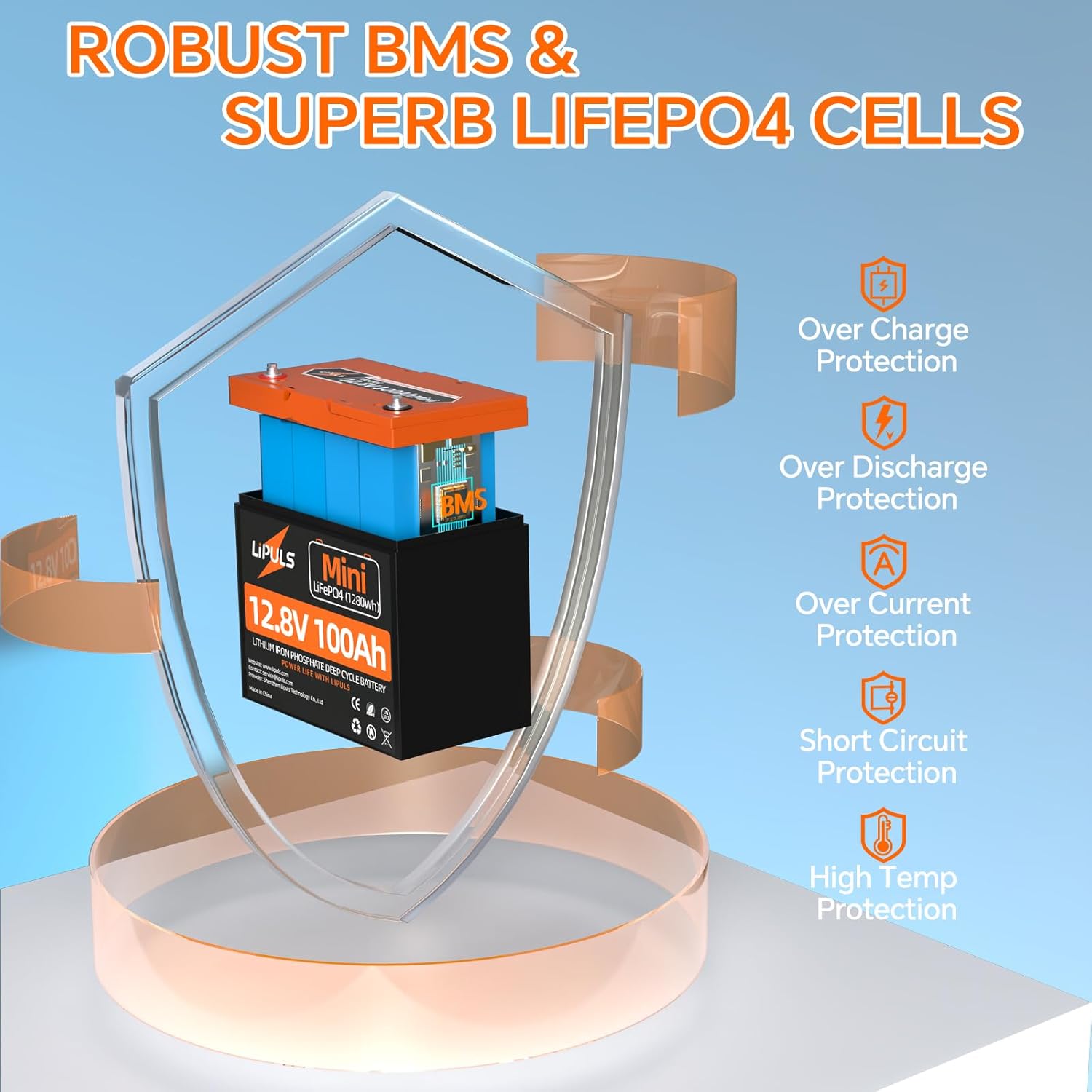
Image 3.3: Diagram detailing the five smart protections provided by the integrated Battery Management System (BMS): overcharge, over-discharge, over-current, short circuit, and high-temperature protection.
4. Setup
4.1 Unboxing and Initial Inspection
Upon receiving your LIPULS battery, carefully unbox it and inspect for any signs of damage during transit. The package should contain:
- 1 x LIPULS 12V 100Ah Mini LiFePO4 Deep Cycle Lithium Battery
- 2 x M8 Terminals
- 1 x Product Manual (this document)
- 1 x Service Card
If any items are missing or damaged, please contact LIPULS customer support immediately.
4.2 Battery Connections
The battery is equipped with M8 terminals. Ensure proper polarity when connecting to your system. Connect the positive (+) terminal of the battery to the positive (+) terminal of your load/charger, and the negative (-) terminal of the battery to the negative (-) terminal of your load/charger.
CAUTION: Incorrect polarity can cause severe damage to the battery and connected equipment.
4.3 Parallel and Series Connections
The LIPULS 12V 100Ah Mini LiFePO4 battery supports connections up to 4 series (4S) and 4 parallel (4P) for a maximum configuration of 51.2V 400Ah (20.48kWh).
- Parallel Connection: Connect batteries in parallel to increase capacity (Ah) while maintaining the same voltage (12V). Connect positive terminals together and negative terminals together. Ensure all batteries are at a similar state of charge before connecting in parallel.
- Series Connection: Connect batteries in series to increase voltage (V) while maintaining the same capacity (100Ah). Connect the positive terminal of one battery to the negative terminal of the next.
IMPORTANT: When connecting batteries in series or parallel, use identical batteries (same brand, model, and capacity) and ensure all cables are of appropriate gauge and length to handle the current.

Image 4.1: Illustration of a DIY battery system, demonstrating how multiple LIPULS batteries can be connected to create a larger energy storage solution for solar or off-grid applications.

Image 4.2: Visual guide for expanding the battery system, showing a 4P4S connection to achieve 20.48kWh of energy storage for solar energy systems, house backup power, or off-grid living.
5. Operating Instructions
5.1 Charging the Battery
The LIPULS LiFePO4 battery can be recharged using several methods:
- Dedicated LiFePO4 Charger: Use a 14.6V 20A LiFePO4 charger for optimal and safe charging.
- Solar Panels with MPPT Controller: Connect solar panels through an MPPT (Maximum Power Point Tracking) charge controller. Ensure the controller is compatible with LiFePO4 batteries and set to the correct charging profile.
- Generator with DC-DC Charger: A generator can be used in conjunction with a 20A DC-DC charger to replenish the battery.
NOTE: Do not use lead-acid battery chargers unless they have a specific LiFePO4 charging mode. Overcharging or undercharging with an incompatible charger can damage the battery.

Image 5.1: Illustration of the three primary methods for recharging the LIPULS LiFePO4 battery: solar panels with an MPPT controller, a dedicated 14.6V 20A LiFePO4 charger, and a generator with a 20A DC-DC charger.
5.2 Discharge and Application Guidelines
- The battery is ideal for 30-70 lbs trolling motors, RVs, marine applications, solar systems, and general off-grid energy storage.
- Not Suitable For: This battery is not designed for use as a starting battery for vehicles or for golf carts. It is intended for deep cycle energy storage applications.
- Operating Temperature: Ensure the battery operates within the specified discharge temperature range of -4°F to 140°F (-20°C to 60°C). The internal BMS will protect the battery if temperatures exceed safe limits.

Image 5.2: The LIPULS battery powering a trolling motor on a boat, highlighting its suitability for marine applications due to its IP65 waterproof rating and durability.

Image 5.3: A collage showcasing various applications for the LIPULS battery, including camping, RVs, solar home systems, and powering trolling motors.
6. Maintenance
LiFePO4 batteries require minimal maintenance compared to lead-acid batteries, but following these guidelines will ensure maximum lifespan:
- Regular Inspection: Periodically check the battery terminals for corrosion or loose connections. Clean terminals with a wire brush if necessary and ensure they are tightened securely.
- Keep Clean and Dry: Wipe down the battery case with a dry or slightly damp cloth to remove dust and debris. Avoid using harsh chemicals.
- Temperature Management: Operate and store the battery within the recommended temperature ranges. Avoid extreme heat or cold.
- Storage: If storing the battery for an extended period, charge it to approximately 50-70% State of Charge (SOC) and store it in a cool, dry place. Recharge every 3-6 months to prevent self-discharge below critical levels.
- Avoid Deep Discharge: While LiFePO4 batteries tolerate deep discharge well, consistently discharging to 0% can reduce overall cycle life. The BMS will protect against over-discharge.
7. Troubleshooting
The integrated BMS provides protection against common issues. If you encounter a problem, refer to the following table:
| Problem | Possible Cause | Solution |
|---|---|---|
| Battery not charging |
|
|
| No power output from battery |
|
|
| Battery appears swollen or damaged | Internal cell damage or severe malfunction. | Immediately discontinue use and contact LIPULS customer support. Do not attempt to charge or use. |
If the problem persists after attempting these solutions, please contact LIPULS customer support for further assistance.
8. Specifications
| Feature | Detail |
|---|---|
| Model | 12V100Ah100MINI |
| Brand | LIPULS |
| Nominal Voltage | 12.8V |
| Nominal Capacity | 100Ah |
| Energy | 1280Wh |
| BMS | Built-in 100A |
| Cell Type | Grade A LiFePO4 |
| Cycle Life | Up to 15,000 cycles (at 60% DOD) |
| Lifespan | Approximately 10 years |
| Charge Temperature Range | 32~113°F (0~45°C) |
| Discharge Temperature Range | -4~140°F (-20~60°C) |
| Max Cell Surface Temperature | 176°F (80°C) |
| Waterproof Rating | IP65 |
| Terminal Type | M8 Terminal |
| Product Dimensions | 5.4 x 9 x 8.35 inches (D x W x H) |
| Item Weight | 20.9 pounds |
| Max Series/Parallel Connection | 4S4P (51.2V 400Ah) |
9. Warranty and Support
LIPULS stands behind the quality of its products. Your LIPULS 12V 100Ah Mini LiFePO4 Lithium Battery comes with a comprehensive warranty.
- Warranty Period: A 5-year extended warranty is available. Please refer to the service card included in your package or contact customer support for details on how to register or claim your warranty.
- Customer Support: For any questions, technical assistance, or warranty claims, please contact LIPULS customer service.
Contact Information:
- Website: www.lipuls.com
- Email: service@lipuls.com
- Seller: LiPULS (via Amazon)
Please ensure you purchase from the official LIPULS store to protect your warranty rights.