
1. Important Safety Information
Read and understand all instructions before operating the pressure washer. Failure to follow these instructions may result in serious injury or property damage.
- Always wear appropriate personal protective equipment, including eye protection, hearing protection, and protective footwear.
- Never point the spray gun at people, pets, or electrical outlets. The high-pressure spray can cause severe injury.
- Ensure all connections are secure before starting the unit.
- Operate the pressure washer in a well-ventilated area to avoid carbon monoxide poisoning.
- Do not operate with flammable liquids. Use only recommended cleaning solutions.
- Keep children and pets away from the operating area.
- Always turn off the engine and relieve pressure before performing any maintenance or moving the unit.
2. Product Overview and Features
The VEVOR Gas Pressure Washer is designed for powerful and efficient cleaning of various surfaces. Key features include:
- High Pressure Output: Delivers 4400 PSI pressure and 4.0 GPM flow rate for tackling tough stains.
- Powerful Engine: Equipped with a 390 ml 4-stroke engine and a 15 hp copper pump for reliable performance.
- Versatile Nozzles: Includes 5 quick-connect metal spray nozzles (0°, 15°, 25°, 40°, Soap Nozzle) for diverse cleaning tasks.
- Convenient Storage: Features integrated storage for the spray gun, nozzles, and a 50 ft abrasion-resistant water hose.
- Easy Mobility: Built with a strong steel frame, ergonomic handle, and two 10-inch never-flat wheels for effortless transport.
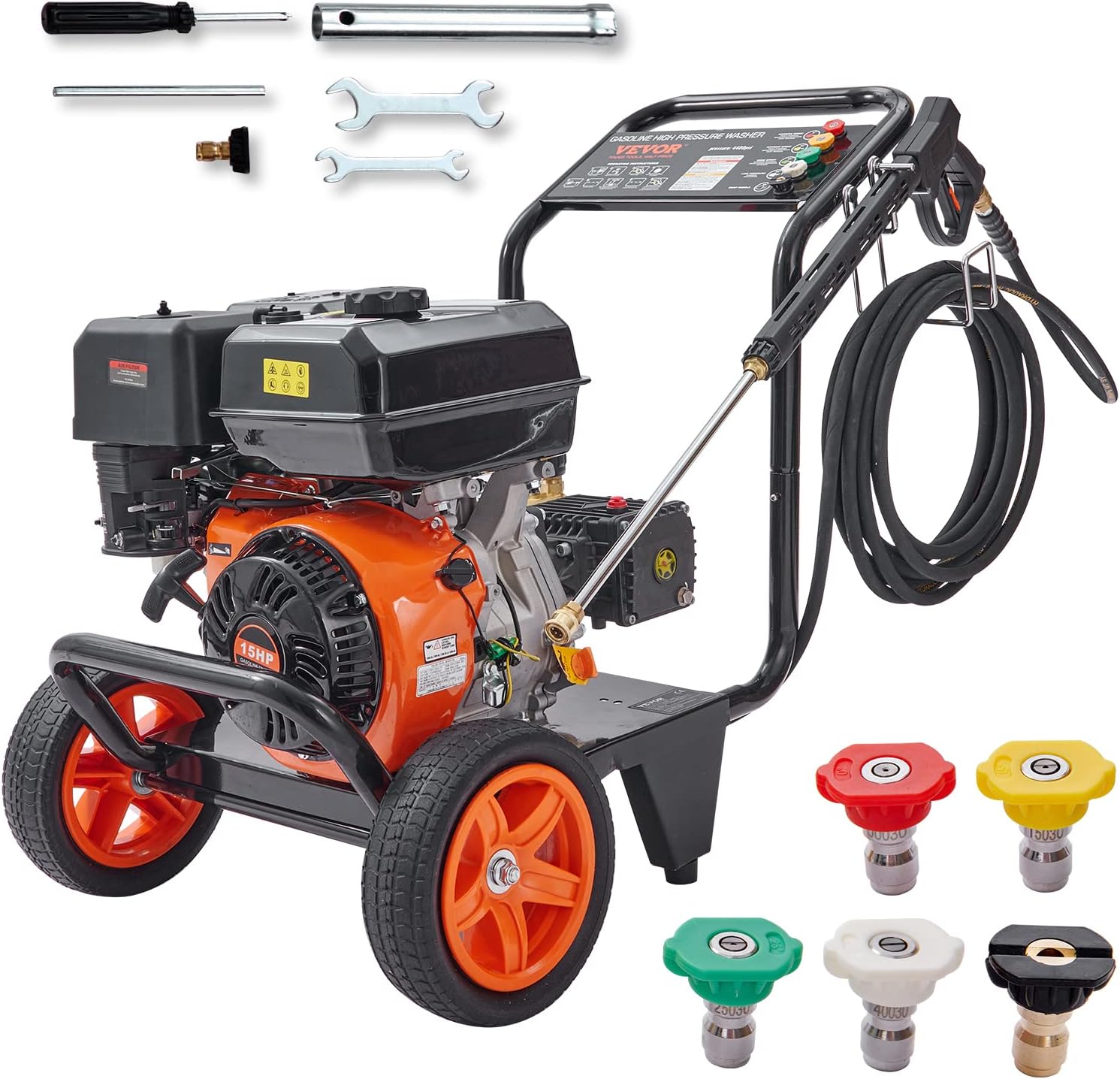
Figure 2.1: VEVOR Gas Pressure Washer with included accessories and nozzles.

Figure 2.2: Detailed view of the 390cc 4-stroke engine and copper pump, highlighting low noise and longer lifetime.
3. Setup and Assembly
Follow these steps to assemble your pressure washer before first use:
- Assemble the Handle: Attach the handle to the main unit using the provided bolts and nuts. Ensure it is securely fastened.
- Assemble the Wheels: Attach the two 10-inch wheels to the axle using the provided hardware. Ensure they rotate freely.
- Connect the High-Pressure Hose: Connect one end of the high-pressure hose to the pump outlet on the pressure washer and the other end to the spray gun. Tighten all connections securely to prevent leaks.
- Connect the Water Supply: Connect a standard garden hose (not included) to the water inlet on the pressure washer. Ensure the water supply is clean and free of debris.
- Install Siphon and Filter (if applicable): If using a siphon for detergent, install it according to the diagram.
- Add Engine Oil: Before first use, fill the engine with the recommended type and amount of engine oil. Refer to the engine oil cap or manual for specifications. Do not overfill.
- Add Fuel: Fill the fuel tank with fresh, unleaded gasoline. Do not overfill.

Figure 3.1: Visual guide for initial setup and starting procedures, including oil and fuel filling.
4. Operating Instructions
Follow these steps for safe and effective operation:
- Starting the Engine:
- Ensure the water supply is turned on and the garden hose is connected.
- Squeeze the spray gun trigger to purge air from the pump and hose until a steady stream of water emerges.
- Turn the engine switch to the "ON" position.
- Move the choke lever to the "CHOKE" position (cold start).
- Move the throttle lever to the "FAST" position.
- Pull the recoil starter handle firmly until the engine starts.
- Once the engine starts, gradually move the choke lever to the "RUN" position.
- Using the Spray Gun and Nozzles:
- Select the appropriate quick-connect nozzle for your cleaning task.
- 0° (Red): Intense, pinpoint stream for stubborn stains. Use with extreme caution.
- 15° (Yellow): High-pressure, narrow spray for heavy-duty cleaning.
- 25° (Green): Medium-pressure, wider spray for general cleaning.
- 40° (White): Low-pressure, wide spray for gentle cleaning of delicate surfaces.
- Soap Nozzle (Black): For applying detergent at low pressure.
- Insert the desired nozzle into the quick-connect collar on the spray gun and pull back the collar to lock it in place.
- Always test the spray pattern and pressure in an inconspicuous area before cleaning the main surface.
- Maintain a safe distance from the surface being cleaned to avoid damage.
- Select the appropriate quick-connect nozzle for your cleaning task.
- Applying Detergent:
- Fill the detergent tank or connect the siphon tube to a container of pressure washer-safe detergent.
- Attach the black soap nozzle to the spray gun.
- The pressure washer will automatically draw detergent when operating at low pressure with the soap nozzle.
- After applying detergent, switch to a high-pressure nozzle (e.g., 25° or 15°) to rinse the surface thoroughly.
- Shutting Down:
- Turn off the engine switch.
- Turn off the water supply.
- Squeeze the spray gun trigger to release any remaining pressure in the system.
- Disconnect the garden hose and high-pressure hose.

Figure 4.1: Quick-connect nozzles for various cleaning applications.

Figure 4.2: Examples of versatile use for the pressure washer on different surfaces.
5. Maintenance
Regular maintenance ensures optimal performance and extends the life of your pressure washer:
- Engine Oil: Check engine oil level before each use. Change oil after the first 5 hours of operation, then every 50 hours or annually.
- Air Filter: Inspect the air filter regularly and clean or replace it if dirty.
- Spark Plug: Inspect and clean the spark plug annually. Replace if necessary.
- Fuel System: Use fresh gasoline. For storage longer than 30 days, add a fuel stabilizer or drain the fuel tank and carburetor.
- Pump: Flush the pump with a pump protector or antifreeze solution before storing in freezing temperatures.
- Nozzles: Clean clogged nozzles with the provided nozzle cleaning tool.
- Hoses and Connections: Inspect hoses for kinks, cuts, or leaks. Ensure all connections are tight.
6. Troubleshooting
Refer to this section for common issues and their solutions:
| Problem | Possible Cause | Solution |
|---|---|---|
| Engine will not start | No fuel or low fuel level Engine switch OFF Choke not set correctly Spark plug issue Low oil level (engine safety shut-off) | Fill fuel tank Turn engine switch to ON Adjust choke for cold/warm start Inspect/clean/replace spark plug Fill engine oil to proper level |
| Low pressure output | Clogged nozzle Insufficient water supply Air in pump Worn pump seals | Clean or replace nozzle Ensure full water flow to unit Purge air by squeezing trigger with engine off Contact VEVOR support for pump service |
| Engine runs rough or stalls | Stale fuel Clogged fuel filter Dirty air filter Loose engine switch (as noted in customer reviews) | Drain and refill with fresh fuel Clean or replace fuel filter Clean or replace air filter Check and secure engine switch connection |
7. Specifications
Detailed specifications for the VEVOR Gas Pressure Washer (Model: BSG250A):
- Brand: VEVOR
- Model Number: BSG250A
- Power Source: Gas Powered
- Maximum Pressure: 4400 PSI (Pound per Square Inch)
- Maximum Flow Rate: 4.0 GPM (Gallons Per Minute)
- Engine Type: 390cc, 4-stroke, 15 HP (Horsepower) Copper Pump
- Fuel Tank Volume: 1.7 Gallons
- Hose Length: 50 Feet
- Item Weight: 137 Pounds
- Product Dimensions (L x W x H): 37.4" x 26.4" x 31.3"
- Color: Black-Orange
- UPC: 197988933755
- Certification: CETA

Figure 7.1: Key specifications and dimensions of the pressure washer.
8. Warranty and Support
VEVOR is committed to providing reliable tools. For warranty information, technical support, or service inquiries, please refer to the contact information provided with your product packaging or visit the official VEVOR website.
You can also visit the VEVOR Store on Amazon for additional product information and customer support options.


