
1. Product Overview
The BIYEH RS32 NGTC1 Fast Fuse, Model RT16-1, is an essential electrical component designed for overcurrent protection in various applications. This fast-acting fuse is engineered to interrupt circuits quickly when current exceeds a safe level, thereby protecting electrical equipment from damage due to overloads or short circuits. It is suitable for systems operating at voltages up to 690V/660V and 1000V, with various current ratings available.
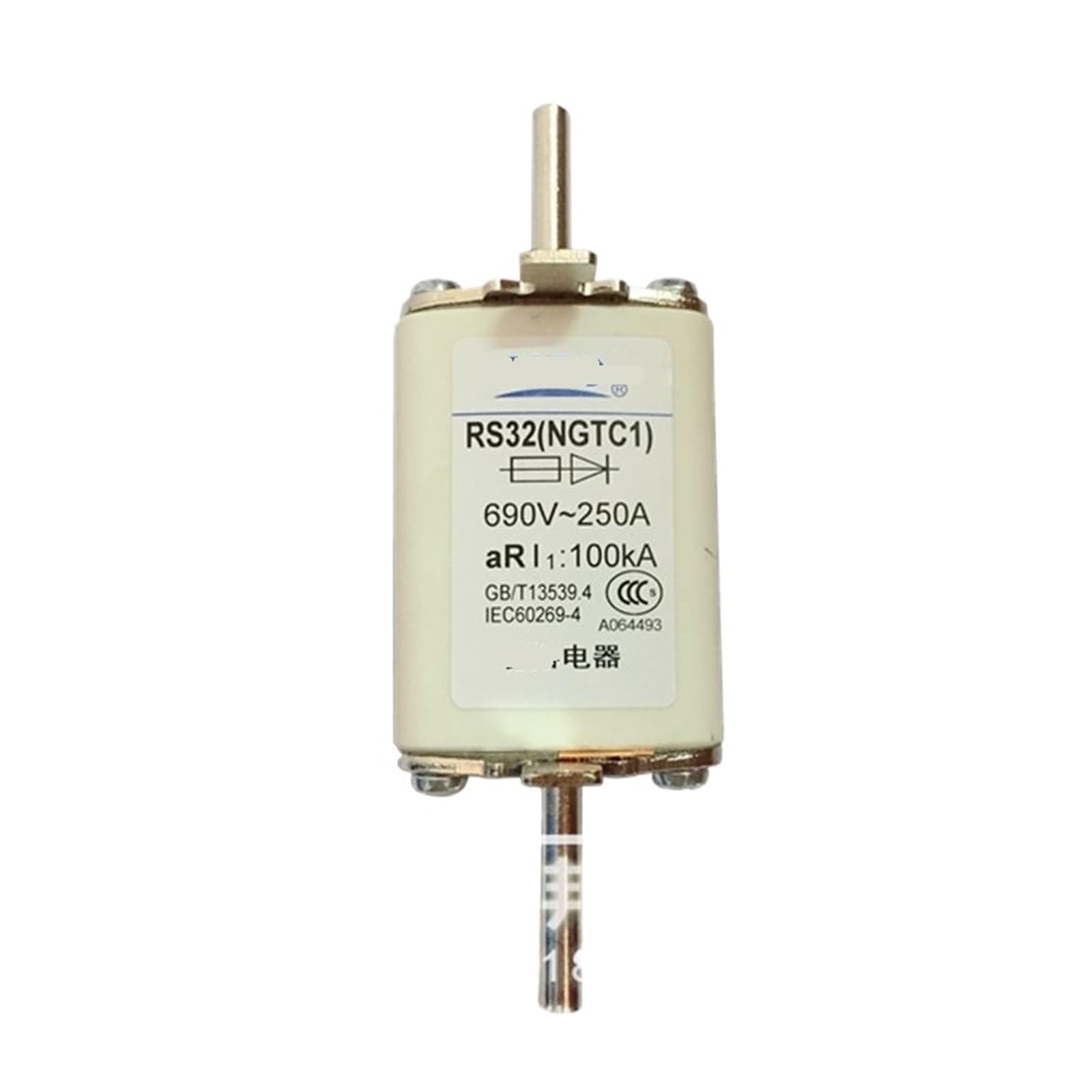
Image showing the BIYEH RS32 NGTC1 fast fuse, highlighting its compact design and terminal connections.
2. Safety Information
WARNING: Electrical work can be dangerous and should only be performed by qualified personnel. Failure to follow these safety instructions may result in electric shock, fire, or serious injury.
- Always disconnect power to the circuit before installing, inspecting, or replacing fuses.
- Ensure the replacement fuse has the correct voltage and current rating for the application. Using an incorrect fuse can lead to inadequate protection or fire hazards.
- Do not bypass or tamper with fuses. Fuses are safety devices designed to protect equipment and prevent hazards.
- Wear appropriate personal protective equipment (PPE), such as insulated gloves and safety glasses, when working with electrical components.
- Keep children and unauthorized persons away from electrical installations.
3. Product Features
- Model: RS32 (NGTC1)
- Type: Fast Fuse
- Voltage Rating: 690V/660V, 1000V
- Current Ratings: Available in various amperages (e.g., 100A, 160A, 200A, 250A)
- Designed for reliable overcurrent protection.
- Compact and durable construction.
4. Specifications
| Specification | Detail |
|---|---|
| Brand Name | BIYEH |
| Model Info | BIYEH (RS32 NGTC1) |
| Item Weight | 1.76 ounces |
| Product Dimensions | 3 x 2 x 1 inches |
| Item Model Number | RT16-1 |
| Part Number | BIYEH |
| Color | One Color |
| ASIN | B0CPV3FWWC |
| Date First Available | December 9, 2023 |
5. Installation
Installation of the BIYEH RS32 NGTC1 Fast Fuse should be performed by a qualified electrician in accordance with all local and national electrical codes and regulations.
- Power Disconnection: Before beginning any work, ensure that the main power supply to the circuit where the fuse will be installed is completely disconnected and locked out. Verify with a voltage tester.
- Identify Fuse Holder: Locate the appropriate fuse holder or circuit protection panel for the fuse.
- Verify Ratings: Confirm that the voltage and current ratings of the BIYEH RS32 NGTC1 Fast Fuse match the requirements of the circuit it is protecting.
- Insert Fuse: Carefully insert the fuse into its designated holder. Ensure it is seated firmly and correctly to establish proper electrical contact.
- Secure Connections: If applicable, ensure any terminal connections are tightened to the manufacturer's specifications to prevent loose connections and arcing.
- Restore Power: Once the fuse is securely installed and all safety checks are complete, restore power to the circuit.
6. Operation
The BIYEH RS32 NGTC1 Fast Fuse operates passively as a protective device. When the electrical current flowing through the circuit exceeds the fuse's rated amperage for a specific duration, the fuse element inside melts, creating an open circuit. This action immediately stops the flow of electricity, preventing damage to downstream equipment or wiring due to overcurrent conditions (overloads or short circuits).
A properly functioning fuse will remain intact under normal operating conditions. Its primary function is to act as a sacrificial component, breaking the circuit to protect more valuable or critical parts of the electrical system.
7. Maintenance
Fuses generally require minimal maintenance, but periodic inspection is recommended to ensure continued safety and performance.
- Visual Inspection: Periodically inspect the fuse and its holder for any signs of physical damage, discoloration, or loose connections.
- Replacement: If a fuse blows (indicates an overcurrent event), it must be replaced with a new fuse of the exact same type, voltage, and current rating. Never attempt to repair a blown fuse.
- Troubleshooting Cause: Before replacing a blown fuse, it is crucial to identify and rectify the cause of the overcurrent (e.g., short circuit, overloaded appliance) to prevent immediate re-blowing of the new fuse.
- Cleaning: Ensure the fuse holder and surrounding area are free from dust and debris, which could potentially interfere with proper operation or heat dissipation.
8. Troubleshooting
The most common issue with a fuse is that it blows, indicating a problem within the electrical circuit it protects.
Symptom: Circuit is dead (no power)
- Possible Cause: The fuse has blown due to an overcurrent condition.
- Action:
- Disconnect Power: Turn off the main power supply to the affected circuit.
- Inspect Fuse: Visually inspect the fuse. Many fuses have an indicator that shows if they have blown. If not, use a multimeter to test for continuity across the fuse. A blown fuse will show infinite resistance (open circuit).
- Identify Cause: Before replacing, investigate what caused the fuse to blow. This could be a faulty appliance, a short circuit in wiring, or an overloaded circuit. Address the root cause.
- Replace Fuse: Replace the blown fuse with a new one of the identical type, voltage, and current rating. Never use a fuse with a higher rating.
- Restore Power: Carefully restore power and monitor the circuit. If the new fuse blows immediately, there is still an unresolved issue in the circuit that requires professional attention.
If you are unable to identify or resolve the cause of a blown fuse, consult a qualified electrician.
9. Warranty and Support
For information regarding the warranty period, terms, and conditions for your BIYEH RS32 NGTC1 Fast Fuse, please refer to the manufacturer's official website or contact BIYEH customer support directly. Keep your purchase receipt as proof of purchase for any warranty claims.
For technical support or further assistance, please visit the BIYEH official website or contact their customer service department through the contact information provided with your product packaging or on their website.
Important: Do not attempt to open or modify the fuse, as this will void the warranty and may create a safety hazard.