
1. Product Overview
The Thermalright TL-P9W-S is a high-performance 92mm CPU PWM fan designed for efficient cooling in PC cases and with CPU coolers. It features automatic speed control, low noise operation, and customizable ARGB lighting effects.
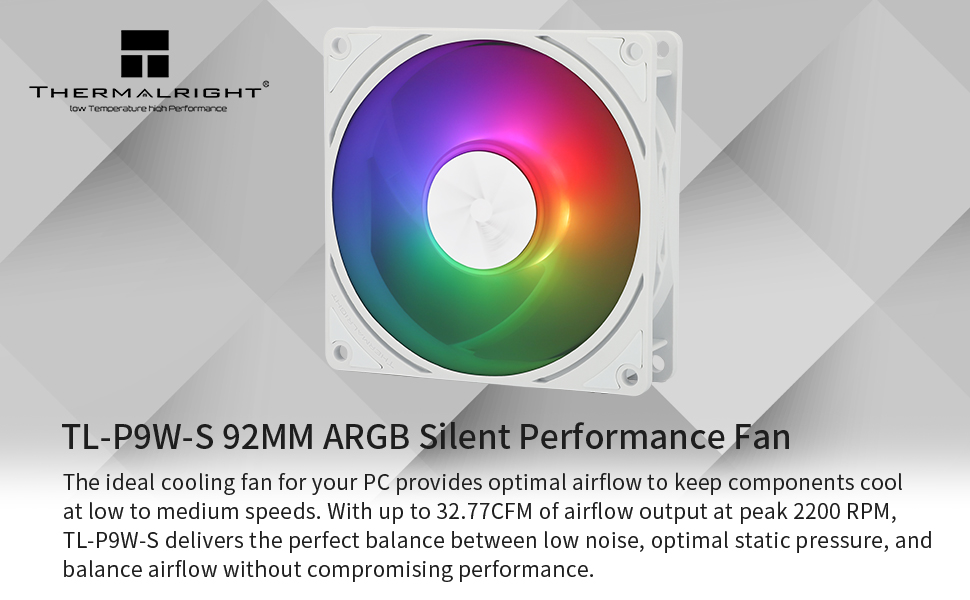
Image: Thermalright TL-P9W-S fan highlighting key features.
- High Performance Cooling: Automatic speed control via 4-pin PWM interface, reaching a maximum speed of 2200 RPM for effective heat dissipation.
- Low Noise Operation: Equipped with four vibration damping pads to reduce friction and noise, ensuring quiet performance.
- ARGB Lighting: High brightness LED atomized ARGB fan blades provide soft, customizable lighting effects. Connects to a 3-pin ARGB port on the motherboard for control.
- Durable Construction: Fan blades and frame are made from industrial-grade PBT+PC material for strength and stability.
- Long-lasting Bearing: Features a maintenance-free S-FDB (Fluid Dynamic Bearing) with magnetic assist for low friction and extended lifespan.
2. Setup and Installation
Follow these steps to properly install your Thermalright TL-P9W-S fan. Ensure your system is powered off and unplugged before beginning installation.
2.1 Connecting the Fan
- PWM Connection: Connect the 4-pin PWM fan cable to an available 4-pin fan header on your motherboard. This allows the motherboard to control the fan speed based on system temperature.
- ARGB Connection: Connect the 3-pin ARGB connector to a +5V ARGB header on your motherboard. This enables control over the fan's lighting effects. If connecting multiple ARGB devices, utilize the daisy-chain feature by connecting additional ARGB connectors to the sharing header.
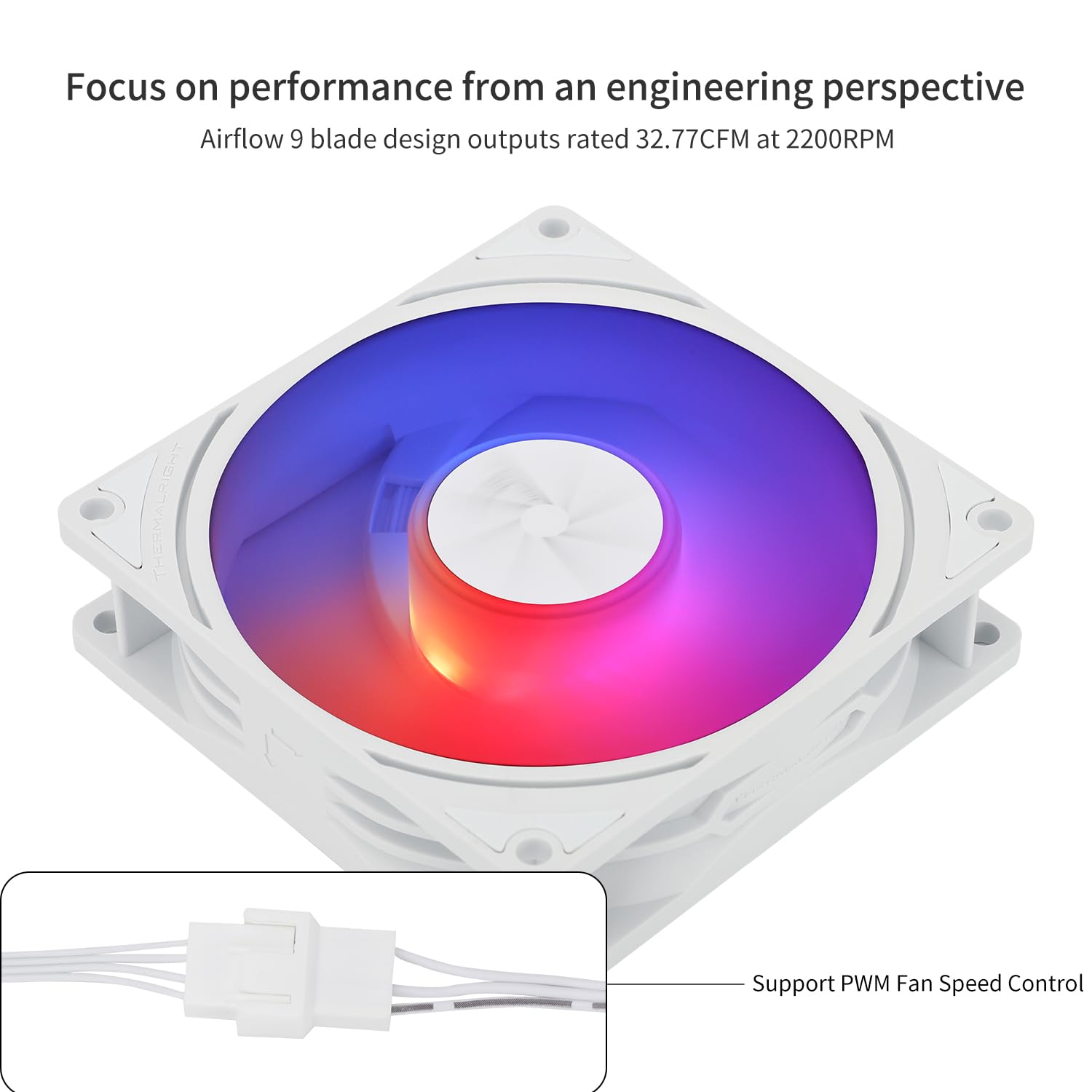
Image: PWM fan speed control connector.
2.2 Mounting the Fan
The TL-P9W-S fan can be used as a case fan or mounted on compatible CPU coolers. Use the provided screws to secure the fan in your desired location. The soft silicone feet at each corner help reduce vibration.

Image: Examples of fan installation in a PC case and on CPU coolers.
2.3 Installation Video Guide
For a visual guide on installation, please refer to the official video below:
Video: Thermalright case fan quick start guide. This video demonstrates the connection process for the fan's PWM and ARGB cables to a motherboard.
3. Operating Instructions
3.1 Fan Speed Control (PWM)
The 4-pin PWM connector allows your motherboard to automatically adjust the fan speed based on the CPU or system temperature. This ensures optimal cooling performance while minimizing noise when high airflow is not required. You can typically configure fan curves in your motherboard's BIOS/UEFI settings or through manufacturer-provided software.
3.2 ARGB Lighting Control
The 3-pin ARGB connector enables synchronization and control of the fan's lighting effects through your motherboard's ARGB software (e.g., ASUS Aura Sync, MSI Mystic Light Sync, Gigabyte RGB Fusion, ASRock Polychrome Sync). This allows you to customize colors, patterns, and brightness to match your system's aesthetic.
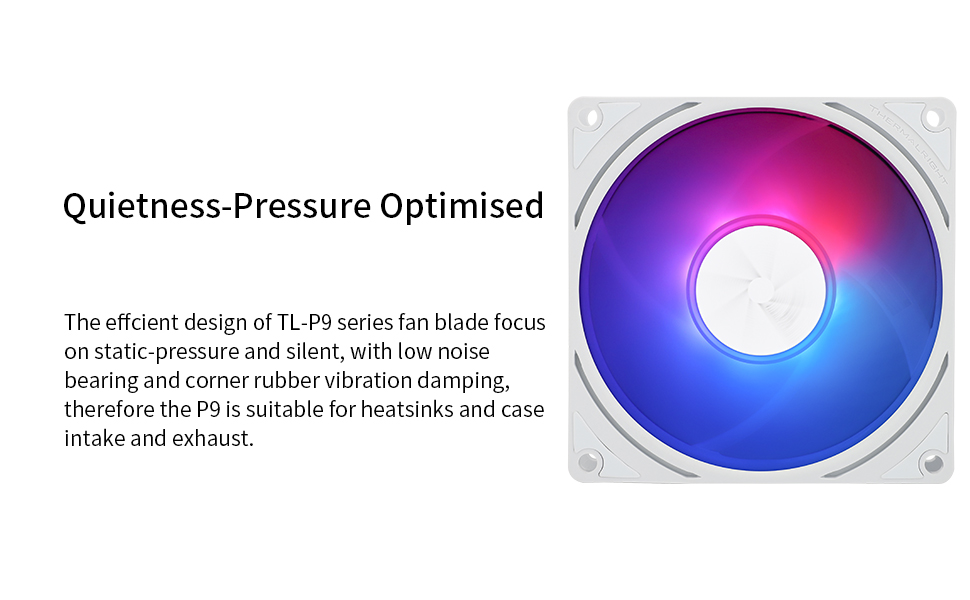
Image: Fan displaying various ARGB lighting effects.
4. Maintenance
The Thermalright TL-P9W-S fan utilizes an S-FDB (Fluid Dynamic Bearing) which is designed for long-term, maintenance-free operation. Therefore, do not attempt to disassemble the fan as this may damage the bearing and void any potential warranty.
To ensure optimal performance and longevity:
- Periodically inspect the fan blades for dust accumulation.
- Gently clean any dust from the fan blades and frame using compressed air or a soft brush. Ensure the fan is powered off during cleaning.

Image: Detail of the S-FDB bearing and vibration damping pads.
5. Troubleshooting
If you encounter issues with your Thermalright TL-P9W-S fan, consider the following troubleshooting steps:
- Fan Not Spinning:
- Ensure the 4-pin PWM connector is securely plugged into the motherboard fan header.
- Check your motherboard's BIOS/UEFI settings to ensure the fan header is enabled and configured correctly.
- Verify that the power supply is functioning correctly.
- No ARGB Lighting:
- Confirm the 3-pin ARGB connector is correctly attached to a +5V ARGB header on your motherboard. Note that this is different from a +12V RGB header.
- Check your motherboard's ARGB software to ensure lighting effects are enabled and configured.
- If daisy-chaining, ensure all connections are secure.
- Excessive Noise:
- Ensure the fan is securely mounted and not vibrating against other components. The rubber damping pads should help mitigate this.
- Check for any cables or obstructions interfering with the fan blades.
- Adjust the fan speed curve in your motherboard's BIOS/UEFI or software. Running the fan at 100% speed continuously can generate more noise. Tuning to 50-60% for typical loads often provides a good balance of cooling and quietness.
- Clean any dust buildup on the fan blades.
- Poor Cooling Performance:
- Ensure the fan is oriented correctly for optimal airflow (intake or exhaust, depending on your system's needs).
- Verify that there are no obstructions blocking airflow to or from the fan.
- Check fan speed settings; increase speed if temperatures are too high.
6. Specifications
| Feature | Specification |
|---|---|
| Model | TL-P9W-S |
| Product Dimensions (L x W x H) | 3.62" x 0.98" x 3.62" (92mm x 25mm x 92mm) |
| Power Connector Type | 4-Pin PWM |
| ARGB Connector Type | 3-Pin (+5V) |
| Voltage | 12 Volts |
| Wattage | 9 Watts |
| Cooling Method | Air |
| Compatible Devices | Desktop PCs (Case, CPU Coolers) |
| Noise Level | 23.85 Decibels (Max) |
| Material | PBT+PC, Silicon |
| Maximum Rotational Speed | 2200 RPM |
| Air Flow Capacity | 32.77 Cubic Feet Per Minute (CFM) |
| Bearing Type | S-FDB (Fluid Dynamic Bearing) |
7. Warranty and Support
For warranty information and technical support, please refer to the official Thermalright website or contact your retailer. Keep your proof of purchase for any warranty claims.
Manufacturer: THERMALRIGHT


