
1. Product Overview
The Sparkleiot SG92R is a compact and lightweight 9-gram micro servo motor designed for various applications, including RC remote control aircraft models, robotics, and other projects requiring precise angular positioning. This specific model offers a controllable angle of 180 degrees, allowing for accurate movement and positioning within its operational range.
It features high-quality components for reliable performance and durability.
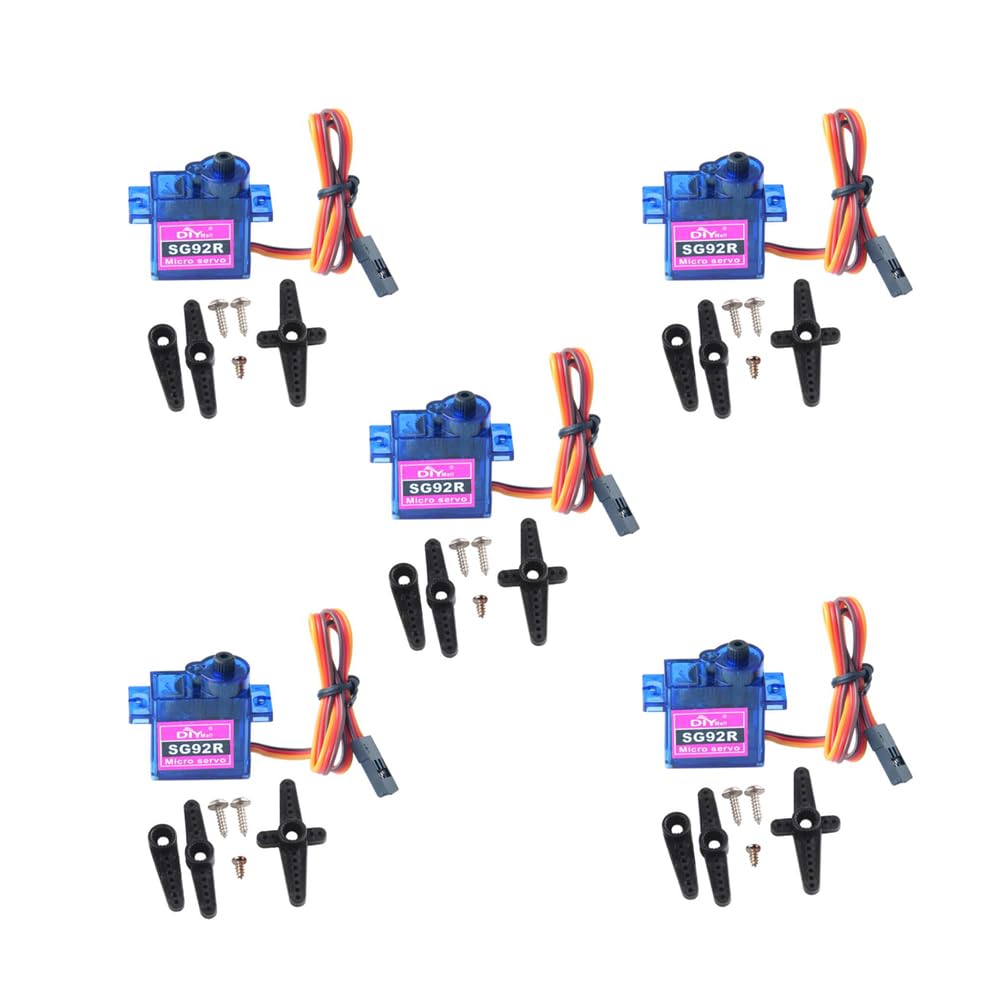
Figure 1.1: The Sparkleiot SG92R 9g Micro Servo Motor. This image displays the compact blue servo unit with its three-wire connector (orange, red, brown) for signal, power, and ground connections.
2. Package Contents
Before proceeding with setup, please ensure all components are present in your package:
- 1 x SG92R 9g Micro Servo Motor
- 1 set of accessories (includes various servo horns and mounting screws)

Figure 2.1: Included accessories for the SG92R servo. This image shows the SG92R servo motor along with three types of servo horns (unilateral arm, cross arm, I type arm) and a set of mounting screws.
3. Specifications
| Feature | Specification |
|---|---|
| Product Name | SG92R |
| Product Size (L x W x H) | 22.4mm x 12.5mm x 23.8mm |
| Product Weight | 10 grams (±5%) |
| Product Line Length | 25cm (±1cm) |
| Working Voltage | 4.8V - 6V |
| Blocking Torque | 1.3KG.CM - 1.8KG.CM |
| No-load Speed | 0.09 sec/60 degrees |
| No-load Current | 90MA |
| Output Shaft | 20T |
| Gear Type | Nylon Gears |
| Motor Type | High-speed Strong Magnetic Motor |
| Wire Material | High-quality Copper Wire |

Figure 3.1: Dimensions of the SG92R Micro Servo. This image provides a detailed view of the servo motor with measurements indicating its length (22.7mm), width (12.1mm), and height (30.5mm including the output shaft).
4. Setup Instructions
4.1. Connecting the Servo
The SG92R servo motor uses a standard 3-wire connection:
- Brown Wire: Ground (GND)
- Red Wire: Power (VCC, 4.8V-6V)
- Orange Wire: Signal (PWM input)
Connect these wires to your microcontroller (e.g., Arduino) or RC receiver according to its pinout specifications. Ensure correct polarity to prevent damage to the servo or control board.
4.2. Mounting the Servo
Use the provided screws and servo horns to mount the servo securely in your application. Select the appropriate servo horn (unilateral, cross, or I-type) based on your project's requirements. Ensure the servo is mounted firmly to prevent vibrations and ensure accurate movement.
5. Operating Instructions
5.1. Control Signal
The SG92R servo motor is controlled using a standard Pulse Width Modulation (PWM) signal. The control signal should have a period of 20ms (50Hz frequency).
- 180 Degree Control: For 180-degree angular control, the high-level time (pulse width) should range from 500 microseconds (µs) to 2500 microseconds (µs). This allows the servo to stop at any angle within its 180-degree range.
- 90 Degree Control: If your application requires a 90-degree range, the pulse width typically ranges from 1000 microseconds (µs) to 2000 microseconds (µs).
Note: The 180-degree and 270-degree variants (if applicable to other models) share the same control principle, allowing them to stop at any angle within their specified range. This 180-degree model is not a continuous rotation servo.
5.2. Remote Control Integration
The SG92R servo can be integrated into remote control systems. Ensure your remote control receiver outputs the correct PWM signal within the specified ranges (500-2500µs for 180 degrees) to achieve the desired angular control.
6. Maintenance
- Keep Clean: Regularly clean the servo to prevent dust and debris from interfering with its moving parts. Use a soft, dry cloth.
- Avoid Overload: Do not apply excessive force or torque beyond the servo's blocking torque specification (1.3KG.CM - 1.8KG.CM) as this can damage the gears or motor.
- Proper Storage: Store the servo in a dry, cool environment, away from direct sunlight and extreme temperatures.
- Check Connections: Periodically inspect the wiring and connections for any signs of wear, fraying, or loose contacts.
7. Troubleshooting
- Servo Not Moving:
- Verify power supply connections (Red wire to VCC, Brown wire to GND) and ensure the voltage is within 4.8V-6V.
- Check the signal wire (Orange) connection to your controller.
- Ensure your control code is sending a valid PWM signal with a 20ms period and a pulse width between 500-2500µs.
- Incorrect or Limited Angle Movement:
- Confirm that the PWM pulse width range in your code is correctly set for 180-degree operation (500-2500µs). A narrower range (e.g., 1000-2000µs) will result in a smaller angular movement (e.g., 90 degrees).
- Ensure the servo horn is not obstructed by any part of your model or project.
- Jittery or Unstable Movement:
- A weak or unstable power supply can cause jitter. Ensure your power source can provide sufficient current, especially if multiple servos are used.
- Electrical noise in the signal line can also cause instability. Keep signal wires away from high-current wires.
- Check for loose connections.
- Servo Making Noise but Not Moving:
- This often indicates the servo is stalled or overloaded. Reduce the load on the servo or check for physical obstructions.
- The servo might be trying to reach an angle outside its physical limits or the commanded pulse width is out of range.
8. Safety Information
No specific safety information is provided beyond general electronic component handling. Always exercise caution when working with electronic components and power sources. Ensure proper insulation and avoid short circuits. Keep out of reach of children.
9. Warranty and Support
For warranty information or technical support, please refer to the Sparkleiot official website or contact your retailer. Keep your purchase receipt for warranty claims.