
Introduction
This manual provides detailed instructions for the assembly, operation, and maintenance of your tectake Aluminum and Polycarbonate Garden Greenhouse. Designed to create an optimal environment for plant cultivation, this greenhouse offers protection from various weather conditions and promotes healthy growth. Please read this manual thoroughly before beginning assembly or use to ensure safe and correct installation and operation.

Overview of the tectake greenhouse highlighting key features such as internal greenhouse effect, translucent and UV-resistant panels, additional roof crossbars for stability, rust-resistant aluminum frame, two hinged windows for ventilation, and ample space for cultivation.
Safety Information
Warning: Improper installation or use can lead to injury or damage. Always follow these safety guidelines:
- Anchoring: Anchor the greenhouse securely to the ground. This is crucial to ensure stability and prevent damage from wind or other adverse weather conditions.
- Material Handling: The greenhouse is constructed from metal and polycarbonate. Be aware that components may have sharp edges or be heavy. Handle all parts with caution to prevent cuts or crushing injuries. Wear appropriate protective gear, such as gloves, during assembly.
- Assembly Personnel: Assembly typically requires two or more adults. Do not attempt to assemble alone.
- Site Selection: Choose a level, stable surface for installation, away from overhead power lines or other obstructions.
- Children and Pets: Keep children and pets away from the assembly area. Do not allow them to play inside or around the greenhouse unsupervised.
- Ventilation: Ensure proper ventilation, especially during hot weather, to prevent overheating inside the greenhouse.
Package Contents
Verify that all components are present before beginning assembly. If any parts are missing or damaged, contact customer support.
- Greenhouse Frame Components (Anodized Aluminum Profiles)
- Polycarbonate Panels (4mm thickness)
- Sliding Door Assembly
- Roof Window Assembly
- Fasteners and Hardware (screws, nuts, bolts, clips)
- Assembly Instructions (this manual)

Line drawing illustrating the basic structural framework and entrance of the tectake greenhouse.
Assembly Instructions
Assembly requires careful attention to detail. It is recommended to have at least two people for this process. Refer to the diagrams for visual guidance.
- Prepare the Foundation: Ensure the chosen site is level and clear of debris. A solid, level foundation (e.g., concrete slab, treated timber base) is recommended for optimal stability and longevity.
- Assemble the Base Frame: Connect the base aluminum profiles according to the diagrams. Ensure all corners are square and securely fastened.
- Erect the Side Walls: Attach the vertical and horizontal profiles for the side walls to the base frame. Gradually insert the polycarbonate panels into the designated channels as you build up the frame. Secure panels with clips or fasteners as indicated.
- Install the Roof Structure: Assemble the roof trusses and attach them to the top of the side walls. Carefully install the roof polycarbonate panels, ensuring they overlap correctly for weather sealing.
- Mount the Sliding Door: Assemble the sliding door frame and attach the polycarbonate panels. Install the door onto the designated track, ensuring it slides smoothly and closes securely.
- Install the Roof Window: Assemble and install the roof window mechanism. Ensure it opens and closes properly for ventilation.
- Final Anchoring: Once the greenhouse is fully assembled, anchor it firmly to the ground using appropriate anchoring kits (not always included, may need to be purchased separately based on local conditions). This step is critical for stability against wind.

Detailed views of the greenhouse features: top-hinged roof windows for ventilation, durable roof panels, corrosion-proof anodized aluminum frame, and a wind-proof sliding door. These components are key during assembly.

Close-up view of the metallic structural components and joints of the anodized aluminum frame, showcasing geometric patterns and construction details.
Operation
The tectake greenhouse is designed for ease of use, providing a controlled environment for your plants.
- Access: The 60 x 160 cm sliding door provides convenient access. Ensure the door slides freely and is kept clear of obstructions.
- Ventilation: The 58 x 58 cm roof window allows for manual ventilation. Open the window to regulate temperature and humidity, preventing mold formation and excessive heat buildup. Adjust ventilation based on external weather conditions and internal plant needs.
- Temperature Control: The polycarbonate panels create a greenhouse effect, retaining heat. Monitor internal temperatures, especially during sunny periods, and use the roof window for cooling as needed.
- Plant Protection: The structure and panels protect plants from cold, rain, frost, and strong winds, extending your growing season.
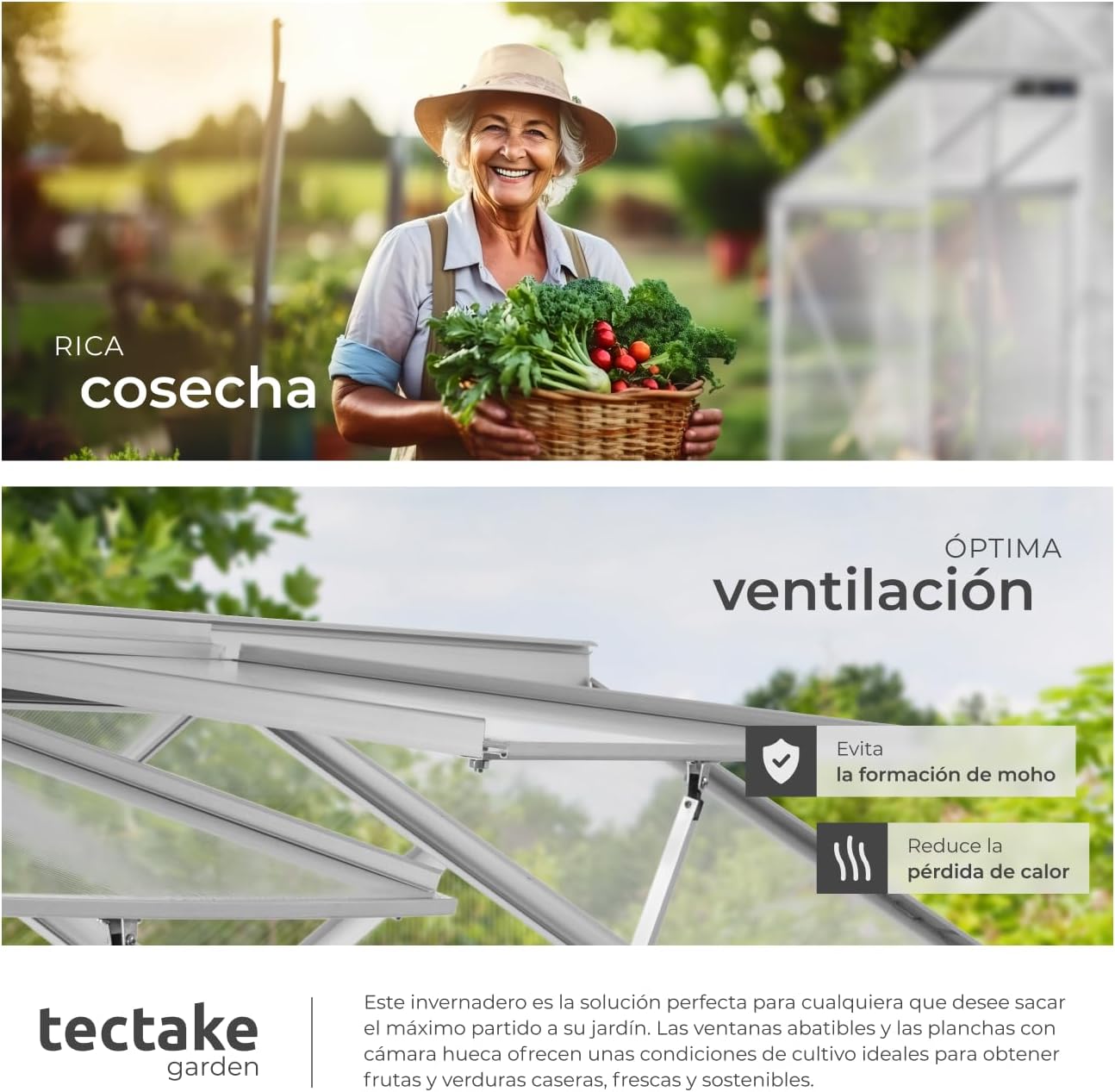
A woman holding a basket of fresh produce, with an inset showing the greenhouse's optimal ventilation system designed to prevent mold and reduce heat loss.
Maintenance
Regular maintenance ensures the longevity and optimal performance of your greenhouse.
- Cleaning Panels: Clean the polycarbonate panels periodically with mild soap and water using a soft cloth or sponge. Avoid abrasive cleaners or brushes that could scratch the surface. Rinse thoroughly with clean water.
- Frame Inspection: Regularly inspect the aluminum frame for any signs of corrosion, loose fasteners, or damage. Tighten any loose screws and replace damaged parts promptly.
- Door and Window Tracks: Keep the sliding door and roof window tracks clean and free of debris to ensure smooth operation. Lubricate moving parts if necessary.
- Anchoring Check: Periodically check the ground anchors to ensure they remain secure, especially after strong winds or heavy rainfall.
- Snow Removal: In areas with heavy snowfall, gently remove accumulated snow from the roof to prevent structural stress.

A greenhouse being cleaned with water, demonstrating routine maintenance for polycarbonate panels.
Troubleshooting
This section addresses common issues you might encounter with your greenhouse.
| Problem | Possible Cause | Solution |
|---|---|---|
| Greenhouse feels unstable or wobbly. | Inadequate anchoring; uneven ground; loose frame connections. | Ensure proper ground anchoring. Verify the foundation is level. Tighten all frame bolts and screws. |
| Door or window sticks or does not slide smoothly. | Debris in tracks; misaligned frame; lack of lubrication. | Clean tracks thoroughly. Check frame alignment and adjust if necessary. Apply a silicone-based lubricant to tracks. |
| Water leakage inside the greenhouse. | Improper panel installation; damaged seals; loose panels. | Inspect panel overlaps and ensure they are correctly seated. Check for damaged sealing strips and replace if needed. Secure any loose panels. |
| Excessive heat buildup inside. | Insufficient ventilation. | Ensure the roof window is open during warm periods. Consider additional ventilation options if needed. |
Specifications
| Feature | Detail |
|---|---|
| Model Number | 402476-3 |
| Overall Dimensions (L x W x H) | 250 x 185 x 195 cm |
| Base Area | 4.41 m² |
| Volume | 7.7 m³ |
| Approximate Weight | 26 kg |
| Frame Material | Anodized Aluminum |
| Cover Material | Polycarbonate (PC) |
| Nominal Wall Thickness | 4 mm |
| Number of Doors | 1 (Sliding Door: 60 x 160 cm) |
| Number of Ventilation Openings | 1 (Roof Window: 58 x 58 cm) |
| Roof Height | 125 cm |

Technical specifications and dimensions of the tectake greenhouse, including total measurements, roof height, door size, and roof window size.
Warranty and Support
For warranty information or technical support, please refer to the documentation included with your purchase or visit the official tectake website. Keep your proof of purchase for any warranty claims.
If you require assistance with assembly, parts replacement, or have questions regarding the use of your greenhouse, please contact tectake customer service. Contact details can typically be found on the product packaging or the manufacturer's website.