1. Introduction
This manual provides essential information for the HC-CARGO 240127 Air Conditioning Compressor. It covers product specifications, vehicle compatibility, general installation guidelines, operational principles, maintenance recommendations, and basic troubleshooting. For optimal performance and safety, it is highly recommended that installation and complex repairs be performed by a qualified automotive technician.
2. Product Overview
The HC-CARGO 240127 is a high-quality air conditioning compressor designed for specific Mercedes-Benz vehicle models. It is a critical component of your vehicle's air conditioning system, responsible for compressing the refrigerant and circulating it through the system to provide cooling.

Image 2.1: Front view of the HC-CARGO 240127 Air Conditioning Compressor, showing the pulley and main body.
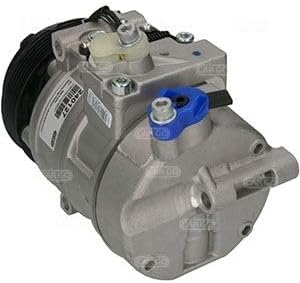
Image 2.2: Side view of the HC-CARGO 240127 Air Conditioning Compressor, highlighting the input/output ports and mounting points.
3. Specifications
Detailed technical specifications for the HC-CARGO 240127 Air Conditioning Compressor:
| Feature | Detail |
|---|---|
| Number of Ribs | 6 |
| Pulley Diameter | 120.0 mm |
| Pulley Type | Multiple Pulley |
| Rotation Direction | Clockwise |
| Input Diameter | 28.4 mm |
| Output Diameter | 14.0 mm |
| Compressor Oil | PAG 46 |
| Refrigerant Type | R134a |
| Manufacturer Part Number | 240127 |
| OEM Reference Numbers | 0002300911, 0002302011, 22300811, 24416178, A0002300911, R1580026, 0002303911, 6854028, 9122120, A0002302011, 000230201180, 0002306811, 6854031, A000230201180, 0002307011, 93176859, A0002303911, 000230701180, A0002306811, 0002340911, A0002307011 |
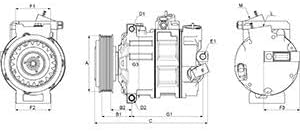
Image 3.1: Multi-view technical drawing illustrating the overall dimensions and layout of the compressor.
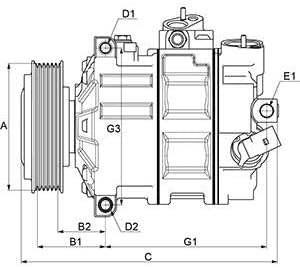
Image 3.2: Detailed front view technical drawing, showing specific dimensions related to the pulley and mounting points.

Image 3.3: Top view technical drawing, providing dimensions for the width and depth of the compressor body.

Image 3.4: Side view technical drawing, detailing the height and specific port locations with their respective dimensions.
4. Vehicle Compatibility
The HC-CARGO 240127 Air Conditioning Compressor is compatible with the following vehicle models. Please verify compatibility with your specific vehicle's make, model, and year before purchase and installation, ideally using the OEM part numbers provided.
- MERCEDES-BENZ SLK (R170):
- 32 AMG Kompressor (170.466) (2001-2004)
- 320 (170.465) (2000-2004)
- 230 Kompressor (170.449) (2000-2004)
- 200 Kompressor (170.444) (2000-2004)
- 200 Kompressor (170.445) (1996-2000)
- 230 Kompressor (170.447) (1996-2000)
- 200 (170.435) (1996-2000)
- MERCEDES-BENZ C-Class Sedan (W203):
- C 270 CDI (203.016) (2000-2007)
- MERCEDES-BENZ M-Class (W163):
- ML 350 (2003-2005)
- ML 350 (163.157) (2002-2005)
- ML 500 (163.175) (2001-2005)
- ML 400 CDI (163.128) (2001-2005)
- ML 55 AMG (163.174) (2000-2005)
- ML 270 CDI (163.113) (1999-2005)
- ML 430 (163.172) (1998-2005)
- ML 230 (163.136) (1998-2005)
- ML 320 (163.154) (1998-2002)
- MERCEDES-BENZ C-Class Sedan (W202):
- C 220 D (202.021) (1996-2000)
5. Installation Guide
Installing an AC compressor requires specialized tools, knowledge of automotive AC systems, and handling of refrigerants. Improper installation can lead to system damage, refrigerant leaks, and personal injury. Professional installation by a certified technician is strongly recommended.
General Steps (for reference only):
- System Discharge: Safely discharge the existing refrigerant from the AC system using proper recovery equipment.
- Component Removal: Disconnect electrical connections and refrigerant lines from the old compressor. Remove mounting bolts and carefully extract the old compressor.
- System Flush: Flush the AC system to remove any contaminants, debris, or old oil. This is crucial for preventing damage to the new compressor.
- New Compressor Preparation: Add the correct amount and type of PAG 46 compressor oil to the new compressor as specified by the vehicle manufacturer or compressor instructions.
- Installation: Install the new compressor, ensuring all mounting bolts are tightened to specifications. Reconnect electrical connections and refrigerant lines, replacing O-rings as necessary.
- Vacuum and Leak Test: Evacuate the AC system using a vacuum pump to remove air and moisture. Perform a leak test to ensure system integrity.
- Refrigerant Recharge: Recharge the system with the correct type (R134a) and amount of refrigerant according to vehicle specifications.
- Performance Check: Start the vehicle and test the AC system for proper operation, checking pressures and cooling performance.
6. Operation
The air conditioning compressor is activated when the vehicle's AC system is turned on. It draws in low-pressure gaseous refrigerant from the evaporator, compresses it into a high-pressure, high-temperature gas, and then sends it to the condenser. This process is fundamental to the refrigeration cycle that cools the vehicle's cabin. The compressor's clutch engages and disengages to regulate the flow of refrigerant based on cooling demand.
7. Maintenance
Proper maintenance of your vehicle's AC system can extend the life of your compressor and ensure efficient cooling. Consider the following:
- Regular System Checks: Have your AC system inspected annually by a qualified technician for proper refrigerant levels and overall performance.
- Refrigerant Leaks: Address any refrigerant leaks promptly. Low refrigerant levels can cause the compressor to overwork and fail prematurely.
- Drive Belt Condition: Ensure the serpentine belt driving the compressor is in good condition and properly tensioned.
- Cabin Air Filter: Replace your cabin air filter regularly to ensure good airflow and reduce strain on the system.
- Run AC Periodically: Even in cold weather, run your AC system for a few minutes once a month to keep seals lubricated and prevent component degradation.
8. Troubleshooting
If you experience issues with your vehicle's air conditioning, consider these common problems and general troubleshooting steps. For accurate diagnosis and repair, consult a professional.
- No Cold Air: This could indicate low refrigerant, a faulty compressor clutch, a leak in the system, or an electrical issue.
- Weak Airflow: Often caused by a clogged cabin air filter, a faulty blower motor, or issues with the ventilation system.
- Unusual Noises: Squealing or grinding noises from the compressor area may indicate a failing compressor bearing, clutch issue, or a loose drive belt.
- AC Cycles On/Off Rapidly: This can be a symptom of low refrigerant, an overcharged system, or a faulty pressure switch.
- Burning Smell: Could indicate an electrical short, a slipping drive belt, or an overheating component. Immediately investigate and cease AC operation.
9. Warranty and Support
For specific warranty information regarding your HC-CARGO 240127 Air Conditioning Compressor, please refer to the documentation provided at the time of purchase or contact HC-Cargo directly through their official website or authorized distributors. Keep your purchase receipt as proof of purchase for any warranty claims.
For technical support, installation assistance, or further inquiries, please contact your automotive service professional or the HC-Cargo customer support channels.