
1. Introduction
This manual provides comprehensive instructions for the proper installation, operation, and maintenance of the Emerson Expansion Valve HFES 1 BA ODF EE. This valve is designed to regulate the flow of refrigerant into the evaporator, ensuring optimal performance and efficiency in refrigeration and air conditioning systems. Adherence to these guidelines is crucial for safe and effective use of the product.
2. Safety Information
Always prioritize safety when working with refrigeration systems. Improper handling of refrigerants or high-pressure components can lead to serious injury or equipment damage. Only qualified personnel should perform installation and maintenance procedures.
- Ensure the system is depressurized and isolated before beginning any work.
- Wear appropriate personal protective equipment (PPE), including safety glasses and gloves.
- Handle refrigerants in a well-ventilated area.
- Follow all local and national codes and regulations for refrigeration system installation and service.
- Avoid direct contact with refrigerant, as it can cause frostbite.
3. Product Overview
The Emerson HFES 1 BA Expansion Valve is a thermostatic expansion valve (TXV) designed for precise control of refrigerant flow. It consists of a valve body, a sensing bulb, and a capillary tube. The sensing bulb, filled with a charge, is attached to the evaporator outlet and reacts to the superheat of the refrigerant vapor, signaling the valve to adjust its opening.
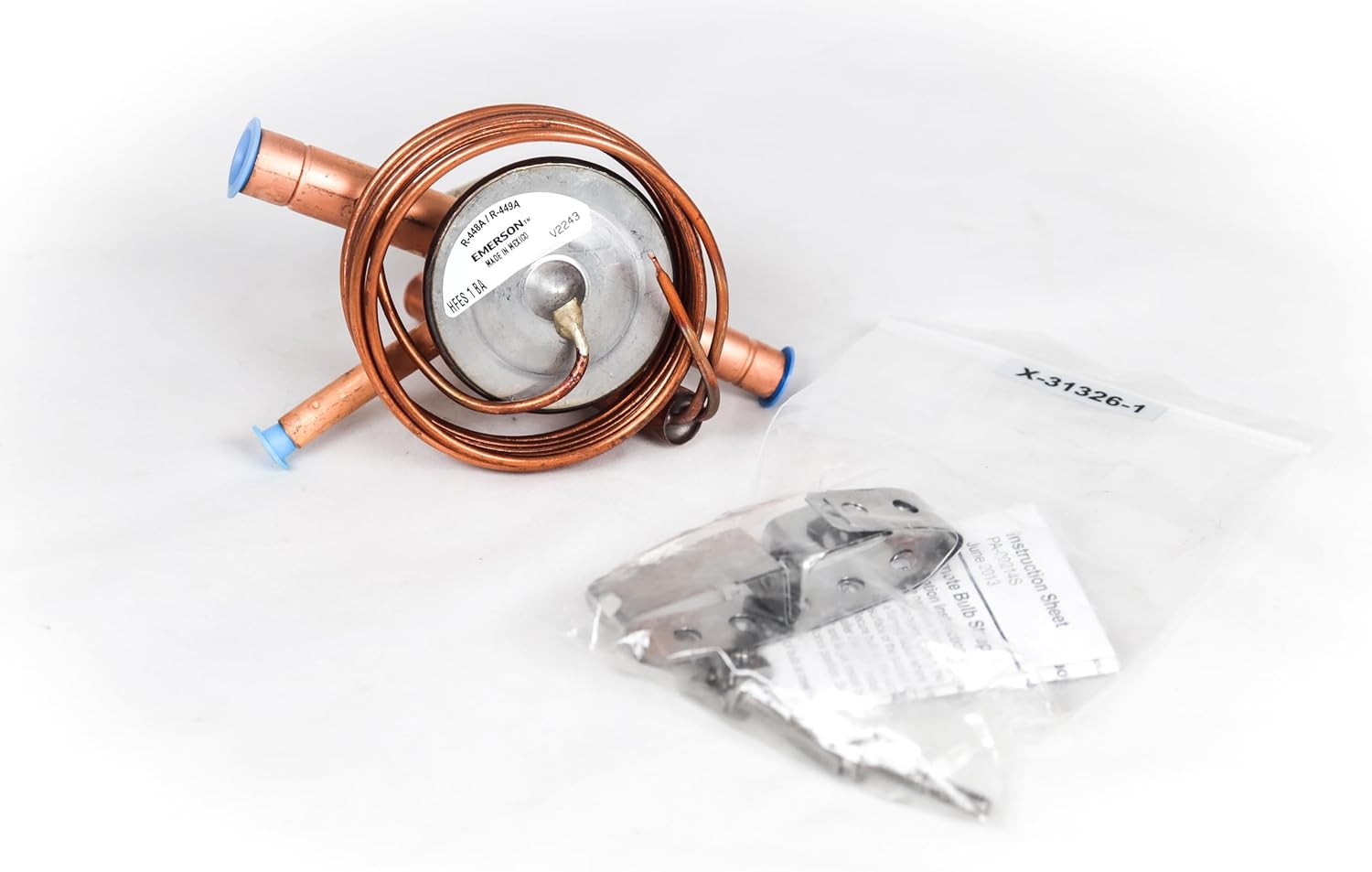
Figure 3.1: Overview of the Emerson HFES 1 BA Expansion Valve, showing the main body, copper tubing, and the sensing bulb with its capillary tube.
4. Setup and Installation
Proper installation is critical for the valve's performance and longevity. Ensure all connections are clean and free of debris before assembly.
4.1 Pre-installation Checks
- Verify that the valve model (HFES 1 BA) is compatible with the system's refrigerant type and capacity.
- Inspect the valve for any signs of physical damage.
4.2 Mounting the Valve
Mount the valve in a position that allows for easy access for service and ensures proper drainage of oil. The valve should be installed with the power element (top part) higher than the outlet connection to prevent liquid refrigerant from entering the power element.

Figure 4.1: The expansion valve shown with its associated mounting bracket and screws, essential for secure installation.
4.3 Connecting the Sensing Bulb
The sensing bulb must be securely attached to the suction line at the evaporator outlet. Ensure good thermal contact by cleaning the suction line surface and using the provided clamp. Insulate the bulb to prevent ambient temperature influences.

Figure 4.2: Detailed view of the valve's connections and the mounting hardware, illustrating how the valve and bulb are secured.
4.4 Brazing Connections
Use appropriate brazing techniques to connect the valve to the refrigerant lines. Protect the valve body from excessive heat during brazing by wrapping it with a wet cloth or using a heat sink compound. Purge the system with nitrogen during brazing to prevent oxidation.
4.5 Leak Testing
After installation, perform a thorough leak test using an approved leak detection method. Pressurize the system with nitrogen to the recommended test pressure and check all brazed connections and valve joints.
5. Operating Principles
The Emerson HFES 1 BA valve operates based on the superheat of the refrigerant vapor at the evaporator outlet. As the superheat changes, the pressure within the sensing bulb and capillary tube changes, causing the diaphragm to move and adjust the valve's opening. This dynamic adjustment ensures that the evaporator is always supplied with the optimal amount of refrigerant, preventing liquid slugging and ensuring efficient heat transfer.
6. Maintenance
The Emerson expansion valve is designed for reliable operation with minimal maintenance. However, periodic checks can help ensure continued optimal performance.
- Annual Inspection: Visually inspect the valve and its connections for any signs of leaks, corrosion, or physical damage.
- Sensing Bulb Check: Ensure the sensing bulb remains securely attached and insulated on the suction line.
- System Performance: Monitor system superheat and subcooling to verify the valve is operating within design parameters.
7. Troubleshooting
If the system is not performing as expected, the expansion valve may be a contributing factor. Here are common issues and potential solutions:
| Problem | Possible Cause | Solution |
|---|---|---|
| High Superheat / Starved Evaporator | Valve stuck closed, low refrigerant charge, restricted filter drier, sensing bulb improperly installed. | Check refrigerant charge, inspect filter drier, re-attach/insulate sensing bulb, inspect valve for blockage. |
| Low Superheat / Flooded Evaporator | Valve stuck open, sensing bulb losing charge, external equalizer line blocked. | Check sensing bulb attachment, clear equalizer line, replace valve if necessary. |
| Fluctuating Superheat | Improper sensing bulb location, unstable load, liquid slugging. | Relocate sensing bulb, check system load stability, ensure proper liquid line subcooling. |
For complex issues, consult a certified HVAC/R technician.
8. Specifications
Key technical specifications for the Emerson Expansion Valve HFES 1 BA:
- Manufacturer: Emerson
- Model Number: HFES 1 BA
- Material: Stainless Steel (body)
- Inlet Connection Size: 1 Inches
- Inlet Connection Type: Outside Diameter Flared (ODF)
- Number of Ports: 2
- Valve Type: Globe Valve
- Specification Met: ASME BPVC
9. Support
For technical assistance, replacement parts, or further information regarding the Emerson Expansion Valve HFES 1 BA ODF EE, please contact your authorized Emerson distributor or the seller from whom the product was purchased. Provide the model number and any relevant system details when seeking support.