1. Introduction
This manual provides essential information for the safe and effective use of your VEVOR Tow Bar, Model FF-T809. Please read these instructions thoroughly before assembly, installation, or operation to ensure proper function and safety. This tow bar is designed for towing vehicles up to 5500 lbs (2495 kg) and features a universal coupler that fits a 2-inch ball hitch.
2. Safety Information
WARNING: Failure to follow these safety instructions may result in serious injury or property damage.
- Always ensure the tow bar is securely attached to both the towing vehicle and the towed vehicle before commencing travel.
- Do not exceed the maximum towing capacity of 5500 lbs (2495 kg).
- Regularly inspect all components of the tow bar, including bolts, pins, chains, and the coupler, for wear, damage, or corrosion. Replace any damaged parts immediately.
- Ensure safety chains are properly crossed and attached to both vehicles, providing a backup connection in case of coupler detachment.
- Verify that the towed vehicle's braking and lighting systems are functional and properly connected, if required by local regulations.
- Maintain a safe speed and increase braking distance when towing.
- Avoid sudden maneuvers, sharp turns, or excessive speeds while towing.
- Consult your vehicle's owner's manual for specific towing recommendations and limitations.
3. Package Contents
Verify that all components listed below are present and undamaged before proceeding with assembly and installation.
- 1 x Tow Bar Assembly
- 2 x Security Chains
- 2 x Square Pins
- 4 x U-Shaped Bolts
- 6 x Hex Bolts

Figure 3.1: Included accessories for the VEVOR Tow Bar.
4. Specifications
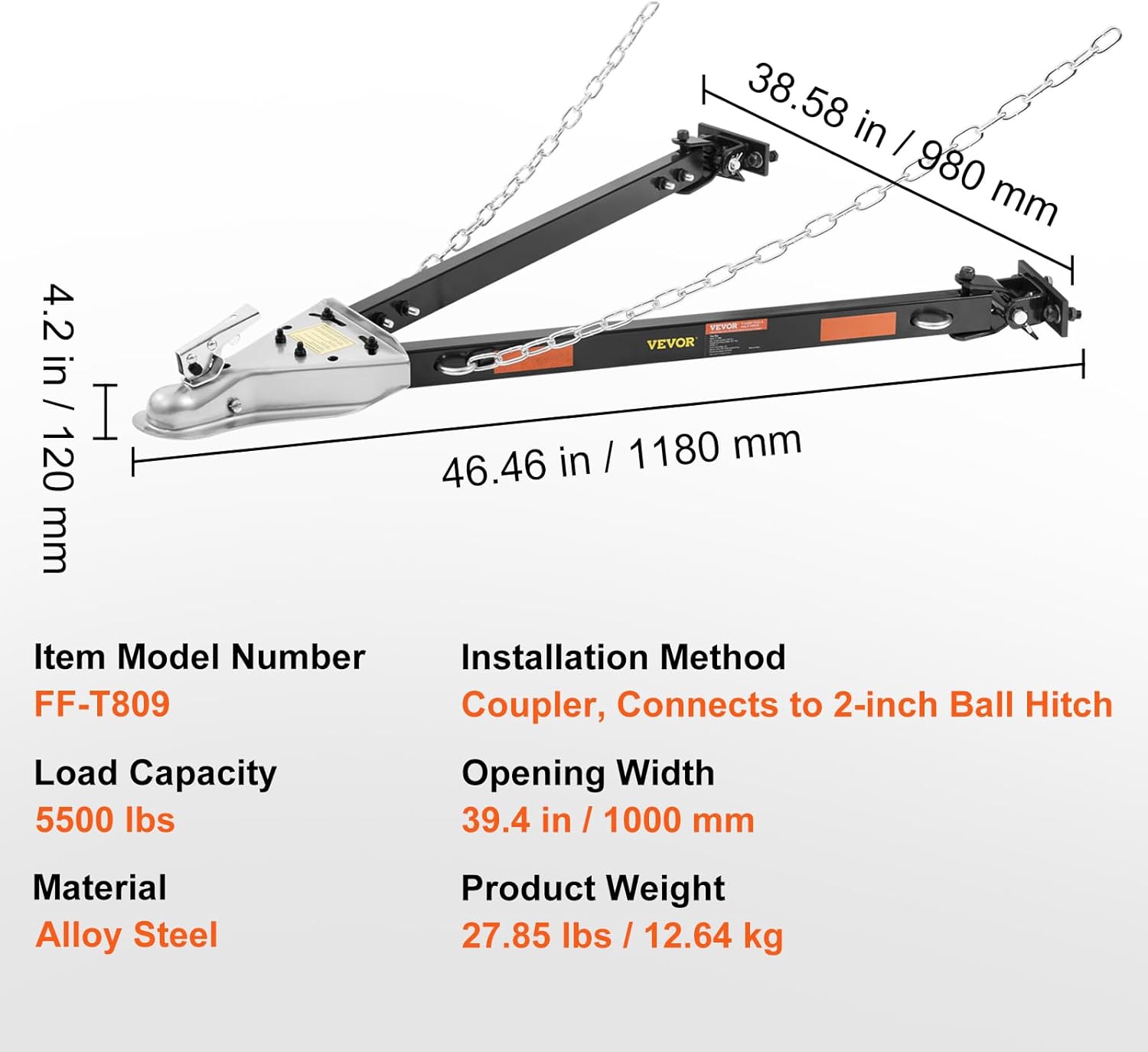
Figure 4.1: VEVOR Tow Bar dimensions and specifications.
| Specification | Value |
|---|---|
| Model Number | FF-T809 |
| Maximum Towing Capacity | 5500 lbs (2495 kg) |
| Material | Alloy Steel |
| Finish Type | Powder Coated |
| Coupler Type | Fits 2-inch Ball Hitch |
| Adjustable Opening Width | Up to 39.4 inches (1000 mm) |
| Product Dimensions (L x W x H) | 46.46 x 38.58 x 4.72 inches (1180 x 980 x 120 mm) |
| Item Weight | 27.87 lbs (12.64 kg) |
| Vehicle Service Type | Car, Tractor, Trailer, Truck (Universal Fit) |
5. Assembly Instructions
The VEVOR Tow Bar is designed for straightforward assembly. Follow these steps to prepare your tow bar for use.
- Unpack all components and verify against the 'Package Contents' list.
- Attach the two main arms to the central coupler assembly using the provided hex bolts. Ensure all bolts are tightened securely.
- Install the bumper-mounted brackets at the ends of the tow bar arms. These brackets are designed for quick disassembly and assembly without welding. Use the square pins to secure them in place.
- Attach the security chains to the designated points on the tow bar arms using the U-shaped bolts.
- Perform a visual inspection to ensure all connections are tight and secure.

Figure 5.1: Key components and features of the tow bar assembly.
6. Installation
Proper installation is critical for safe towing. Follow these steps carefully.
- Prepare the Towing Vehicle: Ensure your towing vehicle has a properly installed 2-inch hitch ball.
- Connect the Coupler: Open the coupler latch on the tow bar and place it over the 2-inch hitch ball of the towing vehicle. Close the latch securely and insert the safety pin or lock.
- Attach to Towed Vehicle: Position the towed vehicle in front of the towing vehicle. Adjust the width of the tow bar arms to align with the bumper or frame attachment points of the towed vehicle.
- Secure Bumper Brackets: Attach the bumper-mounted brackets to the appropriate points on the towed vehicle's bumper or frame. Ensure a firm and stable connection. The adjustable width allows for compatibility with various vehicles up to 39.4 inches (1000 mm) opening width.
- Connect Safety Chains: Cross the two security chains underneath the tow bar and attach them to the designated attachment points on both the towing vehicle and the towed vehicle. The chains should be taut but allow for turns.
- Final Check: Double-check all connections, bolts, pins, and chains to ensure they are secure before driving.

Figure 6.1: Tow bar connection to a vehicle's bumper.

Figure 6.2: Coupler connection to the towing vehicle's hitch ball.
7. Operation
Once the tow bar is correctly installed, observe the following operational guidelines:
- Pre-Trip Inspection: Before each trip, inspect all connections, safety chains, and the tow bar itself for any signs of loosening, wear, or damage.
- Driving: Drive cautiously, maintaining a reduced speed compared to normal driving. Allow for increased stopping distances and wider turns. Avoid sudden acceleration or braking.
- Maneuvering: Be aware of the increased length and weight of your combined vehicles. Practice turning and backing up in a safe, open area if you are unfamiliar with towing.
- Monitoring: Periodically check the tow bar and connections during long trips to ensure everything remains secure.

Figure 7.1: VEVOR Tow Bar in operation, towing a motorcycle trailer.

Figure 7.2: Versatile applications of the VEVOR Tow Bar for RVs, ORVs, and pickup trucks.
8. Maintenance
Regular maintenance will extend the life of your VEVOR Tow Bar and ensure safe operation.
- Cleaning: Clean the tow bar regularly, especially after exposure to dirt, salt, or harsh weather conditions. Use mild soap and water, then dry thoroughly.
- Lubrication: Periodically lubricate moving parts, such as the coupler mechanism and pivot points, with a suitable grease or lubricant to prevent rust and ensure smooth operation.
- Inspection: Conduct a thorough inspection before and after each use. Check for:
- Cracks, bends, or deformation in the steel components.
- Excessive wear on the coupler, pins, or chains.
- Loose or missing bolts and nuts.
- Corrosion or rust, especially on critical load-bearing areas.
- Storage: Store the tow bar in a dry, protected area when not in use to prevent rust and damage.
9. Troubleshooting
If you encounter issues with your VEVOR Tow Bar, consider the following common problems and solutions:
- Problem: Tow bar feels loose or unstable during towing.
Solution: Stop immediately and check all connections. Ensure the coupler is fully latched onto the hitch ball and secured with a pin. Verify that all bolts and pins connecting the tow bar arms to the towed vehicle are tight and properly installed. Check for any signs of wear or damage on components. - Problem: Difficulty attaching the tow bar to the towed vehicle.
Solution: Ensure the towed vehicle's attachment points are clean and free of obstructions. Adjust the width of the tow bar arms to match the vehicle's bumper or frame width. If the vehicle's design is incompatible, additional adapters may be required (not included). - Problem: Excessive noise or rattling during towing.
Solution: This often indicates loose connections. Re-check all bolts, pins, and the coupler latch. Ensure safety chains are taut but not overly tight, and not dragging on the ground. Lubricate pivot points if necessary. - Problem: Rust or corrosion appearing on the tow bar.
Solution: While the tow bar has a powder-coated finish for protection, prolonged exposure to moisture and salt can cause corrosion. Clean the affected areas, remove rust with a wire brush, and apply a rust-inhibiting primer and paint. Ensure proper storage in a dry environment.
If problems persist or you suspect a critical component failure, discontinue use and contact VEVOR customer support.
10. Warranty and Support
VEVOR products are designed for durability and performance. For warranty information, technical support, or to inquire about replacement parts, please refer to the official VEVOR website or contact their customer service department directly. Keep your purchase receipt as proof of purchase for any warranty claims.
For further assistance, please visit: www.vevor.com


