
1. Introduction
The SOBOUR CDG1-1DD Solid State Relay (SSR) is an electronic switching device designed for reliable and silent operation in various DC control DC applications. Unlike traditional mechanical relays, SSRs offer advantages such as no moving parts, no contact bounce, no spark generation, and a longer operational life. This manual provides essential information for the safe installation, operation, and maintenance of your CDG1-1DD series solid state relay.
2. Safety Information
Please read and understand all safety instructions before installing or operating this device. Failure to follow these instructions may result in electric shock, fire, or serious injury.
- Always disconnect power to the circuit before installing, wiring, or performing maintenance on the relay.
- Installation should only be performed by qualified personnel familiar with electrical systems and safety procedures.
- Ensure that the relay's voltage and current ratings are suitable for your application. Overloading can cause damage or fire.
- Use appropriate wire gauges for the load current to prevent overheating.
- Mount the relay in an area with adequate ventilation to prevent overheating, especially for higher current models.
- Do not expose the relay to moisture, corrosive gases, or excessive vibrations.
3. Product Overview
The SOBOUR CDG1-1DD is a single-phase DC control DC solid state relay. It features a compact design and provides reliable switching without mechanical contacts, eliminating sparks and extending operational life. The relay is designed for various industrial and commercial applications requiring precise DC load control.

Figure 3.1: Front view of the SOBOUR CDG1-1DD Solid State Relay, showing input and output terminals.
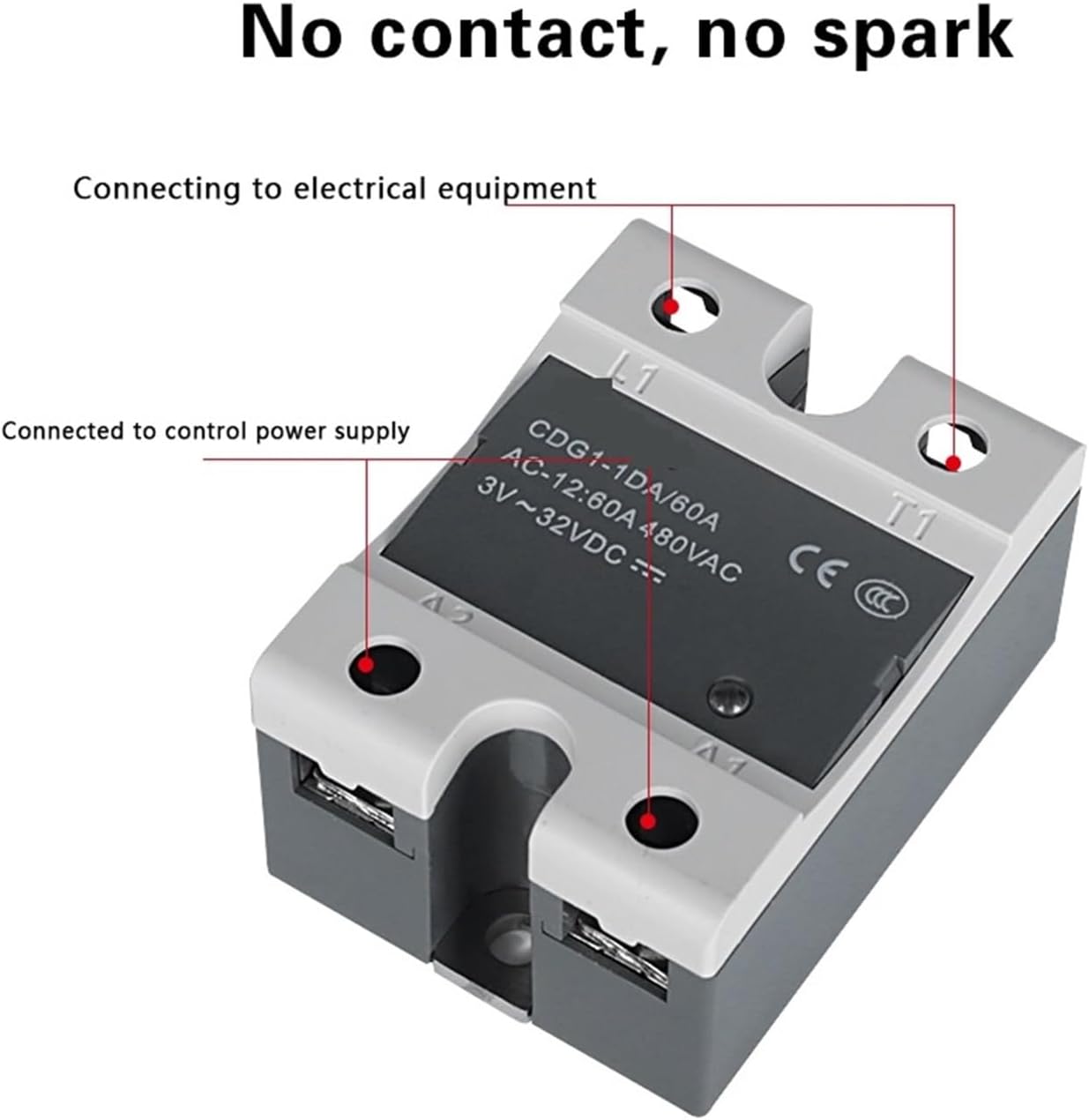
Figure 3.2: Angled view highlighting the "No contact, no spark" feature and connection points for control and load circuits.
Key Features:
- DC Control DC: Designed to switch DC loads using a DC control signal.
- No Spark Operation: Eliminates electrical arcing, enhancing safety and component life.
- High Reliability: Solid-state design ensures long-term stability and performance.
- Wide Current Range: Available in various current ratings (10A, 25A, 40A, 60A, 80A) to suit different applications.
4. Specifications
The following table outlines the general specifications for the SOBOUR CDG1-1DD series. Specific current ratings vary by model.
| Parameter | Value |
|---|---|
| Model Series | CDG1-1DD |
| Control Voltage (Input) | 3V ~ 32V DC |
| Load Voltage (Output) | DC-12: 220V DC (Max) |
| Load Current Options | 10A, 25A, 40A, 60A, 80A |
| Operating Principle | DC Control DC |
| Isolation Voltage | > 2500V AC |
| On-State Voltage Drop | < 1.6V |
| Off-State Leakage Current | < 5mA |
| Response Time | < 10ms |
| Mounting Method | Panel Mount (Screw terminals) |
| Dimensions (Approx.) | 48.5mm (L) x 45.5mm (W) x 31.5mm (H) |
| Weight (40A model) | 3.53 ounces (approx. 100g) |
| Manufacturer | SOBOUR |

Figure 4.1: Detailed dimensions of the CDG1-1DD Solid State Relay in millimeters.
5. Setup & Installation
Proper installation is crucial for the safe and efficient operation of the solid state relay. Refer to the wiring diagrams and follow these steps carefully.
5.1 Mounting
- Mount the relay on a flat, stable surface using screws through the designated mounting holes.
- For higher current models (e.g., 40A and above), it is highly recommended to use a heatsink to dissipate heat and prevent thermal damage. Ensure good thermal contact between the relay and the heatsink.
- Allow sufficient clearance around the relay for air circulation, especially if not using a heatsink.
5.2 Wiring Connections (DC Control DC)
The CDG1-1DD series is designed for DC control of DC loads. The input terminals (A1, A2) control the switching of the output terminals (L1, T1).
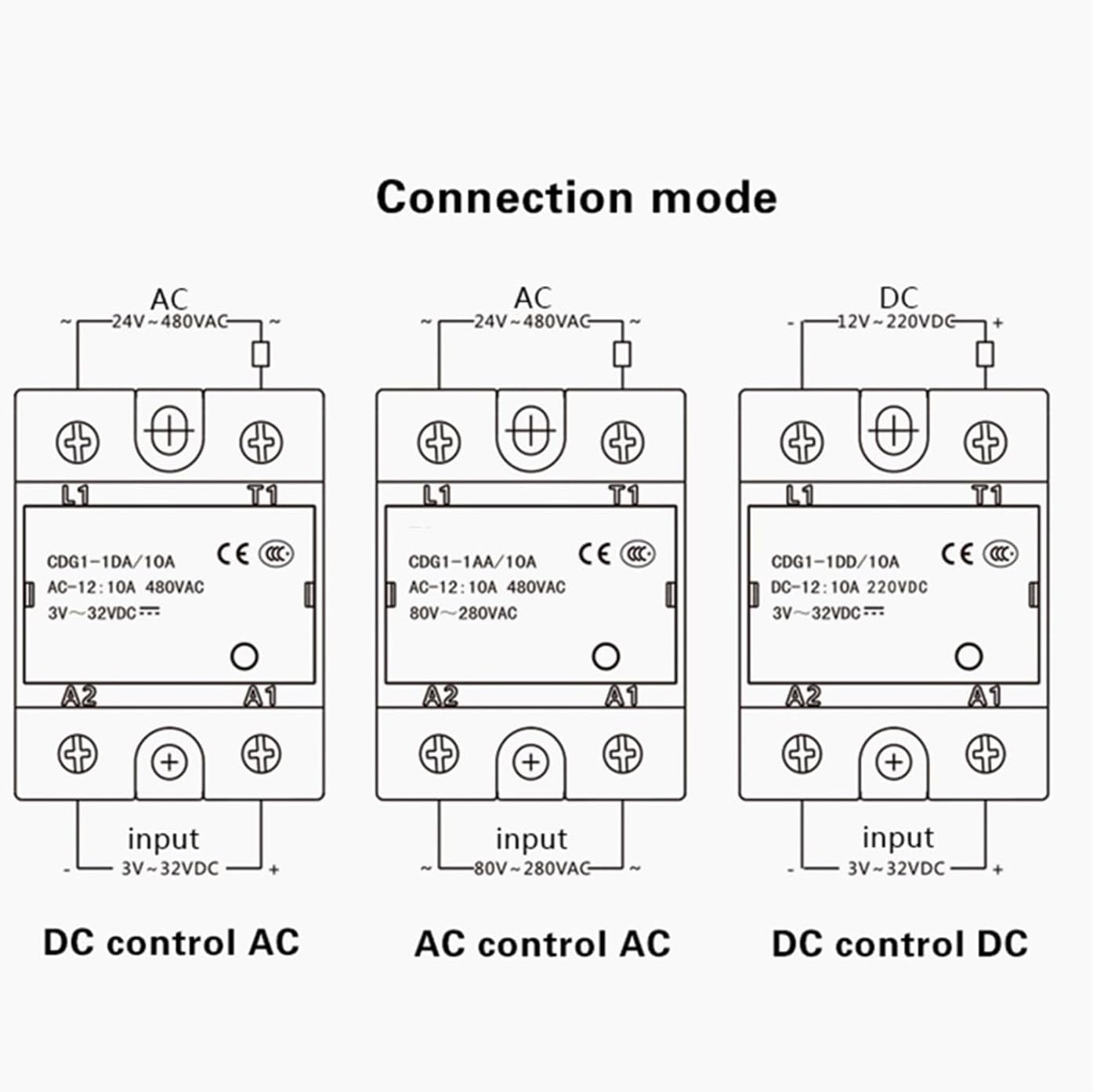
Figure 5.1: Connection diagram for DC control DC solid state relay (CDG1-1DD). Input is 3V-32VDC, output is DC-12V-220VDC.
- Control Input (A1, A2):
- Connect the positive (+) terminal of your DC control power supply (3V-32V DC) to terminal A1.
- Connect the negative (-) terminal of your DC control power supply to terminal A2.
- Ensure the control voltage is within the specified range (3V-32V DC).
- Load Output (L1, T1):
- Connect the positive (+) terminal of your DC load power supply to terminal L1.
- Connect one side of your DC load (e.g., motor, heater, LED strip) to terminal T1.
- Connect the other side of your DC load to the negative (-) terminal of your DC load power supply.
- Ensure the load voltage and current are within the relay's specified ratings.
- Verify Connections: Double-check all wiring for correct polarity and secure connections before applying power. Loose connections can cause overheating and damage.
6. Operating Instructions
Once properly installed and wired, operating the SOBOUR CDG1-1DD Solid State Relay is straightforward:
- Apply Load Power: Ensure the DC load power supply is connected and ready.
- Apply Control Signal: Apply the specified DC control voltage (3V-32V DC) to the input terminals (A1, A2).
- Relay Activation: When the control voltage is applied, the internal solid-state switch will close, allowing current to flow through the load circuit (L1 to T1), activating your DC load.
- Relay Deactivation: When the control voltage is removed from A1 and A2, the internal solid-state switch will open, interrupting the current flow to the load and deactivating it.
The relay operates silently and without mechanical wear, providing a fast and reliable switching action.
7. Maintenance
The SOBOUR CDG1-1DD Solid State Relay is designed for maintenance-free operation due to its solid-state nature. However, periodic checks can help ensure optimal performance and longevity:
- Visual Inspection: Periodically inspect the relay for any signs of physical damage, discoloration (indicating overheating), or loose connections.
- Connection Integrity: Ensure all terminal screws are tight and wires are securely connected. Loose connections can lead to increased resistance and heat.
- Cleanliness: Keep the relay and its surroundings free from dust, dirt, and debris, which can impede heat dissipation. Use a soft, dry cloth for cleaning.
- Thermal Management: If a heatsink is used, ensure it is clean and free of obstructions. Verify that the ambient temperature remains within the relay's operating limits.
8. Troubleshooting
If you encounter issues with your SOBOUR CDG1-1DD Solid State Relay, refer to the following troubleshooting guide:
| Problem | Possible Cause | Solution |
|---|---|---|
| Relay does not switch ON (load remains OFF) |
|
|
| Relay does not switch OFF (load remains ON) |
|
|
| Relay overheats |
|
|
If the problem persists after performing these checks, contact SOBOUR customer support for further assistance.
9. Warranty and Support
SOBOUR products are manufactured to high-quality standards. For information regarding warranty coverage, technical support, or replacement parts, please refer to the product packaging or contact SOBOUR customer service directly. Keep your purchase receipt as proof of purchase.
Contact information can typically be found on the manufacturer's official website or on the product's packaging.